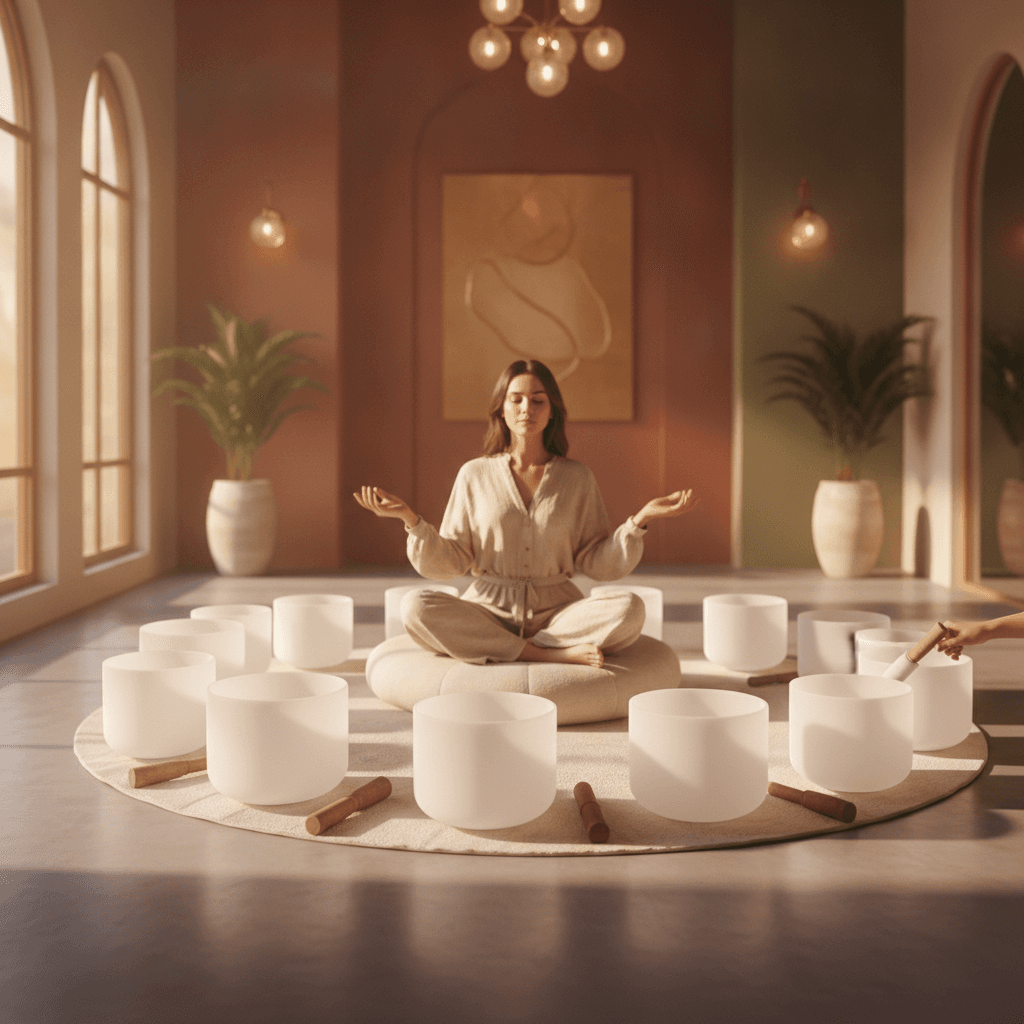
The Symphony Within: Vagal Tone & Low-Frequency Sound at Soul Art
Key Insights
Explore how low-frequency sound therapy at Soul Art Dubai enhances vagal tone, fostering deep relaxation and resilience for modern living.
Have you ever wondered what truly governs your ability to navigate the relentless pace of modern life with grace, or why some individuals seem to recover from stress more easily than others? The answer may lie within an often-overlooked yet profoundly powerful pathway in your body: the vagus nerve. This intricate neural highway is the key to unlocking your innate capacity for calm, resilience, and profound well-being.
At Soul Art, Dubai's premier sound wellness studio, we delve deep into the sophisticated interplay between your body's internal rhythms and the external world. We specifically explore how precisely calibrated low-frequency sound vibrations can gently guide your nervous system towards a state of harmonious balance. This article will unveil the scientific foundation behind vagal tone enhancement through sound, offering you a deeper understanding of this vital connection and practical pathways to cultivate your inner tranquility. Join us as we explore the subtle yet powerful science that Larissa Steinbach and her team harness to support optimal health and serenity.
The Science Explained
Our bodies are complex symphonies of biological processes, constantly striving for balance. At the heart of this intricate system lies the autonomic nervous system (ANS), which orchestrates our involuntary functions, from heartbeat to digestion. The ANS comprises two primary branches: the sympathetic nervous system, our "fight or flight" responder, and the parasympathetic nervous system, our "rest and digest" counterpart. Optimal well-being hinges on the flexible oscillation between these two states.
When chronic stress prevails, we often find ourselves trapped in prolonged sympathetic dominance. This sustained activation can lead to a cascade of negative effects, including elevated cortisol levels, disrupted digestion, systemic inflammation, impaired sleep, and reduced emotional regulation. Recognizing and addressing this imbalance is crucial for maintaining overall health.
Understanding the Vagus Nerve and Vagal Tone
The vagus nerve, often referred to as the "wandering nerve," is the longest cranial nerve in the human body, extending from the brainstem down through the spinal cord to the abdomen. It forms a crucial communication link, connecting the brain to major organs such as the heart, gut, and lungs. This extensive network makes it a primary mechanism for heart-brain interactions, transmitting sensory information and playing a pivotal role in controlling vital functions like heart rate, digestion, and blood glucose regulation.
"Vagal tone" describes the electrical activity of this extraordinary nerve, serving as a powerful indicator of your nervous system's balance. A high vagal tone is highly desirable, as it is associated with a robust parasympathetic response. Individuals with enhanced vagal tone typically exhibit lower blood pressure, improved heart rate variability (HRV), and better gut health. It reflects a body more adept at recovering from stress, maintaining homeostasis, and fostering overall well-being and performance.
Conversely, a low vagal tone often correlates with sympathetic dominance, where the body remains in a heightened state of alert. This imbalance is frequently observed in individuals experiencing chronic fatigue syndrome, fibromyalgia, and various autoimmune disorders, underscoring its profound impact on health. Understanding and actively improving vagal tone is therefore a cornerstone of holistic wellness.
Heart rate variability (HRV) is a key physiological measure used to quantify vagal tone and assess the health of the vagus nerve. HRV measures the beat-to-beat variations in your heart rate, reflecting the dynamic interplay between the sympathetic and parasympathetic branches of your ANS. High HRV indicates greater parasympathetic activity, signalling a calm, resilient nervous system. Low HRV, on the other hand, suggests sympathetic dominance, pointing to a state of stress or dysregulation.
Electrocardiogram (ECG) readings are used to accurately record the heart's electrical activity, providing crucial data on heart rate (HR) in beats per minute (BPM) and HRV. For a calm and unstressed nervous system, one would typically observe a low HR BPM and a high HRV. These markers are illustrative of robust parasympathetic nervous system activity, indicating the body's capacity for rest, repair, and optimal function.
The Power of Low-Frequency Sound Vibrations (LFV)
The conscious application of low-frequency sound vibrations (LFV) is emerging as a compelling method for influencing the autonomic nervous system. The body's response to LFV is multifaceted, involving a range of mechanoreceptors located throughout the skin, fascia, and even within the mesentery. These specialized sensory cells, particularly Pacinian corpuscles, are adept at detecting vibratory stimuli. While Pacinian corpuscles are known to have maximal afferent output around 240 Hz, they can be stimulated effectively by any frequency below that, sending afferent impulses to the vagus nerve and central nervous system.
A significant body of preliminary research highlights the promising benefits of LFV in supporting vagal tone. Recent studies, while acknowledging the need for further validation, have demonstrated a significant increase in vagal tone markers post-intervention in LFV sessions. For instance, a study assessing the impact of LFV on the ANS found a significant increase in some vagal tone markers 30 minutes post-intervention in healthy active male participants, compared to no-vibration sessions. This research indicated that LFV was associated with enhanced HRV variables and significantly increased parasympathetic activity. The conclusion drawn was that improved vagal tone after an LFV session points to its potential utility as a recovery modality, and importantly, for stress management.
Beyond stress management, LFV has shown potential in other areas of well-being. Studies have explored the application of vibrotactile transducers at the abdominal level, which has been associated with reductions in depression and anhedonia, even when not explicitly premising vagal stimulation. Another study, using relaxing music with a low-frequency soundtrack and a vibrotactile transducer, aimed to activate Pacinian corpuscles to send afferent impulses via the vagus nerve to brain regions associated with depression. While the specific frequencies were not always reported, the underlying mechanism points to direct neural stimulation.
Further neurophysiological research supports these findings. One study examined brainstem data and emotional responses, revealing that 40 Hz vibratory stimulation elicited the strongest parasympathetic response and a significant increase in cardiac vagal tone (CVT) in participants. This suggests a direct physiological pathway through which specific low-frequency vibrations can influence vagal activity.
The benefits of LFV extend to physical comfort and recovery as well. Research indicates that vibration between 30-50 Hz can increase local circulation, effectively reduce perceived pain, and promote fascial glide through mechanotransductive signalling. Low-frequency auditory pulses have also been studied for their ability to decrease pain-related cortical activity and improve neuromuscular relaxation, offering a complementary approach to pain management. For sleep support, employing low-frequency vibration, particularly in the 20-40 Hz range, can contribute to tension reduction, supporting smoother transitions into restorative sleep. These findings collectively underscore the diverse potential of LFV as a holistic wellness tool.
How It Works in Practice
At Soul Art, the scientific principles of vagal tone and low-frequency sound are translated into a deeply immersive, transformative experience for our clients. It moves beyond abstract theory, allowing individuals to feel and embody the science directly within their own bodies. This practical application cultivates a profound connection to inner states of being.
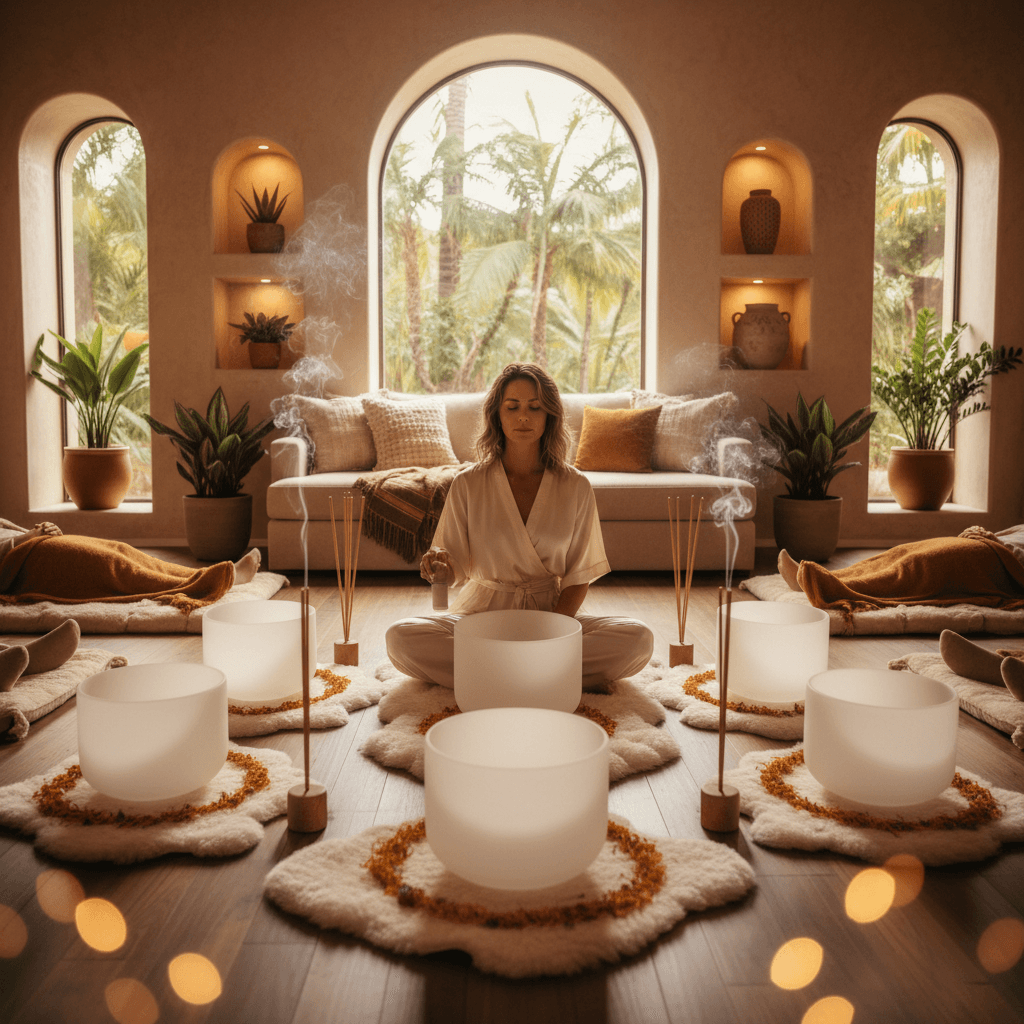
Imagine stepping into a serene sanctuary, where the external world gently fades away. Here, you are invited to recline comfortably, perhaps on a specialized vibroacoustic bed or surrounded by instruments designed to transmit subtle, yet powerful, vibrations throughout your being. The experience is not merely auditory; it is profoundly sensory. You begin to feel the sound as much as you hear it, a pervasive, gentle resonance that permeates every cell.
As the low-frequency sounds begin, you might first notice a gentle humming or a deep, sustained tone. These vibrations travel through the air, through your body's tissues, and directly stimulate those crucial mechanoreceptors we discussed. This initiates a subtle yet profound shift within your nervous system. Many people report an immediate sense of deep relaxation, a letting go of muscle tension that they may not have even realized they were holding. The mind, often racing with thoughts and anxieties, begins to quiet, settling into a more meditative state.
Physiologically, these LFV encourage your body to transition from a sympathetic "on-guard" state to a parasympathetic "rest and restore" mode. You may observe your breathing becoming deeper and more rhythmic, your heart rate gently slowing, and a pervasive sense of peace washing over you. This shift is not just anecdotal; it is a measurable response reflected in an increase in your heart rate variability, indicating enhanced vagal tone. The session becomes a journey into interoception, the conscious awareness of your internal bodily states, allowing you to re-establish a dialogue with your body's innate wisdom.
The holistic impact of these sessions at Soul Art extends far beyond mere physical relaxation. Clients often describe an improvement in emotional regulation, a heightened sense of clarity, and an increased capacity to navigate daily stressors with greater ease. It’s about creating an internal environment where your body remembers how to self-regulate, how to find its way back to balance. This guided experience offers a powerful "reset," helping to recalibrate your entire system and foster enduring resilience.
The Soul Art Approach
Larissa Steinbach, the visionary founder of Soul Art, has meticulously crafted an approach that seamlessly blends ancient wisdom with cutting-edge scientific understanding. Her philosophy centres on the belief that true well-being arises from a harmonious balance between our internal and external worlds, and that sound is a powerful conduit for achieving this equilibrium. The Soul Art method is not simply about listening to sound; it's about experiencing sound as a therapeutic force that interacts directly with your body's most fundamental systems.
At Soul Art, the environment itself is a testament to this philosophy. The studio is designed as a sanctuary, an oasis of calm that immediately invites relaxation and introspection. Within this carefully curated space, Larissa and her practitioners utilize a diverse array of instruments specifically chosen for their ability to produce rich, resonant low-frequency vibrations. These include large crystal singing bowls, meticulously tuned gongs, and other bespoke acoustic tools. Each instrument is played with intention, creating intricate soundscapes that are not only aesthetically beautiful but also physiologically potent.
What makes the Soul Art method truly unique is its emphasis on personalized, curated experiences. Larissa Steinbach understands that each individual's journey to well-being is distinct. While there are foundational sound journeys, sessions can be tailored to address specific client needs, whether the goal is deep meditative states, profound stress reduction, enhanced physical recovery, or fostering emotional release. This bespoke approach ensures that every experience is deeply resonant and maximally beneficial for the individual.
The guided sessions at Soul Art integrate mindfulness practices, inviting clients to bring their full attention to the present moment and to the sensations within their bodies. This combination of focused awareness and targeted low-frequency vibration creates a powerful synergy, amplifying the effects on vagal tone and nervous system regulation. It is through this intentional engagement that clients can cultivate a deeper self-connection and unlock their innate capacity for healing.
"The subtle hum of a low-frequency vibration isn't just an external sound; it's an invitation for the body to remember its deepest rhythms of calm and regeneration."
Soul Art offers a sophisticated and effective pathway to nervous system regulation, providing a vital tool for navigating the complexities of modern life. It is a space where the science of sound meets the art of inner peace, empowering individuals to reclaim their vitality and serenity.
Your Next Steps
Embracing the profound connection between vagal tone and low-frequency sound is an empowering step towards holistic well-being. While immersive sound wellness sessions at Soul Art offer a deeply restorative experience, there are also practical, science-backed techniques you can integrate into your daily life to cultivate a healthier vagal tone. These simple yet effective practices can significantly support your nervous system's capacity for calm and resilience.
Here are actionable steps you can implement today:
- Practice Deep Diaphragmatic Breathing: Focus on exhaling longer than you inhale. Scientific research indicates that slowing your breath to approximately 5.5 to 6 breaths per minute, with a prolonged exhale, stimulates the vagus nerve more effectively. This rhythm helps synchronize your heart rate and breathing, achieving a state known as coherence.
- Engage in Humming, Singing, or Chanting: The vagus nerve passes directly through the area of the vocal cords and the muscles at the back of the throat. Creating physical vibrations in this region through humming, singing, or chanting acts as a direct stimulant to the nerve. This is why many ancient traditions utilized vocalizations as a form of meditation and healing.
- Incorporate Gentle Movement and Stretching: Regular, gentle stretching and myofascial release techniques, particularly in the evening, can reduce musculoskeletal tension and fascial stiffness. This reduction in nociceptive load supports smoother transitions into sleep and can generally enhance parasympathetic activation. Consider simple yoga or mobility work for 10 minutes daily.
- Mindfully Expose Yourself to Calming Frequencies: Seek out environments or practices that utilize low-frequency vibrations. Whether it's the carefully curated soundscapes at Soul Art or exploring guided meditations with subtle LFV, intentional exposure can help reinforce parasympathetic activity.
- Prioritize Rest and Self-Care: Consistent and quality sleep is paramount for nervous system recovery. Vagal tone enhancement is critical for sleep onset, as parasympathetic activation facilitates the transition into restorative sleep cycles. Create a calming bedtime routine and ensure your sleep environment supports deep rest.
By integrating these practices, you can actively participate in toning your vagus nerve and fostering a more resilient nervous system. To truly immerse yourself in the transformative power of expertly curated low-frequency sound, we warmly invite you to experience the unique sessions offered at Soul Art. Discover firsthand how Larissa Steinbach's approach can guide you to profound relaxation and enhanced well-being.
In Summary
The intricate dance between vagal tone and low-frequency sound offers a compelling pathway to enhanced well-being and resilience. We've explored how the vagus nerve, a central component of our parasympathetic nervous system, plays a pivotal role in governing our body's ability to rest, digest, and recover. A robust vagal tone, measurable through heart rate variability, is a hallmark of a healthy, adaptable nervous system.
Preliminary research consistently highlights the profound impact of low-frequency sound vibrations in activating mechanoreceptors, stimulating vagal afferents, and gently shifting the autonomic nervous system towards a state of greater calm and balance. These vibrations have been associated with increased parasympathetic activity, improved stress management, enhanced recovery, and even support for pain modulation and sleep. Soul Art, under the expert guidance of Larissa Steinbach, leverages these scientific principles to create unique, deeply immersive experiences designed to naturally cultivate a higher vagal tone.
This powerful combination of scientific understanding and artful application provides a sophisticated tool for navigating the demands of modern life. By embracing practices that support your vagus nerve, including the specialized sound wellness sessions at Soul Art, you empower yourself to build greater resilience, foster deeper relaxation, and unlock a more profound sense of inner peace. We invite you to explore this transformative journey and experience the remarkable benefits firsthand at Soul Art.
Bookings Coming Soon
Soul Art is still in preparation. Session details and booking will be published here after launch.
Coming Soon
Wellness Disclaimer: This article is for educational and informational purposes only. It does not constitute medical advice, diagnosis, or treatment. Soul Art Dubai provides non-medical wellness experiences focused on relaxation, stress management, and general wellbeing. Sound wellness is a complementary practice and should not replace professional medical care.
Related Articles
Beyond Hearing: Sound Waves & Your Body's Inner Boundaries at Soul Art
Breath Holding & Sound: Releasing Guarded Patterns at Soul Art Dubai
Reclaim Vitality: Soft Sound Practices for Fatigue & Collapse