Harmonizing Your Inner Rhythms: Tridosha Balance Through Sound Therapy

Key Insights
Discover how ancient Ayurvedic wisdom meets modern sound wellness. Explore Tridosha balance with science-backed sound therapy at Soul Art Dubai by Larissa Steinbach.
Have you ever considered that the secret to enduring well-being might lie in ancient wisdom, harmonized with cutting-edge holistic practices? For millennia, Ayurveda has taught us that health is a delicate dance between three fundamental energetic principles: Vata, Pitta, and Kapha, collectively known as Tridosha. When these energies are in balance, vitality thrives; when imbalanced, discomfort and disharmony can arise.
Today, modern science is increasingly exploring how these ancient concepts translate into physiological realities, and how complementary practices can support their equilibrium. At Soul Art, Dubai's premier sound wellness studio, Larissa Steinbach meticulously blends the profound insights of Ayurveda with the transformative power of sound therapy. This article will delve into the scientific underpinnings of Tridosha, elucidate its connection to your overall state of being, and reveal how precisely calibrated sound experiences can guide you towards profound inner harmony.
Prepare to journey into a world where ancient tradition meets contemporary understanding, offering a unique path to balance for your mind, body, and spirit. We will explore how specific frequencies and vibrations may help recalibrate your unique energetic constitution, fostering a state of calm and enhanced well-being.
The Science Explained: Unpacking the Tridosha and Sound's Influence
Ayurveda, often referred to as the "Science of Life," posits that every individual possesses a unique constitution, or Prakriti, determined by the predominant presence of Vata, Pitta, and Kapha. These three Doshas are derived from the five universal elements (ether, air, fire, water, and earth) and govern all physiological and psychological processes within the living organism. A harmonious interplay among them creates balance and health, while an imbalance (excess or deficiency) can manifest as signs of disharmony or disease.
Recent scientific inquiries are increasingly validating the foundational concepts of Tridosha within experimental contexts. Research from institutions like the Government Ayurveda Medical College in Karnataka has begun to observe correlations between an individual's Dosha Prakriti and their perception of Pranic Energy Sensations (PES), suggesting that Doshas indeed influence subtle energy experiences and perceptual capacities. This underscores the idea that Doshas reflect the unified functional principles of the mind-body system.
Defining the Doshas through a Scientific Lens
To appreciate how sound therapy may support Doshic balance, it is crucial to understand each Dosha's functional role, as described in both traditional Ayurveda and modern scientific interpretations:
-
Vata (Air & Ether): Responsible for movement, communication, and all input/output functions within the body. Scientifically, Vata relates to the nervous system, circulation, breathing, and elimination, aligning with principles of homeostasis. An imbalanced Vata may manifest as anxiety, restlessness, insomnia, or digestive issues.
-
Pitta (Fire & Water): Governs metabolism, digestion, transformation, and intelligence. Modern interpretations connect Pitta to the body's enzymatic and endocrine systems, regulating heat, energy production, and the breakdown and assimilation of substances, akin to negative entropy production. Excess Pitta can lead to anger, inflammation, skin issues, or acidity.
-
Kapha (Earth & Water): Provides structure, lubrication, stability, and storage within the body. Kapha relates to the lymphatic system, joint lubrication, immune function, and structural integrity of tissues. It is associated with inheritable structure and cellular cohesion. An aggravated Kapha might result in lethargy, congestion, weight gain, or feelings of attachment.
Studies, including those by Alex Hankey, Dean of Academic Studies at the Institute of Ayurveda Integrative Medicine, present compelling evidence that the family of Dosha-based concepts – including the three Doshas and their inherent balance (Prakriti) – are scientifically valid. These approaches utilize factor analysis of human physiology, systems analysis of organism function, and even correlation with genomic variations (Ayugenomics) to translate traditional Ayurvedic wisdom into the idiom of modern biology and medicine. The principle that Dosha accumulation beyond physiological limits can lead to disorders, while a state of equilibrium carries out normal functions, forms the basis of Ayurvedic health practices.
The Vibrational Science of Sound
Sound therapy, a complementary wellness practice, harnesses specific frequencies and vibrations to influence physiological and psychological states. This practice extends beyond just auditory perception; when vibrations are involved, the body itself receives sound waves through the skin, potentially offering profound benefits. Research into sound therapy, while still growing, indicates promising outcomes across various aspects of well-being.
Preliminary studies suggest that sound baths, for instance, tend to induce states of deep relaxation, which may contribute to reduced stress and anxiety levels. The act of focused listening during a sound session can help quiet the mind, lower heart rate, and decrease blood pressure, creating an environment conducive to internal recalibration. Electroencephalogram (EEG) studies have shown that singing bowl sound meditations can lead to distinct changes in brainwave states, including an increase in delta brain waves, which are associated with deep relaxation and meditative states. Different frequencies emitted from instruments may be linked to varying energy levels and relaxation states, highlighting the intricate interplay between sound, brain activity, and overall well-being.
"The subtle energies described by Ayurveda find a remarkable resonance in the vibrational physics of sound, offering a non-invasive pathway to influence the deeply interwoven systems of the human experience."
This scientific exploration paves the way for understanding how targeted sound experiences may serve as a powerful tool to support the functional balance of the Tridosha. By influencing brainwave states, reducing physiological markers of stress, and engaging the body's innate capacity for self-regulation, sound therapy offers a holistic approach to wellness that aligns beautifully with Ayurvedic principles.
How It Works in Practice: Sound as a Doshic Rebalancer
Connecting the scientific understanding of Tridosha to the experiential realm of sound therapy reveals a sophisticated approach to holistic well-being. At Soul Art, the selection of sound frequencies and instruments is not arbitrary; it is carefully considered to resonate with specific Doshic needs, aiming to bring the body's subtle energies back into equilibrium. This personalized approach is central to Ayurvedic wellness and is expertly integrated into the sound sessions.
Imagine a session where your unique constitution is honored, and the sounds are chosen to gently guide your system towards its inherent balance. This is the essence of Doshic sound therapy. The practitioner acts as a conductor, orchestrating a symphony of vibrations tailored to your energetic profile.
Tailoring Sound to Your Dosha
The integrative role of sound healing in Ayurveda highlights specific applications for each Dosha:
-
For Vata Imbalance: Individuals with a predominant Vata constitution, or those experiencing Vata aggravation (e.g., anxiety, restlessness, scattered thoughts), may benefit from deep, grounding sounds. Instruments like slow drums, larger Tibetan bowls, or gongs can produce low frequencies and sustained vibrations that help calm the nervous system and foster a sense of stability. These sounds may help reduce overthinking and bring the mind into a more settled state.
-
For Pitta Imbalance: When Pitta is elevated, manifesting as intensity, anger, irritability, or inflammation, cooling and gentle sounds are often employed. Flutes, ocean drums, or soft, melodious chanting can create a soothing auditory landscape. These frequencies aim to pacify the fiery nature of Pitta, promoting emotional tranquility and reducing internal heat.
-
For Kapha Imbalance: To counteract Kapha's tendency towards lethargy, stagnation, or feelings of heaviness, uplifting and invigorating tones are beneficial. Bells, chimes, or tuning forks with their clear, bright resonance can stimulate the senses and encourage movement of energy. These sounds may help to dispel dullness and ignite a more vibrant, engaged state.
Clients often describe a profound sense of relaxation and release during these sessions. The combined auditory and vibrational experience can lead to a meditative state where the body's self-healing mechanisms are gently activated. This may involve a reduction in perceived pain, enhanced mood, and an overall sense of peace that extends long after the session concludes.
The vibrations generated by these instruments are not just heard; they are felt throughout the body, engaging the tactile senses and potentially influencing cellular function. This full-body immersion in sound is a key differentiator, distinguishing it from simply listening to music. The experience is designed to be deeply restorative, a powerful method for stress management and holistic wellness.
The Soul Art Approach: Larissa Steinbach's Unique Harmony
At Soul Art, Larissa Steinbach, our esteemed founder and lead practitioner, brings a wealth of knowledge and a deep intuitive understanding to the practice of sound wellness. Her method is a meticulously crafted fusion of ancient Ayurvedic wisdom, extensive research, and a refined artistic sensibility. This approach is what makes Soul Art Dubai’s premier destination for sound therapy experiences.
Larissa's dedication extends beyond simply playing instruments; it involves a profound commitment to understanding each client's unique energetic blueprint. She recognizes that true healing and balance emerge from a personalized interaction with sound, informed by the principles of Tridosha. This thoughtful customization is a hallmark of the Soul Art experience.
Personalized Pathways to Balance
Larissa Steinbach's approach at Soul Art integrates several key elements to ensure an effective and deeply transformative experience:
-
Individualized Assessment: Before each session, Larissa takes the time to understand your current state of being, including any physical, mental, or emotional challenges you may be experiencing. This holistic intake helps her intuitively assess potential Doshic imbalances, guiding the choice of instruments and frequencies.
-
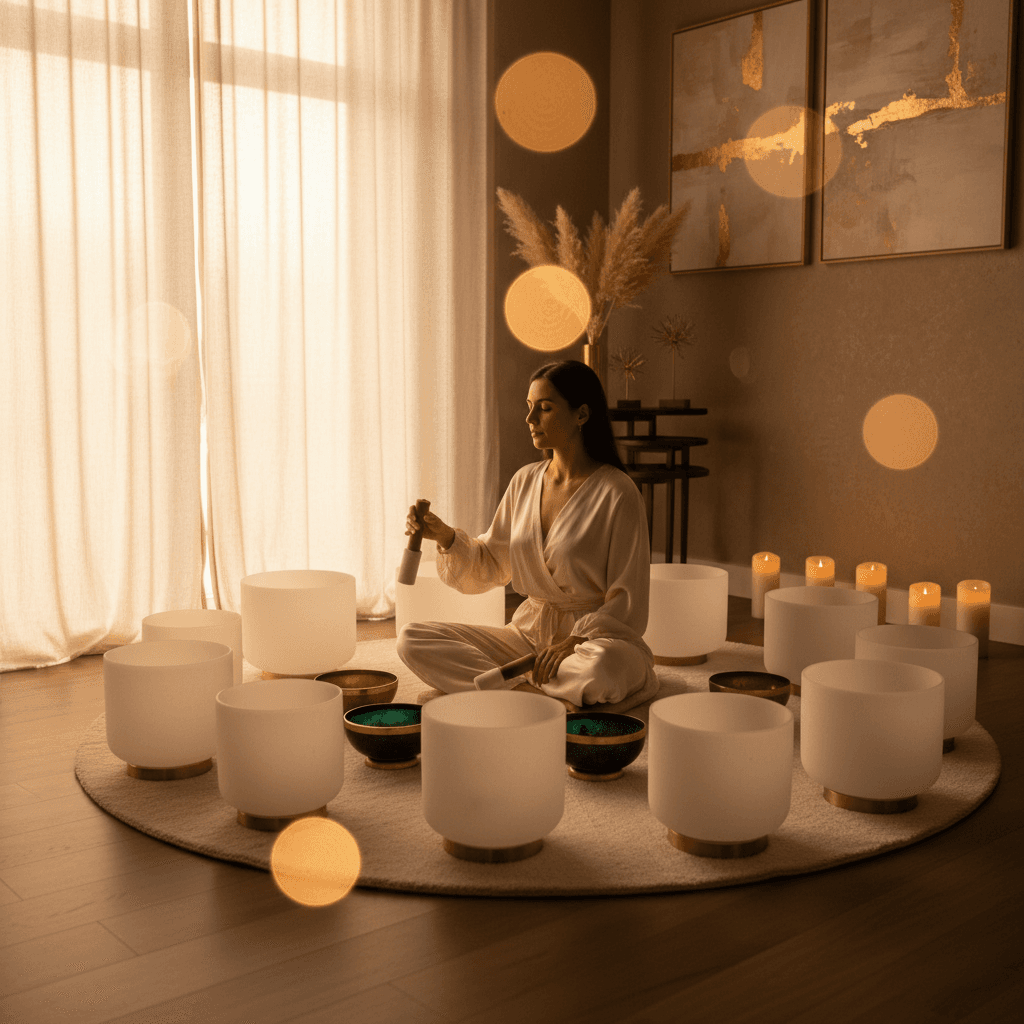
Curated Soundscapes: Drawing from a diverse array of instruments, including crystal singing bowls, Himalayan singing bowls, gongs, chimes, and tuning forks, Larissa crafts unique soundscapes. These are specifically tailored to address the energetic needs of your predominant Dosha or any current imbalances. For instance, a client with elevated Vata might experience more deep, sustained tones, while someone needing Kapha invigoration might encounter brighter, more dynamic sounds.
-
Vibrational Attunement: Larissa emphasizes the vibrational aspect of sound, using instruments not just for their auditory qualities but for their palpable resonance within the body. This direct cellular engagement may support the release of tension and promote a state of deep physiological relaxation. The focused application of these vibrations is a gentle yet powerful tool for mind-body recalibration.
-
Conscious Intention: Every session at Soul Art is imbued with conscious intention, focusing on guiding the individual toward their innate state of balance and well-being. This intentionality, combined with the carefully selected frequencies, creates a potent container for personal transformation. The environment itself is designed to foster a sense of quiet luxury, allowing for complete immersion in the experience.
Through Larissa's expert guidance, Soul Art offers not just a momentary escape, but a pathway to sustained harmony. The method respects the complexity of the human system, acknowledging the profound interconnectedness of mind, body, and spirit, as articulated by Ayurvedic tradition. It is a testament to how ancient wisdom, when thoughtfully applied, can profoundly enhance modern wellness practices.
Your Next Steps: Integrating Sound and Ayurvedic Wisdom into Your Life
Embarking on a journey towards Tridosha balance through sound therapy is a powerful step towards holistic well-being. The insights gained from understanding your unique energetic constitution, combined with the profound effects of vibrational healing, can empower you to cultivate greater harmony in your daily life. It’s about becoming more attuned to your inner landscape.
Here are some practical steps you can take to begin integrating these principles, even before your next session at Soul Art:
-
Observe Your Dosha: Spend time observing your body's subtle cues and your mental-emotional patterns throughout the day. Are you feeling restless (Vata), irritable (Pitta), or lethargic (Kapha)? This self-awareness is the first step in recognizing potential imbalances. Journaling can be an excellent tool for this self-observation.
-
Incorporate Mindful Sound: Introduce calming sounds into your environment, such as gentle nature sounds, soft instrumental music, or the resonant tones of singing bowls (if you have access). Even short periods of mindful listening can act as a mini-meditation, helping to reduce stress. Remember to seek out sounds that feel balancing for your current state.
-
Practice Self-Care Rituals: Integrate daily self-care rituals that align with Ayurvedic principles. This might include a mindful morning routine, warm oil massage (Abhyanga), or incorporating soothing teas. These small, consistent actions can significantly contribute to overall Doshic balance.
-
Prioritize Rest: Adequate rest is crucial for all Doshas, especially Vata. Create a conducive sleep environment and aim for consistent sleep patterns. Deep rest allows your body and mind to restore and recalibrate.
-
Hydrate Mindfully: Staying well-hydrated with warm water or herbal teas can support all Doshas, aiding digestion and cleansing. Listen to your body's specific needs for hydration.
Ready to dive deeper and experience the personalized touch of sound therapy guided by an expert? Larissa Steinbach and the team at Soul Art are here to support your journey towards profound balance and vibrant health. A session at our studio is an invitation to experience the transformative power of sound in a serene and luxurious environment, crafted just for you.
In Summary: A Symphony of Balance
The journey to Tridosha balance is a profound exploration of self, where ancient Ayurvedic wisdom illuminates the path to holistic well-being. We've seen how Vata, Pitta, and Kapha govern our unique constitutions, influencing everything from our physical health to our emotional states, and how modern science is increasingly validating these intricate connections. Sound therapy, with its precise frequencies and deeply felt vibrations, emerges as a powerful, complementary practice to gently guide these Doshas back into harmony.
At Soul Art, Larissa Steinbach expertly weaves together these threads, offering personalized sound experiences designed to resonate with your unique energetic needs. Through her unique approach, you can discover a profound sense of peace, clarity, and renewed vitality. Embracing this holistic wellness practice is an investment in your deepest self, fostering resilience and balance in every facet of your life.
Bookings Coming Soon
Soul Art is still in preparation. Session details and booking will be published here after launch.
Coming Soon