The Four Stages of Nada: Subtle Sound for Deeper Wellness

Key Insights
Explore the ancient wisdom of Nada Yoga's four stages of sound, from audible Vaikhari to the transcendental Para Nada, and how Soul Art Dubai offers profound sound wellness.
Have you ever paused to truly listen beyond the immediate sounds of your environment? Beyond the chatter, the music, the ambient hum? What if the very fabric of our existence, our deepest states of consciousness, were intricately woven with a spectrum of sound, far more subtle than what our ears typically perceive? This profound concept lies at the heart of Nada Yoga, the ancient science of sound, which posits that the universe itself is fundamentally vibratory, a concept often encapsulated in the phrase Nada Brahma – "Sound is God."
At Soul Art, Dubai's premier sound wellness studio, founded by the visionary Larissa Steinbach, we delve into these depths, guiding you through a transformative journey into the subtle power of sound. This journey is often understood through the lens of the Four Stages of Nada: a progression from the gross, audible world to the most transcendental, internal vibrations of consciousness itself. Understanding these stages offers a profound framework for perceiving how sound influences our entire being, from physical relaxation to spiritual awakening.
This article will embark on a scientific exploration of these four stages – Vaikhari, Madhyama, Pashyanti, and Para – revealing how each level of sound can be accessed and experienced. We will uncover the underlying neurological and physiological mechanisms that make sound such a potent tool for wellbeing, connecting ancient wisdom with contemporary scientific understanding. Prepare to discover how embracing the full spectrum of Nada can unlock deeper states of peace, clarity, and self-awareness, profoundly enhancing your holistic wellness journey.
Understanding the Universal Resonance: The Science of Nada
The ancient Sanskrit term 'Nada' translates etymologically to 'a flow of consciousness,' though it is commonly understood as 'sound.' Nada Yoga, as a profound laya yoga practice, seeks to guide practitioners toward a complete cessation of ordinary consciousness, facilitating a deeper connection to the universal flow. Central to this practice is the scientific understanding of sound's manifestation, progressing through four distinct stages based on frequency and subtlety: Para, Pashyanti, Madhyama, and Vaikhari.
Modern science is increasingly echoing these ancient insights, providing a complementary perspective on the profound effects of sound and vibration on the human body, mind, and nervous system. Studies consistently highlight that sound frequencies can influence brain waves, reduce anxiety, and promote relaxation. There is also preliminary evidence suggesting that sound may stimulate healing and regeneration at a cellular level, underscoring its potential as a powerful wellness tool.
Vaikhari Nada: The Audible Realm
Vaikhari Nada represents the most gross and outwardly manifest form of sound, the one we encounter daily. This is the audible sound we speak, sing, and hear, produced by friction or the striking of two objects. Its frequencies of vibration fall within the limited range that the human ear can consciously process.
From a neurological perspective, Vaikhari sound engages our auditory cortex, triggering a cascade of responses in the brain. The physical act of speaking or chanting stimulates the vocal cords and surrounding musculature, sending sensory feedback that can influence our mood and energy levels. Engaging with external, rhythmic sounds, such as those from singing bowls or gongs, can activate the parasympathetic nervous system, helping to lower heart rate and reduce stress hormones, initiating a state of relaxation.
Madhyama Nada: The Whisper of Thought
Moving inward, Madhyama Nada signifies a more subtle form of sound, operating at the mental or thought-based level. This encompasses the internal monologue, the 'sound' of thoughts, or the whispered repetition of a mantra within the mind. While it lacks external audibility, it possesses lower frequencies than Pashyanti and Para, yet remains significantly subtler than Vaikhari.
Neuroscientifically, Madhyama Nada engages areas of the brain associated with internal speech and self-monitoring, such as the prefrontal cortex and Wernicke's area, without external vocalization. This internal focus can lead to altered brainwave states, particularly increasing alpha waves, which are linked to calm and alert relaxation. The deliberate internal repetition of sounds can serve as a potent form of mindfulness, helping to still the incessant mental chatter and promoting mental clarity. This stage represents a crucial bridge, allowing the practitioner to transition from the external world of sensory perception to deeper internal states.
Pashyanti Nada: The Vision of Awareness
Pashyanti Nada delves deeper still, existing within the subconscious or unconscious realms of the mind. This stage is often described as an intellectual sound, closer to the mind than the ear, and may be seen as colours or shapes rather than heard in the conventional sense. It is the sound of intuition, operating at a level where meaning and intention begin to form before they crystallize into explicit thoughts or words.
At this level, brain activity may shift towards theta and delta waves, characteristic of dream states, deep sleep, and profound meditation. The ability to "see" sound resonates with phenomena observed in synesthesia, where sensory inputs cross paths in the brain. Engaging with Pashyanti Nada involves moving beyond linear thought, tapping into a more holistic and imagistic understanding, often accessed through guided visualization or deep contemplative practices. This stage is associated with the causal body (Karana), representing the blueprint of our being.
Para Nada: The Primordial Silence
Para Nada is the ultimate, most subtle manifestation of sound, described as the quality of the soul itself. It is the transcendental, non-empirical, unstruck sound – anahata nada – the primal, finest inner sound, or shabda. This sound is beyond frequency and vibration as we typically understand them; it is the source from which all other sounds emanate. It is conceived only by venturing into the deepest realms of consciousness.
Accessing Para Nada is associated with profound meditative states, often linked to the Turiya state of consciousness, where awareness transcends the waking, dreaming, and deep sleep states. Neuroimaging studies of advanced meditators have shown remarkable changes in brain structure and function, including increased grey matter density in areas related to attention and sensory processing, and enhanced connectivity. It is in this state that one may experience a profound sense of oneness, an absorption where the mind becomes so attuned to the internal sound that one is no longer listening to it, but vibrating in unison with it, leading to a state of Nada Brahman. This deeply subtle experience is believed to reside at the root chakra (muladhara), acting as the fundamental ground of being.
How It Works in Practice: Journeying Through the Soundscape
The journey through the four stages of Nada is not merely theoretical; it is a profoundly experiential process that forms the bedrock of sound wellness practices. From the moment you step into a session, the intention is set to guide your consciousness from the grossest external perceptions to the most subtle internal awareness, facilitating a deep state of relaxation and introspection.
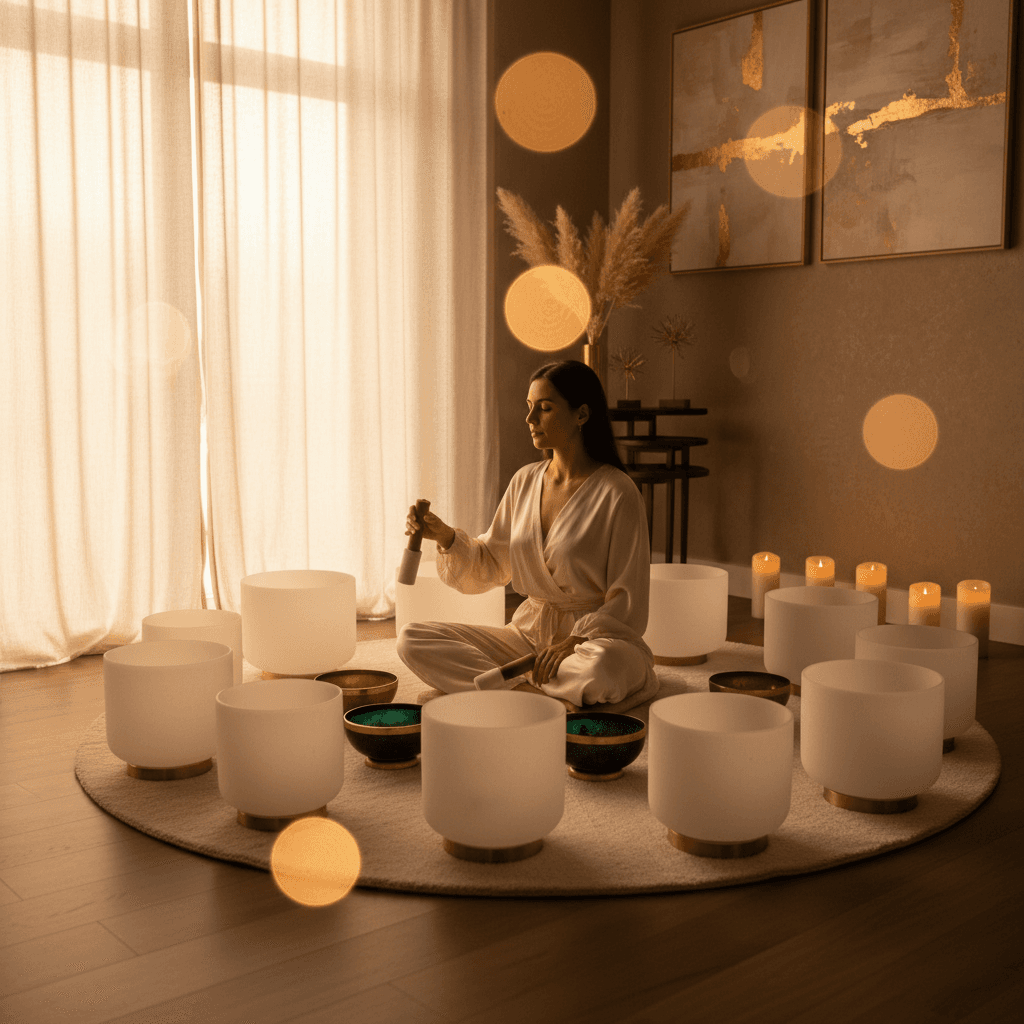
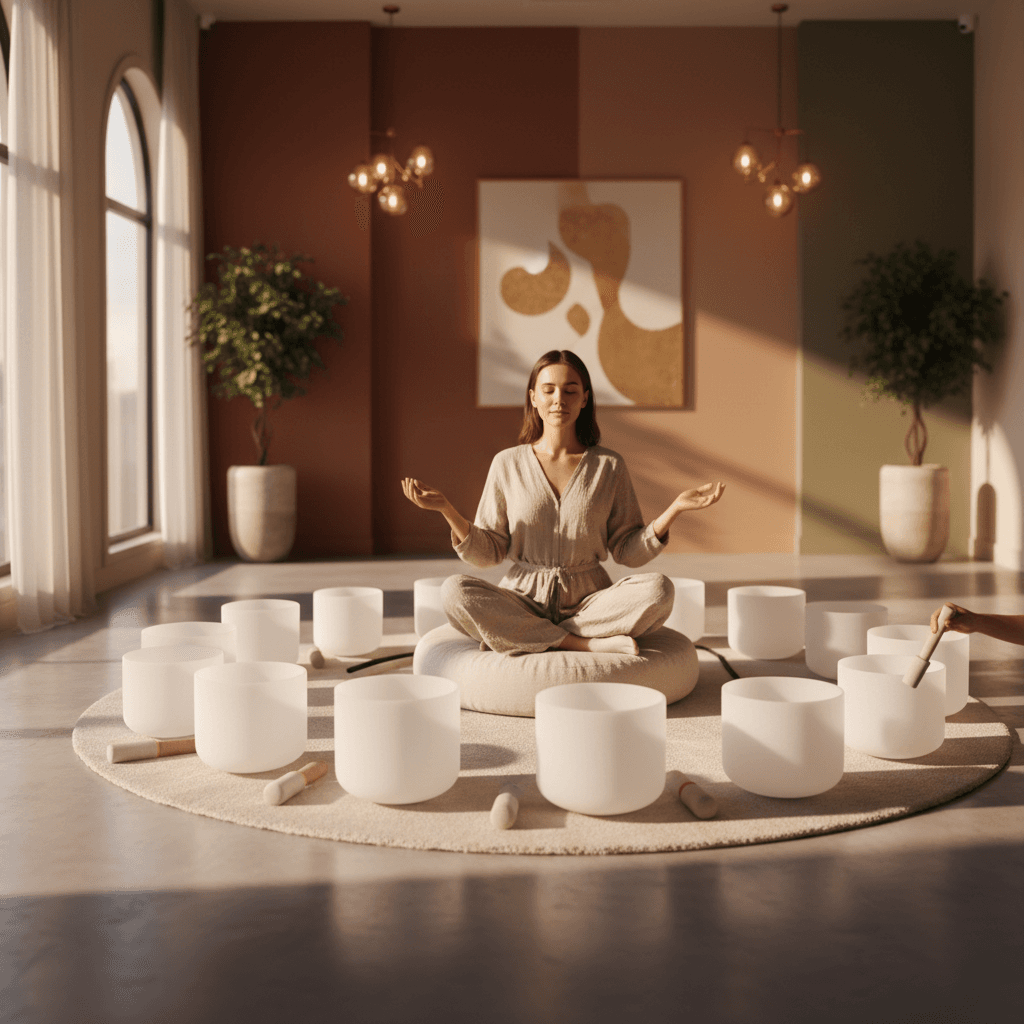
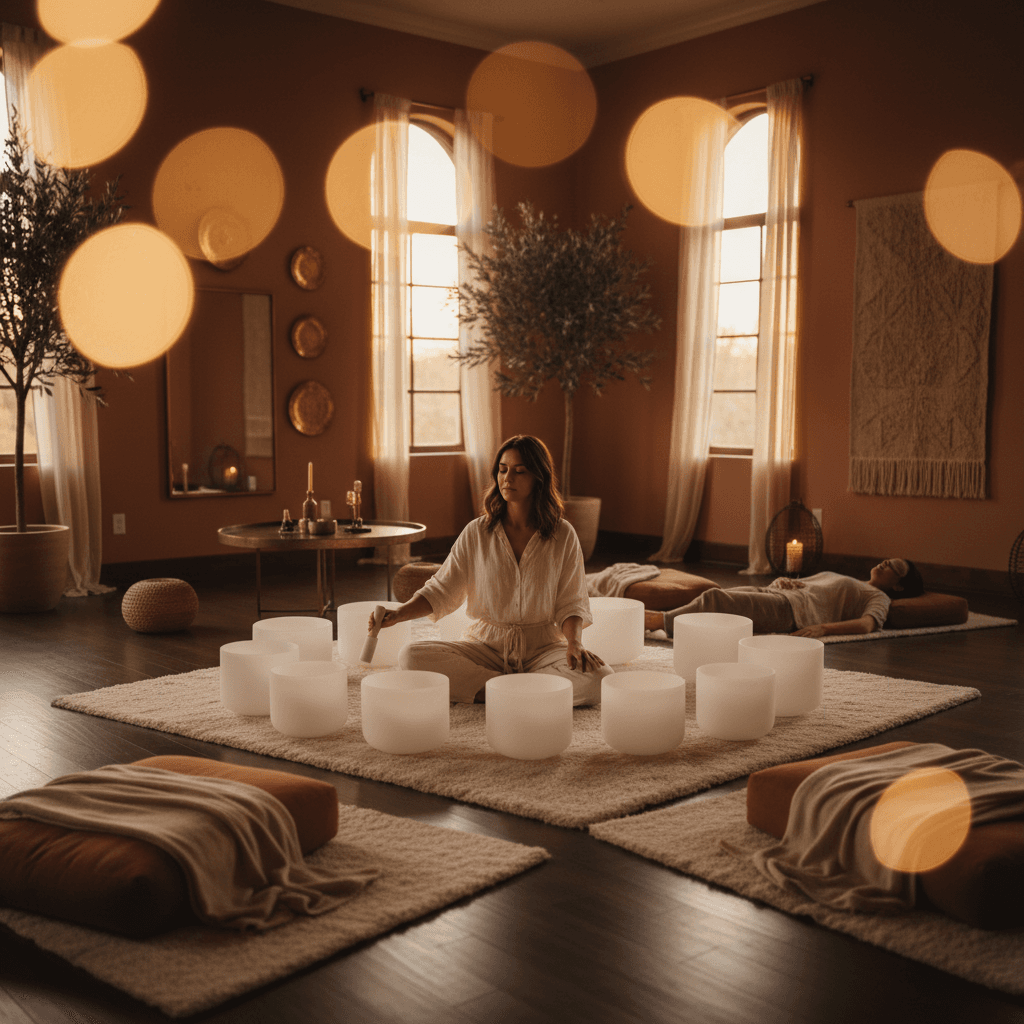
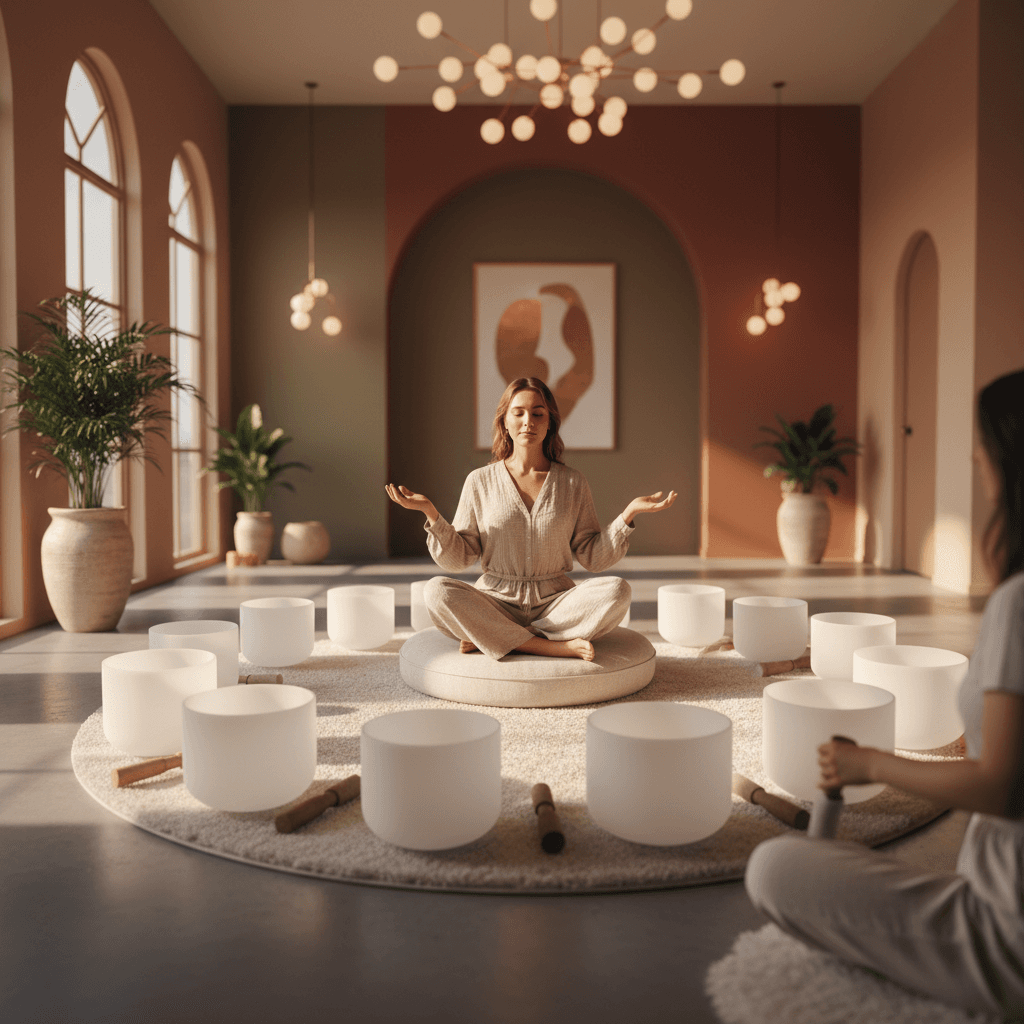
The process often begins with Ahata Nada, or struck, external sounds. Instruments like Himalayan singing bowls, crystal bowls, gongs, and tuning forks create rich, complex soundscapes. These audible vibrations resonate through the body, which is itself a vibrational system. Many people report feeling these frequencies as gentle pulses or waves moving through their tissues, muscles, and even bones. This initial engagement helps to quiet the external sensory inputs, drawing attention inward and preparing the mind for deeper states.
As the external sounds gently recede or become a background hum, the focus shifts to Madhyama Nada. This is where the mind begins to create its own internal soundscape. You might experience the echo of the instruments within your mind, or perhaps the subtle hum of your own nervous system. It's in this space that the internal dialogue often softens, allowing for a more profound connection to one's thoughts and emotions without immediate external distractions. The practice of internal mantra repetition or mindful breath awareness can deepen this stage, creating a mental resonance that supports focus and tranquility.
Further still, as the mind relaxes and deepens, one may enter the realm of Pashyanti Nada. This stage is characterized by a shift from purely auditory perception to a more multi-sensory, intuitive experience. Clients may report seeing vibrant colours, intricate patterns, or receiving sudden insights and clear visualizations. It's a non-linear experience, where understanding transcends words and manifests as a felt sense or direct knowing. This phase is often described as feeling profoundly connected to one's deeper self, accessing reservoirs of creativity and inner wisdom.
The ultimate aim is to touch upon Para Nada, the unstruck, primordial sound that underlies all existence. While difficult to describe in conventional terms, this stage is an experience of pure, unmanifested consciousness. It's not a sound that can be heard with the ears, nor seen with the eyes, but rather experienced as a profound silence or an all-encompassing vibration from within. This can lead to moments of profound stillness, oneness, and a sense of absolute peace, where the boundaries of self dissolve into a universal awareness.
"The journey through Nada is not about finding a sound, but about becoming the sound, dissolving into the very essence of vibration that defines our existence."
This progression from the tangible to the intangible fosters a holistic reset, allowing the nervous system to recalibrate and the mind to find a deep, restorative calm. The experience is unique to each individual, yet the underlying current of profound relaxation and expanded awareness remains a common thread.
The Soul Art Approach: Larissa Steinbach's Unique Methodology
At Soul Art, Larissa Steinbach meticulously crafts each sound wellness experience to facilitate this profound journey through the Four Stages of Nada. Her approach is rooted in both ancient wisdom and a deep understanding of modern neurological responses to sound, creating an environment where clients can safely and effectively explore their inner soundscapes. Larissa's expertise lies in her ability to intuitively select and play instruments, guiding the energetic flow with intention and precision.
What makes the Soul Art method truly unique is its personalized and holistic application of Nada Yoga principles. Larissa doesn't merely play instruments; she orchestrates a vibrational tapestry designed to resonate with each individual's current state of being. She understands that while the general progression through Nada stages is universal, the path each person takes is deeply personal. Her sessions are therefore attuned to creating specific frequencies and rhythms that support the desired mental and emotional states.
Specific instruments are chosen for their unique vibrational properties and their ability to induce different states of consciousness.
- Gongs and Large Crystal Bowls are often used to introduce powerful, enveloping Vaikhari Nada, helping to quiet the external world and ground the physical body. Their rich overtones create a sense of being bathed in sound, initiating deep physical relaxation.
- Smaller Crystal Bowls, Himalayan Bowls, and Tuning Forks are employed to refine the auditory experience, gently drawing awareness inward towards Madhyama Nada. These instruments create subtle, sustained vibrations that encourage introspection and mental stillness.
- Vocal Toning and Guided Meditations led by Larissa are crucial for navigating the transition into Pashyanti Nada, where inner visions and insights often arise. Her soothing voice acts as an anchor, supporting the mind's journey into deeper, less tangible realms.
- The carefully orchestrated pauses and periods of profound silence are equally vital. These moments create the energetic space for clients to experience the subtle, unstruck Para Nada, fostering a direct encounter with their innermost self and the universal silence from which all sound arises.
Larissa Steinbach's signature approach combines expert facilitation with a profound reverence for the power of sound, ensuring that each Soul Art session is not just an auditory experience, but a deeply transformative journey. This method promotes not only immediate relaxation but also cultivates a lasting sense of inner peace and expanded self-awareness, truly embodying a luxurious and mindful path to wellness.
Your Next Steps: Embracing the Sound Within
The exploration of Nada, from the grossest audible sound to the most subtle inner vibration, offers a powerful pathway to profound wellbeing and self-discovery. Understanding these stages allows us to engage with sound, both external and internal, with greater intention and awareness. This isn't just a concept to be studied; it's a practice to be lived, enriching your daily experience and deepening your connection to your inner self.
Here are some practical steps you can integrate into your life to begin harnessing the power of subtle sound:
- Mindful Listening Practice: Dedicate 5-10 minutes each day to simply listen. Start with external sounds (Vaikhari), noticing their textures, rhythms, and nuances. Then, gently shift your attention inward, listening to the subtle hum of your own body, your breath, or the quiet space between thoughts (Madhyama).
- Internal Sound Meditation: Find a quiet space, close your eyes, and bring your awareness to the sounds within. Many people report hearing a soft ringing, buzzing, or humming – these can be manifestations of internal Nada. Simply observe these sounds without judgment, allowing them to guide you deeper.
- Conscious Breathing with Sound: As you breathe, inwardly whisper the sound "Om" or a gentle "So Hum." Focus on the feeling of this subtle sound as it resonates within your mental space. This practice can bridge Vaikhari (whispering) and Madhyama (mental sound), promoting calm and focus.
- Journaling Inner Experiences: After practicing mindful listening or meditation, take a few moments to journal any sensations, images, or insights that arose. This can help you to acknowledge and integrate experiences of Pashyanti Nada, where subtle perceptions may manifest.
- Explore Guided Sound Wellness Sessions: For a more structured and deeply immersive experience, consider joining a guided sound session. Professionals like Larissa Steinbach at Soul Art are skilled in creating environments that facilitate the journey through all four stages of Nada, offering a supported path to profound relaxation and self-discovery.
By consciously engaging with sound at its various levels, you can unlock a remarkable capacity for stress reduction, enhanced mental clarity, and a deeper spiritual connection. These practices are a complementary approach to holistic wellness, nurturing your entire being.
In Summary
The Four Stages of Nada – Vaikhari, Madhyama, Pashyanti, and Para – offer a profound framework for understanding the pervasive and transformative power of sound. From the audible world we consciously perceive to the deepest, most subtle vibrations of our consciousness, sound is a fundamental force shaping our reality and wellbeing. This ancient wisdom, now increasingly supported by scientific inquiry, reveals how purposefully engaging with sound can lead to profound relaxation, mental clarity, and a deeper connection to self.
At Soul Art, under the expert guidance of Larissa Steinbach, clients are invited to embark on this remarkable journey, transitioning from external sounds to the liberating inner stillness. By exploring these stages, you may support your nervous system's restoration, reduce stress, and cultivate a richer, more vibrant sense of self. We invite you to experience this unique pathway to holistic wellness and discover the transformative frequencies that await within.
Bookings Coming Soon
Soul Art is still in preparation. Session details and booking will be published here after launch.
Coming Soon
Wellness Disclaimer: This article is for educational and informational purposes only. It does not constitute medical advice, diagnosis, or treatment. Soul Art Dubai provides non-medical wellness experiences focused on relaxation, stress management, and general wellbeing. Sound wellness is a complementary practice and should not replace professional medical care.