Triathlon: Sound Across Three Disciplines for Peak Performance

Key Insights
Discover how sound wellness at Soul Art, led by Larissa Steinbach, enhances triathlete recovery, focus, and resilience across swim, bike, and run.
Triathlon: Sound Across Three Disciplines
Triathlon, a testament to human endurance, pushes the boundaries of physical and mental fortitude across swimming, cycling, and running. Athletes meticulously optimize every aspect of their training, from power output and pace to nutrition strategies and biomechanics. Yet, what if there was an often-overlooked, scientifically-grounded approach that could profoundly enhance recovery, sharpen mental clarity, and build unprecedented resilience?
This article delves into the fascinating world of sound wellness and its powerful potential as a complementary approach for triathletes. We will explore how specific frequencies and vibrations can regulate the nervous system, foster deep focus, and ultimately support peak performance across all three demanding disciplines. Discover how Soul Art, under the guidance of Larissa Steinbach, is integrating this ancient wisdom with modern scientific understanding to offer a unique edge for endurance athletes seeking holistic wellbeing.
Prepare to unlock insights into how sound can be your silent partner in navigating the challenges of triathlon, transforming not just your race day, but your entire training journey and overall quality of life. This is about more than just training harder; it’s about recovering smarter, focusing deeper, and thriving in the ultimate test of endurance.
The Science Explained: Orchestrating Inner Harmony for Performance
The relentless demands of triathlon—intense training blocks, the pressure of competition, and the constant pursuit of marginal gains—can place significant stress on an athlete's entire system. While physical training targets muscles and cardiovascular capacity, the nervous system often bears the brunt of this cumulative load, directly impacting recovery, mental state, and injury risk. Understanding this intricate interplay is the first step toward harnessing sound wellness as a powerful tool.
The Physiological Symphony: Calming the Athlete's Nervous System
Our autonomic nervous system, responsible for unconscious bodily functions, operates in two primary modes: the sympathetic ("fight or flight") and the parasympathetic ("rest and digest"). For triathletes, the sympathetic system is frequently engaged, not just during high-intensity training or competition, but also due to chronic stress, disrupted sleep, and even negative life events. This sustained activation can hinder proper recovery, impair immune function, and increase susceptibility to illness or injury.
Research from sources like PMC on "Training and Competition Readiness in Triathlon" highlights the critical importance of reducing state-level stressors and developing resilience strategies. Sound wellness, through its unique ability to induce deep relaxation, may support the activation of the parasympathetic nervous system. This shift helps to lower heart rate, regulate breathing, and promote physiological restoration. Many people report a profound sense of calm, allowing the body to enter a state conducive to healing and adaptation.
Specific frequencies and resonant vibrations, often experienced in a sound wellness session, can gently guide brainwaves into states associated with deep relaxation, such as alpha and theta waves. This bio-feedback mechanism encourages the body to release built-up tension, reduce cortisol levels, and improve the quality of sleep, a fundamental pillar of recovery for any athlete. By fostering a balanced nervous system, sound wellness becomes a complementary approach to mitigate the risks associated with overtraining and chronic stress, such as Relative Energy Deficiency (REDs) or the Female Athlete Triad, by enhancing overall physiological harmony.
The Mental Edge: Cultivating Flow and Focus Across Disciplines
Beyond physical demands, triathlon is an intense mental game, requiring sustained focus, strategic pacing, and unwavering determination. The ability to stay present, manage perceived effort, and make critical decisions under strain is paramount. A 2023 and 2022 body of work in sports psychology, referenced by Terapung.com, suggests that flow state, focused attention, and metacognitive control are key for endurance athletes. Sound wellness offers a unique pathway to cultivate these essential mental skills.
During a sound session, the immersive auditory experience naturally guides the mind away from distractions and into a state of heightened awareness. This practice may facilitate improved attentional control, training the brain to reduce "wasted thinking" and remain task-focused. Athletes like Kristian Blummenfelt speak of "accepting pain as data," and a calm, focused mind—primed through sound wellness—is better equipped to interpret these signals objectively, rather than succumbing to emotional overwhelm.
Mindfulness and attentional training, which can be significantly enhanced through sound practices, have been shown to reduce mental fatigue and improve decision-making capacity during prolonged efforts. Preliminary studies indicate that simple attentional strategies, including those deepened by sound, can effectively reduce feelings of effort and improve pacing strategies. This mental conditioning creates a crucial advantage, allowing triathletes to deploy mental strategies they’ve practiced, even when facing the novelty and unpredictability of race day.
Enhancing Physical Preparedness & Injury Mitigation
While sound wellness does not directly build muscle or improve VO2 max, its profound impact on recovery, stress reduction, and mental clarity indirectly supports all aspects of physical preparedness. A well-rested, mentally resilient athlete is better positioned to maximize the benefits of their rigorous physical training, minimize injury risk, and enhance their overall performance. The Scientific Triathlon blog emphasizes that proper strength training can significantly improve exercise economy, lactate threshold, and anaerobic capacity. The success of such programs is often linked to consistency and the athlete’s ability to recover from heavy loads.
Sound wellness may support faster physical recovery by promoting deeper sleep and reducing systemic inflammation triggered by stress. This allows the body to repair muscle tissue more efficiently and adapt to training stimuli. When athletes are better recovered, they are more likely to execute their strength training with proper form and intensity, thereby maximizing physiological gains and reducing the risk of overuse injuries. Furthermore, improved focus cultivated through sound can lead to greater body awareness during training, allowing athletes to fine-tune biomechanics (like stroke mechanics mentioned in strength training research) and detect early signs of fatigue or discomfort, preventing minor issues from escalating.
By integrating sound wellness, triathletes are not just treating symptoms of stress; they are investing in a holistic wellness practice that creates a robust foundation for long-term athlete development. It’s about building a body and mind that can not only endure but thrive under pressure, leading to sustained performance and reduced time away from training due to injury or burnout.
How It Works in Practice: The Immersive Experience
Stepping into a sound wellness session is a departure from the high-octane environment of training. It is an invitation to pause, to listen, and to allow the body's innate wisdom to guide you toward equilibrium. For a triathlete, this experience is not merely passive relaxation; it is an active recalibration of the entire system.
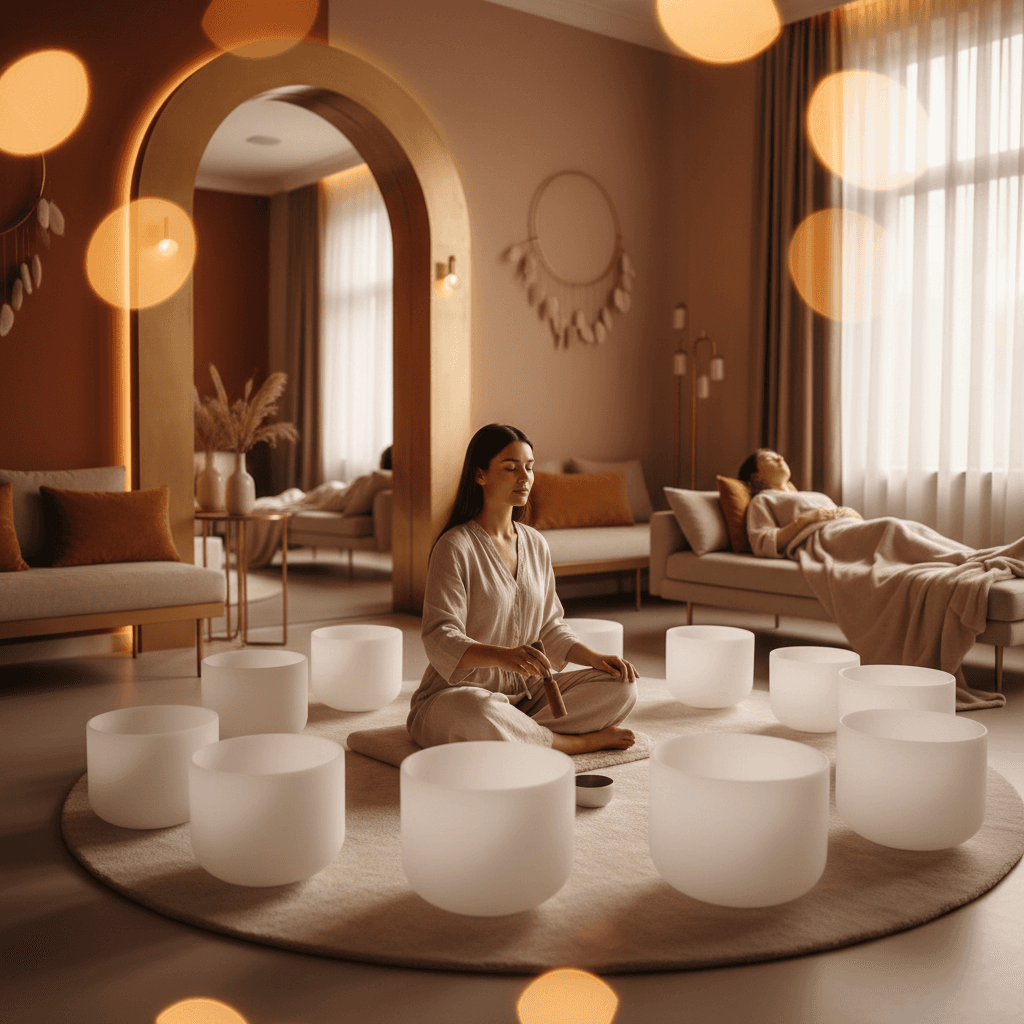
Upon entering the tranquil space, clients are gently guided to recline comfortably, often enveloped in soft blankets. The journey begins with the subtle resonance of various instruments. Imagine the deep, earthy tones of Tibetan singing bowls as they vibrate directly on or around the body, creating a full-body sonic massage. This tactile vibration may help release deep-seated muscular tension, particularly in areas often stressed by swimming, cycling, and running—the shoulders, hips, and lower back. Many people report feeling tension literally melt away.
Next, the room fills with the expansive, symphonic sounds of gongs and crystal singing bowls. These instruments produce rich, sustained overtones that create an immersive soundscape, subtly influencing brainwave activity. The intricate harmonies and frequencies have been associated with shifting the mind from a state of busy beta waves (active thought) to more relaxed alpha or even restorative theta waves (deep relaxation, meditation, creativity). This transition is crucial for triathletes who often struggle to "switch off" after intense training, finding their minds racing with performance analysis or future planning.
During the session, the gentle, enveloping sounds create a sanctuary for the mind. Racing thoughts begin to subside, replaced by a profound sense of quietude and presence. This focused attention on the present moment, cultivated during a sound bath, directly translates to the mental fortitude required in a triathlon. Just as a triathlete transitions seamlessly between swim, bike, and run, sound wellness helps facilitate seamless transitions between states of high arousal and deep calm. This practice can reduce the impact of mental fatigue, helping athletes maintain focus and decision-making clarity even in the latter stages of a long race.
Clients often describe an experience of profound peace, a feeling of being "reset" or "recalibrated." This isn't just anecdotal; it aligns with the physiological benefits of parasympathetic nervous system activation, leading to improved sleep quality, reduced perceived stress, and a refreshed mental state. For a triathlete, this translates into quicker physical recovery, enhanced mental clarity for strategic race planning, and a more resilient mindset to confront the inevitable challenges of endurance sport. The practice becomes a vital component of a well-rounded training regimen, supporting not just physical output, but also the crucial inner landscape that dictates true endurance.
The Soul Art Approach: Larissa Steinbach's Vision for Athletic Wellbeing
At Soul Art, Dubai's premier sound wellness studio, Larissa Steinbach has meticulously crafted a unique approach that seamlessly blends ancient wisdom with the contemporary needs of high-performing individuals, including triathletes. Her vision extends beyond mere relaxation, aiming to provide a powerful holistic wellness tool that supports athletes in achieving their fullest potential, both on and off the course. The Soul Art method is distinctive in its scientific grounding, personalized attention, and carefully curated immersive experiences.
Larissa Steinbach understands that modern athletes require more than just physical conditioning; they need sophisticated tools for mental resilience and profound recovery. Soul Art’s signature sessions are designed to systematically activate the parasympathetic nervous system, guiding the body into its natural healing state. This intentional shift is facilitated through the expert application of specific sound frequencies and vibrations, carefully selected to resonate with the body's energetic centers and promote deep cellular relaxation.
The studio utilizes a diverse array of masterfully tuned instruments, each chosen for its unique vibrational properties and ability to induce specific states of consciousness and physiological responses. These include large, resonant gongs that create expansive soundscapes, traditional Tibetan singing bowls whose deep vibrations gently penetrate the body, and shimmering crystal singing bowls known for their pure, sustained tones that can elevate mental clarity. The strategic combination and skillful playing of these instruments by experienced practitioners, under Larissa Steinbach's guidance, create an unparalleled immersive experience.
What makes the Soul Art method particularly effective for triathletes is its emphasis on balancing the body's energy, reducing chronic stress, and enhancing mental acuity—all critical components for endurance performance. Larissa Steinbach and her team provide a serene sanctuary where athletes can actively engage in their own recovery, cultivate present-moment awareness, and develop the mental fortitude needed to excel. It's a space where the demands of training are acknowledged, and a pathway to profound restoration is offered, creating a truly unique and transformative self-care practice tailored for the athletic spirit.
"True endurance isn't just about pushing limits; it's about mastering the art of recovery and cultivating an unwavering inner calm. Sound wellness offers a profound pathway to that mastery, allowing triathletes to not only perform at their peak but to truly thrive in every aspect of their lives." – Larissa Steinbach, Founder of Soul Art
Your Next Steps: Integrating Sound into Your Triathlon Journey
The journey of a triathlete is one of constant growth, requiring dedication not only to training but also to intelligent recovery and mental conditioning. Integrating sound wellness into your routine may support significant improvements in your overall wellbeing and performance. Consider these actionable steps to harness the power of sound:
- Prioritize Deep Recovery: Actively schedule dedicated recovery time, making it as important as your training sessions. This should include practices that consciously activate your parasympathetic nervous system. Explore how regular sound wellness sessions may support enhanced physical and mental restoration, helping you bounce back stronger from intense efforts.
- Cultivate Mental Resilience: Incorporate short, daily mindfulness or breathing exercises into your routine. Even five to ten minutes can make a significant difference. Using guided sound meditations or attending a sound bath has been associated with improving focus and reducing "wasted thinking" during your efforts, making your training more efficient and your race performance sharper.
- Listen to Your Body's Signals: Pay close attention to signs of stress or fatigue. Implement periodical stress assessments, whether formal or informal, and be prepared to adjust training loads when necessary. Complement these adjustments with practices like sound wellness to actively mitigate stress and prevent burnout.
- Explore Holistic Support Systems: Recognize that peak performance is a multifaceted endeavor. Consider how complementary practices like sound wellness can enhance your overall training regimen, improve sleep quality, and foster emotional balance, creating a more sustainable and enjoyable athletic journey.
- Experience Soul Art for Yourself: The most effective way to understand the benefits of sound wellness is to experience it firsthand. Book an introductory session at Soul Art and feel the profound difference that Larissa Steinbach's curated approach can make to your recovery, focus, and overall wellbeing.
In Summary: The Unseen Advantage
Triathlon demands excellence across three disciplines, testing physical prowess and mental grit alike. While meticulous training plans focus on physiological adaptations, the power of a well-regulated nervous system and a deeply focused mind remains an unparalleled advantage. Sound wellness offers a scientifically-grounded, complementary approach to enhance these crucial aspects, supporting athletes in achieving sustained peak performance and holistic wellbeing.
Through the targeted use of specific frequencies and vibrations, practices like those offered by Soul Art may support profound relaxation, reduce stress, improve sleep, and cultivate enhanced mental clarity. This fosters resilience, optimizes recovery, and empowers triathletes to navigate the intense demands of their sport with greater ease and presence. Under the expert guidance of Larissa Steinbach, Soul Art invites you to discover this transformative path, providing an unseen yet powerful advantage across every swim, bike, and run. Embrace the frequency of well-being and elevate your triathlon journey.
Bookings Coming Soon
Soul Art is still in preparation. Session details and booking will be published here after launch.
Coming Soon
Wellness Disclaimer: This article is for educational and informational purposes only. It does not constitute medical advice, diagnosis, or treatment. Soul Art Dubai provides non-medical wellness experiences focused on relaxation, stress management, and general wellbeing. Sound wellness is a complementary practice and should not replace professional medical care.
Related Articles
Optimizing Athletic Performance: The Synergy of Sports Nutrition and Sound Wellness
Archery, Stillness, and Sound: Soul Art's Path to Focus

Swimming's Secret Weapon: Sound for Peak Aquatic Performance