Elevate Your Workout: The Science of Sound & Intensity

Key Insights
Discover how carefully curated sound can transform your exercise, boost performance, and enhance holistic well-being with Soul Art Dubai.
The Unseen Edge: How Sound Can Transform Your Workout Intensity
Imagine pushing through that final rep or sustaining a challenging run, not just with physical grit, but with an unseen ally that orchestrates your every move and thought. What if the secret to unlocking greater athletic potential and making every session more fulfilling wasn't just about technique or nutrition, but about the very soundscape surrounding your effort?
Recent scientific inquiry confirms what many athletes and fitness enthusiasts have intuitively understood for decades: sound is a powerful, yet often underestimated, tool in enhancing workout intensity and overall performance. Far beyond merely providing "good vibes," music and carefully chosen sound can profoundly influence our perception of exertion, our physiological responses, and even our brain's capacity for growth. At Soul Art, we delve into how these sonic principles can elevate your fitness journey, promoting not just physical strength but also a harmonious mind-body connection, a core tenet of Larissa Steinbach's vision.
This exploration will take you from the neurological pathways that respond to rhythm and melody, to practical strategies for harnessing sound in your daily training. You'll learn how to leverage sound for increased endurance, enhanced focus, and even quicker recovery, ultimately leading to a more profound and sustainable sense of well-being. Prepare to tune into a new dimension of workout performance, one where every beat, tone, and frequency plays a vital role in your success.
The Symphony of Sweat: Unpacking the Science of Sound and Performance
The impact of sound on physical performance is not merely psychological; it is deeply rooted in our neurobiology and physiology. Research illuminates several fascinating mechanisms through which auditory stimuli can either sharpen our focus and amplify our efforts, or provide a much-needed mental respite. Understanding these underlying processes is key to strategically integrating sound into any fitness regimen.
Distraction and Perceived Exertion
One of the most well-documented benefits of music during exercise is its ability to reduce perceived exertion. When we engage in physical activity, our bodies constantly send signals of effort and discomfort to the brain, leading to sensations of fatigue. Music, particularly enjoyable music, acts as a powerful external stimulus that competes for the brain's attention.
By engaging our cognitive resources, music effectively distracts us from the internal physiological feedback that signals exhaustion. This reduction in the awareness of effort means that tough workouts can feel less intense, allowing us to push harder and sustain activity longer than we might otherwise. Studies have consistently shown that this effect is most pronounced during low-to-moderate intensity exercise, where music can make the same level of intensity feel less strenuous.
"Music competes with this physiological feedback for the brain's conscious attention. Similarly, music often changes people's perception of their own effort throughout a workout: it seems easier to run those 10 miles or complete a few extra biceps curls when Beyoncé or Eminem is right there with"
However, as exercise intensity escalates to very high levels, particularly those exceeding the ventilatory threshold, the benefits of music as a distractor tend to diminish. At these peak intensities, an athlete's attention naturally shifts from a dissociative focus (external distraction) to an associative focus (internal bodily sensations, performance monitoring). Highly trained individuals, accustomed to tolerating sensations of fatigue, may even find music disruptive during these phases, as their focus is intensely directed towards the task at hand. This nuanced understanding allows us to tailor sonic experiences to specific phases of a workout.
Rhythm, Synchronization, and Efficiency
Beyond mere distraction, the rhythmic quality of music offers a profound advantage through synchronization. When movements are timed to the beat of music – whether it’s steps during a run, reps in strength training, or pedaling on a bike – it creates a "metronome effect" that significantly enhances efficiency. This deep connection between music and movement activates various regions of the brain important for coordinating movements, including the supplementary motor area, cerebellum, basal ganglia, and ventral premotor cortex, even when someone is sitting still.
Research indicates that synchronizing movements with music can lead to a measurable reduction in oxygen consumption, an improvement in movement economy, and enhanced endurance. This rhythmic entrainment helps the body work smarter, not necessarily harder, by streamlining motor coordination and creating a sense of flow. The precise tempo, measured in beats per minute (bpm), also plays a critical role, with ideal ranges varying by activity: cycling performance has been shown to benefit from tempos between 125 and 140 bpm, while treadmill performance peaks between 123 and 131 bpm. This suggests that the brain's natural instinct to move in time with music can be strategically harnessed for peak physical output.
Motivation, Mood, and Neuroplasticity
The emotional and cognitive uplift provided by music is another cornerstone of its workout-enhancing capabilities. Listening to enjoyable music triggers the release of dopamine, a powerful feel-good neurotransmitter, within the brain's reward system. This biochemical response elevates mood, increases motivation, and can make even strenuous movement feel more natural and enjoyable. The psychological boost from dopamine directly contributes to the desire to persist and overcome challenges.
Furthermore, the integration of music and movement offers significant benefits for neuroplasticity – the brain's remarkable ability to form new neural connections and adapt. Regularly incorporating music into workouts, especially those involving new or complex motor skills like dance or sports, can enhance this adaptability and improve memory retention. The simultaneous physical movement, rhythmic engagement, and cognitive processing create a holistic brain workout, strengthening both body and mind. This suggests that sound not only optimizes performance in the moment but also fosters long-term cognitive growth, a testament to the profound mind-body connection fostered by sound wellness practices.
From Theory to Treadmill: Integrating Sound into Your Routine
Translating the intricate science of sound into practical applications for your fitness journey involves a thoughtful approach to curation and awareness. It’s about understanding how different sonic elements can serve various purposes within your training cycle, moving beyond a one-size-fits-all playlist to a more strategic integration.
Tailoring Your Sonic Landscape
The effectiveness of sound in enhancing performance is highly dependent on workout intensity and individual preference. For low-to-moderate intensity exercises, such as warm-ups, steady-state cardio, or lighter strength training, fast-tempo music presented at a moderate volume can be incredibly beneficial. This type of music excels at providing distraction from fatigue, boosting mood, and encouraging a consistent pace, allowing participants to increase their pace or distance without perceiving greater exertion.
However, as intensity shifts to high levels, the role of music evolves. For highly trained athletes engaging in maximum effort, the brain's focus tends to become intensely internal, monitoring physiological sensations and performance. In these scenarios, music may offer less benefit as a distraction and could even become a disruption to the athlete's associative focus. This highlights the importance of individual experimentation and awareness of your body's response at different exertion levels. Interestingly, pre-task music, particularly fast and loud tracks, has shown benefits in priming the body for activity, yielding higher levels of grip strength before exercise even begins.
Volume, Clarity, and Hearing Health
While "loud and fast" might seem like the go-to for motivation, it's crucial to strike a balance between volume, clarity, and hearing health. Research indicates that sound levels in many fitness facilities can be dangerously high, posing a risk of auditory strain without necessarily enhancing perceived workout intensity. Studies have found that lowering the volume to safer levels does not diminish the feeling of being challenged.
The emphasis should shift from sheer loudness to audio quality and clarity. Well-designed sound systems and high-fidelity audio gear ensure that the rhythmic and motivational aspects of music are conveyed effectively, without compromising your long-term hearing. Prioritizing clear, impactful sound at safe volumes allows you to reap the psychological and physiological benefits without adverse effects. This holistic approach ensures that your pursuit of physical wellness doesn't come at the cost of another vital sense.
Beyond the Beat: Tones and Frequencies for Recovery
The influence of sound extends beyond just high-energy beats for peak performance; it is equally vital for recovery and restoration. While fast-tempo music fuels intensity, music with a slower tempo has been shown to aid in faster physiological recovery. Studies indicate that slower music can help accelerate the return of resting heart rate and reduce blood lactate levels post-exercise.
This highlights the potential of using carefully chosen tones and frequencies not just for stimulation, but for calming the nervous system and facilitating physical repair. Incorporating ambient soundscapes, nature sounds, or specific therapeutic frequencies can create an optimal environment for active recovery, stretching, or meditation, complementing the intensity of your main workout. This mindful application of sound supports the body’s natural healing processes and brings a deeper dimension to your overall fitness regimen.
The Soul Art Edge: Larissa Steinbach's Holistic Sound Wellness
At Soul Art, Dubai's premier sound wellness studio, Larissa Steinbach intuitively understood these intricate connections long before they became mainstream scientific discourse. Her pioneering approach integrates the deep scientific understanding of sound's effects with ancient wisdom and modern wellness practices, offering a unique methodology that transcends conventional fitness. Larissa's vision extends beyond mere workout playlists to encompass a holistic sonic journey.
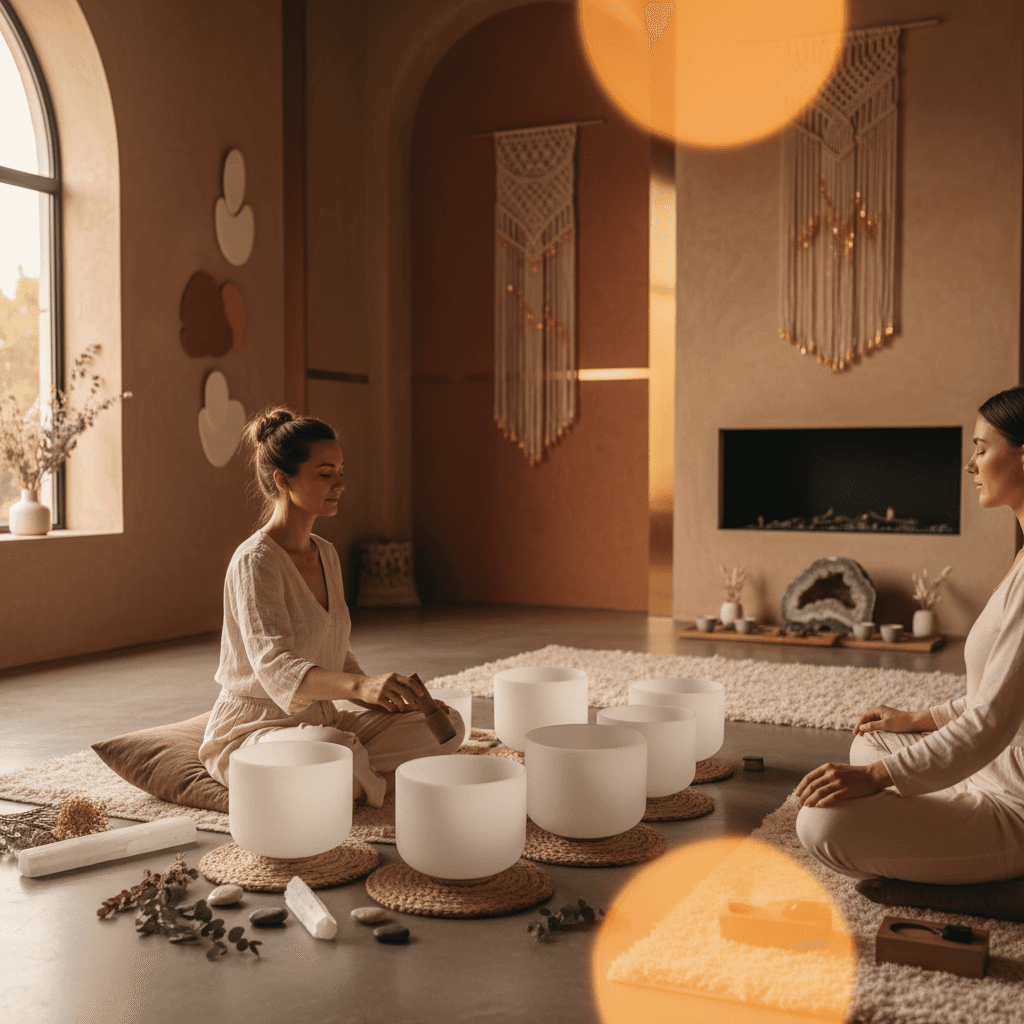
Larissa Steinbach and the Soul Art method focus on crafting curated soundscapes designed not just to motivate, but to deeply attune the mind and body. While rhythm and tempo are acknowledged for their impact on workout intensity, the Soul Art experience also champions the profound effects of specific therapeutic frequencies and vibrational sound. This includes the resonant tones of crystal singing bowls, the deep reverberations of gongs, the delicate chimes, and other instruments that induce states of relaxation, focus, and nervous system regulation.
Our approach at Soul Art acknowledges that peak physical performance is intricately linked to mental clarity and emotional balance. Therefore, sessions may incorporate sounds designed for pre-workout mental preparation, enhancing focus and intention, or post-workout for active recovery, stress reduction, and deep cellular regeneration. This unique blend allows clients to experience a profound mind-body connection, fostering resilience and supporting recovery in ways traditional workouts often overlook. Soul Art empowers you to not just train harder, but to train smarter, with a deeper connection to your inner self.
The quiet luxury ethos of Soul Art is evident in every detail, from the exquisite acoustic design of our studio to the personalized attention each client receives. We create an immersive environment where every frequency is intentionally chosen to support your well-being, providing a sanctuary where the science of sound meets the art of self-care. It's an invitation to experience how integrated sound wellness can be the missing link in your pursuit of peak physical and mental vitality.
Elevate Your Training: Actionable Steps for Sonic Enhancement
Harnessing the power of sound for enhanced workout intensity and holistic well-being is an accessible practice for everyone. By implementing a few mindful strategies, you can transform your training experience and unlock new levels of performance and recovery. Here are some practical steps you can integrate into your routine today:
- Curate Your Playlists Strategically: Design playlists that align with different phases of your workout. Use fast-tempo, motivating music for warm-ups and peak performance during low-to-moderate intensity efforts. For high-intensity segments, consider silence or more internally focused sounds if music becomes a distraction, especially for highly trained individuals.
- Prioritize Sound Quality Over Sheer Volume: Invest in good quality headphones or ensure your gym's sound system delivers clarity without excessive loudness. Protect your hearing while still benefiting from crisp rhythms and melodies. Remember, studies suggest lowering volume to safer levels does not compromise perceived workout intensity.
- Experiment with Pre-Workout Sonic Priming: Before a challenging session, listen to fast and loud music, as some research suggests this can enhance physical readiness, like grip strength. This mental and physical "warm-up" through sound can set a strong foundation for your training.
- Embrace Sound for Active Recovery: Don't limit sound to just the intense phases. Incorporate slower-tempo music, ambient sounds, or even therapeutic frequencies during cool-downs, stretching, or post-workout meditation. This can accelerate heart rate recovery and reduce muscle lactate, promoting faster healing and deeper relaxation.
- Explore Holistic Sound Wellness: Consider integrating dedicated sound wellness sessions into your overall regimen. Practices like those offered by Larissa Steinbach at Soul Art can complement your physical training by enhancing neuroplasticity, reducing stress, and fostering a profound mind-body connection, offering benefits far beyond the gym.
By consciously integrating sound into your fitness journey, you move beyond merely exercising to actively creating an environment that supports optimal physical and mental states.
Bookings Coming Soon
Soul Art is still in preparation. Session details and booking will be published here after launch.
Coming Soon
Harnessing Sound for Peak Performance and Profound Well-being
The profound connection between sound and physical performance is a testament to the intricate workings of the human body and mind. We've explored how carefully chosen auditory stimuli can serve as powerful tools, capable of reducing perceived exertion, enhancing movement efficiency through synchronization, and boosting motivation via dopamine release. Beyond the immediate benefits, sound also plays a crucial role in fostering neuroplasticity and facilitating recovery, making it an indispensable element of a holistic wellness strategy.
Larissa Steinbach's Soul Art studio in Dubai stands at the forefront of this movement, offering meticulously crafted sound wellness experiences that integrate scientific insights with a deep understanding of human needs. By embracing the full spectrum of sound – from energizing beats to calming frequencies – you can unlock new dimensions of workout intensity, mental clarity, and overall well-being. Let sound be the unseen, yet powerful, force that propels your fitness journey forward.
Related Articles
Optimizing Athletic Performance: The Synergy of Sports Nutrition and Sound Wellness

Archery, Stillness, and Sound: Soul Art's Path to Focus

Swimming's Secret Weapon: Sound for Peak Aquatic Performance