Beyond Overwhelm: Sound Healing & Your Window of Tolerance

Key Insights
Explore the Window of Tolerance and how sound healing, guided by Larissa Steinbach at Soul Art, can help you cultivate emotional resilience and deep calm in Dubai.
Unlocking Inner Calm: The Window of Tolerance in Sound Healing
Why do some days feel effortless, while others leave you utterly overwhelmed by the smallest challenge? This fluctuating capacity for calm, resilience, and emotional balance is deeply connected to a profound concept in neurobiology: the Window of Tolerance. Understanding this "sweet spot" of nervous system regulation is not just scientific theory; it is a fundamental key to navigating life's stressors with greater grace and presence.
At Soul Art, Dubai's premier sound wellness studio, we recognize that true well-being stems from a regulated nervous system. This article will demystify the Window of Tolerance, exploring its scientific underpinnings and revealing how the transformative power of sound healing can gently guide you back to your optimal state. Discover how Larissa Steinbach's unique approach at Soul Art supports you in expanding this vital window, fostering profound peace and resilience.
This framework, recognized in trauma-informed care guidelines, provides an essential lens through which to understand our reactions to stress and adversity. By exploring the science, we can better appreciate how gentle yet powerful practices like sound healing offer a path to greater emotional regulation and overall wellness.
Understanding the Window of Tolerance: Your Nervous System's Sweet Spot
The Window of Tolerance, a concept developed by Dr. Dan Siegel, describes the optimal zone of arousal where our nervous system can effectively manage and process emotions and stress. When we are within this window, we can think clearly, engage socially, and respond flexibly to life's demands. Our executive functioning, including planning and focus, operates at its best.
This state corresponds directly to the ventral vagal state of our nervous system, signaling safety and allowing for connection. However, life's inevitable stressors, particularly those stemming from trauma or adversity, can push us outside this comfortable zone. This crucial framework helps explain why stress can feel manageable one day, and completely overwhelming the next.
"The Window of Tolerance is not merely a psychological concept; it is a neurobiological blueprint for our capacity to navigate the complexities of life with an integrated and resilient nervous system."
Hyperarousal: The "Fight or Flight" Response
When external or internal stressors push us above our Window of Tolerance, we enter a state of hyperarousal. This is the familiar "fight or flight" response, characterized by an activated sympathetic nervous system. Physiologically, this can manifest as panic, anxiety, irritability, anger, and restlessness.
In this state, the rational, thinking part of our brain—the prefrontal cortex—can temporarily go offline. This makes it challenging to regulate emotional responses, leading to impulsive decisions or reactions we might later regret. Chronic hyperarousal is closely linked to the long-term effects of stress on the brain, making minor stressors trigger disproportionate responses.
Hypoarousal: The "Freeze or Shutdown" Response
Conversely, if stressors become too overwhelming or prolonged, our nervous system can react by shifting into hypoarousal. This is often described as a "freeze" or "shutdown" response, mirroring a dorsal vagal state. Symptoms include fatigue, numbness, a sense of disconnection, dissociation, and a general lack of energy or motivation.
In hypoarousal, individuals may feel emotionally numb or find it difficult to engage with their surroundings. This state can also be a protective mechanism, particularly in response to severe emotional trauma, where the body's system essentially "shuts down" to cope. Both hyperarousal and hypoarousal represent states of dysregulation, where the nervous system is struggling to maintain balance.
Neurobiological Underpinnings
The Window of Tolerance is deeply rooted in our neurobiology, particularly the intricate workings of the autonomic nervous system (ANS). The ANS comprises two main branches: the sympathetic nervous system (SNS), which mobilizes us for action (fight/flight), and the parasympathetic nervous system (PNS), which promotes rest and digestion. A healthy nervous system efficiently shifts between these states while remaining within the Window of Tolerance.
Trauma and chronic stress can significantly narrow this window, making individuals more prone to being triggered into extreme states. Research has shown that autonomic dysregulation is a hallmark of complex emotional trauma and conditions like PTSD. The interplay of the vagus nerve, which plays a critical role in regulating internal organ function and emotional responses, and the hypothalamic-pituitary-adrenal (HPA) axis, which controls our stress hormone response, determines our capacity for resilience. By understanding these mechanisms, we can appreciate the importance of practices that help restore regulatory capacity, such as those offered at Soul Art.
Sound Healing: A Gentle Bridge to Regulation
Sound healing offers a gentle yet profoundly effective approach to restoring balance within the nervous system, helping individuals expand their Window of Tolerance. By engaging our auditory system and cellular structures, specific frequencies and vibrations can guide the body and mind back to a state of calm and integration. This non-verbal modality can be particularly impactful for processing stress and emotional tension, especially when cognitive processing feels difficult.
Shifting Brainwave States
One of the key mechanisms of sound healing involves brainwave entrainment. Our brains operate at different frequencies, corresponding to various mental states:
- Beta (13-30 Hz): Associated with alertness, focus, and problem-solving.
- Alpha (8-12 Hz): Linked to relaxed wakefulness, creativity, and light meditation.
- Theta (4-7 Hz): Deep relaxation, meditation, emotional processing, and dreaming.
- Delta (0.5-3 Hz): Characterized by deep, restorative sleep and physical healing.
Studies show that instruments like gongs, singing bowls, and binaural beats can help shift brainwaves from high-stress beta states into calmer alpha or theta states. This transition naturally facilitates relaxation and reduces anxiety, creating an ideal environment for the nervous system to self-regulate. Research published in Frontiers in Human Neuroscience supports that rhythmic auditory stimulation can entrain brainwaves to targeted frequencies, promoting states of deep calm.
Calming the Autonomic Nervous System
Sound healing is highly effective in activating the parasympathetic nervous system (PNS), shifting the body from "fight or flight" into a "rest and digest" mode. This crucial shift supports overall physiological well-being. When the PNS is active, the body's natural healing processes are enhanced.
Key studies have demonstrated significant reductions in cortisol levels, the body's primary stress hormone, after sound healing sessions. For example, a 2016 study at the University of California showed that just 20 minutes of singing bowl meditation resulted in significantly lower cortisol levels and heart rates among participants. Furthermore, research indicates improved heart rate variability (HRV), a key marker of cardiovascular health and stress resilience, following exposure to low-frequency sound vibrations. These physiological changes underscore sound healing’s capacity to calm autonomic nervous system overactivity.
Releasing Somatic Tension
The physical vibrations generated by sound healing instruments travel deeply into the body, interacting with tissues, organs, and cells. This concept of cellular resonance suggests that these vibrations can help align the body’s cells to a healthier state. When we experience stress or trauma, tension is often stored within our physical body at a pre-verbal level, influencing our emotional responses and contributing to a narrowed Window of Tolerance.
Sound vibrations can gently access these somatic memories and stored emotional tension without requiring cognitive processing, offering a unique pathway to release. A study published in Nature Communications (2019) found that low-frequency sound vibrations improved the regeneration of damaged tissue and stimulated cellular repair. This physical release of tension can contribute significantly to expanding one's Window of Tolerance, allowing for greater physical comfort and emotional flow. Many people report feeling deeply relaxed, with a notable reduction in physical stiffness and discomfort, after a sound wellness session.
The Soul Art Difference: Larissa Steinbach's Harmonious Path to Resilience
At Soul Art, Larissa Steinbach, our esteemed founder, has cultivated an approach to sound wellness that is both scientifically grounded and deeply intuitive. Her methodology focuses on creating a sacred space where individuals can safely explore their inner landscape and gently expand their Window of Tolerance. Larissa believes that true healing begins when the nervous system feels safe enough to relax and recalibrate.
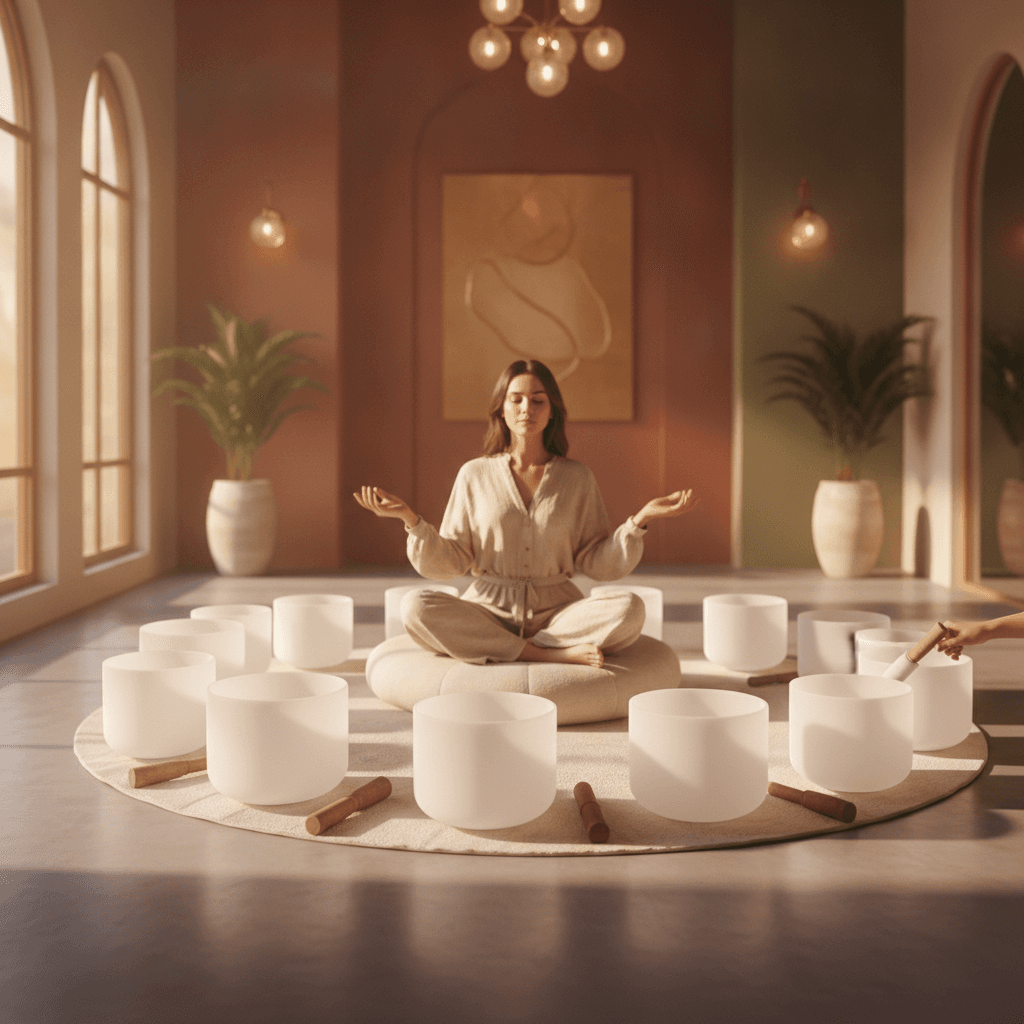
The Soul Art experience is characterized by its quiet luxury—a sophisticated and serene environment designed to facilitate profound relaxation and inner peace. Larissa carefully selects and orchestrates a diverse array of instruments, each chosen for its unique vibrational qualities. This includes master-crafted Himalayan singing bowls, crystal alchemy bowls, resonant gongs, and precisely calibrated tuning forks. Each session is a thoughtfully curated journey of sound.
Larissa's expertise lies in her ability to intuitively guide clients, using specific frequencies and soundscapes to encourage brainwave entrainment and parasympathetic nervous system activation. Her methods support a gentle release of stored tension and a recalibration of the body's energetic centers. Whether it's through the deep, immersive tones of a gong bath or the targeted vibrations of tuning forks, the aim is always to foster a sense of safety, allowing the nervous system to naturally find its way back into equilibrium. This personalized approach makes Soul Art a unique haven for holistic wellness in Dubai.
Cultivating Your Window of Tolerance: Practical Steps
Expanding your Window of Tolerance is a dynamic and ongoing journey that empowers you to respond to life with greater resilience and emotional balance. Sound wellness at Soul Art, guided by Larissa Steinbach, is a powerful complementary practice, but there are also daily steps you can integrate into your life to support this process.
Here are some actionable strategies to help cultivate and expand your capacity for calm:
- Engage in Regular Sound Wellness Sessions: Consistent exposure to harmonic frequencies can train your nervous system to spend more time in alpha and theta brainwave states. Booking sessions at Soul Art provides a dedicated space for this profound regulation.
- Practice Mindful Breathing Techniques: Deep, diaphragmatic breathing activates the vagus nerve, directly stimulating the parasympathetic nervous system. Even a few minutes of conscious breathing daily can make a significant difference in grounding you.
- Incorporate Mindful Movement: Gentle activities like yoga, Qigong, or even a slow, conscious walk can help release physical tension and connect you more deeply to your body. This somatic awareness supports emotional regulation.
- Create a Calming Environment: Designate spaces in your home or office that promote relaxation. This might involve soft lighting, comforting textures, or playing gentle, meditative music to gently shift your brainwaves.
- Practice Self-Compassion and Awareness: Pay attention to the early signs that you might be approaching the edges of your Window of Tolerance. Recognizing these signals allows you to intervene with self-care practices before becoming overwhelmed.
By integrating these practices, you empower yourself to navigate daily stressors with increased ease and maintain a deeper sense of inner peace. Ready to discover your expanded capacity for calm? Explore the diverse range of sound wellness experiences available at Soul Art Dubai.
In Summary: Embracing Your Capacity for Calm
The Window of Tolerance is a fundamental concept for understanding our emotional resilience and nervous system health. It provides a clear framework for recognizing when we are in our optimal state of regulation versus when we are overwhelmed or shut down. As scientific research continues to affirm, sound healing offers a gentle, non-invasive, and effective pathway to expand this vital window.
Through brainwave entrainment, parasympathetic activation, and the release of somatic tension, sound wellness practices can profoundly support emotional balance and stress management. Under the expert guidance of Larissa Steinbach, Soul Art provides a sanctuary where you can experience this transformative power, cultivating a deeper sense of peace and resilience. Embrace your capacity for calm and embark on a harmonious journey of well-being with Soul Art.
Bookings Coming Soon
Soul Art is still in preparation. Session details and booking will be published here after launch.
Coming Soon
Wellness Disclaimer: This article is for educational and informational purposes only. It does not constitute medical advice, diagnosis, or treatment. Soul Art Dubai provides non-medical wellness experiences focused on relaxation, stress management, and general wellbeing. Sound wellness is a complementary practice and should not replace professional medical care.
Related Articles
Beyond Hearing: Sound Waves & Your Body's Inner Boundaries at Soul Art
Breath Holding & Sound: Releasing Guarded Patterns at Soul Art Dubai
Reclaim Vitality: Soft Sound Practices for Fatigue & Collapse