Optimize Your Tennis Game: The Power of Sound for Match Preparation
Key Insights
Discover how sound influences anticipation, focus, and performance in tennis. Larissa Steinbach's Soul Art reveals the science behind acoustic wellness for athletes.
The roar of the crowd, the thwack of a powerful serve, the rhythmic bounce of the ball – tennis is a symphony of athleticism and strategy. But beyond the obvious visual spectacle, have you ever considered the profound, yet often overlooked, role that sound plays in a tennis match? From the controversial grunts to the subtle cues of racket-ball contact, auditory information is constantly shaping a player's performance and an opponent's anticipation.
What if harnessing the power of sound could provide a significant edge in your match preparation, enhancing focus, reducing anxiety, and even improving reaction times? This article delves into the cutting-edge science behind auditory perception in tennis, revealing how sound isn't just background noise, but a critical component of peak athletic performance and holistic wellbeing. We will explore how these principles are expertly applied at Soul Art by founder Larissa Steinbach, offering unique sound wellness experiences designed to elevate your game and nervous system regulation.
The Unseen Orchestra: Auditory Cues in Tennis
Sound is far more than an accessory in sports; it is an intrinsic part of how athletes perceive, react, and perform. In tennis, where milliseconds can define victory or defeat, the brain's ability to process auditory information quickly and accurately is paramount. Research has increasingly highlighted that auditory perception is closely related to players' performance, influencing everything from ball trajectory prediction to motor control.
Studies have shown that blocking auditory information completely, such as by wearing earplugs, negatively impacts a player's actual performance in matches and their ability to anticipate a ball's trajectory. This underscores the fundamental importance of sound as a sensory input, complementing visual information to build a complete picture of the unfolding game.
Grunting: A Double-Edged Sonic Sword
The presence of grunting in tennis has been a hotbed of debate, with opinions sharply divided on its impact. On one side, some argue that grunting is a physiological necessity, helping players to generate maximum force and stroke velocity. Experimental studies indeed support this, demonstrating that grunting can increase stroke velocity by nearly 4% for groundstrokes and 5% for serves, without increasing oxygen cost or perceived effort, yet showing an increase in muscular activity. This suggests grunting is a performance-enhancing and sustainable strategy.
However, from an opponent's perspective, grunting presents a complex challenge. Tennis legends like Roger Federer and Martina Navratilova have voiced concerns that excessive grunting can distract and irritate opponents, potentially granting an unfair competitive advantage. Scientific findings lend credence to this perspective. Research indicates that the presence of an additional auditory stimulus, such as a grunt, can impair the speed and accuracy of an opponent's directional decision-making.
One study revealed that participants were consistently slower by approximately 30 milliseconds to respond to the direction of the ball when a grunt was present, and they made more decision errors. In a fast-paced game like tennis, this 30-millisecond delay can translate to picking up a typical rally shot two feet later, significantly reducing preparation time and increasing pressure on the opponent.
The potential interference from grunting is multi-layered. It may not necessarily prevent players from "hearing the ball" directly, as some argue, but it can mask the crucial sound of the racket striking the ball or draw attention away from it. This highlights the intricate nature of multisensory integration in sports, where different auditory cues compete for the brain's processing resources, influencing anticipation and reaction.
The Racket-Ball Contact: A Crucial Auditory Signal
Beyond the contentious grunt, the pure sound of the racket-ball contact (RBC) is a vital, often subconscious, source of information for tennis players. This specific sound provides critical insights into the interaction of materials at a location in an environment, helping players predict ball trajectories and stroke force. Experienced players implicitly use these auditory cues to anticipate ball speed and trajectory, particularly when visual input is limited or delayed.
Groundbreaking research has shown that manipulating the intensity of RBC sounds directly influences how players predict ball outcomes. When RBC sounds were experimentally amplified, participants anticipated longer ball trajectories and judged strokes as more forceful. Conversely, less intense sounds led to predictions of shorter trajectories. This effect occurred implicitly, meaning participants were unaware of the sound manipulation, yet their judgments were systematically altered. This underscores that sound intensity is clearly taken into account when predicting the consequences of an opponent's strokes, making it a critical, yet often unacknowledged, element of anticipatory judgments in racquet sports.
"The subtle symphony of a tennis match, from the impact of racket on ball to the rhythm of footfalls, holds profound information that shapes an athlete's perception and performance. To truly excel, we must learn to attune to this unseen orchestra."
Beyond the Court: Acoustic Reafferences and Motor Control
The influence of sound extends beyond external cues; the sounds athletes naturally produce during movement, known as acoustic reafferences, also play a significant role in motor control and performance. Athletes perceive these self-generated sounds and use them to regulate their actions, creating a feedback loop between movement and sound.
A fascinating study involving hurdlers demonstrated this principle vividly. Participants listened to recordings of natural step sounds during hurdling, which were then played back to them with altered tempos before a training intervention. All participants showed an improvement in overall running time, with the best performance observed in those who listened to slowed-down tempos. This suggests that manipulating the tempo of acoustic reafferences can enhance both short-term and long-term athletic performance, especially when the tempo is decreased.
Furthermore, research indicates a link between the perceived proximity of sound and motor preparation. The closer a sound is perceived within an individual's peripersonal space (the space immediately surrounding the body), the earlier the initiation of movement. This implies that the brain uses auditory information not just for anticipation, but also for refining and expediting motor responses, making it a powerful tool for enhancing reaction times and movement fluidity in dynamic sports like tennis.
How It Works in Practice
Translating this scientific understanding into actionable strategies offers tennis players a unique pathway to enhanced performance and wellbeing. The practical application of sound wellness for match preparation centers on leveraging auditory cues for improved anticipation, heightened focus, and effective stress reduction. By consciously integrating specific sound practices, athletes can train their brains to process sonic information more efficiently and use it to their advantage.
For anticipation, incorporating exercises that hone the discrimination of racket-ball contact sounds can be incredibly beneficial. This might involve listening to recordings of various stroke types with eyes closed, attempting to predict trajectory or force based solely on the acoustic signature. Such practices can refine the neural pathways responsible for integrating sound with visual information, leading to quicker and more accurate judgments during a live match. Improved anticipatory judgments mean more time to react, better positioning, and ultimately, more control over the point.
Regarding focus and concentration, certain sound environments can promote brainwave states conducive to optimal performance. The mental demands of tennis require sustained attention, yet high-stakes matches often trigger anxiety that can derail focus. Specific frequencies and rhythmic patterns, particularly those found in natural sounds or carefully composed soundscapes, can help quiet the mind and reduce mental chatter. This allows for a deeper state of presence on the court, where attention is directed solely to the game, rather than internal distractions or external pressures.
Moreover, sound can be a powerful tool for pre-match anxiety relief and post-match recovery. A study on chronic anxiety found that exposure to tennis stroke sound stimuli led to a significant reduction in anxiety scores. The sound of tennis exhibited a pleasing timbre, with primary frequencies ranging from 100 to 2,800 Hz and a steady rhythm, aligning with human auditory preferences. This suggests that the inherent rhythmic and tonal qualities of tennis sounds can be naturally calming, offering a novel approach to stress management for athletes. Integrating calming soundscapes or even meditating with specific frequencies can help regulate the nervous system, lower cortisol levels, and prepare the mind for the intense demands of competition, fostering a sense of calm resilience.
The Soul Art Approach
At Soul Art, Dubai's premier sound wellness studio, Larissa Steinbach expertly bridges the gap between ancient wisdom and modern scientific understanding to offer transformative experiences. Recognizing the profound impact of sound on human physiology and psychology, Larissa has developed a unique approach that caters to the specific needs of athletes, including tennis players seeking a competitive edge through holistic wellbeing. Her methodology at Soul Art is rooted in the principle that our bodies are vibrational beings, constantly influenced by the frequencies around us.
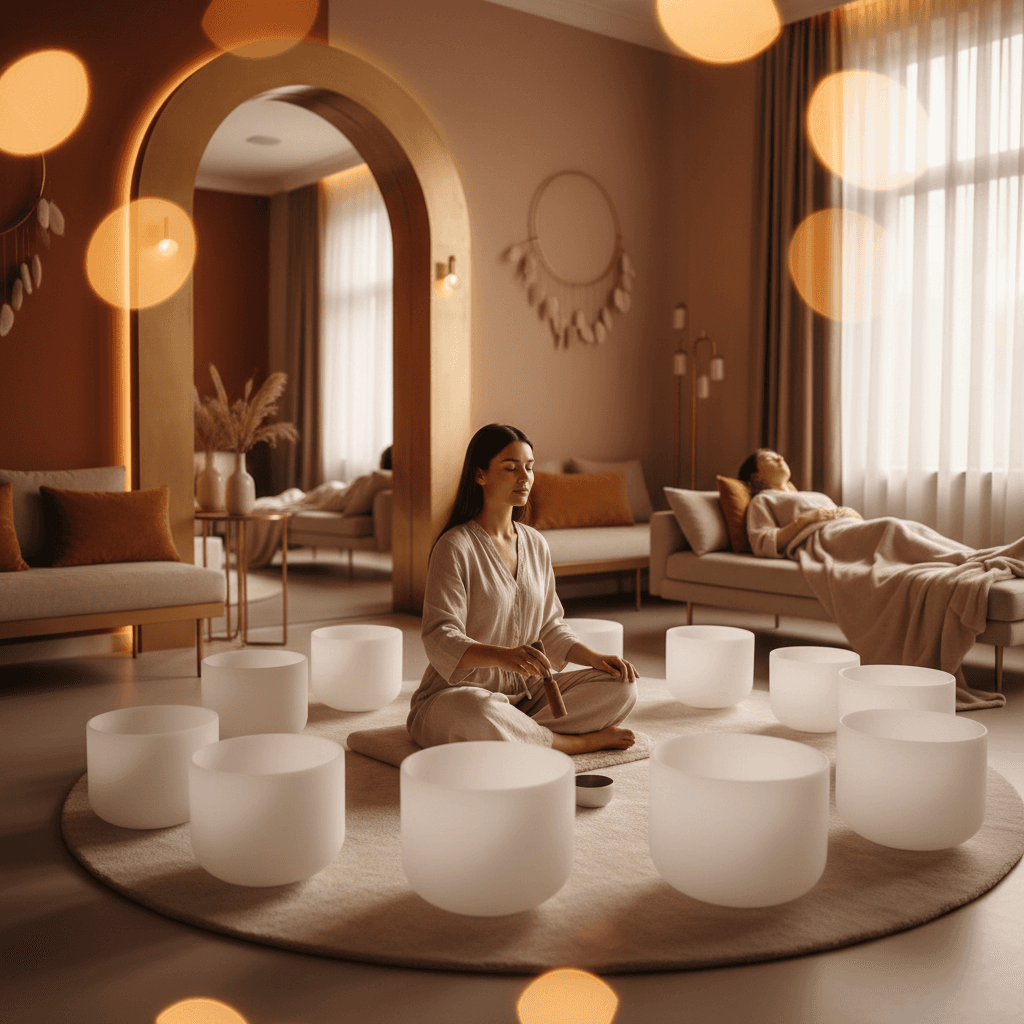
Larissa's sessions are not merely passive listening experiences; they are carefully curated sound journeys designed to regulate the nervous system, enhance cognitive functions, and promote deep relaxation and recovery. Utilizing a diverse array of sacred instruments, including resonant Himalayan singing bowls, powerful gongs, precision-tuned tuning forks, and other sonic tools, she creates immersive soundscapes. These instruments generate specific frequencies and harmonics known to encourage the brain to shift into beneficial states, such as alpha and theta brainwaves, which are associated with heightened creativity, deep relaxation, and improved focus.
The Soul Art method focuses on personalized sound protocols, acknowledging that each individual's needs are unique. For athletes, this might involve targeting frequencies that support mental clarity and reaction time, or specific rhythms that aid in physical recovery and reduce muscle tension. Larissa integrates bio-acoustics and principles of brainwave entrainment to maximize the therapeutic benefits, guiding participants into states where mental clutter dissolves, and their innate capacity for concentration and calm is amplified. This holistic approach ensures that players not only gain a competitive advantage but also cultivate a more resilient mind-body connection, fostering sustained wellbeing both on and off the court.
Your Next Steps
Embracing sound wellness as part of your tennis match preparation and overall athletic regimen can unlock a new dimension of performance and wellbeing. Here are some practical steps you can take today to begin integrating the power of sound into your routine:
- Mindful Listening Practice: Dedicate time each day to mindfully listen to the sounds around you, particularly those associated with tennis – the distinct thwack of racket-ball contact, the rhythm of footwork. This can help refine your auditory processing skills and enhance anticipation on the court.
- Curate Calming Soundscapes: Before a match or during recovery, engage with calming nature sounds (like ocean waves or gentle rain) or specific ambient music known for its relaxing frequencies. This may support nervous system regulation and reduce pre-match anxiety.
- Incorporate Rhythmic Breathing with Sound: Combine deep, diaphragmatic breathing with a steady, rhythmic sound (such as a slow, consistent beat). This practice can improve focus and help center your mind, preparing you for high-pressure situations.
- Explore Acoustic Reafferences: If possible, experiment with recording and re-listening to your own practice sounds. Some preliminary studies suggest that manipulating the tempo of these "acoustic reafferences" might enhance motor control and performance.
- Experience Professional Sound Wellness: For a truly immersive and personalized approach, consider exploring sound wellness sessions. Larissa Steinbach at Soul Art offers expertly guided experiences designed to optimize mental clarity, enhance physical recovery, and balance your energy, providing a tailored path to peak performance.
In Summary
The intricate world of sound plays a far more significant role in tennis performance than often acknowledged. From the controversial impact of grunting on anticipation to the critical information conveyed by racket-ball contact, auditory cues are fundamental to an athlete's focus, reaction time, and strategic decisions. Integrating sound wellness practices can be a powerful, complementary tool for any tennis player seeking to enhance their game and overall wellbeing.
By consciously harnessing the power of specific frequencies and rhythmic patterns, players may support better nervous system regulation, reduce anxiety, and improve cognitive functions vital for competition. Larissa Steinbach's Soul Art offers a scientifically informed, yet deeply holistic, approach to sound wellness, providing athletes with a unique avenue to elevate their match preparation and cultivate a more resilient mind-body connection. Discover how sound can be your silent partner in achieving peak performance.
Bookings Coming Soon
Soul Art is still in preparation. Session details and booking will be published here after launch.
Coming Soon
Wellness Disclaimer: This article is for educational and informational purposes only. It does not constitute medical advice, diagnosis, or treatment. Soul Art Dubai provides non-medical wellness experiences focused on relaxation, stress management, and general wellbeing. Sound wellness is a complementary practice and should not replace professional medical care.
Related Articles
Optimizing Athletic Performance: The Synergy of Sports Nutrition and Sound Wellness

Archery, Stillness, and Sound: Soul Art's Path to Focus

Swimming's Secret Weapon: Sound for Peak Aquatic Performance