Elevate Your Game: The Science of Sound in Sports Psychology

Key Insights
Unlock peak athletic performance and mental resilience with sound integration. Discover how frequencies enhance focus, recovery, and flow states at Soul Art Dubai.
Could the secret weapon for an athlete's peak performance and unparalleled recovery lie not in a new training regimen, but in the subtle power of sound? Imagine if optimizing your athletic prowess extended beyond physical conditioning to a profound engagement with your inner landscape, guided by resonant frequencies. For too long, the mental game in sports has been viewed separately from the physiological, but cutting-edge research is now revealing a compelling link: sound.
This article delves into the scientifically-backed integration of sound into sports psychology, exploring how carefully curated auditory experiences can unlock new levels of motivation, resilience, and recovery. We will uncover the neurological mechanisms at play and provide practical insights into how athletes can harness this powerful, yet often overlooked, dimension of their training. Ultimately, understanding and applying sound integration can be a transformative approach, supporting not just competitive edge but also holistic well-being.
The Auditory-Brain Connection: How Sound Shapes Performance
The human experience is intrinsically linked to sound. From the rhythmic beat of a drum to the intricate melodies of an orchestra, sound influences individuals and societies across various domains of life (Ekiz and Atasoy, 2021). Beyond its basic auditory function, music, fundamentally defined as the perception, analysis, and transformation of sounds into vocal expressions (Say, 1998), embodies a lifestyle that touches the human psyche. It facilitates emotional release, stimulates physical activation, revives past memories, and provides an immersive experience that transcends the immediate environment (Akkuş, 2007).
This multidimensional influence positions sound and music as potent tools in sports, extending far beyond simple entertainment. Scientific inquiry into how sound impacts athletic performance and psychological states has burgeoned, revealing profound connections between auditory input and the body's physiological and mental responses. The integration of musical memory into sports practices has emerged as an innovative approach aimed at enhancing athletic performance and promoting physical relaxation (Erdal, 2005).
The Neurobiology of Music and Movement
Our brains are wired to respond to sound. When we listen to music or engage with specific frequencies, a cascade of neurochemical and physiological responses is initiated. This includes changes in heart rate, respiration, muscle tension, and the release of neurotransmitters such as dopamine, which is associated with pleasure and motivation. The brain's auditory cortex processes sound, but its influence extends to areas governing emotion, memory, and motor control, making it a powerful modulator of our internal state.
One of the key frameworks for understanding sound's impact on the nervous system is the Polyvagal Theory (Porges, 2011). This theory highlights how our vagus nerve, a major component of the autonomic nervous system, responds to auditory cues. Specific sound frequencies can signal safety or danger to our nervous system, either promoting states of calm and social engagement or triggering fight-or-flight responses. For athletes, managing these internal alarm systems, which can be activated by repetitive stress tests like injuries, social rejection, or competitive pressure, is paramount for sustained performance and well-being (Grand & Goldberg, 2011).
Five Pillars of Musical Influence in Sport
Research by experts like Karageorghis and Terry (1997) has illuminated five primary ways music can profoundly influence preparation and competitive performances:
- Dissociation: Music can act as a powerful distracter, diverting an athlete's attention from feelings of fatigue, discomfort, or boredom during strenuous exercise. This allows for sustained effort and a higher pain threshold.
- Arousal Regulation: Athletes often need to manage their physiological and psychological arousal levels. Music can be strategically used to either increase energy and focus before an event or induce calm and reduce anxiety, depending on the individual and the task at hand.
- Synchronization: Listening to music with a strong beat can help athletes synchronize their movements with the rhythm, leading to more efficient biomechanics and sustained endurance. Studies have shown improvements in 400-meter sprint performance when music is synchronized with movement (Simpson & Karageorghis, 2006).
- Acquisition of Motor Skills: Music may support motor learning and skill development. The rhythmic patterns can aid in the coordination and timing required for mastering complex athletic movements, offering a beneficial backdrop for practice (Spilthoorn, 1986).
- Attainment of Flow: Often described as being "in the zone," a flow state is characterized by deep immersion, enjoyment, and optimal performance. Music can help athletes enter and sustain this state by enhancing focus and reducing self-consciousness, allowing them to perform at their peak.
Enhancing Psychological and Physical Resilience
The benefits of integrating sound extend deeply into an athlete's overall resilience. A comprehensive review by Cohen (2025) underscores music's multifaceted role, including athletic performance enhancement, arousal regulation, motivation, resilience, and self-management skills. Empirical evidence consistently suggests that music diminishes the perception of fatigue and enhances strength, endurance, and overall performance (Eliakim et al., 2007; Hutchinson et al., 2018).
Moreover, a study examining the effects of listening to music in sports activities found that integrating music into all stages of sports practice may enhance athletes’ motivation, psychological strength, and physical performance. This study particularly noted that female athletes and those with more years of experience seemed to benefit more, pointing to the power of personalized interventions. Tailoring music choices to match exercise intensity and athletes’ emotional states may support a more systematic and effective integration of music into sports performance strategies. Jing and Xudong (2008) also demonstrated that relaxing music can aid in recovery from aerobic exercise-induced fatigue, further broadening the scope of its utility.
How It Works in Practice
Translating the intricate science of sound into practical applications for athletes involves a nuanced understanding of individual needs and the specific demands of their sport. Sound integration is not merely about playing background music; it is a strategic and personalized intervention designed to optimize various facets of an athlete’s journey. The goal is to create tailored auditory environments that address pre-performance anxieties, sustain in-game focus, and facilitate post-competition recovery.
For example, before a crucial event, an athlete might use carefully selected soundscapes to manage arousal. Up-tempo, motivational tracks can elevate energy and focus, while calming ambient sounds or binaural beats may support the reduction of pre-competition jitters. This intentional approach helps to align the athlete’s mental state with the physical demands ahead, ensuring they enter the competition feeling composed yet energized.
During training or actual performance, the power of sound can be harnessed to mitigate fatigue. By acting as a dissociative agent, music shifts an athlete’s attention away from the discomfort of exertion, making the effort feel less intense (Szmedra & Bacharach, 1998). The rhythmic elements can also synchronize with movement, improving efficiency and stamina. This allows athletes to maintain a consistent pace and form for longer durations, ultimately enhancing endurance and overall output.
Perhaps one of the most vital, yet often overlooked, applications is in post-performance recovery. After intense physical and mental exertion, the nervous system requires a profound reset. Relaxing music and specific sound frequencies can significantly aid in this process. They may help to lower heart rate, reduce muscle tension, and promote a state conducive to deep rest and cellular repair, accelerating both physical and psychological recovery. This holistic approach supports the athlete in processing the emotional highs and lows of competition, promoting mental clarity and emotional balance.
The effectiveness of these interventions is significantly enhanced by personalization. What motivates one athlete might distract another; what calms one might bore another. Therefore, tailoring music choices and sound interventions to individual preferences, exercise intensity, and current emotional states is crucial for optimizing training outcomes (Ballmann, 2021). This individualized approach makes music-based interventions a remarkably cost-effective and accessible means to optimize athletic performance and promote psychological well-being in sports settings (Cohen, 2025). Athletes often report a deeper connection to their bodies and a heightened sense of control over their mental state when engaging with these customized sound experiences.
The Soul Art Approach
At Soul Art, Larissa Steinbach has pioneered a distinctive approach to integrating sound wellness into sports psychology, recognizing the profound impact of personalized auditory experiences on athletic performance and holistic well-being. Her methodology transcends conventional music therapy by combining ancient sound wisdom with cutting-edge understanding of neuroscience and sports psychology principles. Larissa’s vision is to offer athletes in Dubai a unique pathway to enhanced mental fortitude, emotional balance, and accelerated physical recovery.
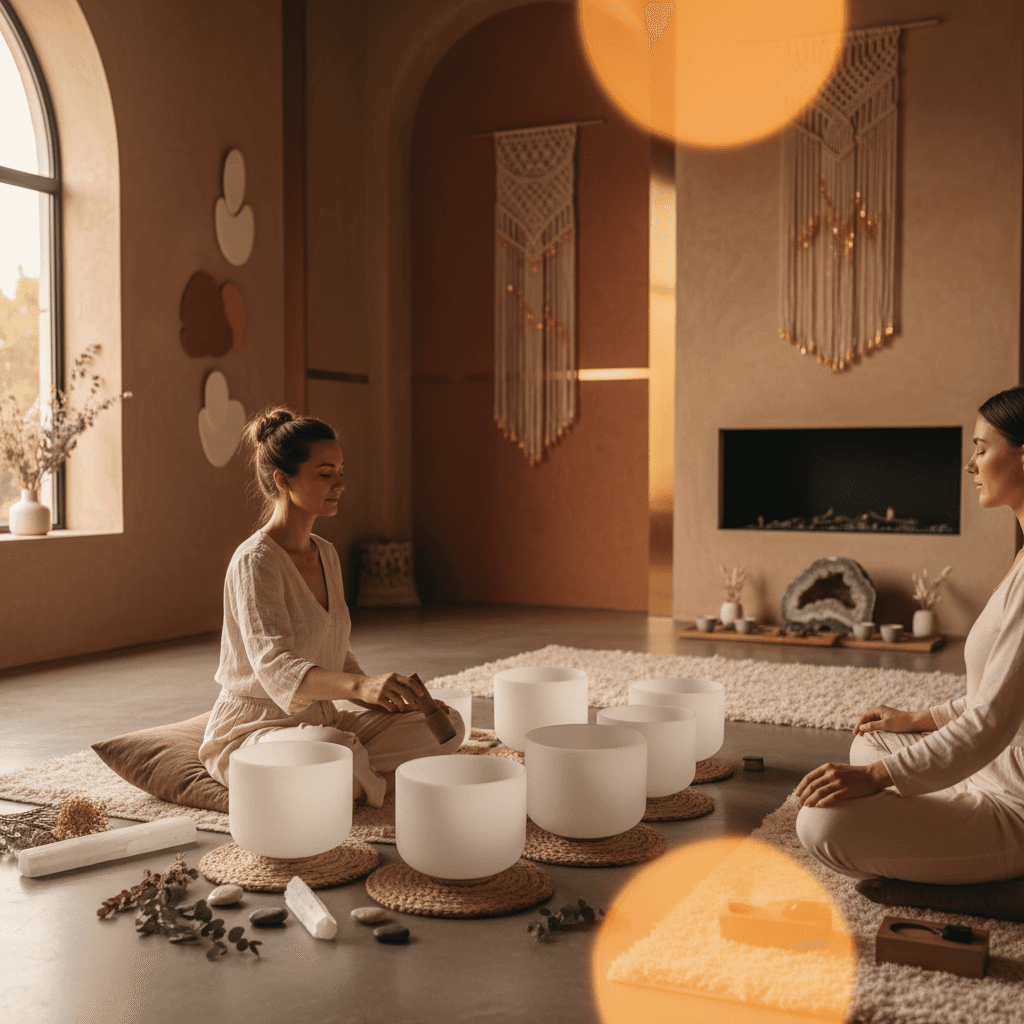
The Soul Art method is built upon creating bespoke soundscapes, moving beyond generic playlists to deliver deeply resonant and therapeutically informed sessions. Instead of just music, Larissa utilizes a range of carefully selected instruments, including gongs, Tibetan singing bowls, and tuning forks, each chosen for its specific frequency and vibratory properties. These instruments produce complex overtones and profound vibrations that interact directly with the body's energetic systems and nervous system. Larissa Steinbach’s expertise lies in curating these sound experiences to align with an athlete's individual goals, whether that’s pre-competition focus, mid-game endurance, or post-match recovery.
A cornerstone of the Soul Art approach is its deep understanding of nervous system regulation, informed by the Polyvagal Theory (Porges, 2011). Larissa guides athletes through auditory journeys designed to shift their autonomic nervous system from states of stress and hyper-arousal to states of calm and relaxed vigilance. This can be particularly impactful for athletes who experience performance anxiety, mental blocks, or struggle with the cumulative effects of stress tests inherent in competitive sports (Van Der Kolk, 2014). The controlled and specific sound frequencies used may help to retune the auditory pathways, signaling safety to the brain and fostering a sense of groundedness.
Soul Art provides a sanctuary where athletes can disconnect from external pressures and reconnect with their inner resources. Through these immersive sound experiences, many clients report a significant reduction in perceived exertion during training, an improvement in their ability to enter "flow states," and a quicker return to baseline after intense physical activity. Larissa Steinbach is committed to offering a complementary approach that empowers athletes to not only excel in their sport but also to cultivate enduring mental and emotional well-being.
Your Next Steps
Embracing the power of sound integration in your athletic journey doesn't require an immediate overhaul of your entire training regimen. It begins with curiosity and a willingness to explore how your internal landscape can be optimized. Understanding that your mental and emotional states are as crucial as your physical conditioning is the first step towards unlocking new levels of performance and well-being.
Here are some practical actions you can implement today to begin harnessing the potential of sound:
- Experiment with Pre-Workout Sounds: Before training or competition, try listening to music that energizes you, or alternatively, calming sounds if you tend to feel anxious. Pay attention to how your body and mind respond.
- Incorporate Calming Sounds for Post-Workout Recovery: After strenuous activity, integrate ambient music, nature sounds, or guided meditations with sound. This may support your nervous system in transitioning from exertion to relaxation and recovery.
- Create Personalized Sound Playlists: Based on your self-observation, curate specific playlists for different phases of your athletic cycle—warm-up, peak performance, cool-down, and rest. Remember, individualized approaches are often most effective.
- Consider Guided Sound Meditations: Many apps and online resources offer guided meditations incorporating sound. These can be particularly effective for improving focus, managing stress, and enhancing sleep quality, all vital for athletic performance.
- Explore Professional Sound Wellness Guidance: For a deeper, more tailored experience, consider a session with a qualified sound wellness practitioner. They can provide personalized soundscapes and techniques designed to address your unique athletic goals and well-being needs.
The journey to peak performance is holistic. By consciously integrating sound into your routine, you are investing in a powerful, complementary approach to self-care and competitive excellence.
In Summary
The integration of sound into sports psychology presents a scientifically-grounded and highly promising frontier for athletes seeking an edge. We’ve explored how sound, through its profound connection to the brain and nervous system, can significantly enhance motivation, psychological strength, and physical performance. From regulating arousal and mitigating fatigue to facilitating motor skill acquisition and achieving peak flow states, the benefits are expansive. This innovative approach, deeply rooted in research and personalized application, supports not only athletic excellence but also crucial mental and emotional resilience.
Larissa Steinbach's Soul Art studio in Dubai stands at the forefront of this movement, offering meticulously crafted sound wellness experiences that blend ancient wisdom with modern science. By focusing on individualized soundscapes and nervous system regulation, Soul Art empowers athletes to unlock their fullest potential and achieve a profound state of well-being. Embrace this powerful dimension of holistic wellness, and discover how the right frequencies can transform your game and your life.
Bookings Coming Soon
Soul Art is still in preparation. Session details and booking will be published here after launch.
Coming Soon
Related Articles
Optimizing Athletic Performance: The Synergy of Sports Nutrition and Sound Wellness

Archery, Stillness, and Sound: Soul Art's Path to Focus

Swimming's Secret Weapon: Sound for Peak Aquatic Performance