Sound Wellness: A Strategic Edge for Medical Leadership Teams

Key Insights
Discover how sound wellness, backed by science, offers medical leaders in Dubai a powerful tool for stress reduction, burnout prevention, and enhanced team performance. Elevate well-being with Soul Art.
Could the gentle resonance of a Tibetan singing bowl or the deep vibration of a gong hold the key to transforming the high-stress environment of medical leadership? In the demanding world of healthcare, leaders face unprecedented pressure, from managing complex teams and navigating systemic challenges to mitigating their own — and their staff’s — burnout. Traditional leadership models often focus on external metrics, overlooking the critical internal state that drives true resilience and sustained performance.
At Soul Art, Dubai’s premier sound wellness studio, we understand that nurturing the well-being of medical leaders is not merely a luxury but a strategic imperative. This article delves into the robust scientific evidence supporting sound wellness as an essential tool for medical leadership teams. We explore how this ancient practice, refined for modern application by our founder Larissa Steinbach, can significantly reduce stress, enhance cognitive function, and cultivate the "wellness-centered leadership" vital for thriving healthcare cultures. Prepare to discover how sound, a modality increasingly validated by rigorous scientific inquiry, can empower you and your team to lead with greater clarity, empathy, and sustained energy.
The Science Explained: How Sound Shapes Our Well-being
The integration of wellness practices into mainstream understanding has accelerated dramatically over the past decade. What was once considered "alternative" is now being rigorously validated through scientific inquiry, as highlighted by the Global Wellness Institute's (GWI) Wellness Evidence portal. Dr. Pelletier, a key medical consultant for Wellness Evidence, notes this clear shift, emphasizing the crucial bridge being built between clinical medicine and evidence-based wellness. Sound wellness, in particular, stands out as a powerful modality, with research consistently pointing towards its measurable effects on the nervous system, emotional well-being, and physiological regulation.
Physiological Mechanisms of Action
Sound healing, or vibrational therapy, operates on multiple physiological and neurological levels, initiating profound shifts within the body and mind. It leverages the brain's natural responses to auditory stimuli to guide individuals into states of deep relaxation and healing. Controlled laboratory studies, clinical trials, and psychophysiological measurements, including EEG imaging, reveal the intricate ways sound influences us.
1. Brainwave Entrainment
Our brains naturally resonate at different frequencies, corresponding to various states of consciousness. Rhythmic auditory stimulation, a core component of sound wellness, can effectively entrain brainwaves to targeted frequencies. This process allows the brain to synchronize with external rhythms, guiding it from heightened beta states (active, often stressed) into more restorative patterns:
- Theta (4–7 Hz): Associated with emotional processing, deep meditation, intuition, and creativity. Sound can facilitate access to this state, promoting mental clarity and stress reduction.
- Alpha (8–12 Hz): Linked to relaxation, reduced anxiety, and "flow states" where individuals feel focused yet calm. This is often the immediate effect experienced in a sound bath.
- Delta (0.5–3 Hz): The slowest brainwave frequency, correlated with deep restorative sleep, physical healing, and profound relaxation. Accessing delta states through sound can support recovery and rejuvenation.
2. Autonomic Nervous System Regulation
The autonomic nervous system (ANS) controls involuntary bodily functions, divided into the sympathetic (fight-or-flight) and parasympathetic (rest-and-digest) branches. Chronic stress keeps the sympathetic system in overdrive, leading to burnout. Sound meditation has been shown to increase parasympathetic activation.
Studies using Heart Rate Variability (HRV) — a key indicator of ANS balance — reveal that sound practices stimulate the vagus nerve. This critical nerve, a major component of the parasympathetic system, helps regulate heart rate, digestion, and mood. By promoting diaphragmatic breathing patterns and reducing sympathetic overactivity, sound wellness may support a return to physiological balance, crucial for leaders constantly navigating high-pressure situations.
3. Hormonal Shifts and Stress Response
The body's stress response involves the release of hormones like cortisol. Prolonged elevation of cortisol can lead to inflammation, weakened immunity, and chronic fatigue. Preliminary studies suggest that sound wellness practices may be associated with beneficial hormonal shifts, including a reduction in cortisol levels and an increase in feel-good neurotransmitters like dopamine and serotonin. This biological recalibration provides a tangible foundation for the reported feelings of calm and well-being.
The Impact on Leadership Well-being and Performance
Leadership engagement is a key factor in reducing burnout, especially in demanding fields like medicine. Research from Dove Medical Press indicates that for each 1-point increase in composite leadership engagement behaviors, physician burnout decreased 3%, and job satisfaction increased 9%. Elements of wellness-centered leadership, such as caring for people, cultivating team relationships, and inspiring change, are essential. Sound wellness offers a direct, experiential pathway for leaders to embody this model.
"Systematic and consistent efforts to empower leaders with the skills, tools, and resources required to engage their teams through the lens of well-being is a critical driver of building a culture of well-being."
Leaders who prioritize their own well-being through practices like sound wellness are better equipped to model resilience and create supportive environments. This leads to a culture where well-being is not just an expectation but an integrated practice, as highlighted by studies on leadership practices for wellness in hospital settings. The benefits extend beyond individual leaders, potentially impacting team dynamics, decision-making clarity, and overall organizational health.
How It Works in Practice: The Transformative Experience
Moving from scientific theory to lived experience, sound wellness sessions at Soul Art offer a unique, immersive journey. Clients don't just hear the sounds; they feel the vibrations permeating their being, creating a profound sense of peace and somatic release. It’s a passive yet deeply engaging practice, perfectly suited for busy medical leaders who may find traditional meditation challenging.
Upon entering our tranquil studio, clients are invited to recline comfortably, often on mats or cushions, covered with soft blankets. The environment is meticulously designed to be a sanctuary, free from the distractions and demands of the outside world. Soft lighting, ambient temperatures, and the absence of electronic devices ensure a pristine setting for deep relaxation.
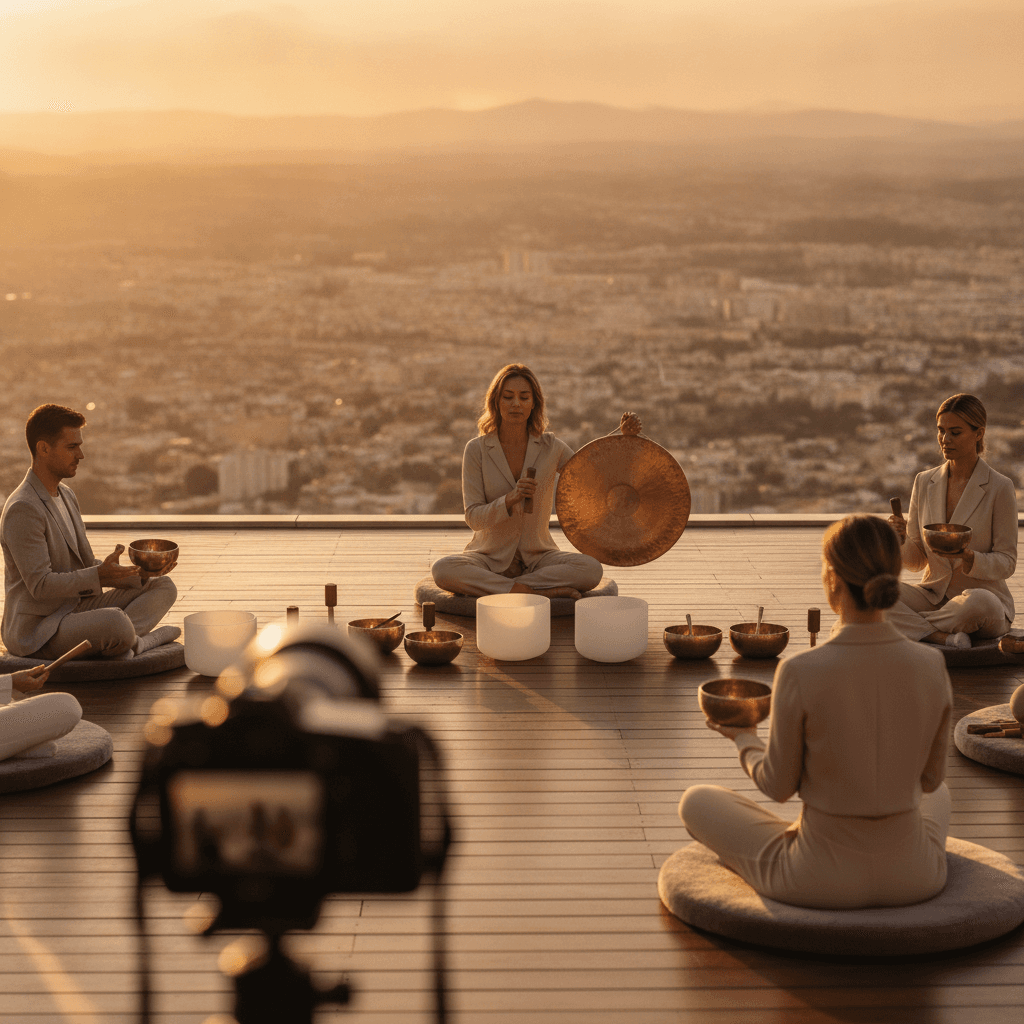
The practitioner, often Larissa Steinbach herself, then begins to play an array of instruments. These typically include crystal singing bowls, each tuned to specific energetic centers; resonant gongs, whose rich overtones create expansive sonic landscapes; chimes, producing delicate, ethereal tones; and sometimes even the gentle rhythm of ocean drums or rain sticks. The sounds are not played as music in a conventional sense but as sustained, evolving soundscapes. The vibrations travel through the air and through the body, facilitated by the water content within our cells.
Many people report sensations ranging from subtle tingling to a floating feeling. The mind, initially busy, gradually settles as the brainwave entrainment takes effect. Thoughts may drift, but the continuous, enveloping sound provides an anchor, gently drawing attention back to the present moment. This process helps to quiet the incessant mental chatter that often plagues high-achievers, allowing for a profound state of rest that goes beyond typical sleep. The experience culminates in a period of silence, allowing for integration and a gentle return to awareness, leaving participants feeling refreshed, centered, and often profoundly calm.
The Soul Art Approach: Larissa Steinbach's Vision
At Soul Art, Larissa Steinbach has cultivated a distinctive approach to sound wellness, specifically tailored to meet the sophisticated needs of Dubai's discerning clientele, including its medical leadership. Her methodology transcends a simple "sound bath"; it’s a carefully curated experience designed for deep restorative impact and a subtle yet profound energetic recalibration. Larissa’s expertise lies in her intuitive understanding of sound frequencies and their potential to harmonize the human system.
Larissa combines ancient wisdom with contemporary scientific understanding. She meticulously selects instruments for their specific vibrational qualities and orchestrates sessions that move beyond mere relaxation into true cellular rejuvenation. Her sessions often incorporate a blend of crystal singing bowls, Himalayan singing bowls, planetary gongs, and chimes, each chosen for its unique ability to induce specific brainwave states and energetic shifts. The use of specific notes and harmonies is not accidental; it is an intentional practice aimed at supporting the body's natural healing mechanisms and fostering emotional equilibrium.
What makes the Soul Art method unique is its emphasis on creating a safe, sacred space where leaders can truly let go. Larissa understands that for medical professionals, especially those in leadership roles, vulnerability can be challenging. Her gentle guidance and the immersive nature of the sound allow for a profound surrender, enabling deep stress release without the need for active participation or strenuous effort. This passive engagement is incredibly valuable for individuals whose daily lives are dominated by proactive problem-solving and decision-making.
Furthermore, Larissa Steinbach focuses on the application of sound wellness to address specific challenges faced by medical leaders: chronic stress, decision fatigue, and the emotional toll of their profession. She crafts experiences that not only provide immediate relief but also equip individuals with a deeper sense of inner peace and resilience that they can carry back into their demanding roles. The Soul Art approach is not just about temporary respite; it's about building a sustainable foundation for well-being that underpins effective, empathetic leadership.
Your Next Steps: Integrating Sound Wellness
For medical leadership teams in Dubai, integrating sound wellness into your corporate well-being strategy can be a game-changer. It’s a proactive investment in the health, resilience, and sustained performance of your most critical assets: your leaders. Embracing wellness-centered leadership means providing the tools and resources for your team to thrive, not just survive.
Here are actionable steps you can take today to explore the benefits of sound wellness for your medical leadership team:
- Schedule an Introductory Session: Arrange a private group sound wellness session for your leadership team at Soul Art. Experience the transformative effects firsthand in a dedicated, serene environment. This provides a direct, low-barrier entry point for busy executives.
- Integrate into Wellness Programs: Consider incorporating regular sound wellness sessions as a complementary offering within your existing employee wellness initiatives. This signals a strong commitment to holistic well-being and stress management.
- Educate and Empower: Provide educational resources on the science behind sound wellness. Understanding the physiological and psychological benefits can encourage greater participation and engagement among your team members.
- Promote Self-Care Leave: Encourage leaders to utilize dedicated self-care time, suggesting sound wellness as an effective way to de-stress and recalibrate, rather than viewing it as another task on an already overflowing agenda.
- Observe and Evaluate: Pay attention to anecdotal feedback from your team regarding stress levels, focus, and overall mood after engaging with sound wellness. While not a formal research study, this qualitative data can highlight its value.
Taking these steps demonstrates a forward-thinking approach to leadership, one that values the inner resilience and well-being of its people as much as its operational outcomes.
In Summary: Harmonizing Leadership and Well-being
The profound pressures faced by medical leadership teams demand innovative, scientifically-backed solutions for well-being. Sound wellness, championed by Soul Art founder Larissa Steinbach, emerges as a powerful, evidence-informed practice to combat burnout, reduce stress, and foster a culture of wellness-centered leadership. By leveraging brainwave entrainment, autonomic nervous system regulation, and positive hormonal shifts, sound offers a unique pathway to deep relaxation and enhanced resilience.
Soul Art provides a sanctuary where leaders can experience profound restoration, returning to their roles with renewed clarity and composure. This isn't just about relaxation; it's about equipping medical leaders with an essential tool for sustainable performance and compassionate leadership in a demanding world. Elevate your team's well-being and strategic edge.
Bookings Coming Soon
Soul Art is still in preparation. Session details and booking will be published here after launch.
Coming Soon
Wellness Disclaimer: This article is for educational and informational purposes only. It does not constitute medical advice, diagnosis, or treatment. Soul Art Dubai provides non-medical wellness experiences focused on relaxation, stress management, and general wellbeing. Sound wellness is a complementary practice and should not replace professional medical care.
Related Articles
Reclaim Your Focus: The Afternoon Slump Sound Ritual for Office Wellness with Soul Art

Corporate Sound Healing: Elevate Employee Well-being & Productivity
Conflict Decompression: Resetting Your Mind After Difficult Meetings with Sound Wellness