Unlock Peak Potential: Sound Therapy for Elite Athletic Performance
Key Insights
Discover how scientifically-backed sound therapy at Soul Art Dubai enhances athlete recovery, focus, and overall performance.
Compelling Introduction
Imagine unlocking a hidden gear in your athletic prowess, a deeper reserve of focus, strength, and rapid recovery. What if the secret lay not in more intense training, but in the subtle power of sound? Elite athletes constantly seek marginal gains, and a growing body of scientific research now points to sound therapy as a profound, yet often overlooked, performance enhancer.
At Soul Art, Dubai's premier sound wellness studio founded by Larissa Steinbach, we are at the forefront of integrating cutting-edge science with ancient wisdom. We offer a unique path to optimize athletic potential. This article will delve into the scientific mechanisms behind sound therapy and explore how it can elevate your game, from warm-up to recovery and beyond, fostering not just physical strength but profound mental resilience.
Join us as we uncover how specific frequencies and auditory experiences can modulate your physiology, sharpen your mental edge, and accelerate your journey to peak performance. This journey into sound is about refining your body and mind into a finely tuned instrument, ready for any challenge.
The Science Explained
The human body is a symphony of vibrations, and sound, in its purest form, can profoundly influence our physiological and psychological states. From brainwave entrainment to autonomic nervous system regulation, the intricate interplay between sound and biology is a burgeoning field of study. For athletes, understanding these mechanisms can provide a significant competitive advantage, supporting both physical output and mental fortitude.
How Sound Impacts the Brain and Body
Sound travels as vibrations, which our ears convert into electrical signals interpreted by the brain. Beyond auditory perception, these vibrations can resonate throughout the body, influencing cellular activity and activating specific neural pathways. The brain's response to sound can shift brainwave states, moving us from high-alert beta waves to more relaxed alpha, or even restorative theta and delta waves.
This ability to guide brainwave activity is crucial for athletes, facilitating states of heightened focus, stress reduction, and deep recovery. Different frequencies and rhythms within a soundscape can thus be purposefully designed to elicit desired physiological and psychological responses. It’s a sophisticated form of sensory input, designed to optimize internal environments.
Optimizing Performance with Specific Frequencies
Recent sport science research has shed light on how specific musical frequencies, tempos, and volumes can directly impact athletic performance. A groundbreaking study by Jebabli, et al. (2025), published in Nature, investigated the effects of preferred music during warm-up on intermittent anaerobic speed. They observed significant findings regarding the standard musical frequency of 440 Hz.
The study found that preferred music played at a fast tempo (120-140 BPM), moderate loudness (70-80 dB), and a frequency of 440 Hz was the most effective combination. This protocol was shown to enhance both aerobic and anaerobic performance indices. Furthermore, listening to music at 440 Hz during warm-up also improved mood, reduced perceived exertion (RPE), and significantly enhanced the feeling scale for participants, notably kickboxers. This suggests a direct link between specific sound parameters and improved athletic output.
While female kickboxers showed a higher emotional response to preferred music at 432 Hz, the study clearly indicated that 440 Hz was more effective for direct performance enhancement across both genders. The practical takeaway for athletes and coaches is clear: strategically chosen music at 440 Hz during warm-up may support greater physical performance and a more positive psychological state. This precise application of sound frequency represents a novel area for performance optimization.
Accelerated Recovery through Vibrational Therapy
Beyond performance enhancement during activity, sound plays a critical role in post-exercise recovery, particularly through its influence on the autonomic nervous system. Low-frequency sound vibrations (LFV) and vibration acoustic therapy (VAT) have been shown to positively affect the parasympathetic nervous system, which is responsible for "rest and digest" functions. This is vital for athletes needing to rebound quickly from intense training.
Research, such as that by Hauser, et al. (2025), highlights the impact of LFV on heart rate variability (HRV). HRV is a key indicator of recovery status and overall well-being. Enhanced vagal tone, a positive indicator of parasympathetic activity, is associated with improved well-being and performance. LFV can help facilitate this enhanced vagal tone.
The study indicates that markers like LnRMSSD, a reliable and sensitive indicator of recovery and training load, can be positively influenced by low-frequency sounds. By promoting deeper relaxation and activating the body's natural healing processes, sound therapy offers a complementary approach to accelerate physical recovery. This allows athletes to return to training and competition feeling more restored and ready for peak output.
The Mind-Body Connection: Attentional Processing and Enjoyment
The psychological dimension of athletic performance is as crucial as the physical. Music and sound stimuli have long been recognized for their potential to promote an enjoyable exercise experience, as noted by researchers like Karageorghis (2017). The scientific application of audio-visual stimuli in exercise psychology focuses on enhancing our understanding of these psychological effects.
Sound can serve as a powerful tool for attentional processing. It can help athletes focus and even provide a positive distraction from feelings of fatigue or discomfort during strenuous activity. By creating a more positive and engaging environment, sound experiences may support improved adherence to training regimens and foster greater mental resilience. This holistic approach ensures that athletes are not just physically prepared, but also mentally robust and adaptable.
The development of conceptual frameworks in exercise psychology now allows for higher quality research into how technology-driven auditory stimuli can be used to promote physical activity and enhance the overall experience. The integration of sound into an athlete's routine offers a sophisticated method to manage perceived exertion and cultivate a more positive mindset.
Synergy with Breathwork
Controlled breathing, or breathwork, is rapidly gaining recognition for its ability to enhance both physical capabilities and mental clarity under pressure. As highlighted by the Global Wellness Institute (2025), breathwork techniques can improve VO2 max, aerobic capacity, and optimize oxygen delivery to muscles, leading to improved stamina and endurance. Sound therapy may act as a powerful catalyst for deepening breathwork practices.
The rhythmic nature of certain soundscapes can naturally guide breathing patterns, facilitating diaphragmatic breathing and promoting a state conducive to focused breath regulation. By integrating sound into breathwork, athletes may find it easier to achieve the profound physiological and psychological benefits associated with optimized respiration. This synergy provides a holistic pathway to unlock greater energy and performance.
How It Works in Practice
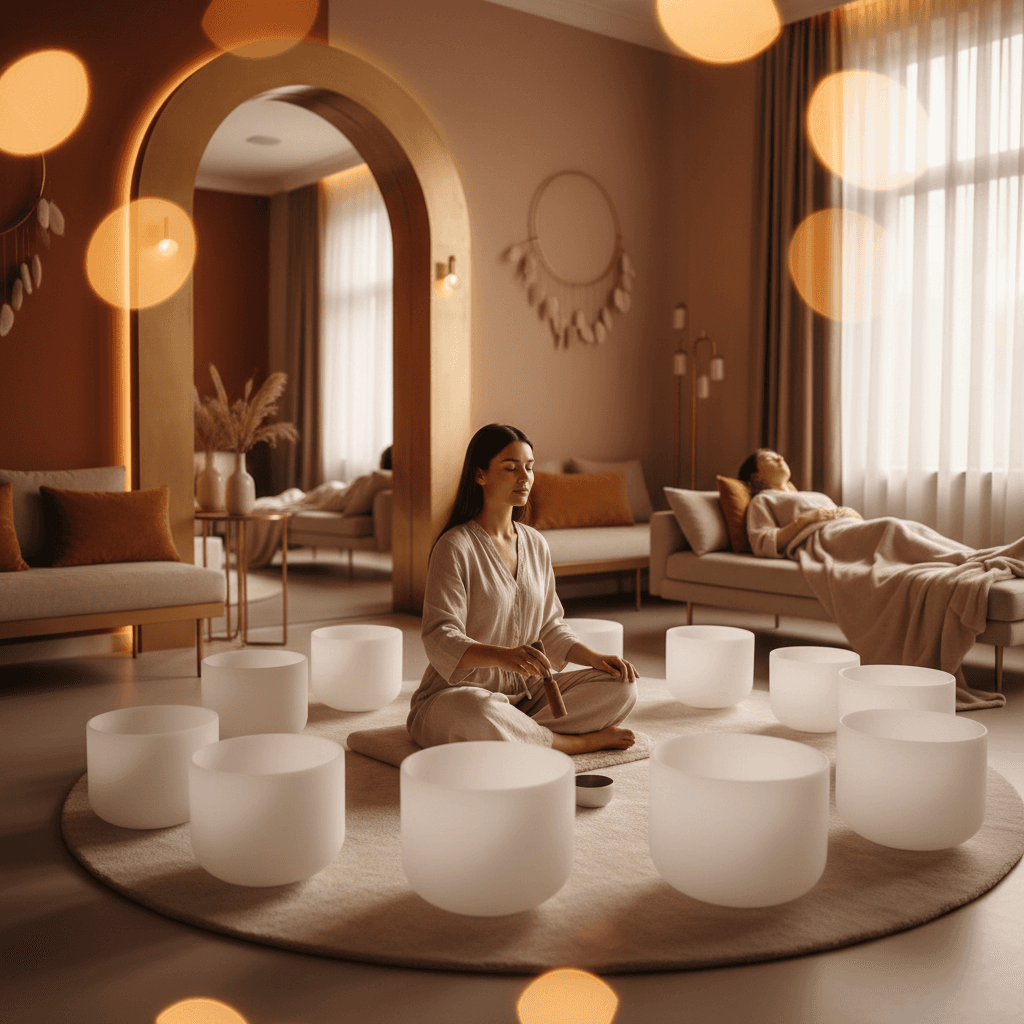
Stepping into a sound wellness session at Soul Art is an immersive experience designed to harmonize mind and body. It's a journey into sensory depth, where the scientific principles of sound are translated into tangible well-being. This is not about passive listening; it's about active vibrational engagement.
As you recline comfortably, often on a heated mat, the environment itself begins to prepare you. Soft lighting, curated aromas, and the tranquil ambience contribute to a sense of immediate calm. The intention is to create a sanctuary where the external world fades away, allowing your internal landscape to come into focus. Each session is carefully constructed to guide your system into a state of optimal receptivity and healing.
The experience then unfolds through a meticulously crafted soundscape, using a diverse array of instruments. You might feel the deep, resonant tones of Tibetan singing bowls vibrating through your body, a sensation that many people report as profoundly grounding. These bowls, when played directly on or around the body, transmit therapeutic vibrations that may support the release of muscular tension and activate the parasympathetic nervous system.
The majestic gongs introduce rich, complex overtones that can envelop you, creating a sonic bath that some anecdotal evidence suggests can help quiet the incessant chatter of the mind. These full-body vibrations are believed to stimulate cellular regeneration and detoxification, subtly encouraging the body's natural healing processes. Complementing these are the ethereal chimes, crystal bowls, and other resonant instruments, each contributing unique frequencies and harmonics.
"The true power of sound lies not just in what we hear, but in what we feel – the subtle vibrations that awaken and realign our deepest energetic blueprint, preparing us for peak physical and mental states."
What clients experience is a state of profound relaxation, often described as a meditative or hypnagogic state, hovering between wakefulness and sleep. In this state, the brain is receptive to positive changes, reducing stress hormones and fostering mental clarity. Athletes often report enhanced mental focus, reduced anxiety, and an overall sense of energetic rejuvenation following sessions. The combination of targeted frequencies, soothing rhythms, and the full-body vibrational experience works synergistically to reset and restore. This deep restoration supports improved sleep, reduced inflammation, and a heightened sense of readiness for future physical demands.
The Soul Art Approach
At Soul Art, Larissa Steinbach has meticulously developed an approach that bridges ancient wisdom with contemporary scientific understanding. Our philosophy is rooted in the belief that true athletic performance emerges from a holistic state of well-being, where mind, body, and spirit are in harmony. We go beyond generic sound baths, offering bespoke experiences tailored to the specific needs of athletes.
Larissa Steinbach, with her profound expertise, leads our team in designing sound journeys that are not merely relaxing but strategically beneficial for performance enhancement and recovery. What makes the Soul Art method unique is its precision. We thoughtfully select specific instruments and techniques to target desired physiological and psychological outcomes. For instance, understanding the nuances of how 440 Hz music impacts warm-up performance, we integrate similar principles into our pre-event or recovery soundscapes.
We utilize a diverse palette of instruments, each chosen for its unique vibrational qualities and potential benefits. This includes the earthy grounding of large Tibetan singing bowls, which provide deep, palpable vibrations to aid physical release and recovery. Our magnificent symphonic gongs offer a full spectrum of frequencies, facilitating deep brainwave shifts conducive to profound relaxation and mental recalibration.
Crystal singing bowls, tuned to specific energetic centers, are employed for their pure, resonant tones, which may support mental clarity and emotional balance. These are often complemented by tuning forks, chimes, and other percussive elements that add layers of intricate sonic texture. Every element, from the duration of a tone to the sequence of instruments played, is considered to create an optimal environment for the athlete's system. The Soul Art approach recognizes that true strength comes from inner calm and optimized cellular vitality, setting a new standard for elite athletic support in Dubai.
Your Next Steps
Incorporating sound into your athletic regimen doesn't have to be a monumental task. Small, consistent steps can yield significant benefits for your performance and overall well-being. Here are some actionable suggestions to begin your journey:
- Curate Your Warm-Up Playlist: Experiment with preferred music at a fast tempo (120-140 BPM) and moderate loudness (70-80 dB). If possible, try to find music mixed around a 440 Hz frequency to potentially enhance mood and reduce perceived exertion during your warm-up, as some research suggests.
- Embrace Mindful Breathing: Integrate short breathwork sessions into your daily routine. Focus on diaphragmatic breathing for 5-10 minutes post-training or before sleep. You may even pair this with ambient or low-frequency soundscapes to deepen relaxation and focus.
- Prioritize Recovery with Sound: Dedicate time for active recovery where you incorporate calming, low-frequency soundscapes. This could be during stretching, foam rolling, or simply lying down. These sounds may support parasympathetic nervous system activation, aiding in quicker physical and mental restoration.
- Mind Your Sleep Environment: Create a serene sleep sanctuary by minimizing light and noise. Consider using a white noise machine or playing gentle, consistent low-frequency sound loops at a very low volume to mask disruptive sounds and promote deeper, more restorative sleep.
- Explore Professional Sound Wellness: For a truly transformative and targeted experience, consider booking a personalized sound therapy session. A session at Soul Art provides an expertly guided journey using a range of instruments designed to optimize your recovery, mental clarity, and overall well-being.
Ready to experience how sound can elevate your performance and overall well-being? Connect with Soul Art today to explore personalized sessions.
In Summary
Sound therapy represents a sophisticated and scientifically-grounded frontier for athletic performance enhancement. From optimizing warm-ups with specific frequencies like 440 Hz to accelerating post-exercise recovery through low-frequency vibrations that enhance heart rate variability, sound offers a holistic toolkit for athletes. It sharpens mental focus, reduces perceived exertion, and fosters deep relaxation critical for regeneration.
Larissa Steinbach's Soul Art studio in Dubai offers a unique, tailored approach, combining ancient instruments with modern scientific insights to create bespoke soundscapes that support peak physical and mental states. By integrating these powerful sound wellness practices, athletes can unlock new dimensions of their potential, achieving not just higher performance but a more profound sense of balance and well-being. Discover the transformative power of sound and elevate your game with Soul Art.
Bookings Coming Soon
Soul Art is still in preparation. Session details and booking will be published here after launch.
Coming Soon
Wellness Disclaimer: This article is for educational and informational purposes only. It does not constitute medical advice, diagnosis, or treatment. Soul Art Dubai provides non-medical wellness experiences focused on relaxation, stress management, and general wellbeing. Sound wellness is a complementary practice and should not replace professional medical care.
Related Articles
Optimizing Athletic Performance: The Synergy of Sports Nutrition and Sound Wellness
Archery, Stillness, and Sound: Soul Art's Path to Focus

Swimming's Secret Weapon: Sound for Peak Aquatic Performance