Sound Healing vs. Music Therapy: Decoding Their Unique Wellness Paths
Key Insights
Unravel the distinct yet complementary worlds of sound healing and music therapy with Soul Art, Dubai. Discover their scientific foundations, applications, and how Larissa Steinbach guides your journey to sonic well-being.
Compelling Introduction: The Harmony of Healing Frequencies
Have you ever noticed how a particular melody can instantly shift your mood, or how the gentle hum of a singing bowl can quiet a busy mind? Sound, in its myriad forms, possesses an undeniable power to influence our inner states. Yet, amidst the growing recognition of sonic wellness, terms like "sound healing" and "music therapy" are often used interchangeably, leading to confusion.
At Soul Art, Dubai's premier sound wellness studio, founded by the visionary Larissa Steinbach, we believe in clarity. Understanding the distinct philosophies and methodologies behind these practices is crucial for anyone seeking to leverage sound for their well-being. While both harness the profound impact of auditory stimuli, their approaches, goals, and applications differ significantly.
This article will meticulously unpackage the core distinctions between sound healing and music therapy. We will delve into their scientific underpinnings, explore how they manifest in practice, and illuminate the unique path to holistic harmony offered by Soul Art. By the end, you will possess a deeper appreciation for these powerful modalities and discover which approach may best resonate with your personal wellness journey.
The Science Behind Sonic Wellness: Unpacking Neuro-Vibrational Effects
The notion that sound can influence health is not a new-age concept; it is deeply rooted in both ancient wisdom and contemporary scientific inquiry. While both music therapy and sound healing tap into our innate responsiveness to auditory stimuli, the mechanisms and intentionality behind their impact present fascinating differences. There is a common misconception that one is purely scientific while the other is purely spiritual, but this perspective overlooks the evolving evidence for both.
Music Therapy: Structured Interventions with Clinical Rigor
Music therapy is a well-established, clinical, and evidence-based practice. It involves the intentional use of music interventions to achieve specific, non-musical therapeutic goals within a professional client-therapist relationship. This structured approach is supported by a robust body of scientific research, spanning hundreds of peer-reviewed studies.
Research consistently demonstrates how music therapy positively affects neuroplasticity, the brain's ability to reorganize itself by forming new neural connections. It has been shown to support language development, enhance emotional regulation, and aid significantly in recovery from illness or injury. These findings have led to its widespread respect and integration into clinical and academic settings globally.
A credentialed music therapist facilitates these sessions, which often occur in hospitals, schools, mental health centers, or rehabilitation clinics. The core of music therapy is often interactive; clients might sing, compose, or play instruments. This active engagement is designed to meet precise therapeutic objectives, such as improving communication skills, reducing anxiety levels, enhancing memory retention, or developing fine and gross motor skills. In this modality, the therapeutic experience of music is considered the direct agent of change, carefully guided by the therapist.
Sound Healing: Holistic Vibrational Resonance for Harmony
Sound healing, in contrast, is a holistic and vibrational practice deeply rooted in ancient traditions, yet it is increasingly garnering attention in scientific circles. It utilizes steady tones and vibrations, often produced by instruments such as singing bowls, tuning forks, gongs, and even the human voice, to facilitate relaxation and promote harmony within the body and energy field. Unlike the interactive nature of music therapy, sound healing is typically receptive; participants lie down and passively receive the resonant tones and vibrations.
The emerging science behind sound healing suggests several intriguing mechanisms of action. Studies have indicated that sound baths and vibroacoustic therapies may support a state of profound relaxation, leading to a reduction in stress and anxiety. The sustained frequencies are thought to influence brainwave patterns, encouraging states of alpha and theta waves, which are associated with deep relaxation and meditative states. This process can help to down-regulate the nervous system, shifting it from a sympathetic (fight-or-flight) response to a parasympathetic (rest-and-digest) state.
Preliminary research further suggests that specific sound frequencies and vibrations may impact physiological responses. These can include a lowering of heart rate and blood pressure, which are crucial indicators of stress reduction. Researchers are actively exploring which sound frequencies are most effective and how much sound exposure is needed to achieve optimal benefits, building on anecdotal reports of enhanced mood and overall well-being. In sound healing, the sound and its vibrational elements are often seen as the direct healing agents, working on the body's energetic systems and physical structures.
Experiencing Sound: Distinct Approaches to Sonic Engagement
While both modalities employ sound, the experiential journey in a music therapy session differs considerably from that in a sound healing session. Understanding these practical distinctions helps individuals align their needs with the most suitable practice. Each approach offers unique pathways to well-being, designed with different intentions and methodologies.
The Music Therapy Experience: Active Participation for Targeted Growth
In music therapy, the experience is profoundly interactive. Clients are not merely passive listeners; they are active participants in the musical process. This might involve playing musical instruments, whether conventional or percussive, engaging in guided improvisation, composing original songs, or singing pre-existing melodies. The activities are carefully selected and guided by a credentialed music therapist to address specific clinical goals.
For instance, a client recovering from a stroke might use rhythmic drumming to improve motor coordination and timing. A child with communication challenges might engage in songwriting to express emotions that are difficult to articulate verbally. The therapist-client relationship is central, fostering a safe and supportive environment where musical expression becomes a powerful tool for self-discovery and growth. The focus is on the therapeutic process inherent in the musical experience itself, rather than the sound as an external object. This makes music therapy a dynamic and collaborative journey, tailored to the individual's progress and needs, often observed and assessed for measurable outcomes.
The Sound Healing Journey: Receptive Immersion for Deep Restoration
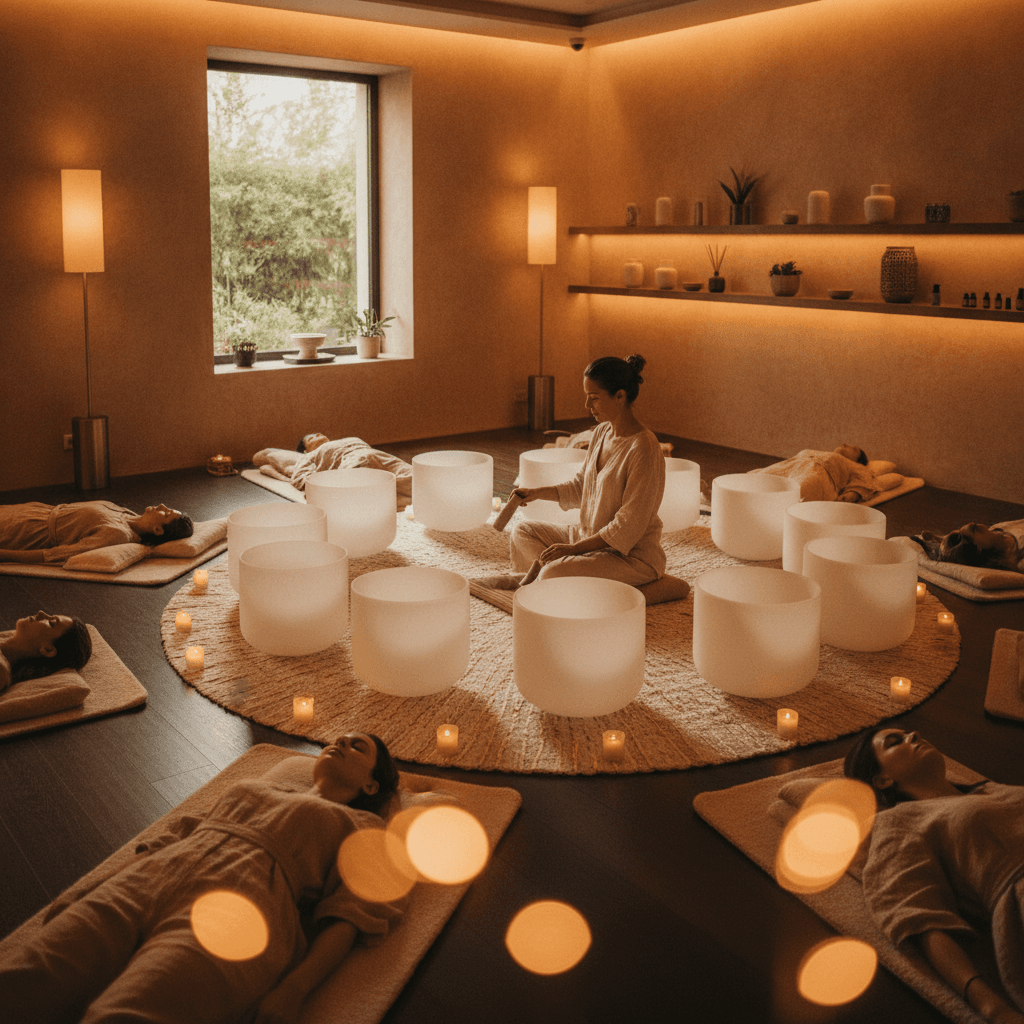
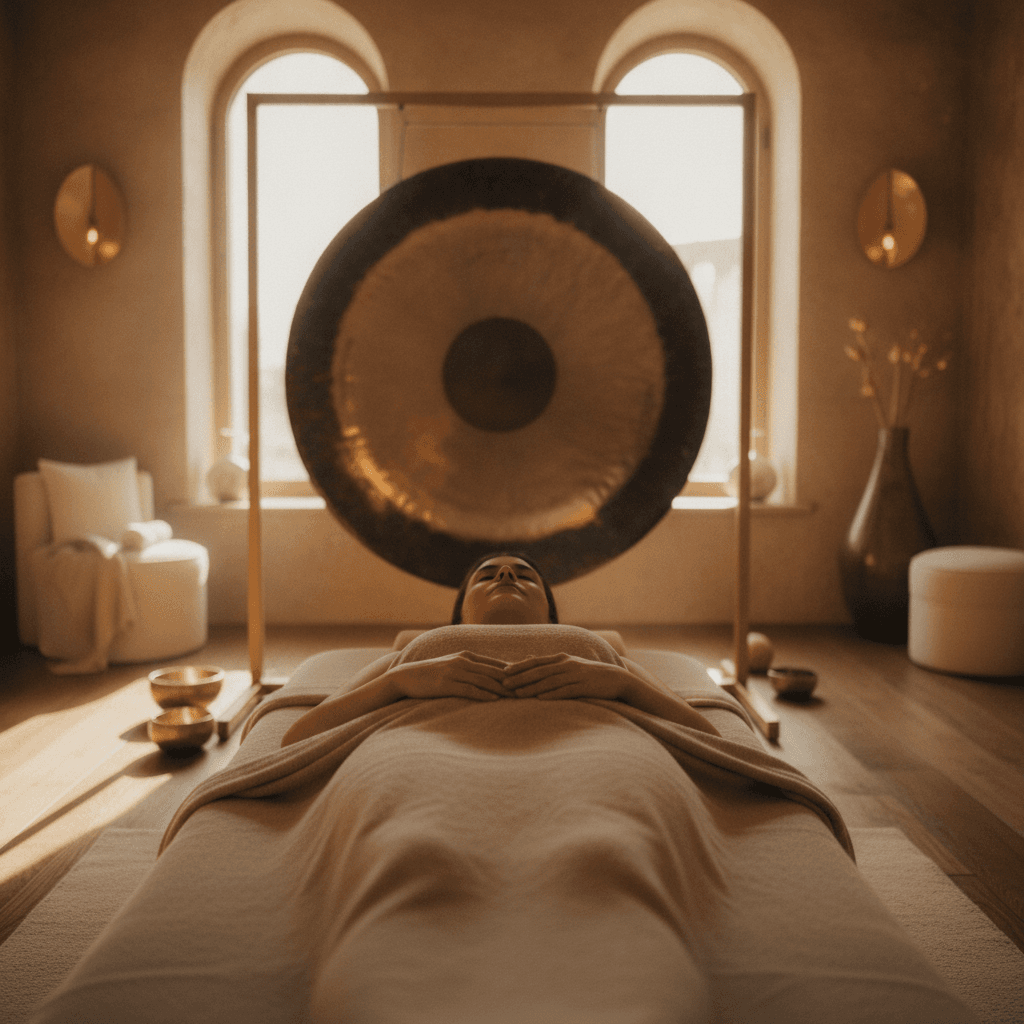
Conversely, a sound healing session is typically receptive. Participants are invited to lie down comfortably, often on a yoga mat or blanket, creating an environment conducive to deep relaxation and introspection. The practitioner then plays a variety of instruments that produce sustained tones and resonant vibrations. These often include crystal and Tibetan singing bowls, majestic gongs, precise tuning forks, and sometimes the calming resonance of the human voice through chanting or toning.
The intention is for the individual to simply receive these steady tones and vibrations. Many people report feeling the subtle vibrations permeate their physical body, creating a gentle internal massage that supports release and restoration. This immersion in sound is designed to help the body and mind relax, quiet mental chatter, and recalibrate the nervous system. The focus is on bringing the individual's energetic and physical states into a harmonious balance through the direct influence of the sound itself. It is a journey of letting go, allowing the frequencies to wash over and through you, fostering a state of deep meditative calm and energetic re-alignment.
"While music therapy meticulously crafts an experience for targeted growth, sound healing invites a surrender into vibrational resonance, allowing the body's innate wisdom to restore harmony."
The Soul Art Distinction: Larissa Steinbach’s Curated Sound Wellness
At Soul Art Dubai, we embrace the profound potential of sound to transform well-being. Our approach, meticulously curated by founder Larissa Steinbach, firmly resides within the realm of sound healing. We are dedicated to providing immersive, deeply restorative experiences that guide individuals towards profound relaxation, stress reduction, and energetic balance. Our philosophy acknowledges the ancient roots of sound as a healing force while integrating a modern, scientifically informed understanding of its impact on the human system.
Larissa Steinbach's vision for Soul Art is built upon the premise that intuitive vibrational tuning can facilitate well-being. We understand that in our fast-paced world, many individuals seek a sanctuary where they can disengage from external pressures and reconnect with their inner equilibrium. Soul Art offers this space, utilizing a carefully selected array of instruments known for their powerful resonant qualities.
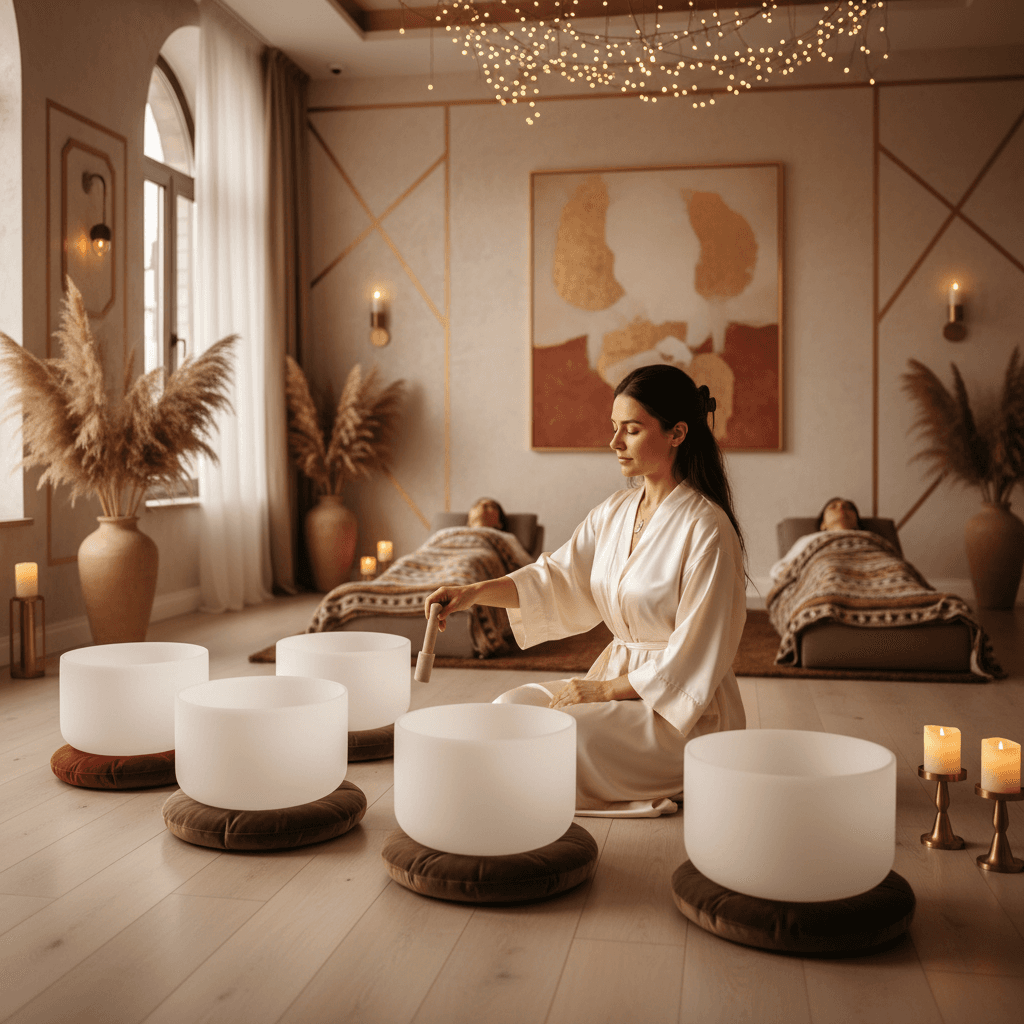
Our sessions predominantly feature pure quartz crystal singing bowls, renowned for their clear, sustained tones and ability to induce deep meditative states. We also incorporate the majestic resonance of gongs, which create a rich tapestry of sound designed to facilitate emotional release and mental stillness. Precision-calibrated tuning forks are sometimes used for targeted vibrational work, while other elemental instruments may enrich the auditory landscape. The Soul Art method emphasizes the receptive experience, creating an environment where the body and mind can naturally recalibrate and restore themselves through the direct influence of pure sound and vibration. This commitment to delivering a truly immersive and restorative sound healing experience makes Soul Art Dubai a unique destination for those seeking a profound path to holistic well-being.
Cultivating Your Sonic Wellness: Practical Steps Forward
Understanding the nuances between sound healing and music therapy empowers you to make informed choices for your wellness journey. Whether you are drawn to the structured engagement of music therapy or the receptive immersion of sound healing, the overarching meta-idea remains: sound is good for us. Here are some practical steps you can take today to integrate the benefits of sonic wellness into your life.
Explore Your Preferences
Begin by reflecting on what you seek. If your goals involve improving specific cognitive functions, developing communication skills, or processing complex emotions through active musical engagement, music therapy might be a path to explore. If your intention is deep relaxation, nervous system regulation, stress reduction, and overall energetic harmonization through passive reception of vibrations, then sound healing may be a more aligned choice.
Start with Receptive Listening
Even if you don't immediately book a session, you can begin by mindfully listening to instrumental music or natural soundscapes. Many apps and online platforms offer guided meditations with ambient sound or binaural beats, which may support relaxation and mental clarity. Pay attention to how different sounds make you feel emotionally and physically.
Seek Qualified Practitioners
When considering either modality, research the qualifications of practitioners. For music therapy, look for board-certified music therapists (MT-BC). For sound healing, seek practitioners with reputable training and certifications, such as those offered by the Sound Medicine Academy or similar well-regarded institutions. A skilled practitioner, like Larissa Steinbach at Soul Art, can significantly enhance your experience.
Listen to Your Body
Your body is an incredible instrument, constantly providing feedback. As you explore different sonic experiences, notice any shifts in your heart rate, breathing, or overall sense of calm. The right sounds will resonate with you, guiding you towards a state of profound peace and restoration. Trust your intuition in discerning what truly serves your well-being.
Experience a Sound Bath
A sound bath, a cornerstone of sound healing, is an excellent entry point. It requires no prior experience or skill, only an openness to receive. It is a perfect opportunity to deeply relax and experience the direct, restorative power of vibrational sound.
Ready to immerse yourself in the transformative power of sound? Discover the profound relaxation and holistic harmony offered by Larissa Steinbach and the dedicated team at Soul Art Dubai.
Bookings Coming Soon
Soul Art is still in preparation. Session details and booking will be published here after launch.
Coming Soon
In Summary: A Clear Path to Sonic Well-being
In essence, while both sound healing and music therapy leverage the profound power of auditory experiences for well-being, their paths diverge in fundamental ways. Music therapy is a clinical, interactive, goal-oriented practice facilitated by credentialed therapists, using music as the agent for achieving specific therapeutic outcomes. Sound healing, championed by pioneers like Larissa Steinbach at Soul Art Dubai, is a holistic, receptive practice that uses steady tones and vibrations to restore harmony, regulate the nervous system, and support overall well-being.
Both modalities stand on a growing foundation of scientific understanding, proving that sound is indeed "good for us." The key distinction lies in the agent of change—the therapeutic experience of music in one, and the direct vibrational impact of sound in the other. By understanding these differences, you can consciously choose the path that best resonates with your personal wellness aspirations, inviting deeper peace, balance, and vitality into your life.
Wellness Disclaimer: This article is for educational and informational purposes only. It does not constitute medical advice, diagnosis, or treatment. Soul Art Dubai provides non-medical wellness experiences focused on relaxation, stress management, and general wellbeing. Sound wellness is a complementary practice and should not replace professional medical care.
Related Articles
Navigating Sound Wellness: Evidence-Based Questions for Practitioners
Soul Art: Integrating Science, Ritual, and Safety for Well-being
Sound Baths: Accessible Comfort for Older Adults at Soul Art