The Sonic Sanctuary: How Practitioner Voice Engages Your Social System at Soul Art
Key Insights
Discover how the Social Engagement System and the human voice foster profound co-regulation. Explore the neuroscience behind connection and Soul Art's unique approach.
Have you ever noticed how the calming tone of a trusted voice can instantly shift your state, easing tension you didn't even realize you were holding? This isn't just a pleasant experience; it’s a profound biological response rooted in our very survival. Our nervous system is intricately wired to seek safety and connection, a quest often facilitated by the subtle cues we exchange through social interaction.
At Soul Art, Dubai's premier sound wellness studio, we delve deep into these fundamental human needs. We explore how conscious engagement, particularly through the practitioner's voice and presence, can unlock powerful pathways to well-being and nervous system regulation. This article will unveil the fascinating science behind the Social Engagement System and how its activation creates a sanctuary for profound relaxation and personal growth.
Understanding these neural pathways helps us appreciate the deliberate, gentle power behind every interaction at Soul Art. Join us as we explore how the ancient wisdom of human connection, amplified by intentional sound, can profoundly support your journey towards holistic wellness.
The Science Explained: Unpacking Our Innate Need for Connection
At the heart of our capacity for connection lies the Social Engagement System (SES), a sophisticated neural network designed to facilitate safe social interaction. This system is a functional integration of autonomic pathways with cranial nerve circuits, which together support communication and co-regulation. It is fundamental for human survival and well-being, as social connectedness is widely considered a biological imperative.
The Ventral Vagal Pathway and Its Orchestration of Social Cues
The SES is intricately linked to the ventral vagal pathway, a crucial part of the autonomic nervous system responsible for feelings of safety and calm. This pathway directly influences the striated muscles of the face and head, governing our ability to make eye contact, display facial expressions, listen to human voices, and modulate vocal tone (prosody). Essentially, the nonverbal communication through our eye gaze, vocal tone, and facial expressions subtly communicates our feelings about the environment, including the people within it.
These pathways connect brainstem nuclei that regulate the heart and lungs with cranial nerves controlling the face, head, and voice. Specifically, cranial nerves V, VII, IX, X, and XI are components of these special visceral efferent pathways, providing a developmental and functional foundation for integrating autonomic regulation with social communication. This integrated circuit allows for rapid, flexible regulation of cardiac output, often described as the “vagal brake,” which supports the physiological conditions enabling social engagement.
Neuroception: Your Nervous System's Unconscious Safety Detector
Our nervous system constantly scans the environment for cues of safety or threat, a process known as neuroception. This detection occurs non-consciously, meaning it operates outside our awareness, influencing our autonomic state even before we consciously process information. The Social Engagement System is activated when our nervous system detects cues of safety through this neuroception.
Cues of safety often come from familiar individuals, those with appropriately prosodic voices, and warm, expressive faces. These signals are vital; they inform our nervous system that the environment is welcoming, allowing us to relax our guard and engage openly. This unconscious assessment of safety is a cornerstone for enabling genuine connection and the benefits that flow from it.
The Biological Imperative of Co-Regulation and Mutual Influence
Social connection is not merely a preference but a biological imperative, deeply wired into our nervous system. Our bodies are designed to seek safety and co-regulation through proximity and interaction with trusted others. Co-regulation, within the context of Polyvagal Theory, describes the process by which individuals interact to influence and mutually regulate each other’s autonomic states.
This process profoundly relies on neuroception’s detection of safety, transmitted through encouraging tones of voice, warm facial expressions, eye contact, and inviting gestures. When these cues are received, the nervous system interprets them as safe, fostering a state of calm and openness. An optimally regulated autonomic nervous system supports homeostasis and provides an efficient vagal brake, reacting and recovering to transitory challenges. However, resilience also involves the integrative mechanism of social connectedness, which requires an active social engagement system to broadcast an individual’s accessibility through voice and facial expressivity.
The Potent Power of the Practitioner's Voice
The human voice is an exceptionally powerful tool for eliciting co-regulation. Research indicates that the brain processes voice acoustics into rich person representations that profoundly shape listener behavior and affect social interactions. Vocal emotion research highlights a staggered time course of person perception from voices, with physical characteristics decoded earlier than psychological and social attributes.
Later processing stages deal with higher-level representations of voice identity, vocal emotion, and more abstract speaker-related characteristics, such as social and psychological attributes. A practitioner's voice, therefore, is not just a medium for instruction; it's a direct channel for transmitting cues of safety, warmth, and trustworthiness. This intentional use of vocal prosody is a key aspect of engaging the Social Engagement System, helping to downregulate defensive responses and promote a state of ease. Transcriptomic studies even reinforce the specialized role of brainstem nuclei in mammalian vocal prosody, indicating it is a genetically supported innovation enabling dynamic social engagement.
"Polyvagal Theory proposes that social connectedness is tantamount to stating that our body feels safe in proximity with another. The theory elaborates that the neural structures involved in the Social Engagement System orchestrate the autonomic states of the interacting dyad to both broadcast and receive cues of safety that downregulate threat reactions of defense and promote accessibility and co-regulation."
How It Works in Practice: Experiencing Conscious Connection
In the modern world, where digital interactions often overshadow genuine human connection, the need for authentic social engagement has become more critical than ever. While social media platforms are systematically designed to capture and maintain user attention through reward pathways and algorithms, they often fall short of providing the deep co-regulation our nervous systems crave. Establishing tech-free areas and participating in offline activities may encourage more direct interpersonal connections, enhancing social skills and reducing dependency on virtual communication.
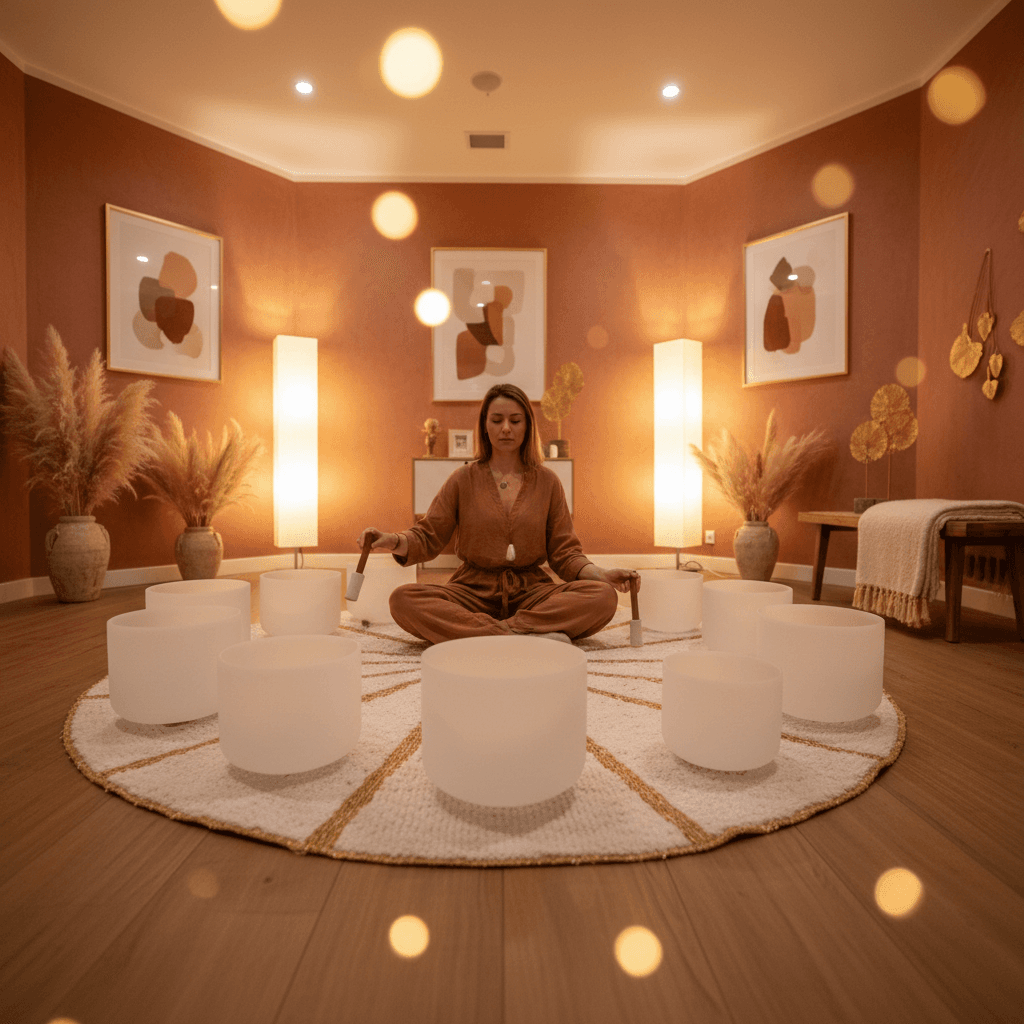
This is precisely where intentional wellness practices, like those offered at Soul Art, shine. During a sound wellness session, the interaction begins even before the instruments resonate. It starts with the welcoming presence and voice of your practitioner. From the moment you arrive, cues of safety are subtly broadcast through their calm demeanor, gentle facial expressions, and inviting vocal tone.
As the session unfolds, the practitioner’s voice guides you, not just with words, but with its rhythm, timbre, and prosody. This consistent, reassuring vocal presence helps to ground your nervous system, signaling that you are in a safe space. It acts as an anchor, allowing your body to release tension and your mind to quiet. The sounds of the instruments then blend with this foundation of safety, deepening the relaxation response.
Clients often report a profound sense of peace and a feeling of being truly seen and heard. This is the Social Engagement System at work, interpreting the non-verbal and vocal cues as an invitation to rest and self-regulate. It's a return to our biological imperative for social connection, offering a gentle antidote to the stresses of daily life and fostering a measurable mediator of health, behavior, and intervention outcomes, objectively indexed by physiological markers like vagal efficiency.
The Soul Art Approach: Larissa Steinbach's Unique Methodology
At Soul Art, Larissa Steinbach has meticulously crafted an environment that deeply understands and leverages the power of the Social Engagement System. Her approach goes beyond simply playing instruments; it's about curating an experience where every element, especially the human connection, serves to foster profound co-regulation and well-being. Larissa’s personal presence, empathetic listening, and carefully modulated voice are central to the Soul Art methodology.
Larissa consciously uses her voice, rich with appropriate prosody and warmth, to invite participants into a state of deep relaxation. She understands that her voice is a direct conduit for cues of safety, helping to downregulate any lingering defensive patterns within the nervous system. This intentional vocal engagement, combined with warm facial expressions and reassuring eye contact, creates an immediate sense of trust and accessibility.
The sound instruments chosen by Larissa, such as Himalayan singing bowls, gongs, and chimes, are carefully selected not only for their therapeutic frequencies but also for their ability to complement the co-regulatory environment established by her presence. Acoustic protocols, which use modulated sound to engage the Social Engagement System and signal safety, are integral to the Soul Art experience. Breath- and rhythm-based practices, such such as vocal toning, which stimulate vagal afferents and promote parasympathetic activity, may also be incorporated.
Soul Art provides a sanctuary where the ancient biological imperative for social connection is honored and harnessed for modern well-being. Larissa Steinbach’s expertise lies in facilitating an experience that allows your nervous system to feel safe, supported, and ultimately, deeply rested.
Your Next Steps: Cultivating Conscious Connection
Understanding the power of the Social Engagement System empowers us to be more intentional in how we seek and offer connection. You can integrate these principles into your daily life to cultivate greater well-being.
Here are some practical steps you can take:
- Practice Mindful Listening: When interacting with others, truly listen, paying attention not just to words but also to vocal tone, facial expressions, and eye contact. Offer your full presence to create a space of authentic connection.
- Conscious Vocalization: Become aware of your own vocal tone and how it might be perceived. A softer, more modulated voice can signal approachability and calm, both to others and to your own nervous system.
- Seek Authentic Engagement: Prioritize in-person interactions with trusted individuals over purely digital ones. The richness of nonverbal cues in face-to-face exchanges is vital for true co-regulation.
- Embrace Digital Detoxes: Consciously step away from screens. Establishing tech-free times or areas can help you regain focus and encourage more direct interpersonal connections, reducing dependency on virtual communication.
- Explore Sound Wellness: Experience firsthand how a skilled practitioner, like Larissa Steinbach at Soul Art, can use their voice and sound to activate your Social Engagement System and guide you into profound states of relaxation.
By intentionally engaging our Social Engagement System, we may support our innate capacity for resilience and foster a deeper sense of safety and belonging in our lives.
In Summary: The Symphony of Safety and Connection
The Social Engagement System is a testament to our profound biological need for connection, orchestrated by our face, voice, and heart. It is through neuroception of safety, signaled by cues like a warm facial expression or a gentle, prosodic voice, that our nervous system finds calm and enters a state of co-regulation. This innate capacity for connection is vital for our well-being, helping to mitigate the disruptions of chronic defensive patterns and support our ability to connect authentically.
At Soul Art, Larissa Steinbach meticulously creates an environment where these scientific principles translate into a deeply felt experience of safety and profound relaxation. Through the intentional use of her voice, presence, and sound instruments, Soul Art provides a unique sanctuary for individuals to restore their nervous system and rediscover the power of genuine human connection. Experience this transformative approach and allow your body to feel truly safe and supported.
Bookings Coming Soon
Soul Art is still in preparation. Session details and booking will be published here after launch.
Coming Soon
Wellness Disclaimer: This article is for educational and informational purposes only. It does not constitute medical advice, diagnosis, or treatment. Soul Art Dubai provides non-medical wellness experiences focused on relaxation, stress management, and general wellbeing. Sound wellness is a complementary practice and should not replace professional medical care.
Related Articles

Beyond Hearing: Sound Waves & Your Body's Inner Boundaries at Soul Art
Breath Holding & Sound: Releasing Guarded Patterns at Soul Art Dubai

Reclaim Vitality: Soft Sound Practices for Fatigue & Collapse