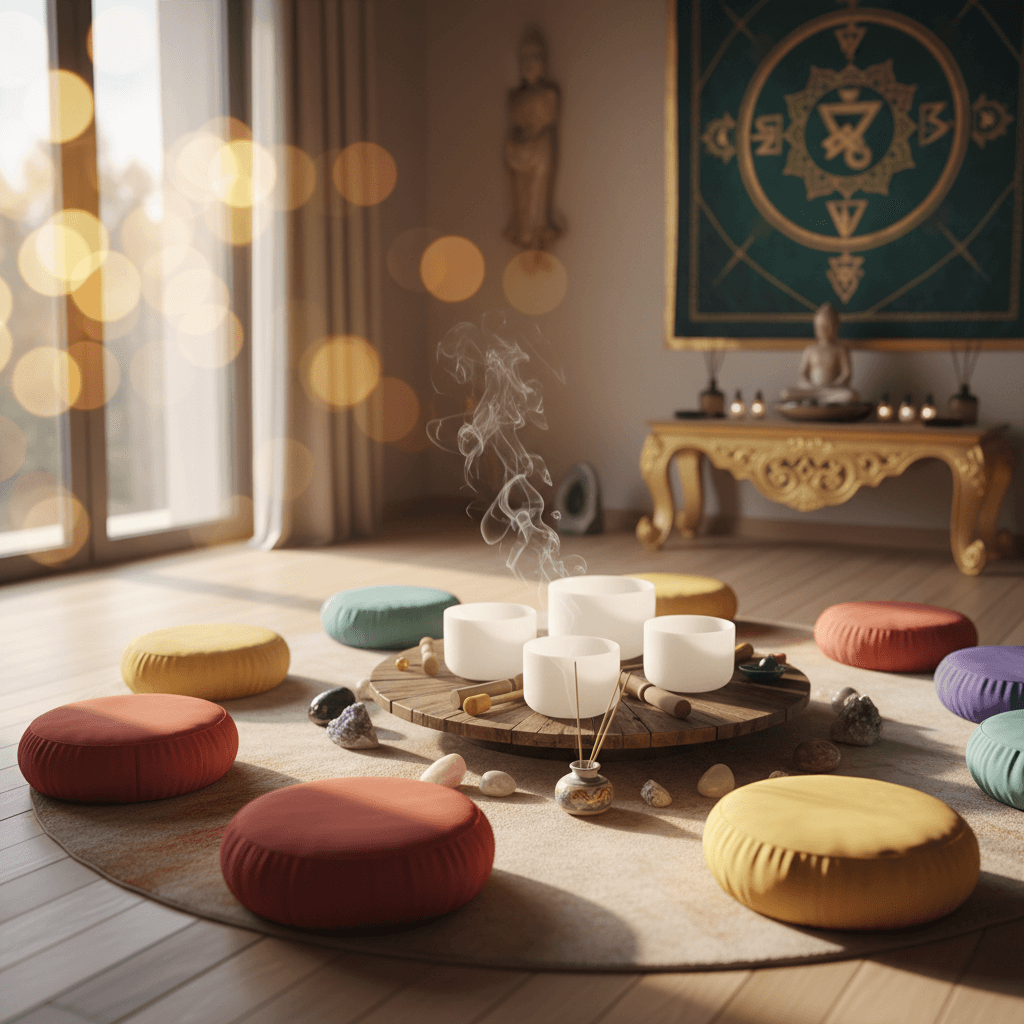
Sound for Sleep: Decoding Restorative Recovery & Wellness
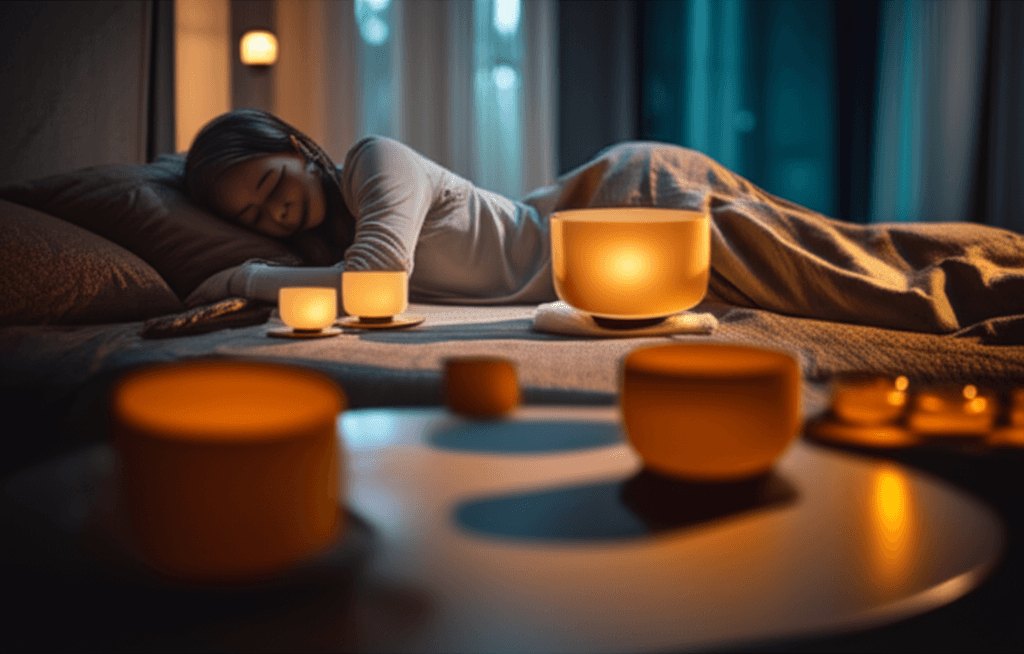
Key Insights
Explore the science of sound for deep rest and recovery. Learn how targeted sound wellness, not just noise, enhances sleep quality and cellular repair at Soul Art Dubai.
Have you ever turned on a "sleep sound" app, hoping for a night of blissful, uninterrupted rest, only to wake up feeling less than refreshed? Many people seek solace in background noise, from ocean waves to "pink noise," believing these sounds are a shortcut to better sleep. However, surprising new research suggests that some popular sleep aids might actually be hindering the very restorative processes we crave.
At Soul Art, Dubai's premier sound wellness studio, we understand that true recovery goes far beyond simply falling asleep. It involves entering specific states of deep, restorative rest where the body and mind can truly rejuvenate on a cellular level. This article will delve into the nuanced science of sound and sleep, revealing why not all noise is beneficial, and how intentional, expertly crafted sound experiences can unlock profound levels of recovery, supporting your overall wellbeing.
The Nuance of Sound: Not All Noise is Equal
The world of sound is complex, and its impact on our physiology is profound. While many popular applications and devices promise improved sleep through ambient noise, scientific inquiry reveals a more intricate picture. Understanding the different ways sound interacts with our sleep cycles is crucial for harnessing its true potential for restorative rest.
The Pink Noise Paradox: Disrupting REM Sleep
For years, pink noise has been marketed as a sleep aid, often lauded for its ability to create a supposedly calming, uniform auditory environment. However, a significant study from the University of Pennsylvania Perelman School of Medicine, published in the journal Sleep, presents a compelling counter-narrative. Their findings indicate that pink noise may interfere with the most crucial stages of sleep.
The research highlighted a notable reduction in REM (Rapid Eye Movement) sleep among participants exposed to pink noise. REM sleep is an absolutely vital stage, essential for critical functions such as memory consolidation, emotional regulation, and comprehensive brain development. Disrupting this stage has potential long-term implications for cognitive health and overall mental wellbeing. Worryingly, this effect was observed to be particularly concerning for children, whose brains are still in crucial developmental phases and who naturally spend more time in REM sleep than adults.
In a striking contrast, the study found that a simple pair of earplugs proved significantly more effective at protecting deep, restorative sleep from disruptive external factors like traffic noise. Furthermore, when pink noise was combined with outside noise, sleep quality deteriorated even further. These findings challenge the prevalent assumption that continuous background noise automatically equates to better sleep, suggesting that in some cases, it could actually be doing more harm than good by diminishing the quality of essential sleep stages.
The Efficacy of Sound Masking: White Noise in Clinical Settings
While the Penn Medicine study raised concerns about certain types of continuous noise, other research highlights the specific benefits of sound masking, particularly with white noise, in distinct environments. The key lies in the purpose and application of the sound. Sound masking operates by introducing a neutral, consistent acoustic layer that effectively reduces the perception of sudden, disruptive noises, such as alarms, footsteps, or conversations.
This technique is especially valuable in noisy environments like hospitals, where constant auditory disturbances can severely impede patient rest and recovery. The Mayo Clinic's research, reinforced by Soft dB's healthcare sound masking systems, provides compelling evidence that white noise can significantly improve sleep efficiency and patient comfort in clinical settings. Studies published in Sleep Medicine: X in 2025 specifically noted that white noise "improved sleep efficiency in hospitalized adults, with good tolerability." By creating a more stable sound environment, sound masking helps lower physiological stress and promotes a consistent backdrop against which other noises fade into the background.
This is not about directly inducing sleep but about protecting existing sleep from interruption. For instance, studies have shown sound masking with "ocean sounds" can improve sleep depth and quality for postoperative coronary artery bypass graft patients. The principle here is reducing the change in sound levels that often trigger arousal, rather than the peak sound level itself. This controlled, neutral acoustic environment can indeed support better rest by mitigating external disturbances.
Beyond Masking: Personalized and Pleasant Sounds for Deeper Rest
Moving beyond mere sound masking, the cutting edge of sound wellness explores how specific, intentional, and even personalized sound experiences can actively enhance sleep architecture. This is where the distinction between passive noise and active sound engagement becomes critical. Research is now pointing towards the profound impact of carefully curated auditory stimuli on our brainwave states and overall cellular recovery.
A study published in Frontiers in Sleep in 2022 investigated the "Effects of pleasant sound on overnight sleep condition." This research suggests that specific, agreeable sounds can positively influence sleep, potentially by supporting the brain's natural rhythms. The implications are significant: it's not just about what noise isn't present, but what beneficial sounds are.
Even more fascinating is the emerging field of personalized sound sequences (PSS). A pilot study in Sleep Medicine in 2025 explored the effects of relaxing personalized sound sequences, derived from an individual's own slow-wave brain activity (delta waves), on sleep in adults with subjective insomnia. Participants listened to these individualized sound sequences for 30 minutes at bedtime. The results were highly promising: compared to a non-personalized placebo, the PSS condition significantly increased total sleep time by an average of 21.4 minutes and crucially, increased REM sleep proportion by 2.6%. It also reduced REM latency and improved overall subjective sleep quality. These preliminary results strongly suggest that listening to one's own slow brain waves converted into sound may improve both sleep quality and quantity, especially for those with moderate to severe sleep difficulties.
"Our bodies and minds require certain conditions. But once these are met, the result is deep rest. This truly restorative state – one never described before – confers benefits unattainable through routine rest and relaxation."
- Alexandra Crosswell, PhD, UC San Francisco
These findings align with the concept of deep rest, a psychological and physiological state during which our bodies can recover on a cellular level. As described by a UC San Francisco-based team, deep rest allows formerly stressed cells to restore themselves, performing essential maintenance to keep the human body in optimal working order. This goes beyond simple relaxation; it's a regenerative biological process that actively counters the cumulative effects of stress and supports cellular repair. Intentional sound, when expertly applied, may play a powerful role in guiding us into these profoundly restorative states, fostering a level of recovery unattainable through ordinary sleep or passive rest.
How It Works in Practice
Translating complex scientific principles into a tangible, beneficial experience is the art of sound wellness. When you step into a dedicated sound studio like Soul Art, the approach to sleep and recovery transcends merely masking noise; it becomes an active engagement with frequency and vibration designed to guide your mind and body into optimal states for repair.
The foundation of this practical application lies in creating an environment conducive to profound relaxation and nervous system regulation. This is an intentional space, free from the digital distractions and sudden auditory assaults of daily life. Here, the focus shifts from external chaos to internal harmony.
Unlike generic sleep apps that offer continuous, broad-spectrum noise, a professional sound wellness session involves carefully selected and sequenced sounds. These are not merely background sounds but active agents designed to influence your brainwave patterns. Specific frequencies and harmonic structures are employed to gently coax your brain from the active beta state, often associated with waking consciousness and stress, into calmer alpha, theta, and ultimately, delta brainwave states. Alpha waves are linked with relaxed wakefulness, theta with deep relaxation and meditative states, and delta with deep, restorative, dreamless sleep.
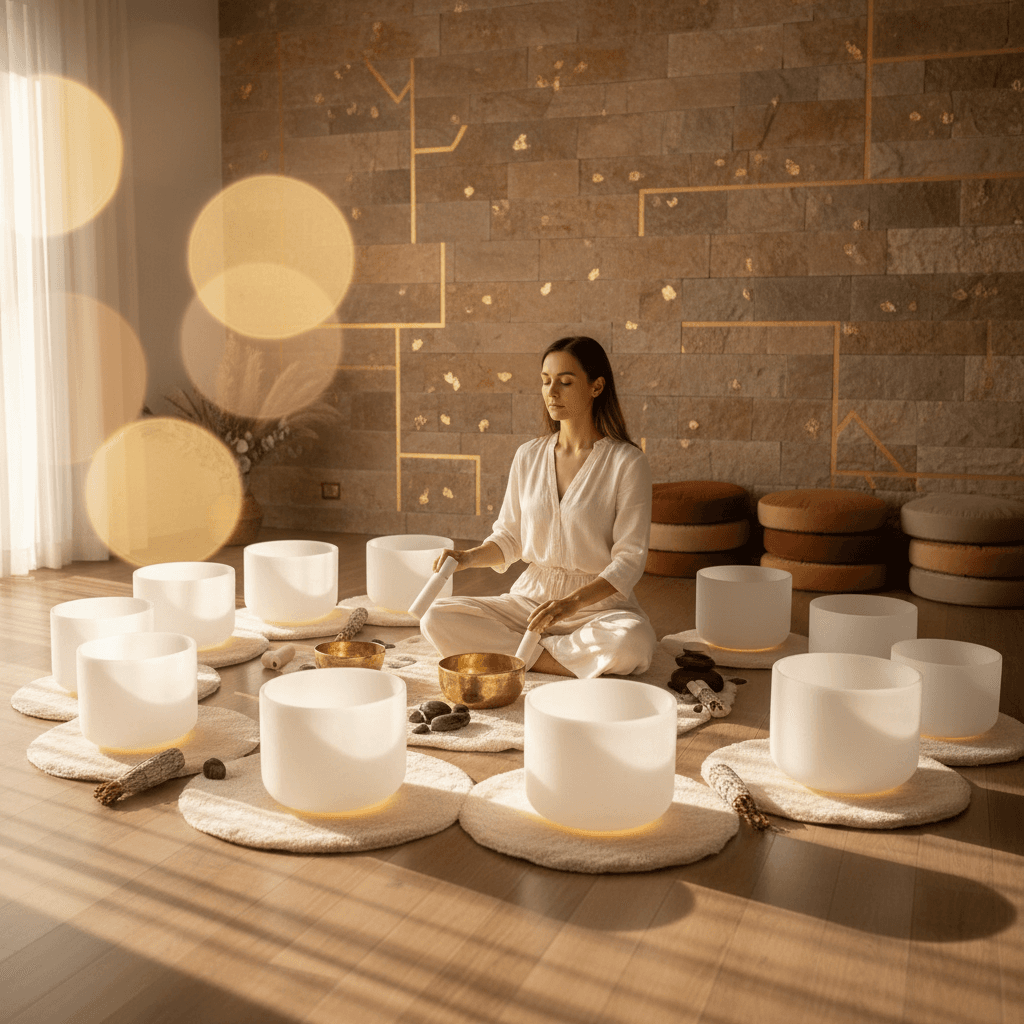
During a session, you may experience a rich tapestry of sound, not just heard through the ears, but felt throughout the entire body. The deep vibrations of gongs, the resonant tones of Himalayan singing bowls, or the precise frequencies of tuning forks are chosen for their ability to promote specific physiological responses. These vibrations interact with the body's own cellular structure, supporting the release of muscular tension and promoting a sense of inner calm. This is an active form of self-care where your body’s sensory system is immersed.
The goal is not to force sleep, but to create the optimal conditions under which deep rest and natural sleep can emerge. By gently guiding the nervous system into a parasympathetic state – often referred to as "rest and digest" – the body's innate healing mechanisms are activated. This allows for cellular repair, hormone rebalancing, and emotional processing, all critical components of true recovery that extend far beyond simply clocking hours of sleep. Many people report emerging from these sessions feeling deeply rested, as if they have undergone a profound reset, with sustained improvements in sleep quality and reduced anxiety.
The Soul Art Approach
At Soul Art, Larissa Steinbach has meticulously crafted a unique approach to sound wellness, blending scientific insight with intuitive artistry to foster profound restorative rest. Her philosophy centers on the understanding that true recovery is deeply personal and requires an intentional, precise application of sound. The studio in Dubai is designed as a sanctuary, where every detail contributes to a serene and transformative experience.
What makes the Soul Art method distinct is its commitment to moving beyond generic soundscapes to create bespoke experiences tailored for genuine cellular and nervous system recovery. Larissa does not simply play ambient noise; she orchestrates sophisticated sound journeys. These experiences are specifically designed to guide individuals into deeper brainwave states that are conducive to healing, emotional regulation, and deep rest, as opposed to merely initiating sleep.
Larissa utilizes a carefully selected array of instruments, each chosen for its unique acoustic properties and therapeutic potential. This includes majestic gongs, which produce expansive, immersive sound waves that can wash over the body and mind, helping to release deep-seated tension. Himalayan singing bowls contribute rich, resonant overtones that encourage meditative states and systemic relaxation. Furthermore, tuning forks are often employed for their precise vibrational frequencies, which can be applied to specific areas of the body to promote localized relaxation and energy balancing.
The Soul Art method emphasizes the scientific understanding of how different frequencies affect the brain and body. By drawing on principles related to brainwave entrainment, Larissa crafts soundscapes that gently encourage the brain to shift from active beta waves to alpha, theta, and ultimately, delta waves. This precise guidance supports the body’s natural ability to enter states of deep healing and restorative sleep, aligning ancient wisdom with cutting-edge understanding. The focus is always on facilitating a holistic reset for the nervous system, addressing the accumulated stress that often prevents truly rejuvenating sleep.
Your Next Steps
Understanding the science behind sound for restorative rest is the first step; integrating this knowledge into your daily life is where true transformation begins. Your journey towards deeper, more rejuvenating sleep and recovery can start today with a few intentional adjustments and explorations.
Here are some practical steps you can implement:
- Re-evaluate Your Sound Environment: If you currently use continuous background noise apps, especially those featuring pink noise, consider pausing their use for a week or two. Observe any changes in your sleep quality, particularly how refreshed you feel upon waking.
- Prioritize Quiet: Invest in high-quality earplugs or explore creating a truly quiet and dark sleep sanctuary. Sometimes, the absence of disruptive noise is far more beneficial than the presence of continuous sound, as indicated by research.
- Explore Intentional Sound Practices: Look for guided meditations that specifically use pleasant, evolving soundscapes or binaural beats designed for relaxation, rather than just masking noise. These are designed to guide your brainwaves into calmer states.
- Cultivate "Deep Rest" Moments: Throughout your day, actively seek out short periods of deep rest, even if it's just 5-10 minutes. This could involve mindful breathing, gentle stretching, or listening to a short, calming sound piece specifically chosen for relaxation, without the pressure to fall asleep.
- Consider Professional Sound Wellness: For a truly immersive and expertly guided experience, explore a session at a dedicated sound wellness studio. The tailored approach, skilled facilitation, and profound vibrational experiences can offer a unique pathway to profound rest and nervous system regulation.
Ready to explore how the precise application of sound can unlock your body's natural capacity for deep rest and recovery? Discover the transformative power of a bespoke sound journey guided by Larissa Steinbach at Soul Art.
Bookings Coming Soon
Soul Art is still in preparation. Session details and booking will be published here after launch.
Coming Soon
In Summary
The journey to restorative rest is more nuanced than commonly perceived, with scientific evidence increasingly highlighting the distinction between mere sleep and truly recuperative sleep. Popular continuous background noises, such as pink noise, may inadvertently disrupt vital REM sleep, hindering critical functions like memory and emotional regulation. In contrast, while white noise can be effective for sound masking in noisy environments, the deepest levels of recovery are often unlocked by intentional, personalized, and pleasant sound experiences designed to guide the brain into specific, healing states.
At Soul Art, Larissa Steinbach champions this sophisticated approach, offering meticulously crafted sound wellness sessions that prioritize genuine nervous system regulation and cellular repair. By moving beyond simple noise, Soul Art provides a sanctuary where precise frequencies and vibrations gently encourage profound relaxation and comprehensive recovery. It's an invitation to experience sound not just as an auditory input, but as a powerful catalyst for your deepest, most restorative wellbeing.
Wellness Disclaimer: This article is for educational and informational purposes only. It does not constitute medical advice, diagnosis, or treatment. Soul Art Dubai provides non-medical wellness experiences focused on relaxation, stress management, and general wellbeing. Sound wellness is a complementary practice and should not replace professional medical care.
Related Articles
LGBTQ+ Recovery: Sound Wellness for Inclusive Healing & Regulation
Relationship Recovery: The Science of Sound for Intimacy
Soulful Connections: The Science of Shared Sound Practices and Well-being Sponsorship