Screen Fatigue: Reclaiming Focus with Sound Wellness
Key Insights
Combat screen fatigue and digital overload with Soul Art's unique sound recovery methods. Discover how sound wellness, founded by Larissa Steinbach, restores attention and calm.
Have you ever found yourself endlessly scrolling, feeling mentally drained yet unable to disengage? In an increasingly digital world, the invisible toll of constant screen exposure has become a pervasive challenge, subtly eroding our focus, energy, and overall well-being. Our modern lives demand that we navigate a relentless stream of information, leading to a state often described as screen fatigue.
This comprehensive article, curated by Soul Art, Dubai's premier sound wellness studio founded by Larissa Steinbach, delves into the intricate science behind digital exhaustion. We will explore how prolonged screen time impacts our brains and bodies, from attentional depletion to physiological stress. More importantly, we will uncover how deeply restorative practices, particularly sound recovery, offer a potent antidote, helping us reclaim clarity, calm, and sustained attention in the digital age.
The Pervasive Impact of Digital Life
The digital landscape, while offering unparalleled connectivity and information, also presents a unique set of challenges to our cognitive and physiological well-being. What begins as convenience can quickly transform into a subtle yet persistent drain on our internal resources, leading to a phenomenon known as screen fatigue. Understanding its multifaceted nature is the first step towards genuine recovery.
Attentional Depletion & Cognitive Overload
At the heart of screen fatigue lies what psychologists term attentional depletion. Our digital environments demand continuous micro-decisions – checking notifications, comparing options, switching between tasks – which heavily tax the same brain systems responsible for emotion regulation and sustained focus. Research in the Journal of Environmental Psychology highlights that prolonged screen use activates these regulatory circuits, and that exposure to natural contrast, including sound, is more effective for restoration than continued digital stimulation (Markowitz & Hancock, 2023).
When these systems are overworked, the brain loses its ability to filter relevant information from mere noise, leading to mental fog and reduced cognitive efficiency. The Human Clarity Institute’s report on Digital Fatigue and Energy points out that two hours of dispersed browsing, characterized by its lack of closure, can deplete energy more than a period of concentrated, purposeful effort. This constant "on" state prevents the mind from truly resetting, leaving us feeling continuously exhausted.
The Physiological Toll: Digital Eye Strain & Beyond
Beyond cognitive strain, our bodies bear a significant burden from excessive screen time, particularly our visual system. Digital Eye Strain (DES), also known as Computer Vision Syndrome, is a common consequence, arising from the continuous focusing and refocusing demanded by pixelated characters on screens. The sustained convergence and accommodative demands, often combined with shorter viewing distances, aggravate symptoms.
Prolonged durations of more than four hours, improper posture, and inadequate lighting conditions are directly proportional to the severity of DES symptoms, according to a comprehensive review in PMC - NIH. These ocular symptoms, such as dry or burning eyes, are frequently accompanied by non-ocular symptoms including stiff neck, general fatigue, headaches, and backaches. The impact extends beyond visual discomfort, manifesting as a pervasive sense of physical exhaustion that permeates the entire body.
Beyond Vision: Impact on Mood, Attention, and Brain Function
The ramifications of excessive screen time extend far beyond eye strain and general physical fatigue. Experimental research indicates that even modest reductions in recreational screen use lead to measurable improvements in mood and stress biomarkers (Lemola et al., 2022). This suggests a profound link between our digital habits and our emotional state, where overuse can increase stress markers even during periods intended for rest.
Our attention spans, crucial for deep work and meaningful connection, are also significantly compromised. A study by Microsoft tragically found that human attention spans have plummeted to less than eight seconds, shorter than that of a goldfish, largely attributed to the constant bombardment of information from digital devices (NeurocenterNJ). This continuous stimulation contributes to cognitive fatigue and can even lead to what is colloquially termed "brain rot," where excessive exposure to irrelevant internet materials causes cognitive malfunctions in the brain, especially in adolescents (PMC, Coleman, George, Neophytou). Studies show a concerning association between fatigue and conformity in virtual meetings, where individuals might conform as a shortcut to end the meeting and begin recovery, highlighting the subtle ways digital environments can influence behavior (Scientific Reports).
The Need for Contrast, Not Just Less
While the concept of a "digital detox" often suggests complete disconnection, research indicates that true recovery may depend less on duration and more on the contrast introduced during rest. The Human Clarity Institute’s report concludes that clarity in the digital age depends less on restriction and more on discernment—learning to use technology in ways that reinforce identity rather than erode it. Short, device-based pauses often fail to restore energy because activity slows but rarely truly stops.
The benefits of even partial detoxes are profound and measurable. A study conducted by Georgetown University found that participants who halved their screen time for two weeks experienced significant positive effects on well-being, mental health, and attention. Participants improved in at least one of these three categories, with 91 percent showing positive shifts, and were able to sustain attention for longer—an improvement comparable to reversing about 10 years of age-related decline. This crucial finding suggests that the negative effects of excessive smartphone usage on attention are reversible, even after a brief, sustainable detox. The key, it seems, is intentionally introducing something different enough for the mind to reset.
"True recovery, it seems, depends less on duration than on contrast—the degree to which rest introduces something different enough for the mind to reset." – Human Clarity Institute
How It Works in Practice
The science clearly articulates the toll of screen fatigue, but what does this mean for our lived experience? It manifests as more than just tired eyes; it's a pervasive sense of mental fogginess, emotional irritability, and a restless dissatisfaction that technology promised to alleviate. This constant state of 'on-alert' prevents the nervous system from entering deeply restorative states.
Imagine a mind perpetually buzzing with fragmented information, unable to find a quiet space to process and consolidate. The attentional depletion described by researchers translates into difficulty concentrating on tasks, struggles with decision-making, and a reduced capacity for empathy and sustained conversation. Physiologically, the body may hold tension in the shoulders and neck, a direct response to prolonged static postures and the unconscious strain of visual focus.
This is where the transformative power of sound recovery emerges as a profoundly effective antidote. Unlike digital stimulation, which overloads the visual and cognitive systems, sound wellness offers a multi-sensory experience that bypasses the overworked visual cortex. It introduces a "natural contrast" that engages different neural pathways, guiding the brain away from the frenetic beta waves associated with intense focus and stress. The enveloping soundscapes, rich with harmonic frequencies and gentle resonance, provide a non-linear, non-demanding stimulus that encourages deep relaxation.
As you immerse yourself in these curated sound environments, the auditory system processes complex vibrations that gently influence brainwave activity. This may support a shift towards alpha and theta brainwave states, associated with meditative calmness, creativity, and deep rest. The physical vibrations of instruments like gongs and singing bowls resonate through the body, initiating a subtle cellular massage that may help release muscular tension and promote circulation. This holistic sensory engagement allows the mind to truly disengage from the digital feedback loop, giving the attentional systems a much-needed reprieve and space to restore.
The Soul Art Approach
At Soul Art, Dubai’s premier sound wellness studio, Larissa Steinbach has meticulously crafted an approach that directly addresses the nuances of modern screen fatigue. Recognizing that true recovery demands more than just stepping away from a device, the Soul Art method is designed to provide a rich, contrasting experience that nourishes the entire being. It’s about creating a dedicated sanctuary for restoration, moving beyond mere distraction to profound re-calibration.
Larissa Steinbach’s vision for Soul Art is rooted in the understanding that our bodies and minds yearn for harmony amidst the digital dissonance. She integrates scientific insights into her practice, crafting sound journeys that are not merely aesthetically pleasing but are potent tools for nervous system regulation and cognitive repair. The studio itself is an intentional haven, a space of "quiet luxury" where the outside world's demands gently recede.
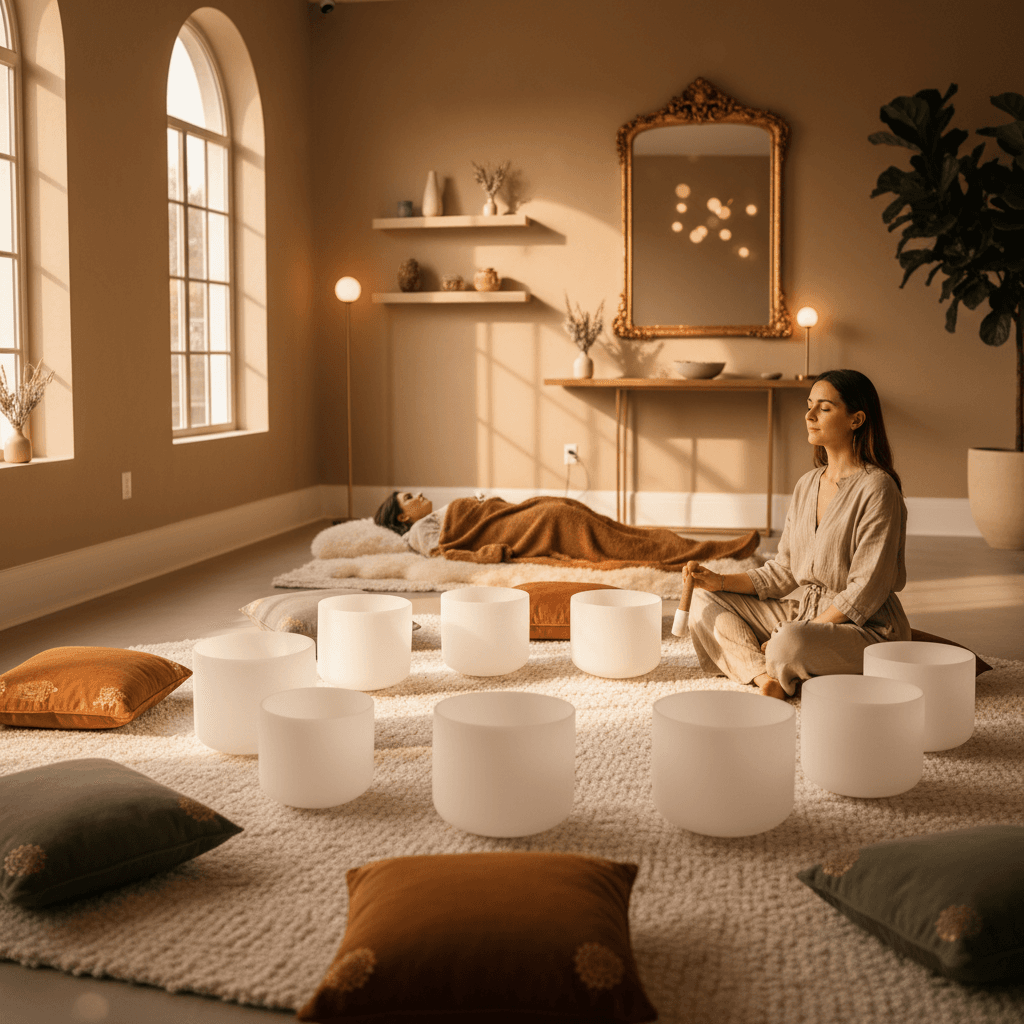
The Soul Art method distinguishes itself through its discerning use of specific instruments and thoughtfully composed soundscapes. Hand-selected gongs, crystal and Himalayan singing bowls, chimes, and other resonant tools are played with precision, creating layers of therapeutic frequencies. These instruments produce deeply immersive vibrations that may support the body in releasing accumulated tension from prolonged screen use and gently guide the mind towards a state of meditative calm. Many people report that the complex, organic sounds offer a stark contrast to the sharp, synthetic alerts of digital devices, providing a true sensory reset.
Larissa emphasizes the importance of intention and personalized experience. Each session at Soul Art is a curated journey designed to interrupt the patterns of attentional depletion and digital overload, offering a space where the brain can cease its constant micro-decisions. This complementary approach to wellness helps individuals restore their self-regulation systems, cultivating a sense of inner peace and renewed focus. It is a profound self-care practice that helps individuals learn discernment in their technology use, ultimately reinforcing their identity and well-being rather than eroding it.
Your Next Steps
Acknowledging the impact of screen fatigue is the first powerful step towards reclaiming your well-being. Incorporating intentional practices into your daily routine can make a significant difference in managing digital overload and fostering greater mental clarity. Here are some actionable steps you can implement today to begin your journey toward sound recovery:
- Implement "Digital Mini-Detoxes": Start with partial detoxes, even for short periods. Try putting your phone away during meals or for the first hour after waking. Research suggests that even modest reductions in screen time can lead to measurable improvements in mood and stress.
- Practice the 20-20-20 Rule for Eye Health: Every 20 minutes, look at something 20 feet away for at least 20 seconds. This simple habit helps reduce digital eye strain by allowing your eye muscles to relax from constant close-up focus.
- Optimize Your Screen Settings: Adjust your screen brightness to match your surroundings and use features like "Night Shift" mode on devices to reduce blue light exposure, especially in the evenings. This may support better sleep quality and reduce visual fatigue.
- Integrate Physical Activity & Nature: Dedicate at least 30 minutes to physical activity daily, whether it's a brisk walk, yoga, or a workout. Incorporating time outdoors has been associated with restoring attentional capacity more effectively than continued digital stimulation.
- Experience Sound Recovery: Seek out environments that offer a complete sensory contrast to your digital life. A session at Soul Art with Larissa Steinbach provides an immersive escape, allowing the brain to disengage and the nervous system to recalibrate through the power of resonant sound.
In Summary
In an era defined by relentless digital connectivity, screen fatigue has emerged as a silent epidemic, draining our energy, diminishing our focus, and impacting our overall well-being. We’ve explored how constant digital micro-decisions lead to attentional depletion, how prolonged screen time manifests as debilitating digital eye strain, and its far-reaching effects on mood, attention, and brain function. The critical takeaway is that true recovery necessitates not just less screen time, but the introduction of profound contrast to reset our overwhelmed systems.
Sound recovery, as practiced at Soul Art by Larissa Steinbach, offers this essential contrast. By immersing the body and mind in harmonious frequencies and deeply resonant vibrations, sound wellness provides a unique pathway to restore balance, calm the nervous system, and reclaim cognitive clarity. It's a sophisticated, scientifically-grounded approach to self-care, designed to help you navigate the digital landscape with renewed energy and discernment.
Bookings Coming Soon
Soul Art is still in preparation. Session details and booking will be published here after launch.
Coming Soon
Wellness Disclaimer: This article is for educational and informational purposes only. It does not constitute medical advice, diagnosis, or treatment. Soul Art Dubai provides non-medical wellness experiences focused on relaxation, stress management, and general wellbeing. Sound wellness is a complementary practice and should not replace professional medical care.
Related Articles

Unseen Ears: Unpacking Voice-Activated Sound & Your Wellbeing

Precision Resonance: Digital Audio Workstations for Healing

Spectrum Analyzers: Unveiling the Science of Sound for Wellness