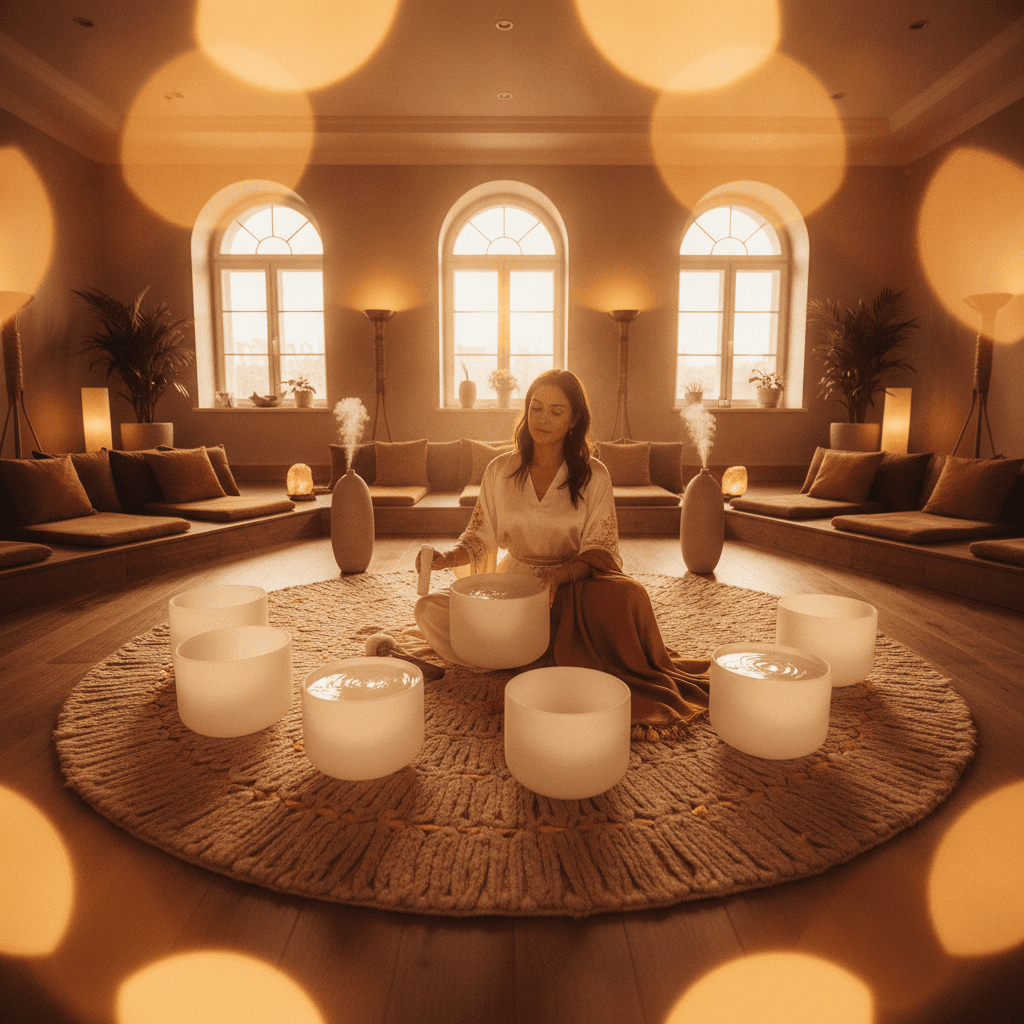
Sacred Listening: Bridging Ancient Wisdom & Modern Science
Key Insights
Explore 'Sacred Listening' across cultures with Soul Art founder Larissa Steinbach. Discover its science-backed benefits for deep relaxation and well-being.
Have you ever considered that the way you listen, and what you listen to, might be as profoundly shaped by your culture as your language itself? In our fast-paced, often fragmented world, the art of sacred listening offers a profound pathway to inner peace and connection. This isn't merely about hearing sounds; it’s about engaging with an ancient, deeply human practice that has resonated through diverse cultures for millennia.
At Soul Art, founded by Larissa Steinbach, we explore how intentional listening can unlock deep states of relaxation and holistic well-being. This article delves into the rich tapestry of sacred listening across global traditions, underpinned by fascinating scientific insights. Prepare to rediscover a powerful, yet often overlooked, dimension of human experience.
The Universal Language of Sound: A Scientific Lens
Across cultures, sound and music play a fundamental role in shaping human experience, eliciting emotions, and even transforming states of consciousness. While the structures and interpretations of music vary widely, its profound impact on our well-being is a universal constant. Scientific inquiry is increasingly shedding light on these intricate connections.
Understanding how our bodies and minds respond to sound, and how these responses are subtly influenced by cultural frameworks, offers a powerful lens through which to appreciate practices like sacred listening.
Physiological Echoes: How Sound Resonates Within Us
The human body is an exquisite resonator, responding to vibrational frequencies in ways that are both subtle and profound. Research indicates that music universally affects our emotions and can induce various levels of arousal, from mild pleasure to profoundly transformed states of consciousness, such as trance states. This visceral response highlights the deep impact of music on our physiological state.
Studies using body mapping techniques have revealed fascinating cultural differences in how people experience music within their bodies. East Asian participants, for instance, tend to exhibit more consistent activation in the head, legs, and arms across different musical categories. This suggests a nuanced sensitivity to varied aspects of music.
Conversely, Western participants often report a more uniform sensation concentrated in the chest area, particularly pronounced in response to melancholic or tender melodies. Despite these variations in bodily awareness, a remarkable convergence exists in the association between musical features and emotional dimensions across cultures. Moreover, preliminary studies suggest specific frequencies, like 432 Hz, may support certain physiological responses. Anecdotal evidence and some preliminary research indicate that listening to music tuned to 432 Hz may be associated with improved Heart Rate Variability (HRV) and potentially trended lower cortisol levels, suggesting a calming effect. Many people report it feels "warmer," "softer," or "more natural."
The Rhythms of Conversation: Cultural Nuances in Dialogue
Listening is not just about comprehending information; it’s an active, dynamic process deeply intertwined with cultural communication styles. The subtle rhythms of conversation, including the duration and frequency of pauses, are profoundly shaped by our cultural and linguistic backgrounds. Research has shown that while universal patterns exist in conversational turn-taking, culture plays a significant part in this everyday skill.
For example, studies comparing native and non-native English speakers revealed surprising similarities in pause durations and ratios of pause time to total speaking time. However, very subtle differences, such as slightly longer pauses common in Nordic conversations compared to rapid-fire English exchanges, can feel like an eternity to someone from a different cultural background. This hypersensitivity to tiny differences in timing underscores how deeply ingrained our conversational habits are.
Different cultures also exhibit unique listening styles:
- Japanese culture often holds a much more diverse view of listening than American or European cultures.
- Germans tend to listen with a very active, direct style, focusing primarily on resolving interpersonal interactions.
- Israelis often listen to analyze information, with an emphasis on evaluating their analysis.
These insights into cultural listening patterns underscore the importance of mindful awareness in all forms of listening, extending beyond verbal communication to the subtle language of sound itself.
Frequency & Perception: The Case of 432 Hz
The concept of specific frequencies impacting human perception and well-being has gained significant interest in sound wellness. Among these, 432 Hz has sparked considerable discussion. While some claims surrounding 432 Hz may lean into mythology, scientific investigation is providing valuable clarity.
Multiple blind listening tests have indicated that a meaningful percentage of listeners, when unaware of the tuning, express a preference for 432 Hz over 440 Hz. They often describe the 432 Hz sound as:
- Warmer: Less "bright" or "piercing" than 440 Hz.
- More grounding: Easier to settle into during meditation or relaxation.
- Longer sustained attention: Listeners may stay present for extended periods.
- Emotionally accessible: Feelings may surface more naturally.
While this preference is not universal, the consistent subjective experience reported across cultures and musical backgrounds suggests a genuine perceptual phenomenon. Preliminary studies, though not conclusive, hint at a potential association between 432 Hz and lower cortisol levels and improved Heart Rate Variability, suggesting a calming influence. Soul Art integrates these insights into its practice, recognizing the profound subjective experiences reported by clients.
Beyond Solitary Listening: Music's Social & Emotional Tapestry
The scientific study of music and emotion has often focused on solitary listening, yet music's broader significance for individuals, peer groups, and communities across cultures is vast. Music everywhere is believed to affect our emotions, involving arousal that ranges from mild pleasure to profoundly transformed states of consciousness. Cross-cultural research shows that musical behaviors are universal across human populations, yet highly diverse in their structures, roles, and cultural interpretations.
For example, group singing has been shown to increase oxytocin, a hormone associated with social connectedness, and decrease cortisol, the stress hormone. This reinforces the idea that shared musical experiences can foster a sense of community and reduce stress. These findings align with how spiritual and religious practices often incorporate communal chanting, singing, and instrumental music to achieve collective transcendence and well-being. This collective aspect of sound engagement is a cornerstone of many sacred listening traditions.
How It Works in Practice
Translating these scientific insights and cultural understandings into a tangible wellness practice is the essence of sound healing. Sacred listening, in a practical context, moves beyond casual hearing to an intentional, deep engagement with sound vibrations. It’s a holistic wellness practice that invites the body, mind, and spirit to realign.
When you step into a sound wellness session, the experience is designed to envelop you. You are not just observing; you are participating through your entire being. The air itself feels alive with subtle vibrations, moving through and around you. This is where theory meets somatic experience.
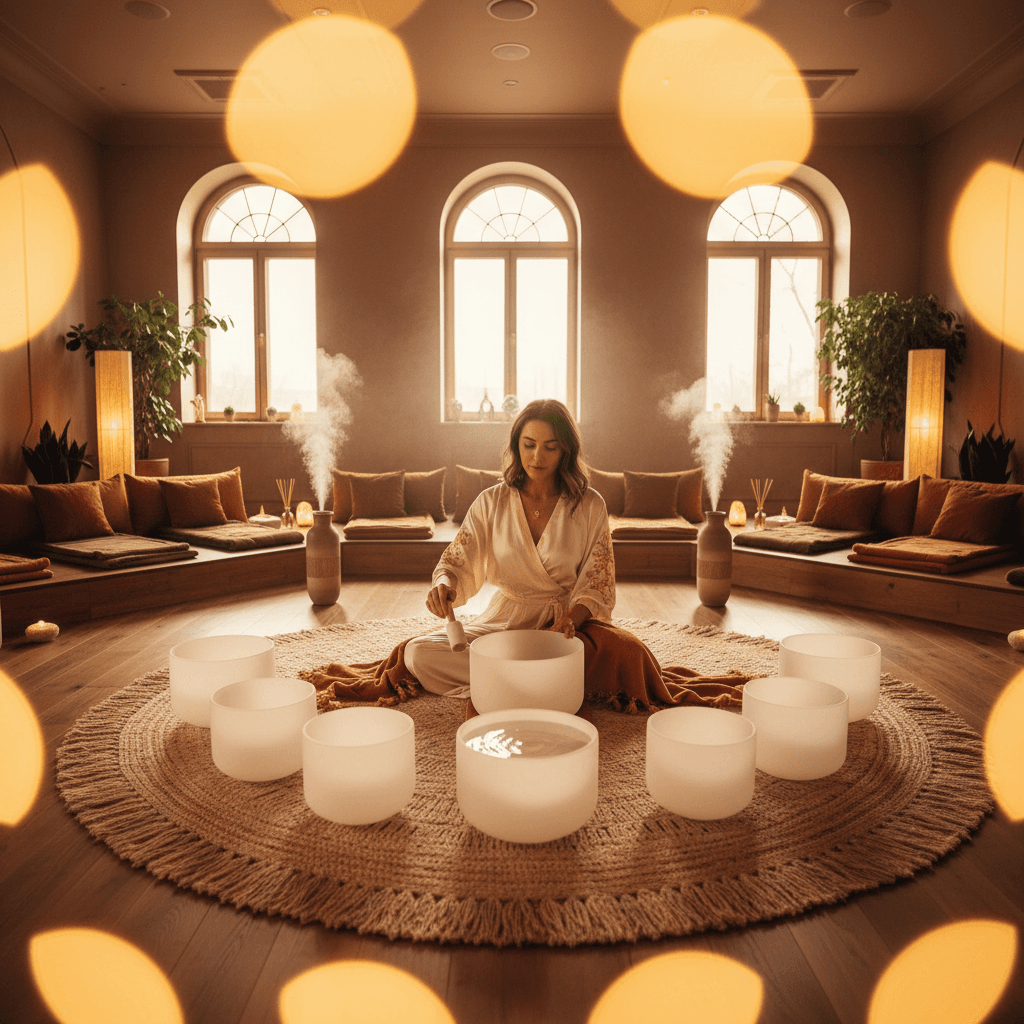
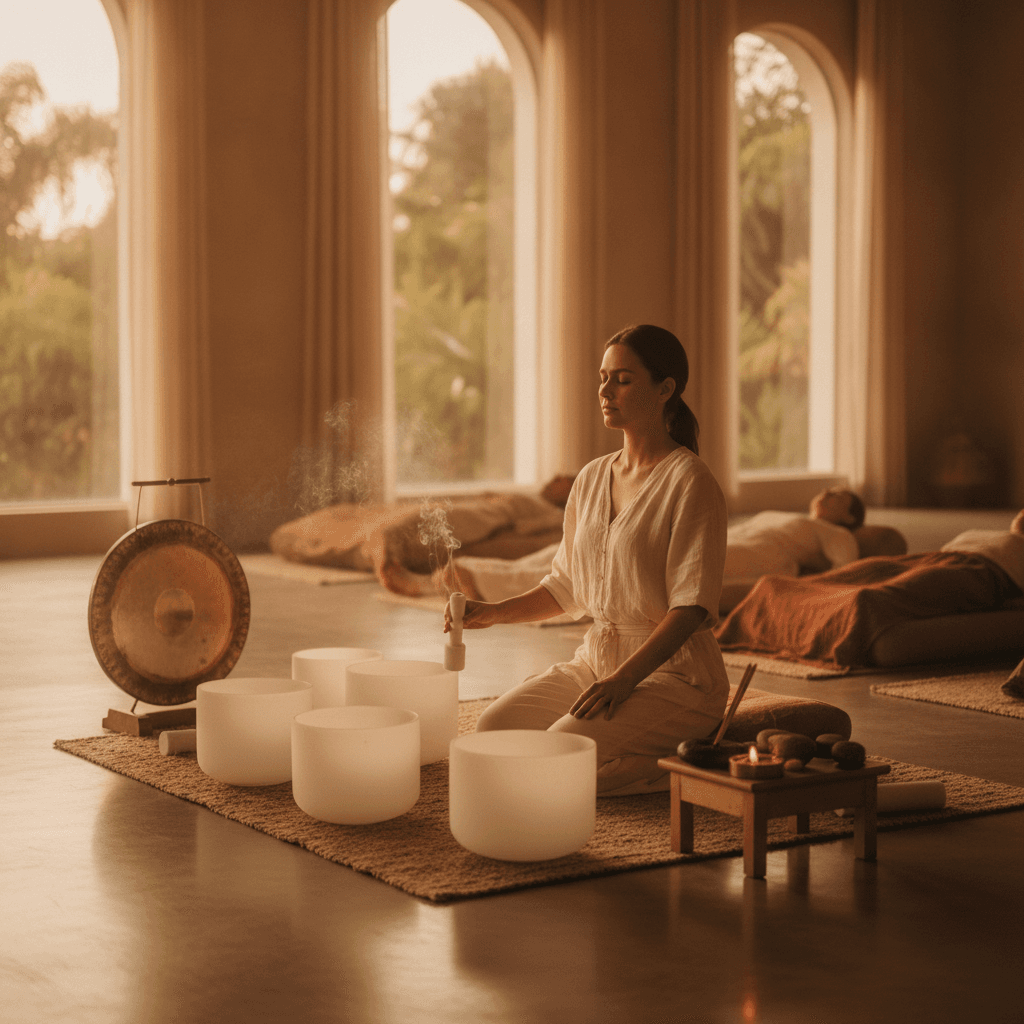
The gentle, sustained tones from instruments like crystal singing bowls, gongs, and chimes create a resonant environment. As these sounds wash over you, your brainwave states may begin to shift from active beta waves to more relaxed alpha and theta states. This shift is often accompanied by a sense of deep calm, where the chatter of the mind subsides, and a profound stillness emerges. Many people report feeling a gentle tingling or warmth, a direct physical sensation of the sound waves interacting with their body’s tissues and energy centers. This is not medical treatment, but a self-care practice aimed at facilitating natural relaxation and stress management.
The intention behind the sound is crucial. It’s not just noise; it’s a carefully curated soundscape designed to facilitate introspection, emotional release, and a heightened sense of present moment awareness. This focused attention on internal experience, often referred to as intrapersonal listening and reflection, is a key component of spiritual listening. It helps individuals connect with underlying issues and emotions, offering a complementary approach to personal growth and well-being.
The Soul Art Approach
At Soul Art, Larissa Steinbach brings together ancient wisdom and contemporary scientific understanding to create a unique sacred listening experience. Her methodology is deeply rooted in the belief that sound, intentionally applied, can facilitate profound relaxation and foster inner harmony. Soul Art’s approach acknowledges the rich cross-cultural heritage of sound healing, integrating elements that resonate with a diverse, global clientele in Dubai.
Larissa's expertise lies in crafting bespoke sound journeys that guide participants into states of deep meditation and rest. She meticulously selects instruments, including high-quality crystal singing bowls and crystal harps, often tuned to the 432 Hz frequency, recognized for its "warmer" and "more grounding" subjective effects. The precision of these instruments ensures a rich, pure vibrational experience.
The Soul Art method emphasizes mindful presence, encouraging clients to move beyond analytical thought and simply receive the sound. This process may support the restoration of the nervous system, reducing symptoms of stress and promoting emotional balance. It is a complementary approach that respects the individual’s journey towards holistic wellness. Larissa Steinbach’s dedication ensures that each session is a sanctuary, a space where the universal language of sacred sound speaks directly to the soul.
"Sacred listening is an invitation to journey inward, to peel back the layers of everyday noise and reconnect with the profound silence and wisdom that resides within us all. It's a practice of presence, an echo of ancient traditions, and a pathway to modern well-being."
Your Next Steps
Embracing the practice of sacred listening can be a transformative step towards enhancing your daily well-being. Whether you're seeking to reduce stress, improve focus, or simply find moments of profound peace, incorporating intentional listening into your life is accessible and deeply rewarding. Here are some actionable steps you can take today:
- Mindful Moments: Dedicate a few minutes each day to simply listen to your environment without judgment. Notice the subtle sounds around you—the hum of the refrigerator, distant traffic, the rustle of leaves. This practice enhances your auditory awareness.
- Curated Soundscapes: Explore high-quality sound baths or ambient music specifically designed for relaxation. Look for tracks tuned to 432 Hz or natural frequencies, and allow yourself to immerse fully without distraction.
- Journal Your Experience: After a listening session, take a few moments to journal any sensations, emotions, or insights that arose. This reflection helps integrate the experience and deepens your understanding of its impact.
- Connect with Nature: Spend time in natural environments, listening to birdsong, flowing water, or the wind. Nature's soundscapes are inherently grounding and can naturally calm the nervous system.
- Experience Professional Guidance: Consider exploring sound wellness sessions led by experienced practitioners. Larissa Steinbach and the team at Soul Art offer expertly guided sacred listening experiences that can provide a deeper dive into these profound practices.
Soul Art is still in preparation. Session details and booking will be published here after launch.
Bookings Coming Soon
Soul Art is still in preparation. Session details and booking will be published here after launch.
Coming Soon
In Summary
Sacred listening is a powerful, cross-cultural practice with roots in ancient traditions and growing validation from modern science. It transcends mere hearing, inviting us into a deeper engagement with sound that can profoundly impact our physiological and emotional well-being. From the universal impact of music on emotions to the nuanced cultural rhythms of conversation, and the specific subjective effects of frequencies like 432 Hz, intentional listening offers a pathway to inner harmony. Soul Art, under the guidance of Larissa Steinbach, provides a unique space to explore these transformative sound experiences. Embrace this complementary approach to holistic wellness and rediscover the profound peace that sacred listening can bring.
Related Articles
The Science of Connection: Call and Response Chanting for Wellness
Deepen Your Bond: Couples Breath & Tone Practice at Soul Art
Harmonize Your Voice: Humming for Public Speaking Nerves