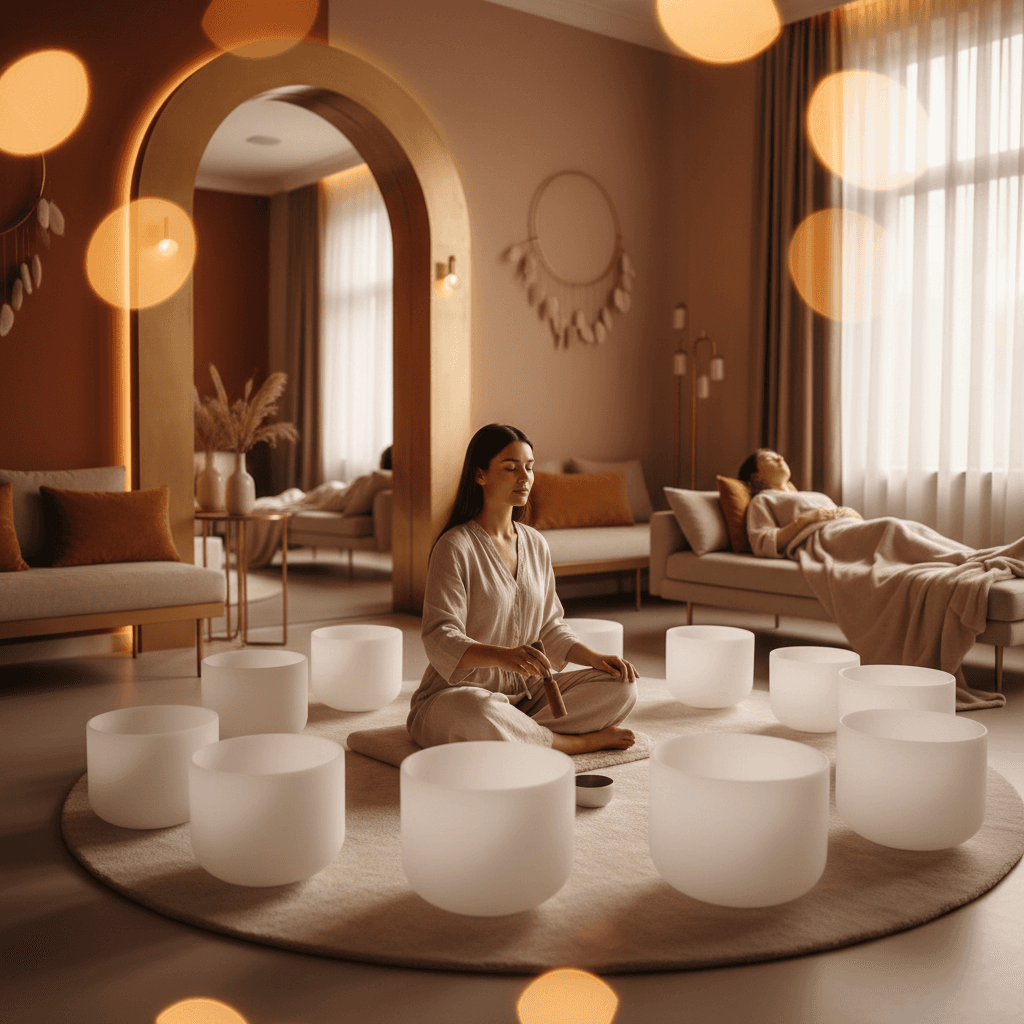
Pressure Performance: Sound for Clutch Moments
Key Insights
Unlock peak performance under pressure with sound wellness. Explore the science of clutch moments and how Soul Art, led by Larissa Steinbach, cultivates focus, control, and resilience.
Have you ever found yourself in a pivotal moment, where the stakes are incredibly high, and your ability to perform determines success or failure? This intense feeling of pressure is universally recognized, whether you're an athlete facing a game-winning shot, a business leader presenting to investors, or an artist on stage. While pressure can often lead to a dreaded "choke," it also holds the potential to ignite what is known as clutch performance.
At Soul Art, Dubai’s premier sound wellness studio, we explore how ancient practices, grounded in modern science, may support your innate ability to thrive under duress. This article delves into the fascinating psychology and neurobiology of performing under pressure, revealing how intentional sound experiences, championed by our founder Larissa Steinbach, may help you harness your inner resilience and achieve your own clutch moments. Discover how managing your internal state can transform pressure from a paralyzing force into a powerful catalyst for extraordinary achievement and enhanced well-being.
The Science Explained: Navigating the High-Stakes Arena
The concept of pressure is defined as any factor that increases the importance of performing well (Baumeister, 1984). It's a double-edged sword, capable of triggering both a significant decline in performance – often termed "choking" – and a remarkable increase in capability, known as clutch performance. Understanding the subtle differences and underlying mechanisms of these responses is crucial for cultivating an edge when it matters most.
Understanding Pressure: Choking vs. Clutch
Choking under pressure is characterized by a significant decline in performance in high-stakes conditions (Hill et al., 2009). Research suggests that two primary psychological processes contribute to choking:
- Self-focus: An intense, often detrimental, internal scrutiny on one's own actions and potential failures. This explicit monitoring of finely tuned motor skills can disrupt automatic execution (Otten, 2009).
- Distraction theories: When attention is pulled away from the task at hand by internal worries or external stimuli. The mind becomes overwhelmed, leading to a perceived lack of control.
In contrast, clutch performance is defined as an increased performance under pressure (Otten, 2009; Swann et al., 2019). It’s not just about maintaining performance, but actively elevating it. Key psychological factors differentiate clutch moments from choking:
- Positive appraisal of anxiety: Instead of viewing anxiety as a threat, individuals in clutch states often perceive it as an energizing force or a sign of importance (Boyce, 2021).
- Feelings of control: A strong belief in one's ability to influence the outcome and manage the situation is a strong predictor of superior performance (Cheng et al., 2009).
- Shift in focus: Successful performers under pressure demonstrate an ability to shift focus from internal worries about the self to the external demands of the task, allowing for more automatic, implicit skill execution (Otten, 2009).
The Brain Under Pressure: PFC, Amygdala, and Automaticity
At a neurological level, the brain's response to pressure involves a delicate interplay between different regions. The prefrontal cortex (PFC), often referred to as the brain's "CEO," plays a pivotal role in executive control, planning, and strategic thinking (vernonwilliamsmd.com). During clutch moments, an optimally functioning PFC is critical because it:
- Filters distractions: It acts as a mental gatekeeper, blocking irrelevant information and enabling acute focus on the task.
- Counteracts amygdala impulses: The amygdala, responsible for the "fight-or-flight" response, can trigger anxiety and panic. A well-regulated PFC may help to dampen these impulses, fostering calmness and clear decision-making.
Furthermore, research highlights the distinction between explicit and implicit knowledge in performance under pressure. When under intense pressure, athletes who rely on explicit knowledge – consciously thinking through each fine motor skill – often see performance decline (Otten, 2009). This "reinvestment of attention" can disrupt fluid execution. Conversely, those who draw upon implicit knowledge, relying on automatic, gross motor skill responses cultivated through extensive practice, tend to see their performance increase. This suggests that the ability to perform instinctively, without overthinking, is a hallmark of clutch performance.
The Role of Arousal and Focus
Arousal refers to an enhanced physiological state where our body and senses are alert and active, with intensified emotions (Welch and Fremaux, 2017a). While too much arousal can lead to panic, an optimal level can enhance performance. Interestingly, increasing sound pressure levels can lead to intensified arousal (Edworthy and Waring, 2006), suggesting a direct link between auditory stimuli and our physiological state.
Clutch states, as explored in qualitative studies, involve a unique psychological experience distinct from other optimal states like "flow" (pubmed.ncbi.nlm.nih.gov/27981877/). While flow is characterized by effortless immersion, clutch often involves:
- Heightened and deliberate concentration: A purposeful, intense focus on the task at hand.
- Intense effort: A conscious exertion of physical and mental energy to "make it happen" (triathlete.com).
- Heightened awareness: An acute perception of one's environment and the immediate situation.
"The ability to shift focus from the self to the task is a key skill in performing under pressure."
This active, effortful concentration, combined with an ability to manage arousal, distinguishes the clutch state and allows individuals to push beyond their normal limits when it matters most.
How It Works in Practice: Sound as a Catalyst for Peak Performance
Connecting these scientific insights to real-world application, sound wellness emerges as a powerful, non-invasive practice that may support the development of clutch performance skills. Sound, particularly specific frequencies and vibrations, interacts deeply with our nervous system, offering a unique pathway to influence the brain states crucial for optimal function under pressure.
One primary way sound wellness may help is by aiding in the regulation of arousal. While high-intensity music can increase arousal and energy (Karageorghis et al., 2018), softer, harmonically rich sounds, often used in sound baths, are known for their profound calming effects. These sounds may help to quiet the amygdala’s stress response, allowing the PFC to function more effectively in filtering distractions and promoting clear decision-making. By consciously engaging with these calming frequencies, individuals may develop a greater capacity to manage their physiological responses to pressure, maintaining a state of alert calm rather than anxious panic.
Furthermore, sound wellness sessions often encourage deep, present-moment focus. The immersive nature of sound, with its intricate layers and resonant vibrations, naturally draws attention away from internal self-focus and redirects it outwards, or deeply inwards, to the auditory experience itself. This practice may train the mind to concentrate deliberately, a key characteristic of clutch performance. It fosters an environment where the "reinvestment of attention" into disruptive self-analysis is minimized, paving the way for more automatic, intuitive action.
The consistent exposure to these intentional soundscapes may also enhance perceived control. When the body and mind are more regulated, and focus is sharpened, individuals often report a greater sense of mastery over their internal state. This internal locus of control is a critical predictor of thriving under pressure (Cheng et al., 2009). By regularly entering states of deep relaxation and focused awareness through sound, people may build a mental reservoir of calm and confidence, reinforcing the belief in their ability to perform when it counts. Many people report that these sessions provide a mental reset, helping them approach challenges with renewed clarity and a stronger sense of self-efficacy.
The Soul Art Approach: Cultivating Inner Resilience with Larissa Steinbach
At Soul Art, Larissa Steinbach and her team harness the profound power of sound to create bespoke wellness experiences designed to cultivate the very qualities essential for clutch performance. Our approach is deeply rooted in the understanding that true strength under pressure comes from an inner sanctuary of calm, focus, and self-belief. Larissa's vision is to offer a holistic wellness practice that equips individuals with tools to navigate life's demanding moments with grace and power.
The Soul Art methodology is unique in its deliberate selection and masterful application of instruments chosen for their specific vibrational frequencies and therapeutic properties. These include:
- Himalayan Singing Bowls: Their complex overtones and sustained vibrations are known to induce deep relaxation and may support brainwave entrainment towards alpha and theta states, conducive to focused calm.
- Gongs: The powerful, immersive sound of gongs creates a sonic landscape that may help to clear mental chatter and facilitate a profound state of awareness and presence.
- Crystal Bowls: Their pure, resonant tones are believed to harmonize the body’s energy centers, fostering a sense of balance and inner peace that is crucial for maintaining composure under pressure.
- Chimes and other percussion: Used to guide focus, punctuate moments, and add textural depth, supporting the journey into heightened awareness.
Larissa Steinbach meticulously curates each session, crafting sound journeys that aim to cultivate several vital attributes for peak performance:
- Mental Clarity: By gently guiding the mind away from distractions, sessions may help to improve cognitive function and decision-making capabilities.
- Emotional Regulation: The soothing frequencies may support the nervous system in finding equilibrium, assisting individuals in managing anxiety and transforming it into positive energy.
- Perceived Control: Through regular practice, clients may develop a stronger sense of internal mastery, fostering confidence and self-efficacy even in demanding situations.
Soul Art provides a serene, approach-mastery training environment (Boyce, 2021) – a space where individuals can safely explore and strengthen their mental and emotional resilience. It's a complementary approach that may empower you to reframe pressure, not as a threat, but as an opportunity for exceptional performance and profound personal growth.
Your Next Steps: Embracing Your Clutch Potential
Cultivating your ability to perform under pressure is an ongoing journey that extends beyond any single session. Integrating mindful practices into your daily life may significantly enhance your resilience and capacity for clutch moments. Remember, the brain’s response to pressure can be trained, and sound wellness may be a powerful ally in this training.
Here are some practical steps you can implement today to support your journey towards greater performance under pressure:
- Mindful Breathing: Practice slow, deep breathing techniques daily. This simple act may directly influence your vagal nerve, helping to calm your nervous system and bring your PFC back online when stress strikes.
- Visualization: Before a high-stakes event, mentally rehearse your successful performance. Visualize yourself calm, focused, and executing flawlessly. This may strengthen neural pathways associated with peak performance (vernonwilliamsmd.com).
- Integrate Sound Breaks: Take short breaks throughout your day to listen to calming, resonant sounds. Even 5-10 minutes of intentional listening may help reset your focus and reduce accumulated stress.
- Prioritize Self-Care: Ensure adequate sleep, nutrition, and physical activity. A well-rested and nourished body may be better equipped to handle the physiological demands of pressure.
- Reframe Pressure: Consciously choose to view challenging situations as opportunities for growth and achievement, rather than threats. As Canada’s champion curler Rachel Homan states, "Pressure is a good thing; it means you have an opportunity to do great things."
By integrating these strategies, especially with the mindful support of sound wellness, you may begin to unlock your innate capacity for clutch performance. At Soul Art, we invite you to experience the transformative power of sound and discover how it may elevate your ability to shine brightest when the spotlight is on you.
In Summary: Mastering Pressure, Elevating Performance
Pressure is an inevitable aspect of life, but how we respond to it is within our influence. Understanding the scientific distinctions between choking and clutch performance reveals that our mindset, our perceived control, and our ability to focus are paramount. Sound wellness, through its profound effects on arousal regulation, mental clarity, and emotional balance, may serve as a powerful tool in cultivating these very attributes.
Larissa Steinbach's Soul Art offers a unique, scientifically-informed approach to holistic wellness, guiding individuals to harness their inner calm and resilience. By engaging with intentional sound experiences, you may unlock your potential to not only endure pressure but to transform it into the catalyst for your most extraordinary "clutch moments." Join us at Soul Art to embark on a journey of profound self-discovery and peak performance.
Bookings Coming Soon
Soul Art is still in preparation. Session details and booking will be published here after launch.
Coming Soon
Wellness Disclaimer: This article is for educational and informational purposes only. It does not constitute medical advice, diagnosis, or treatment. Soul Art Dubai provides non-medical wellness experiences focused on relaxation, stress management, and general wellbeing. Sound wellness is a complementary practice and should not replace professional medical care.
Related Articles
Optimizing Athletic Performance: The Synergy of Sports Nutrition and Sound Wellness
Archery, Stillness, and Sound: Soul Art's Path to Focus

Swimming's Secret Weapon: Sound for Peak Aquatic Performance