Sound for Peak Performance: Unlock Your Pre-Competition Edge

Key Insights
Discover how sound wellness and pre-competition music can activate peak athletic states, reduce anxiety, and optimize focus. Learn from Soul Art's expert Larissa Steinbach.
Have you ever wondered what truly separates an elite athlete from the rest, beyond physical prowess? While training and diet are undeniable pillars, many professionals harness a powerful, yet often underestimated, tool to sharpen their mental edge: sound. The right auditory stimuli can unlock an optimal pre-competition state, transforming anxiety into focused energy and readiness.
At Soul Art, Dubai’s premier sound wellness studio, we explore how carefully curated sound experiences, guided by experts like Larissa Steinbach, can elevate athletic performance. This article delves into the profound scientific connections between sound, mind, and body, revealing how you can integrate these insights to activate your peak state, not just for competition, but for an enhanced sense of well-being and readiness in all aspects of life. Join us as we uncover the harmonizing power of sound to fine-tune your internal rhythms for success.
The Science Behind Sound for Peak Performance
The intricate relationship between sound, particularly music, and athletic performance is well-documented, bridging both physiological and psychological realms. When strategically employed, sound can significantly influence an athlete's pre-competition state, fostering optimal arousal, mitigating anxiety, and aligning mental focus with physical preparedness. Understanding these mechanisms is key to harnessing sound for peak state activation.
The Neuropsychological Connection
Listening to specific sounds or music before competition triggers a cascade of neural mechanisms vital for performance. Research indicates that sound can induce dopamine release, a neurotransmitter associated with feelings of pleasure and reward. This neurochemical response primes the brain to anticipate success and persist through demanding challenges, fostering a positive outlook.
Moreover, sound serves as a potent cognitive regulator, effectively blocking out distracting thoughts and negative stressors that can undermine confidence. For many athletes, a carefully chosen soundtrack or sonic environment acts as a personalized "mental cue," signaling a shift into performance mode—a psychological trigger known as conditioning. This intentional use of sound helps the brain adapt and focus.
Studies also suggest that music facilitates synchronization between distinct cortical regions of the brain, notably the right and left hemispheres. This integration elicits a heightened emotional response and enhanced attentional focus, crucial for complex athletic tasks. Furthermore, sound has been associated with persistent activation in the basal ganglia, a brain region implicated in effective decision-making and preparation for action in sport. This neurological engagement may support improved cognitive performances, including faster reaction times, better attention allocation, and enhanced visual perception.
Physiological Harmony & Rhythmic Entrainment
Beyond mental effects, pre-competition sound profoundly influences critical physiological parameters, preparing the body for exertion. Rhythmic auditory stimuli often lead to an elevated heart rate, increased respiration, and enhanced muscle activation. This innate bodily response helps to energize the system.
A key phenomenon here is rhythmic entrainment, where the tempo and beat of sound can influence and synchronize internal bodily rhythms. This allows athletes to align their biological clocks with the energy demands of impending exertion, essentially harmonizing their internal state with external demands. This can be particularly beneficial for coordinating movement.
Preliminary studies indicate that high-intensity sounds presented during phases of exercise, such as the pressing phase of weightlifting, may support athletes in maintaining peak performance and reducing performance variability. This suggests that certain auditory inputs can directly impact physical output. Additionally, pre-task music has been shown to potentially increase catecholamine release, which may partially explain its favorable effect on anaerobic tasks, providing an energetic boost.
Research into Rhythmic Auditory Stimulation (RAS) highlights its efficacy in timely motor control, particularly in gait training. While often studied in rehabilitation, the principles suggest that sound can influence stride time variability and muscular activation patterns, promoting more balanced and coordinated movement, which has clear implications for athletic performance. The body’s response to sound can be a powerful, non-invasive method to optimize physical readiness.
From Theory to Training: Activating Your Inner Athlete
Understanding the science is the first step; applying it effectively in practice is where the real transformation occurs. Integrating sound into your pre-competition routine involves thoughtful consideration of personal preferences, musical characteristics, and strategic timing. The goal is to create a seamless bridge from your mental state to your physical readiness.
Crafting Your Sonic Edge
A crucial aspect of leveraging sound for performance is personal preference. While specific tempos and rhythms are generally associated with certain effects, the individual's connection to the music or soundscape is paramount. If the auditory input is not preferred, some research suggests performance may suffer. Therefore, tailoring your sonic environment to your unique tastes and needs is essential for maximizing its benefits.
Different types of sound serve different purposes. Fast-tempo music, for instance, has been associated with greater benefits for high-energy, intense exercise, boosting excitement and physiological arousal. Conversely, slower, more meditative sounds can be utilized for mental clarity, focus, or to manage pre-competition jitters. The interplay of tempo, rhythm, melody, and even iconic cues within sound can be consciously manipulated to elicit desired psychophysical responses.
Sound can also act as a self-regulatory mechanism, helping athletes adapt cognitive processes, emotional states, and behavioral responses. This allows for enhanced self-management skills during intense moments. By consistently using specific sounds, athletes can learn to quickly transition into a desired state of mind, fostering a flow state where focus is absolute and performance feels effortless. This integration of cognitive-behavioral principles helps athletes regulate effort and emotional state.
Optimizing Pre-Competition Rituals
The timing of sound exposure is as critical as the sound itself. Listening to music or engaging in sound wellness practices during warm-up or immediately before an event has been repeatedly shown to improve mood, motivation, and aid in achieving top performance levels. This "pre-task" application retains significant ergogenic potential, meaning it can enhance physical work capacity, even if the sound stimulus is not continued throughout the entire competition.
Incorporating sound into your warm-up routine can positively influence physiological arousal and motivation. For instance, specific musical frequencies, such as 440 Hz (standard concert pitch), when combined with preferred fast-tempo music during warm-up, have shown to potentially improve mood, reduce perceived exertion, and enhance performance indices in various physical tests. This highlights the subtle yet powerful influence of sound on physical outcomes.
Furthermore, sound wellness can complement other preconditioning strategies. While morning exercise or specific strength training sessions can prime the body for later-day performance, integrating a sound experience can optimize the mental and emotional component of this preparation. By consciously engaging with sound, athletes can cultivate a holistic readiness, ensuring both mind and body are synchronized for optimal output. The goal is to create a comprehensive pre-competition ritual that leverages every available advantage.
Soul Art Dubai: Precision Sound for Elite Performance
At Soul Art, founded by the visionary Larissa Steinbach, we understand that peak performance extends beyond physical training—it encompasses mental clarity, emotional balance, and a finely tuned nervous system. Our unique approach to sound wellness offers athletes a sophisticated and effective method to achieve their optimal pre-competition state. We move beyond general playlists, crafting personalized sonic journeys designed for precision.
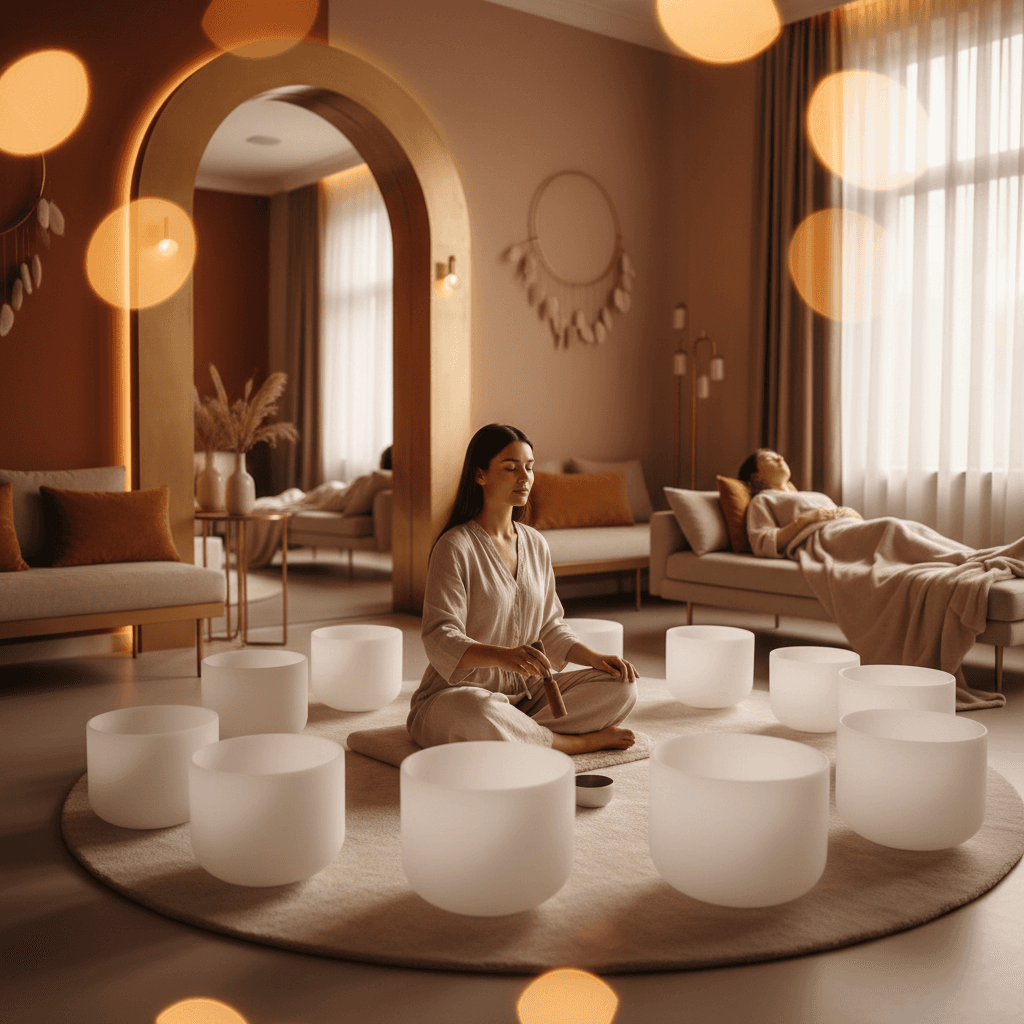
Larissa Steinbach and her team leverage a profound understanding of acoustics and human physiology to create bespoke experiences. Unlike simply listening to music, Soul Art sessions immerse you in a carefully orchestrated environment of therapeutic sound. We utilize a range of exquisite instruments, including powerful gongs, resonating crystal singing bowls, and delicate chimes, each chosen for its specific vibrational frequency and psycho-acoustic effect.
Our method focuses on guiding the brain into desired states, from heightened focus and energized activation to deep relaxation and anxiety reduction. The unique frequencies and harmonic patterns used at Soul Art may support the regulation of heart rate variability and induce alpha or theta brainwave states, which are associated with reduced stress and enhanced cognitive functions. This precisely calibrated sound environment helps to calm the nervous system while simultaneously invigorating the mind.
Soul Art sessions are more than just an auditory experience; they are a holistic wellness practice. We offer a space for athletes to shed external pressures, connect with their inner reserves, and cultivate an unwavering mental fortitude. By working with Larissa Steinbach and the expert practitioners at Soul Art, athletes can integrate these powerful tools into their routine, ensuring they step onto the field or track not just physically prepared, but mentally and emotionally aligned for victory.
"The subtle power of sound can profoundly reshape our internal landscape, transforming chaotic energy into focused potential. At Soul Art, we guide athletes to tap into this innate harmony, unlocking their truest, most powerful selves before the competition even begins." – Larissa Steinbach
Your Path to Peak Performance: Actionable Sound Strategies
Integrating sound for peak state activation is a powerful, complementary tool that can enhance your athletic journey. Here are some actionable steps you can start implementing today to harness the power of sound in your pre-competition routine and beyond.
- Curate Your Personal Playlist: Create diverse playlists for different needs. Include fast-tempo, high-energy tracks for activation and warm-up, and slower, more meditative sounds for calming nerves or post-training recovery. Personal preference is key, so choose music that truly resonates with you and elicits the desired emotional and physiological response.
- Experiment with Tempo and Rhythm: Pay attention to how different tempos affect your heart rate, mood, and perceived exertion. Use faster rhythms for high-intensity segments of your warm-up to entrain your body, and consider moderate tempos for sustained focus. This active engagement helps you understand your body’s unique responses to sound.
- Integrate Mindful Listening: Don't just play music in the background; truly listen. Engage with the sounds, using them as a mental cue to shift into a desired state. This focused attention can help block out distractions and enhance cognitive regulation, reinforcing the psychological conditioning necessary for peak performance.
- Explore Sound Wellness Sessions: Consider engaging in structured sound wellness practices, such as those offered by Soul Art. These sessions provide a deeply immersive and expertly guided experience designed to optimize your nervous system, reduce pre-competition anxiety, and cultivate profound focus through specific frequencies and harmonic compositions.
- Utilize Sound for Recovery: Sound isn't just for activation. After intense training or competition, use calming soundscapes or meditative music to support nervous system regulation and facilitate faster mental and physical recovery. This holistic approach ensures you’re ready for your next challenge.
Ready to experience how precise sound can fine-tune your athletic readiness? Discover the profound benefits of a personalized sound journey at Soul Art.
In Summary: Harmonize for Victory
The journey to peak athletic performance is multifaceted, encompassing physical training, mental fortitude, and emotional resilience. As we've explored, sound and music represent a profound, scientifically-backed tool to activate and optimize an athlete's pre-competition state. From releasing performance-enhancing neurochemicals to synchronizing physiological rhythms, sound offers a unique pathway to mental clarity, reduced anxiety, and sharpened focus.
By understanding the intricate interplay between sound and the body's systems, athletes can strategically integrate personalized auditory experiences into their routines. Whether through high-energy playlists or the immersive, therapeutic frequencies offered by Soul Art, under the guidance of Larissa Steinbach, the power of sound can transform preparation into a competitive advantage. Embrace this complementary wellness practice to harmonize your inner world, elevate your potential, and truly activate your peak state when it matters most.
Bookings Coming Soon
Soul Art is still in preparation. Session details and booking will be published here after launch.
Coming Soon
Wellness Disclaimer: This article is for educational and informational purposes only. It does not constitute medical advice, diagnosis, or treatment. Soul Art Dubai provides non-medical wellness experiences focused on relaxation, stress management, and general wellbeing. Sound wellness is a complementary practice and should not replace professional medical care.
Related Articles
Optimizing Athletic Performance: The Synergy of Sports Nutrition and Sound Wellness

Archery, Stillness, and Sound: Soul Art's Path to Focus

Swimming's Secret Weapon: Sound for Peak Aquatic Performance