Breath Before Sound: Safe Integration for Deeper Well-being
Key Insights
Explore the safe and synergistic benefits of integrating Pranayama breathwork before a sound bath, enhancing relaxation and well-being at Soul Art Dubai.
Pranayama Before a Sound Bath: What Is Safe?
Did you know that sound therapy, often perceived as a modern wellness trend, boasts a lineage stretching back over 40,000 years? From ancient Greek flutes used for mental health to Tibetan singing bowls fostering meditation for millennia, the intentional use of sound for well-being is deeply woven into human history. In our contemporary world, these profound practices are experiencing a powerful resurgence, inviting us to explore their synergistic potential.
At Soul Art, Dubai's premier sound wellness studio, we often receive inquiries about enhancing the deep relaxation offered by sound baths. A common question revolves around integrating breathwork, specifically Pranayama, before a session. This article delves into the fascinating intersection of ancient breathing techniques and vibrational sound, exploring the scientific rationale, practical applications, and crucial safety considerations for combining Pranayama with a sound bath experience.
Join us as we uncover how carefully chosen breath practices can gently prepare your mind and body, potentially deepening your immersion into the resonant frequencies, and discover what truly makes this combination safe and profoundly transformative for your overall well-being. This journey promises to illuminate a path to enhanced calm, clarity, and inner harmony.
The Science Explained
The profound impact of both Pranayama and sound baths on our physiological and psychological states is increasingly supported by scientific inquiry. While their origins are ancient, modern research continues to uncover the intricate mechanisms through which these practices foster well-being. Understanding these individual contributions sets the stage for appreciating their synergistic potential when combined.
The Ancient Roots of Modern Wellness
Humanity's relationship with sound as a healing modality is not a fleeting phenomenon but a testament to its enduring power. Ancient civilizations intuitively understood sound's capacity to influence the human condition. The Ancient Greeks, for instance, harnessed the melodies of flutes and lyres not merely for aesthetic pleasure, but as therapeutic tools to support digestion and mental health.
In the Himalayan regions, Tibetan singing bowls have been integral to meditative practices for over 2,000 years, guiding practitioners into deeper states of consciousness through their resonant tones. Similarly, Australian Aboriginal tribes have utilized the didgeridoo for centuries, employing its unique vibrations to promote healing among the sick. These historical precedents underscore a fundamental truth: sound, in its myriad forms, possesses an inherent ability to soothe, balance, and restore.
Parallel to the ancient wisdom of sound, the practice of Pranayama, or yogic breath regulation, has been a cornerstone of holistic well-being traditions for thousands of years. Originating from ancient India, Pranayama comprises a diverse set of breathing techniques designed to control, extend, and manipulate the breath. These practices are not just about inhaling and exhaling; they are a sophisticated system for influencing the flow of "prana" or life force energy within the body. Rooted in the profound understanding of the mind-body connection, Pranayama has long been revered for its capacity to calm the nervous system, sharpen mental focus, and cultivate inner peace.
The Symphony Within: How Sound Baths Impact Mind and Body
The efficacy of sound baths in promoting relaxation and reducing stress is gaining increasing recognition in the scientific community. Research suggests that the immersive experience of a sound bath may help to synchronize brainwave patterns, moving them from a high-frequency, active state towards slower, more relaxed theta and delta waves. This shift can contribute to a feeling of mental clarity and profound physical ease, akin to deep meditation or sleep.
Tamara Goldsby, PhD, a research psychologist at the University of California San Diego, aptly describes a sound bath as "an easy, noninvasive, low-tech, and relatively inexpensive technique to induce the relaxation response." Preliminary studies have also explored the physiological impacts of sound immersion. For example, a 2016 study involving 62 adults observed significant decreases in tension, anxiety, and negative moods following a meditation session that included a sound bath.
Another notable 2018 study involving surgical patients found that listening to Tibetan singing bowls before surgery led to improved heart rate and other vital signs indicative of reduced anxiety. Beyond mental states, early findings suggest that sound vibrations may also influence physical parameters. Improvements in heart rate variability, a marker of the body's ability to adapt to stress, and potentially lower levels of cortisol, a key stress hormone, have been associated with sound bath participation. Furthermore, some researchers are investigating how these vibrations might enhance blood flow and exert subtle influences on muscles, cells, bones, and other bodily tissues, suggesting a deeper biophysical interaction. While more extensive clinical research is needed to fully delineate the scope of these effects, the initial scientific insights are promising, aligning with centuries of anecdotal evidence and traditional wisdom.
The Power of Breath: Unpacking Pranayama's Physiological Impact
Pranayama, or controlled breathing practices, offers a direct pathway to influencing the autonomic nervous system, which governs involuntary bodily functions like heart rate, digestion, and stress response. Specific Pranayama techniques are known to stimulate the vagus nerve, a critical component of the parasympathetic nervous system. Activation of the parasympathetic system, often termed the "rest and digest" mode, counters the "fight or flight" response of the sympathetic nervous system, promoting a state of calm throughout the body.
The precise regulation of breath involved in Pranayama also plays a vital role in optimizing gas exchange within the lungs, improving oxygenation to tissues and organs, and maintaining a healthy balance of carbon dioxide. This enhanced physiological efficiency can contribute to reduced physical tension and a greater sense of energetic balance. Research indicates that yogic breathing practices may offer therapeutic benefits for a diverse array of populations, positioning Pranayama as a simple, cost-effective, and impactful method for promoting well-being. A narrative review of scientific literature further supports that yogic breathing could be considered safe when practiced under the guidance of a trained teacher, highlighting the importance of proper instruction. Through consistent practice, Pranayama can cultivate a more resilient nervous system, improve mental clarity, and deepen one's capacity for focused attention, creating an ideal inner environment for complementary wellness practices.
The Synergy: Breath Meets Vibration
When Pranayama is intentionally integrated before a sound bath, a powerful synergy can unfold. The controlled, rhythmic breathing of Pranayama acts as a sophisticated preparatory phase, gently guiding the mind and body into a state of heightened receptivity. By consciously slowing the breath and extending exhalations, individuals naturally activate their parasympathetic nervous system. This transition moves the body from an often-overactive state of daily stress into one of profound calm and openness.
This pre-meditative state, cultivated through breathwork, allows the individual to become more attuned to subtle internal sensations and external stimuli. When the resonant frequencies of a sound bath are then introduced, the body and mind are already primed for deep absorption. The vibrations of gongs, crystal bowls, and other instruments can penetrate more profoundly, reaching areas of subtle tension and energetic imbalance. This combination may enhance the brain's ability to synchronize with the external sound frequencies, potentially leading to a more organized brainwave pattern and an even deeper relaxation response. The focused attention on breath, which is central to Pranayama, naturally transitions into a mindful awareness of the sounds and vibrations, fostering an immersive experience that goes beyond mere listening. It allows for a more comprehensive "recalibration" of the individual's energetic blueprint, bringing aspects that are out of alignment back into harmony.
How It Works in Practice
The journey from scientific understanding to personal experience is where the transformative potential of Pranayama before a sound bath truly comes alive. It's about consciously engaging with your inner landscape before surrendering to the external symphony of sound. This practical integration can significantly deepen the immersive quality of your wellness session.
Preparing Your Inner Landscape: The Role of Pranayama
Before embarking on a sound bath, a brief, gentle Pranayama practice serves as an invitation to your nervous system to relax and your mind to quieten. Instead of rushing into the sound experience with a busy mind, you are encouraged to consciously transition. This preparatory breathwork might involve simple yet profound techniques, such as diaphragmatic breathing, where you focus on expanding your abdomen with each inhale and contracting it with each exhale. Another accessible practice is Nadi Shodhana, or alternate nostril breathing, which is known for balancing the left and right hemispheres of the brain, promoting mental clarity and emotional equilibrium.
During this preparatory phase, guided by a skilled facilitator, the emphasis is placed on cultivating awareness of the present moment. You are invited to set an intention for your session – perhaps to release stress, welcome clarity, or simply to embrace deep rest. This mindful focus on breath and intention helps to anchor your awareness, gently drawing you away from external distractions and into your internal world. The conscious act of breathing becomes a bridge, preparing your inner being to fully receive the benefits of the ensuing sound journey. This step transforms the sound bath from a passive experience into an active engagement with your own capacity for self-healing and relaxation.
Journey into Resonance: The Sound Bath Experience
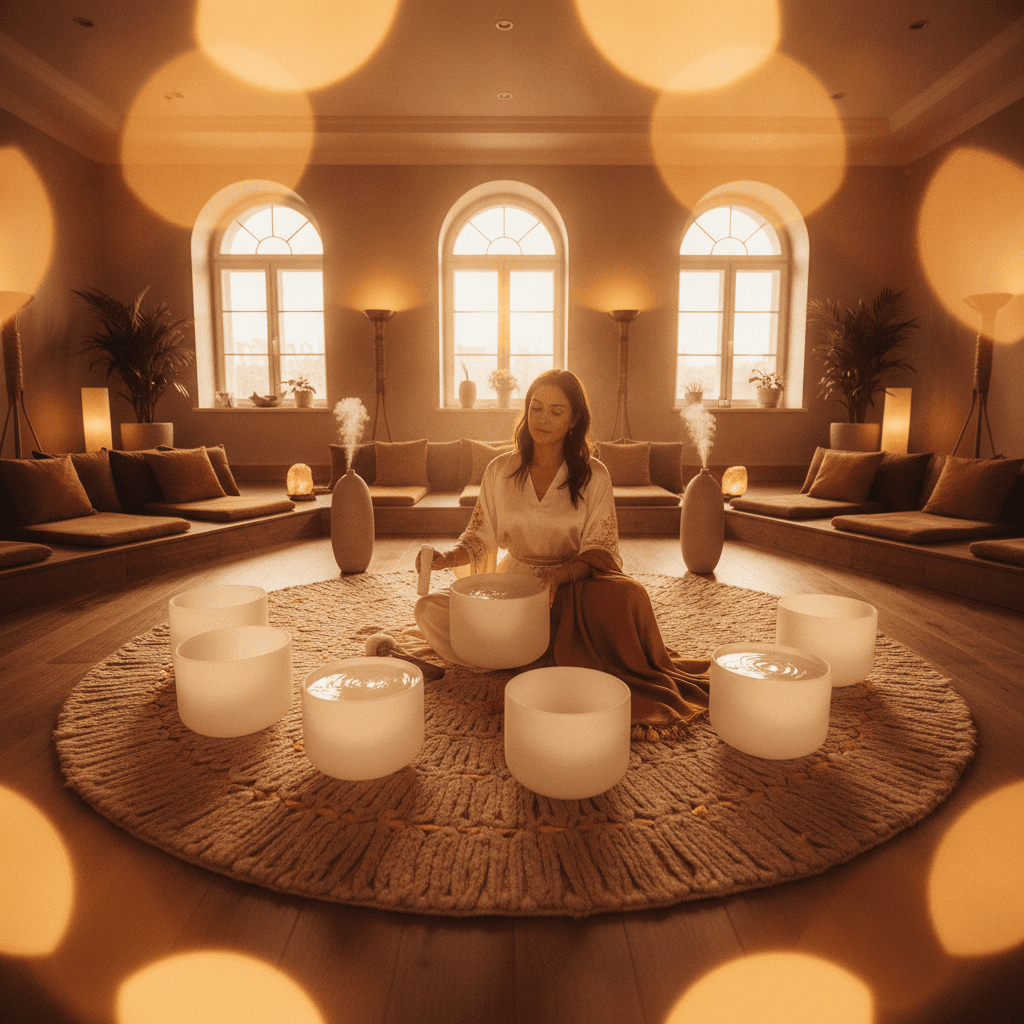
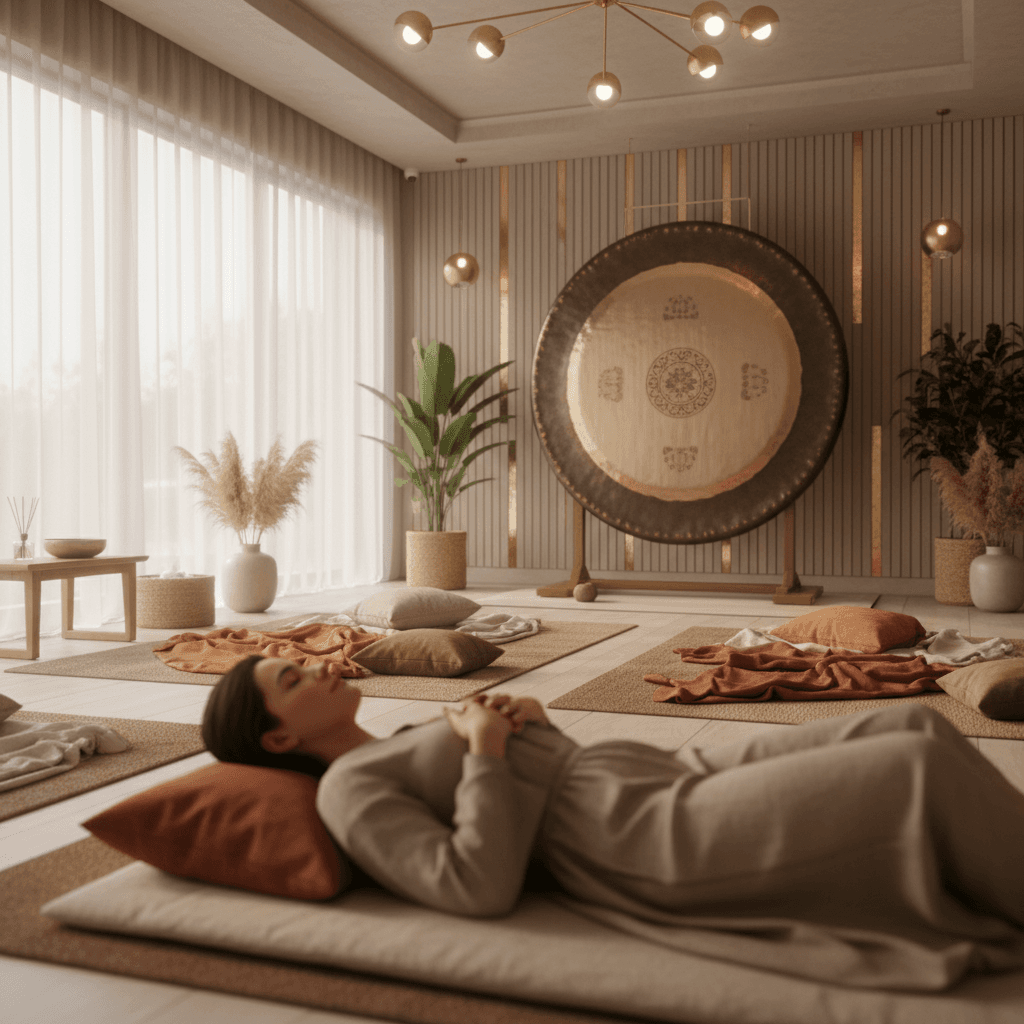
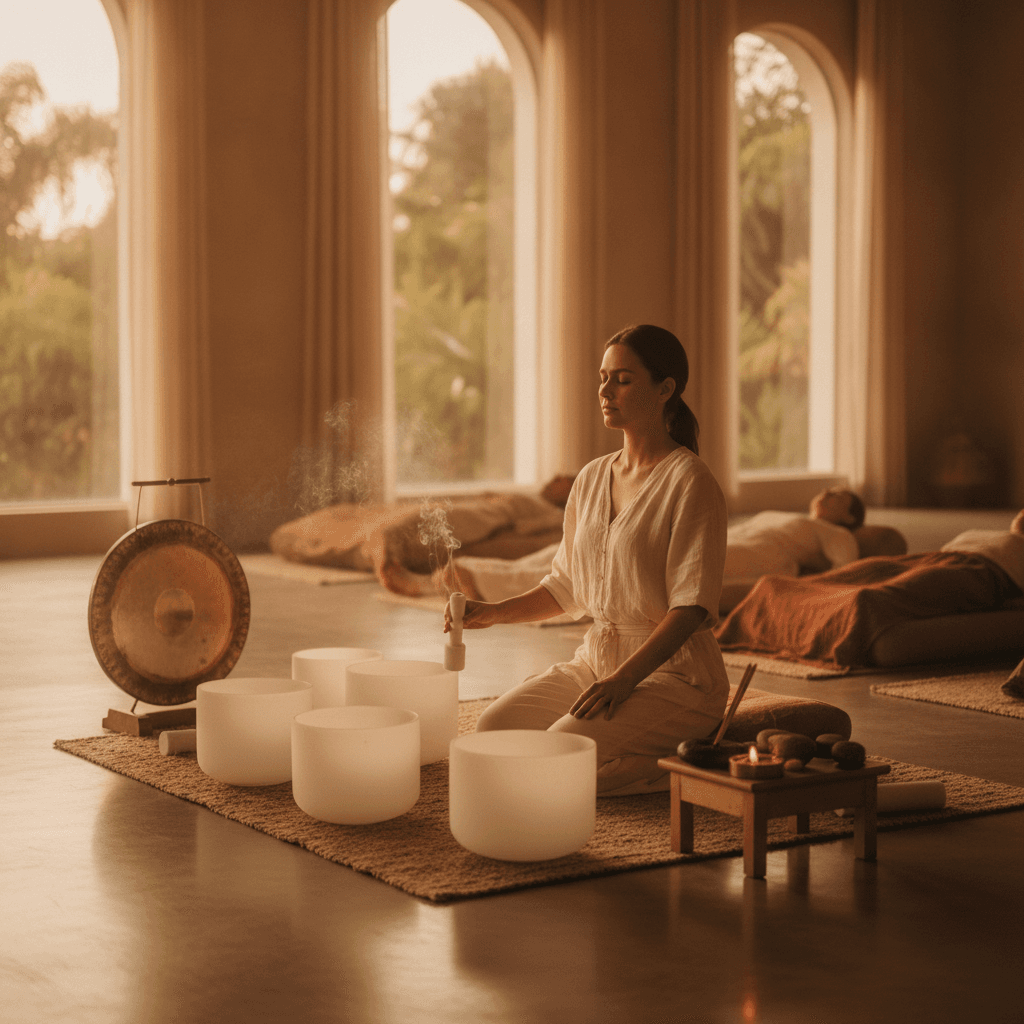
Once your inner landscape has been gently prepared through Pranayama, you transition into the core of the sound bath experience. Typically, you will lie comfortably on a yoga mat, perhaps with a cushion beneath your head and a cozy blanket, allowing your body to fully relax and release its weight. The practitioner then skillfully introduces a range of instruments, such as the resonant tones of Himalayan and crystal singing bowls, the deep reverberations of sacred gongs, the ethereal shimmer of chimes, the earthy pulse of a shaman drum, or the melodic whispers of a handpan and flute.
As the sounds wash over and through you, you are invited to simply listen and feel. The vibrations are not just heard but are often felt throughout the body, creating a gentle internal massage that encourages further release of tension. This experience is deeply personal; some clients report vivid imagery, others a profound sense of peace, and many note a significant reduction in physical discomfort. The goal is to surrender to the sounds, allowing them to guide you into a state of deep meditation or even sleep-like rest.
“In the Western world, we are often human ‘doings’ instead of human beings,” says Tamara Goldsby, PhD. “Sound baths are one way of slowing down to get in touch with ourselves, our bodies, and our emotions.”
This sensory immersion allows for a recalibration, where your individual vibrational blueprint can gently shift back into alignment, promoting holistic well-being.
The Unfolding of Relaxation
The combined experience of focused breathwork followed by a sound bath facilitates a nuanced unfolding of relaxation that can be both immediate and cumulative. Initially, the conscious engagement with Pranayama helps to quiet the incessant mental chatter, creating a calmer internal environment. This allows for a smoother entry into the meditative state often induced by a sound bath, bypassing the initial restlessness many might experience. As the sound vibrations permeate your being, the groundwork laid by your breathwork allows for a more profound physical and emotional release.
Many people report a deeper sense of grounding and tranquility, noting how the sounds seem to effortlessly dissolve lingering tensions that breath alone might have only partially addressed. The body, having been consciously prompted to relax, becomes more adept at recognizing and accessing this state. This 'learning' process suggests that regular engagement with this combined practice can train your nervous system to respond more effectively to stress in daily life. Over time, the relaxation response can become more readily available, even amidst everyday sounds and challenges. The integration of Pranayama ensures that the sound bath is not merely a passive reception of sounds, but an active, gentle collaboration between your inner wisdom and the therapeutic power of vibration, culminating in a truly holistic and enduring state of peace.
The Soul Art Approach
At Soul Art, Dubai's premier sound wellness studio, we believe in a harmonious blend of ancient wisdom and contemporary understanding to foster profound well-being. Our founder, Larissa Steinbach, is deeply committed to curating experiences that are not only deeply relaxing but also grounded in safety, intention, and expert guidance. The integration of Pranayama before a sound bath is a cornerstone of this philosophy, reflecting our dedication to holistic self-care.
Larissa Steinbach's approach emphasizes the creation of a sacred space where individuals feel safe to explore deeper states of consciousness. She understands that while sound baths are generally safe for healthy individuals, the preparatory phase of breathwork is crucial. Under her guidance, or that of our highly trained facilitators, clients are gently introduced to accessible Pranayama techniques. These practices are specifically chosen to align with the subsequent sound journey, focusing on calming the nervous system and preparing the energetic body for optimal receptivity to vibrations. This bespoke methodology ensures that each client, regardless of their prior experience with breathwork or meditation, can safely and effectively engage with the process.
Our studio is equipped with a meticulously selected array of high-quality instruments, each chosen for its unique vibrational signature and therapeutic potential. This includes the deeply resonant tones of large planetary gongs, the pure, crystalline frequencies of quartz singing bowls, the gentle chime of koshi bells, the grounding rhythm of shamanic drums, and the enchanting melodies of handpans and flutes. These instruments are expertly played to create immersive soundscapes that guide the mind into a state of deep relaxation and meditation. The Soul Art method is unique in its emphasis on creating a seamless transition from focused breath to surrendered listening, allowing for a deeply integrated experience. Larissa Steinbach ensures that every session is not just an event, but a carefully choreographed journey designed to support your nervous system, encourage emotional release, and restore inner balance, all within a nurturing and luxurious environment.
Your Next Steps
Embracing the potential of Pranayama before a sound bath is an empowering step towards enhanced well-being. Here’s how you can safely explore this transformative practice and deepen your journey towards inner harmony:
- Start Gently with Breath Awareness: Begin by incorporating simple, mindful breathing into your daily routine. Focus on slow, deep diaphragmatic breaths for a few minutes each day. Observe the natural rhythm of your inhale and exhale without trying to control it excessively. This foundational practice can significantly enhance your body's relaxation response.
- Prioritize Comfort and Hydration: Before any sound bath, ensure you are well-hydrated and have eaten lightly. Wear loose, comfortable clothing that allows for full relaxation. Consider bringing a blanket or an eye mask for added comfort, enhancing your ability to surrender to the experience.
- Set a Clear Intention: Take a moment before your session to reflect on what you wish to gain. Whether it's stress reduction, mental clarity, or emotional release, setting an intention can help focus your mind and amplify the benefits of both Pranayama and the sound bath.
- Seek Qualified Guidance for Pranayama: While simple breath awareness is safe, more advanced Pranayama techniques should always be learned and practiced under the guidance of a trained and certified teacher. Incorrect practice can be counterproductive. At Soul Art, our facilitators provide gentle, appropriate breathwork guidance to ensure your safety and maximize your experience.
- Consult Your Doctor for Medical Conditions: As with any wellness practice, if you have any pre-existing medical conditions, particularly those affecting the heart, lungs, or mental health, it is always wise to consult your doctor before participating in a sound bath or advanced Pranayama practices. Your doctor can provide the most accurate advice based on your individual health history.
By mindfully preparing your body and mind through intentional breathwork, you can unlock an even deeper realm of relaxation and rejuvenation within the resonant embrace of a sound bath. We invite you to experience this powerful synergy for yourself.
Bookings Coming Soon
Soul Art is still in preparation. Session details and booking will be published here after launch.
Coming Soon
In Summary
The integration of Pranayama before a sound bath offers a profound and scientifically supported pathway to enhanced well-being. By engaging in gentle breathwork, we consciously prime our nervous system, transitioning into a state of calm and receptivity. This preparation allows the therapeutic vibrations of the sound bath to penetrate more deeply, fostering greater physical relaxation, mental clarity, and emotional release.
While both practices are generally considered safe for healthy individuals, the key to a truly transformative experience lies in expert guidance and personal awareness. Always consult your doctor for any specific health concerns and seek trained instructors for Pranayama techniques. At Soul Art, Larissa Steinbach and our team are dedicated to providing a safe, luxurious, and expertly guided journey into the synergistic power of breath and sound. We invite you to discover how this ancient wisdom, applied with modern understanding, can elevate your self-care practice and deepen your connection to inner peace.
Bookings Coming Soon
Soul Art is still in preparation. Session details and booking will be published here after launch.
Coming Soon
Wellness Disclaimer: This article is for educational and informational purposes only. It does not constitute medical advice, diagnosis, or treatment. Soul Art Dubai provides non-medical wellness experiences focused on relaxation, stress management, and general wellbeing. Sound wellness is a complementary practice and should not replace professional medical care.
Related Articles
The Science of Connection: Call and Response Chanting for Wellness
Deepen Your Bond: Couples Breath & Tone Practice at Soul Art
Harmonize Your Voice: Humming for Public Speaking Nerves