Postpartum Voice & Self-Connection: A Soul Art Sound Journey

Key Insights
Explore how your voice changes postpartum and how sound wellness, guided by Larissa Steinbach at Soul Art Dubai, supports maternal wellbeing and mother-infant bonding.
The journey into motherhood is profound, transforming every aspect of a woman's life, including her physical and emotional landscape. Yet, few new mothers are aware that this transformation extends even to the sound of their own voice. From subtle shifts in pitch to changes in vocal monotony, the postpartum voice tells a story of adaptation and new beginnings.
At Soul Art, Dubai's premier sound wellness studio, we believe in supporting women through every stage of this incredible transition. Guided by our founder, Larissa Steinbach, we explore how understanding and reconnecting with your postpartum voice through sound can be a powerful pathway to self-connection. This article delves into the science behind these vocal changes and offers practical ways to embrace your evolving self.
Understanding these shifts is not just about curiosity; it's about reclaiming a vital part of your identity. Your voice is a reflection of your inner state and a crucial tool for both self-expression and bonding with your new baby. We invite you to discover how embracing your postpartum voice can foster deeper well-being and a stronger sense of self.
The Science Explained: Your Postpartum Voice and Its Profound Impact
The transformation of motherhood is pervasive, influencing not only a woman's body and mind but also her very voice. Recent scientific research sheds light on surprising vocal changes that occur after childbirth, with significant implications for a mother's social interactions and her deep connection with her infant. These shifts are not merely anecdotal but are supported by rigorous longitudinal studies.
Unpacking Postpartum Vocal Changes
A groundbreaking longitudinal study conducted by Dr. Kasia Pisanski, Kavya Bhardwaj, and Prof David Reby at the University of Sussex revealed fascinating insights into the postpartum voice. Researchers analyzed women's voices over a decade, spanning five years before and five years after childbirth, providing a comprehensive view of these vocal adaptations. They discovered that new mothers' voices undergo a temporary but significant shift.
The study found that women's mean voice pitch dropped by over five percent, an alteration equivalent to more than one full piano note. This translates to approximately 15 Hz, or 1.3 semitones, making their voices noticeably lower. Furthermore, the 'highest' or maximum pitch of their voices also decreased, by 44 Hz or 2.2 semitones on average—more than two piano notes.
Beyond pitch, researchers observed that new mothers' voices became more monotonous, exhibiting less variation in pitch after childbirth. This "vocal masculinising," as it was described, is temporary; the voice typically reverts to its previous frequency around one year postpartum. Importantly, this change is not attributable to aging, distinguishing it as a specific physiological response to pregnancy and childbirth. The pitch of a person's voice can significantly influence how they are perceived in social situations, potentially affecting interactions from job interviews to casual conversations. This temporary vocal shift in new mothers may subtly impact their social dynamics.
The Mother's Voice: A Foundation for Fetal and Infant Development
The significance of the mother's voice extends far beyond social perception; it forms the very sonic landscape of a child's earliest development. Inside the womb, a fetus experiences a unique auditory environment. The mother’s body provides a symphony of internal sounds—the rhythmic noise of flowing blood, the gentle gurgles of intestinal activity, the steady beat of her heart, and the calming rhythm of her breathing.
Crucially, the fetus perceives the mother's voice at a volume approximately 8 dB louder than that of other individuals, making it the most prominent external sound. This prenatal exposure creates a powerful imprint. Research demonstrates that after birth, newborns possess an innate ability to recognize their mothers' voices and can distinguish them from the voices of other women. This recognition is deeply rooted in the memory traces formed during fetal life.
Studies indicate that the more frequently a child heard a particular sound or music in the prenatal period, the stronger the memory of these stimuli after birth. The calming effect of human body sounds, such as heartbeats and breathing, on newborns further underscores the innate connection to the maternal soundscape. This early auditory bonding is not just comforting; it plays a vital role in neural development. A Stanford Medicine-led study, for instance, found that premature babies who heard recordings of their mothers reading to them developed more mature white matter in key language areas of the brain. This suggests that the mother’s voice actively promotes the development of crucial language pathways even before full-term birth.
Voice, Singing, and Maternal Well-being
The interplay between voice, singing, and maternal well-being is increasingly recognized as a powerful component of postpartum care. Engaging with one's voice, particularly through singing, has been associated with numerous benefits for new mothers. A study exploring the influence of music and singing after childbirth revealed improvements in maternal well-being, self-reported mother-infant bonding, and even self-esteem.
Specifically, the singing group in this study demonstrated a significant increase in general self-efficacy, a mother's belief in her ability to successfully manage her parenting role. This empowerment is vital during a period often characterized by self-doubt and overwhelming new responsibilities. While Soul Art provides wellness support and does not offer medical diagnoses or treatment, research highlights that a "flat tone of voice" can be associated with feelings of being overwhelmed, a common experience for new mothers. Cultivating vocal expression and connection through sound wellness practices may support emotional processing and overall well-being.
Furthermore, the act of vocalizing and engaging with sound plays a role in fostering maternal-fetal and maternal-infant attachment. Behaviors such as talking to the baby, even prenatally, are indicative of an emotional connection and interaction with the unborn child. Postnatally, emotional availability, often described as the "connective tissue" in relationships, is crucial for well-attuned preverbal interactions between infant and parent. Through sound wellness practices, mothers can cultivate this emotional availability and strengthen the intricate bond with their baby, leveraging the inherent power of their voice.
How It Works in Practice: Reconnecting Through Sound
Understanding the science behind postpartum vocal changes and the profound impact of the mother's voice lays the groundwork for practical application. At Soul Art, we translate this scientific understanding into deeply nurturing and empowering sound wellness experiences. The aim is to bridge the gap between theoretical knowledge and lived experience, offering new mothers tangible tools for self-connection and well-being.
Imagine entering a tranquil space, designed to be a sanctuary from the demands of daily life. Here, the focus shifts inward, allowing you to gently explore the landscape of your own being. Sound wellness, in this context, is not about performance or singing perfectly; it is about authentic expression and mindful listening. It is a complementary approach to holistic well-being, focusing on relaxation and stress management.
Our sessions often begin with guided breathwork, drawing attention to the rhythm that connects your inner world to the outer. This foundational practice helps to regulate the nervous system, creating a state of calm receptivity. As you breathe deeply, you may begin to notice the subtle vibrations within your own body, setting the stage for vocal exploration. Many people report that connecting with their breath in this way fosters a sense of groundedness.
Gentle vocalization exercises are then introduced, encouraging you to explore the unique timbre and range of your postpartum voice. This might involve simple humming, toning, or soft chanting. The goal is not to force the voice but to allow it to emerge naturally, exploring its altered qualities without judgment. You may feel subtle vibrations resonating through your chest, throat, and head, creating a soothing internal massage. This process can be profoundly cathartic, offering a safe outlet for emotional release and expression.
The beauty of sound wellness lies in its ability to bypass the analytical mind and engage directly with the body's innate wisdom. When you vocalize or immerse yourself in resonant sounds, your body responds at a cellular level, promoting deep relaxation. This can lead to a significant reduction in stress, a heightened sense of self-awareness, and a renewed feeling of connection to your own physical and emotional self. For new mothers, this reconnection is invaluable, helping them navigate the challenges of postpartum life with greater resilience and presence.
The Soul Art Approach: Larissa Steinbach's Philosophy
At Soul Art, Larissa Steinbach, our esteemed founder, has meticulously crafted a unique approach to sound wellness, particularly for women navigating the postpartum journey. Her philosophy is deeply rooted in empathy, scientific understanding, and a profound respect for the transformative power of sound. Larissa understands that the postpartum period is a delicate time, demanding a nurturing and non-judgmental environment for healing and self-discovery.
Larissa's method is distinct because it integrates the latest research on postpartum vocal changes and maternal-infant bonding with ancient wisdom traditions of sound healing. She doesn't just offer sound; she provides a carefully curated experience that is both scientifically informed and deeply intuitive. Each session is designed to be a personalized exploration, acknowledging the unique needs and experiences of every mother. This bespoke approach ensures that clients feel seen, heard, and supported throughout their wellness journey.
"The postpartum voice is not merely a physiological alteration; it's a resonant echo of the profound journey a woman has undertaken. At Soul Art, we embrace this shift as an invitation to deeper self-discovery and an even richer connection with her child."
Specific techniques employed at Soul Art under Larissa's guidance include gentle, guided vocal exercises that encourage exploration of one's changed vocal landscape. These may involve soft humming, toning, or guided breath synchronization, all aimed at fostering a sense of ease and authentic expression. The focus is always on listening to the body's subtle cues and allowing the voice to unfold naturally, free from any pressure to conform to prior vocal habits. This practice may support an increase in self-efficacy, similar to findings in research on singing interventions.
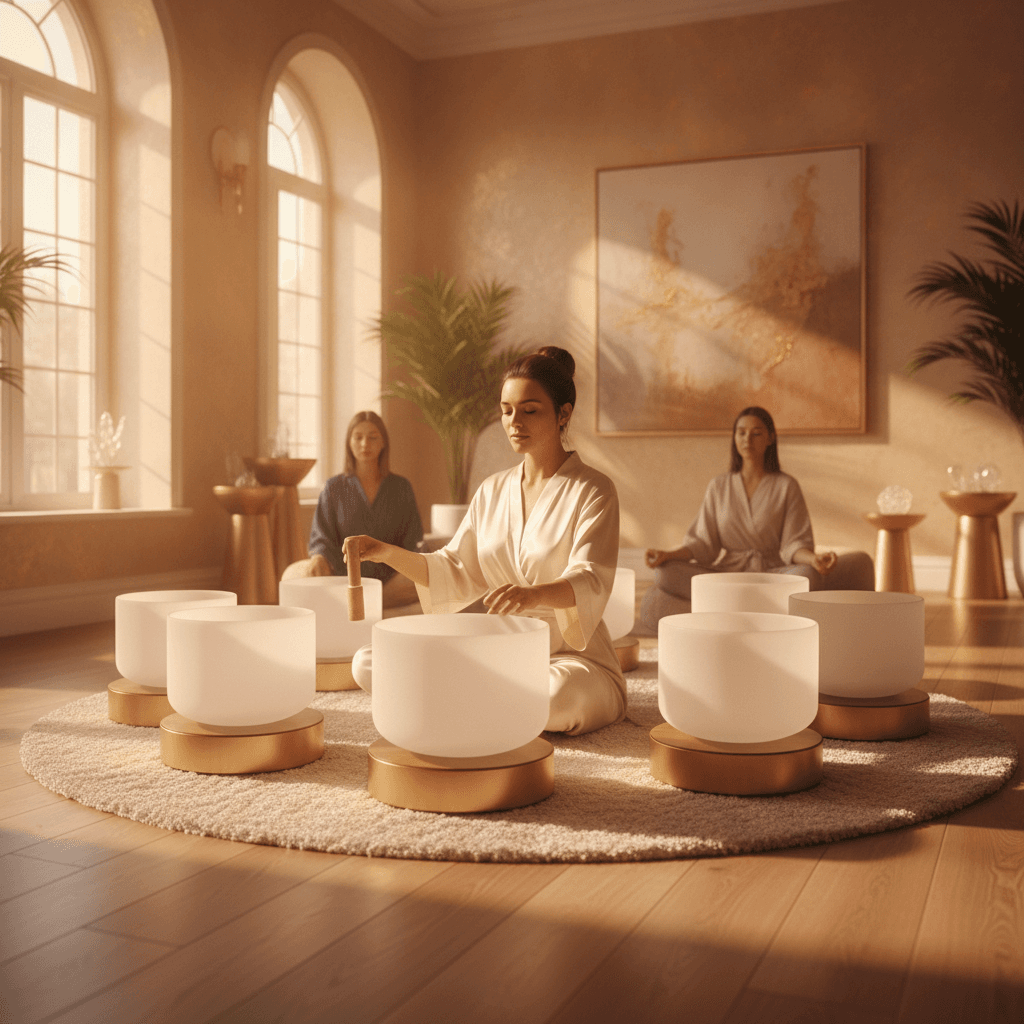
Complementing vocal work, Soul Art incorporates immersive sound baths featuring a carefully selected array of instruments. These include resonant gongs, pure crystal singing bowls, delicate chimes, and ethereal Koshi bells. These instruments are played with intention, creating a harmonious soundscape that promotes deep relaxation and nervous system regulation. The vibrations from these instruments are believed by many to resonate with the body's natural frequencies, helping to release tension and foster a profound sense of peace. Larissa Steinbach ensures that the sound environment acts as a "safe haven," where new mothers can reconnect with their inner selves, embrace their evolving identity, and strengthen the emotional bond with their infant through a holistic wellness practice.
Your Next Steps: Embracing Your Postpartum Voice Today
The journey of rediscovering and connecting with your postpartum voice is a powerful act of self-care. It's a holistic wellness practice that can support your emotional well-being and deepen your bond with your baby. Here are some simple, actionable steps you can begin to incorporate into your daily life to honor this profound transformation.
- Gentle Vocal Exploration: Start by simply humming or making soft, gentle sounds. Talk to your baby, sing lullabies, or hum along to music you love. There's no need for perfection; the goal is to feel the vibrations within your body and connect with your authentic voice. Many people report that these simple acts can be very calming.
- Mindful Listening: Pay attention to your own voice as you speak. Notice its qualities, its pitch, and its rhythm. Extend this mindfulness to the sounds around you, creating moments of auditory awareness that can ground you in the present moment. This practice may support greater self-awareness.
- Conscious Breathwork: Integrate simple diaphragmatic breathing exercises into your routine. Inhale deeply, allowing your belly to expand, and exhale slowly. Synchronizing your breath with gentle vocalizations can enhance relaxation and help regulate your nervous system. Preliminary studies indicate that breathwork can be a powerful stress management tool.
- Connect with Your Support Network: Share your experiences with trusted friends, family, or other new mothers. Peer support has been associated with improved well-being for postpartum women, fostering a sense of community and reducing feelings of isolation.
- Explore Sound Wellness: Consider how dedicated sound wellness sessions could further support your journey. At Soul Art, Larissa Steinbach offers expertly guided experiences designed to help you reconnect with your voice and inner self in a nurturing environment. It's a complementary approach to deepen your self-care practice.
Embrace these practices with self-compassion, understanding that this is a unique and evolving phase of your life. Your postpartum voice is a beautiful testament to your strength and capacity for love.
Bookings Coming Soon
Soul Art is still in preparation. Session details and booking will be published here after launch.
Coming Soon
In Summary: Embracing Your Resonant Self
The postpartum period is a time of profound change, extending even to the subtle yet significant shifts in a mother's voice. Scientific research clearly demonstrates that new mothers experience temporary changes in voice pitch and tone, highlighting a deeper connection between vocal expression and maternal well-being. This unique vocal journey is not just for the mother; it profoundly impacts the developing infant, whose earliest memories are woven with the sound of her voice.
At Soul Art, founded by Larissa Steinbach, we understand that reconnecting with your evolving voice through sound wellness is a powerful pathway to self-connection. Our carefully crafted sessions offer a holistic wellness approach, supporting emotional well-being, stress management, and a deeper bond between mother and child. We invite you to explore this transformative journey, finding harmony within yourself and with your new role.
Discover the resonant power of your postpartum voice.
Wellness Disclaimer: This article is for educational and informational purposes only. It does not constitute medical advice, diagnosis, or treatment. Soul Art Dubai provides non-medical wellness experiences focused on relaxation, stress management, and general wellbeing. Sound wellness is a complementary practice and should not replace professional medical care.
Related Articles

The Science of Connection: Call and Response Chanting for Wellness
Deepen Your Bond: Couples Breath & Tone Practice at Soul Art

Harmonize Your Voice: Humming for Public Speaking Nerves