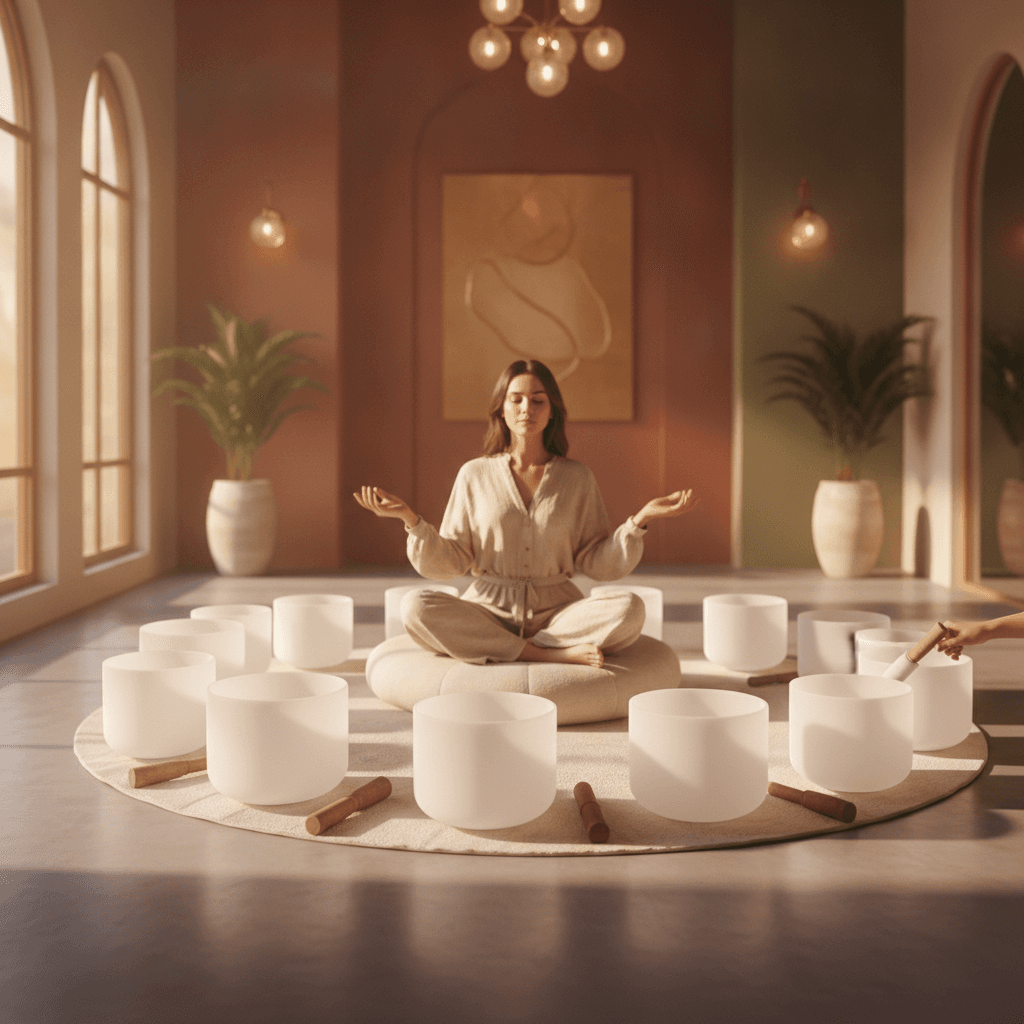
Polyvagal-Informed Sound Healing: Your Path to Somatic Safety

Key Insights
Explore how Polyvagal Theory guides Soul Art's sound healing, fostering nervous system regulation and deep well-being in Dubai.
Have you ever noticed how certain sounds can instantly calm your spirit, while others trigger an immediate sense of unease? This profound connection between sound and our internal state is not merely anecdotal; it’s deeply rooted in the intricate workings of our nervous system. Understanding this mechanism is key to unlocking deeper levels of well-being and resilience.
At Soul Art, Dubai’s premier sound wellness studio, we delve into the sophisticated framework of Polyvagal Theory to enhance our sound healing experiences. This scientifically-grounded approach offers a clearer lens through which to understand our physiological responses to stress and safety. It provides a foundational context for leveraging sound as a powerful tool for nervous system regulation, guiding us towards a more balanced and harmonious existence.
This article will explore the core tenets of Polyvagal Theory, illuminate its connection to sound, and reveal how our unique offerings at Soul Art provide a sanctuary for true somatic safety. Discover how this insights can profoundly impact your well-being, fostering a deeper sense of calm and connection in your daily life.
Unpacking the Polyvagal Theory: The Science of Safety
Developed by Dr. Stephen Porges, Polyvagal Theory offers a revolutionary perspective on how our nervous system influences our behavior, emotions, and connections with others. It moves beyond the simplistic fight-or-flight response, proposing a hierarchy of autonomic nervous system states that dictate our sense of safety or threat. This theory helps us understand the physiological underpinnings of our struggles and provides a framework for non-invasive approaches to support well-being.
A central concept within Polyvagal Theory is "neuroception," our nervous system's unconscious ability to detect cues of safety, danger, or life threat in the environment. This happens without conscious thought, influencing our physiological state before our minds even process what is happening. Our neuroceptive process can then alter our physiological state, thereby impacting our social behaviors and emotional experiences.
The Three States of the Nervous System
Polyvagal Theory identifies three primary neural pathways that regulate our responses to the world, each corresponding to a distinct physiological and psychological state:
- Ventral Vagal (Safe & Social): This is our ideal state, associated with feeling safe, connected, and grounded. When in ventral vagal activation, we are capable of social engagement, empathy, and accessing higher cognitive functions. It promotes rest, digestion, and healing.
- Sympathetic (Fight/Flight): Activated when our nervous system perceives danger, this state prepares us for action. We may experience increased heart rate, rapid breathing, heightened vigilance, and a strong urge to confront or escape a perceived threat.
- Dorsal Vagal (Freeze/Shutdown): This is the most primitive response, typically triggered by extreme threat or overwhelm when fight or flight is not an option. It leads to a sense of shutdown, disconnection, numbness, and can manifest as dissociation or feeling "stuck."
The goal in trauma-informed and wellness care isn't to eliminate these states entirely, as they are natural and necessary for survival. Instead, it is to cultivate the nervous system's capacity to move fluidly and flexibly between them, always with the ability to return to a state of safety and connection after experiencing stress. This adaptive flexibility is a hallmark of resilience.
The Vagus Nerve: Our Internal Regulator
The vagus nerve is a critical component of the parasympathetic nervous system, playing a pivotal role in regulating many bodily functions, including heart rate, digestion, and our social engagement system. Polyvagal Theory highlights the vagus nerve's influence on our capacity for calm, connection, and self-regulation. Its stimulation can help shift our physiological state towards safety.
Vagal tone, often estimated through heart rate variability (specifically respiratory sinus arrhythmia), is considered an indicator of the overall levels of vagal activity and autonomic flexibility. Research suggests that higher vagal tone is associated with better self-regulation, emotional resilience, and social engagement. Conversely, lower vagal tone may correlate with increased stress sensitivity and decreased emotional resilience.
The Nuance of Evidence: Polyvagal Theory's Journey
While Polyvagal Theory presents a compelling framework, its overall empirical validation as a whole theory is considered to be still in development, with ongoing discussion and scrutiny within the research community. Critics suggest that while insightful, it may oversimplify the complexities of the autonomic nervous system and could benefit from further rigorous research to validate all its predictions.
However, many elements of the theory draw substantial support from scientific evidence, particularly regarding the function of the vagus nerve and its connection to social engagement. Key findings that support Polyvagal Theory in clinical settings include documented shifts in physiological state with polyvagal-informed interventions, and the predictive power of vagal tone as an indicator of autonomic flexibility and emotional resilience. The theory’s clinical relevance is further validated by specific interventions, such as the Safe and Sound Protocol (SSP), an evidence-based approach that uses specially filtered music to stimulate the vagus nerve and modulate the ventral vagal pathway. This protocol has shown measurable improvements in regulation and social behavior across diverse populations.
"Understanding our nervous system's unconscious search for safety is the first step towards consciously cultivating a life of greater calm and connection."
Therefore, while the broader theory continues its journey towards full empirical substantiation, its core principles offer an invaluable lens for understanding human experience. It provides a robust framework for developing wellness practices that aim to restore physiological safety and support adaptive shifts in autonomic states.
How Polyvagal-Informed Sound Healing Works in Practice
Sound healing, when approached with a polyvagal-informed understanding, becomes an exquisitely gentle yet powerful tool for nervous system regulation. It offers a "bottom-up" approach, working directly with the body's physiological responses to foster a sense of safety that words alone often cannot reach. This makes it particularly beneficial for individuals navigating anxiety, chronic stress, or past trauma histories.
When we immerse ourselves in the resonant frequencies of sound, our nervous system is directly engaged. The specific characteristics of therapeutic sound can serve as powerful cues of safety, signaling to our body that it is time to relax and release defensive states. This process helps to gently guide the nervous system away from sympathetic activation (fight/flight) or dorsal vagal shutdown (freeze).
Sound works on multiple levels to support this intricate process:
- Rhythmic Patterns and Soothing Tones: The predictable and harmonious nature of crystal singing bowls, gongs, and chimes provides rhythmic input that supports the ventral vagal system. This helps cue the body towards calm, connection, and a feeling of being grounded and present.
- Deep Resonant Frequencies: The rich, sustained vibrations can stimulate the vagus nerve. By enhancing vagal tone, these frequencies may contribute to increased resilience and a greater capacity for self-regulation in the face of stress. Preliminary studies indicate that music interventions can have an overall significant effect on stress reduction.
- Non-Verbal & Immersive Nature: Sound bypasses the cognitive mind, directly accessing deeper parts of our brain responsible for emotional regulation and physiological state. When words feel overwhelming or insufficient, the immersive experience of sound offers a non-threatening pathway to states of rest, repair, and restoration. This allows for a unique form of somatic safety – a felt sense of grounded presence in the body.
Many clients report that sound healing acts as a "reset button" for their nervous system. The vibrations permeate the body, releasing tension and fostering a profound sense of peace. This experience of deeply felt relaxation can be difficult to access through purely cognitive approaches and offers a complementary pathway to holistic well-being.
The Soul Art Approach: Larissa Steinbach's Vision
At Soul Art, Larissa Steinbach, our esteemed founder, has meticulously crafted a sound wellness experience deeply rooted in the principles of Polyvagal Theory. Her vision is to create a sanctuary where every individual can experience profound nervous system regulation and discover their innate capacity for self-healing. The Soul Art method is not just about listening to sounds; it's about consciously cultivating an environment of physiological safety and deep connection.
Larissa's approach emphasizes the careful curation of each sound journey, ensuring that the selection of instruments and the flow of frequencies gently guide participants into a state of ventral vagal activation. This means utilizing sounds that are inherently perceived as safe and soothing by the nervous system, encouraging a natural unwinding of tension and stress responses. The studio environment itself is designed to be a cue of safety, from the lighting and temperature to the comfortable setup.
What makes the Soul Art method unique is its dedication to personalized, empathetic guidance within a group setting. Larissa Steinbach understands that each nervous system is unique, and while the principles are universal, the experience is always personal. She intuitively crafts soundscapes using a diverse array of instruments, including Himalayan singing bowls, crystal singing bowls, gongs, chimes, and other therapeutic percussion. These are chosen for their specific vibrational qualities and their capacity to facilitate deep relaxation and nervous system balance.
Through carefully modulated tones and rhythmic consistency, Soul Art sessions aim to enhance vagal tone and promote a more flexible autonomic state. It is a complementary approach that respects the body's wisdom, offering a gentle yet powerful pathway to manage stress, reduce anxiety, and foster an overarching sense of inner peace and resilience. The intention is always to support your body's natural inclination towards equilibrium and well-being.
Your Next Steps Towards Somatic Safety
Integrating Polyvagal-informed insights into your daily life can significantly enhance your well-being and resilience. Cultivating a sense of safety within your nervous system is an ongoing practice, and there are many accessible ways to begin this journey. Consider incorporating these simple, yet powerful, practices into your routine:
- Mindful Breathing Practices: Consciously slowing your breath can directly influence your vagus nerve. Try the 4-7-8 breathing technique: inhale for a count of four, hold for seven, and exhale slowly for eight. This signals safety to your nervous system.
- Engage Your Senses with Nature: Spend time outdoors, focusing on the sights, sounds, and smells of nature. The gentle rhythms and organic textures can be powerful cues of safety and connection, helping to ground your nervous system.
- Curate Your Sonic Environment: Pay attention to the sounds around you. Create playlists of soothing instrumental music, nature sounds, or ambient tones that promote relaxation. Avoid harsh or jarring noises whenever possible.
- Gentle Movement and Embodiment: Practices like slow yoga, stretching, or conscious walking can help release stored tension and improve your body's proprioception. Connecting with your body in a gentle way can foster a greater sense of somatic safety.
- Social Connection (with safe individuals): Engaging in warm, reciprocal social interactions is a powerful ventral vagal activator. Prioritize spending time with people who make you feel understood, valued, and safe.
These practices, along with dedicated sound wellness sessions, can collectively support your nervous system in cultivating greater flexibility and resilience. They are steps towards intentionally creating a more harmonious internal environment, fostering a deeper sense of well-being that radiates into all areas of your life.
In Summary
Polyvagal Theory provides a profound scientific lens through which to understand our nervous system's response to safety and threat, and its crucial role in our overall well-being. While the comprehensive theory continues to evolve in scientific validation, its core principles offer invaluable guidance for promoting physiological regulation and resilience. Sound healing, when informed by these insights, emerges as a highly effective and gentle wellness practice for supporting the nervous system.
At Soul Art, Larissa Steinbach expertly applies these polyvagal-informed principles to create immersive sound experiences that foster somatic safety and deep relaxation. Our unique approach helps individuals navigate stress, reduce anxiety, and reconnect with their inherent capacity for calm and connection. Embrace the opportunity to explore this transformative pathway to holistic wellness.
Bookings Coming Soon
Soul Art is still in preparation. Session details and booking will be published here after launch.
Coming Soon
Wellness Disclaimer: This article is for educational and informational purposes only. It does not constitute medical advice, diagnosis, or treatment. Soul Art Dubai provides non-medical wellness experiences focused on relaxation, stress management, and general wellbeing. Sound wellness is a complementary practice and should not replace professional medical care.
Related Articles
Beyond Hearing: Sound Waves & Your Body's Inner Boundaries at Soul Art
Breath Holding & Sound: Releasing Guarded Patterns at Soul Art Dubai
Reclaim Vitality: Soft Sound Practices for Fatigue & Collapse