Harmonizing Recovery: Sound-Enhanced Physical Rehabilitation

Key Insights
Explore how scientifically-backed sound practices enhance physical therapy, from gait improvement to pain management, at Soul Art Dubai with Larissa Steinbach.
Could the secret to a more effective, holistic physical recovery be found not just in movement, but in sound? For centuries, cultures have intuitively understood the power of sound for healing. Today, modern science is increasingly validating this ancient wisdom, revealing how precisely applied acoustic principles can profoundly enhance physical rehabilitation.
At Soul Art Dubai, under the expert guidance of Larissa Steinbach, we explore the cutting edge of sound wellness, integrating these scientifically-grounded methods into complementary approaches for physical recovery. This article delves into the fascinating world of sound-enhanced rehabilitation, explaining the mechanisms, practical applications, and how these innovative techniques may support your journey towards greater mobility and well-being. Prepare to discover how the unseen world of frequency and vibration can become a tangible ally in your physical restoration.
The Science Explained: Unlocking the Body's Auditory Potential
The intersection of sound and physical rehabilitation is a burgeoning field, rich with scientific inquiry. Research highlights how our auditory system is intricately linked to our motor function, pain perception, and even cellular responses. By understanding these connections, we can harness sound as a powerful, non-invasive tool to complement traditional physical therapy.
The Power of Rhythm: Rhythmic Auditory Stimulation (RAS)
One of the most robust areas of research in sound-enhanced rehabilitation is Rhythmic Auditory Stimulation (RAS). This technique involves using a metronome or beat-enhanced music to provide rhythmic cues that guide movement. The consistent, predictable beat acts as an external pacemaker for the body's internal timing mechanisms.
Studies show that RAS has immediate and measurable effects on intrinsically rhythmical movements, particularly gait. For individuals with neurological conditions like Parkinson's Disease (PD) or those recovering from a stroke, RAS may significantly improve gait velocity, step cadence, and stride length. It has also been associated with reducing gait variability and enhancing walking stability. This consistent evidence underscores RAS's potential to improve motor function.
The brain's ability to synchronize bodily movements to external rhythmic stimuli is based on a phenomenon called neural entrainment. This is where the repetitive firing of neurons in the brain synchronizes with the rhythm of predictable auditory events. Electrophysiological studies have demonstrated that auditory rhythms induce this entrainment in the auditory cortex, with neural responses phase-locking to the frequency of the auditory beat. This process engages brain networks involved in both perceptual and motor timing, explaining how RAS can enhance a patient’s performance in movement synchronization tasks.
Beyond gait, preliminary evidence suggests the benefits of sound-enhanced exercise (PSE) for other motor functions. For example, in children with spastic cerebral palsy (CP), studies have shown that practicing sit-to-stands with PSE resulted in shorter movement times, improved smoothness of movement, and increased extensor power in the lower extremities. A follow-up randomized controlled study indicated significantly higher improvements in gross motor capacity for children who exercised with PSE music compared to those who did not, with gains preserved at a three-month follow-up.
The Vibrational Dimension: Vibroacoustic Therapy (VAT)
Beyond rhythmic cues, sound's physical properties—its vibrations—offer another avenue for therapeutic application. Vibroacoustic Therapy (VAT) utilizes low-frequency sound stimulation, often delivered through specialized devices like beds or mats, which blend sinusoidal frequencies with music for listening. Pioneering work in the 1970s, such as Petri Lehikoinen's physioacoustic method, involved scanning the body with sinusoidal sound between 27 and 113 Hz.
Research indicates that VAT may support pain management in various conditions, including fibromyalgia and arthritis. Many people report that low-frequency sound stimulation can significantly reduce feelings of pain, anxiety, tension, and fatigue. The physiological effects of these specific sound frequencies are thought to be profound, potentially influencing cellular processes, hormone production, and autonomic nervous system responses such as heart rate and muscle tension.
The mechanism behind this is linked to mechanotransduction, where the transmission of gentle acoustic waves leads to a cellular shift. This can promote cellular migration and proliferation, increase vascularity, and act on pain pathways by increasing local pain-inhibiting substances. It's important to distinguish this from high-energy shockwave therapy, which uses much higher energy acoustic waves for different, more intense tissue-level effects. VAT focuses on gentle, soothing vibrations designed to promote relaxation and facilitate the body’s natural healing processes.
Sonification: Auditory Feedback for Enhanced Movement
Imagine your movements creating sound, guiding your physical therapy in real-time. This is the essence of sonification, a promising feedback tool for patients and therapists alike. Sonification involves translating movement data into auditory signals, providing immediate, intuitive feedback to the individual.
This auditory feedback can complement existing analytical components in therapy, such as visual displays, by offering a different sensory channel for learning and correction. For patients recovering from stroke or managing Parkinson's Disease, sonification can help them refine motor control, improve balance, and achieve smoother, more coordinated movements by listening to the "sound" of their own body's motion. It allows for a deeper, more intrinsic understanding of movement patterns.
How It Works in Practice: Experiencing Sound-Enhanced Rehabilitation
Integrating sound into physical rehabilitation transforms the therapeutic experience, making it more engaging, intuitive, and deeply relaxing. It moves beyond purely mechanical exercises, inviting the body and mind to collaborate in the healing process. Clients often describe a profound sense of connection and awareness, facilitated by the auditory landscape.
When sound is used to enhance rehabilitation, the experience is highly personalized, tailored to an individual's specific needs and goals. For those working on gait improvement, a session might involve walking to a carefully selected rhythmic track, where the tempo is gradually adjusted to encourage a faster, more stable stride. The consistent beat allows the mind to anticipate the next movement, creating a smoother, more natural flow. This rhythmic guidance can help individuals with neurological disorders regain some control over movements like shaking or spasms, using the beat to focus on regulating their actions.
Vibroacoustic therapy sessions typically involve lying on a specialized mat or bed that transmits low-frequency sound vibrations directly into the body. This creates a deeply resonant experience, where the sounds are felt as much as they are heard. The gentle vibrations can penetrate deep into tissues, potentially alleviating muscle tension, reducing discomfort, and promoting a profound state of relaxation. Many clients report that the vibrations help to "melt away" stress and pain, creating an optimal environment for physical recovery. This subtle yet powerful stimulation helps to soothe the nervous system, which is crucial for overall healing.
Sonification, while still emerging in broader applications, offers a unique feedback loop. Imagine performing an exercise, and the quality of your movement — its smoothness, speed, or precision — is instantly translated into an auditory tone or melody. This immediate, non-judgmental feedback allows for instant self-correction and a more intuitive understanding of efficient movement patterns. It transforms rehabilitation exercises from a purely visual or kinesthetic task into a multi-sensory learning experience, fostering greater body awareness and motor control.
The overall atmosphere created by sound-enhanced rehabilitation is one of quiet focus and support. The calming frequencies, guiding rhythms, and subtle vibrations contribute to a reduced perception of effort and pain, making challenging exercises more manageable and enjoyable. This holistic approach supports not only the physical body but also the mental and emotional aspects of recovery, fostering resilience and a positive outlook on the rehabilitation journey.
"The integration of sound into physical recovery creates a multisensory bridge, helping the body to relearn, adapt, and heal with profound grace and efficiency."
The Soul Art Approach: Larissa Steinbach's Vision for Holistic Recovery
At Soul Art Dubai, Larissa Steinbach and her team are dedicated to pioneering integrative wellness practices that harmonize ancient wisdom with contemporary science. Our approach to sound-enhanced rehabilitation is deeply rooted in this philosophy, offering a sophisticated and empathetic pathway to support physical recovery and enhance overall well-being. Larissa believes in the body's innate capacity to heal, and that sound can be a powerful catalyst for this process.
We don't replace conventional physical therapy, but rather offer a complementary, deeply supportive experience designed to optimize its outcomes. Our method at Soul Art focuses on several key areas, leveraging the scientifically-backed principles of sound:
- Customized Rhythmic Guidance: For clients working on mobility and coordination, we carefully curate rhythmic soundscapes that can be synchronized with movement exercises. Whether it's to improve gait, enhance balance, or refine motor control, the rhythmic cues are personalized to the individual's pace and progression, gradually encouraging smoother, more fluid motions. This draws directly from the principles of Rhythmic Auditory Stimulation, adapted for an immersive wellness studio setting.
- Immersive Vibroacoustic Experiences: Our studio utilizes specialized equipment to deliver gentle, low-frequency vibrations throughout the body. Clients recline on comfortable surfaces while therapeutic sounds are not only heard but deeply felt. These vibroacoustic sessions are designed to facilitate profound relaxation, alleviate muscle tension, and potentially reduce discomfort, creating an ideal state for the body to recuperate. The carefully chosen frequencies aim to soothe the nervous system and promote a sense of calm.
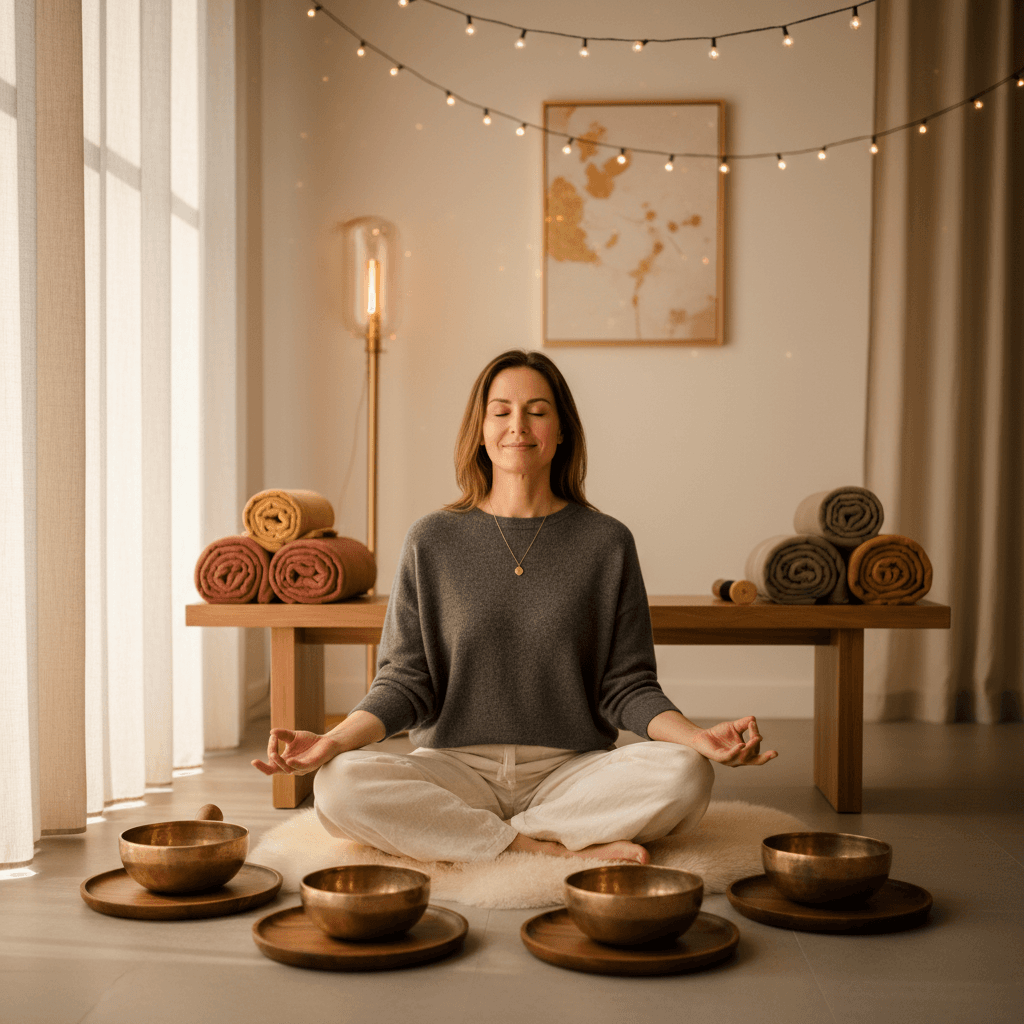
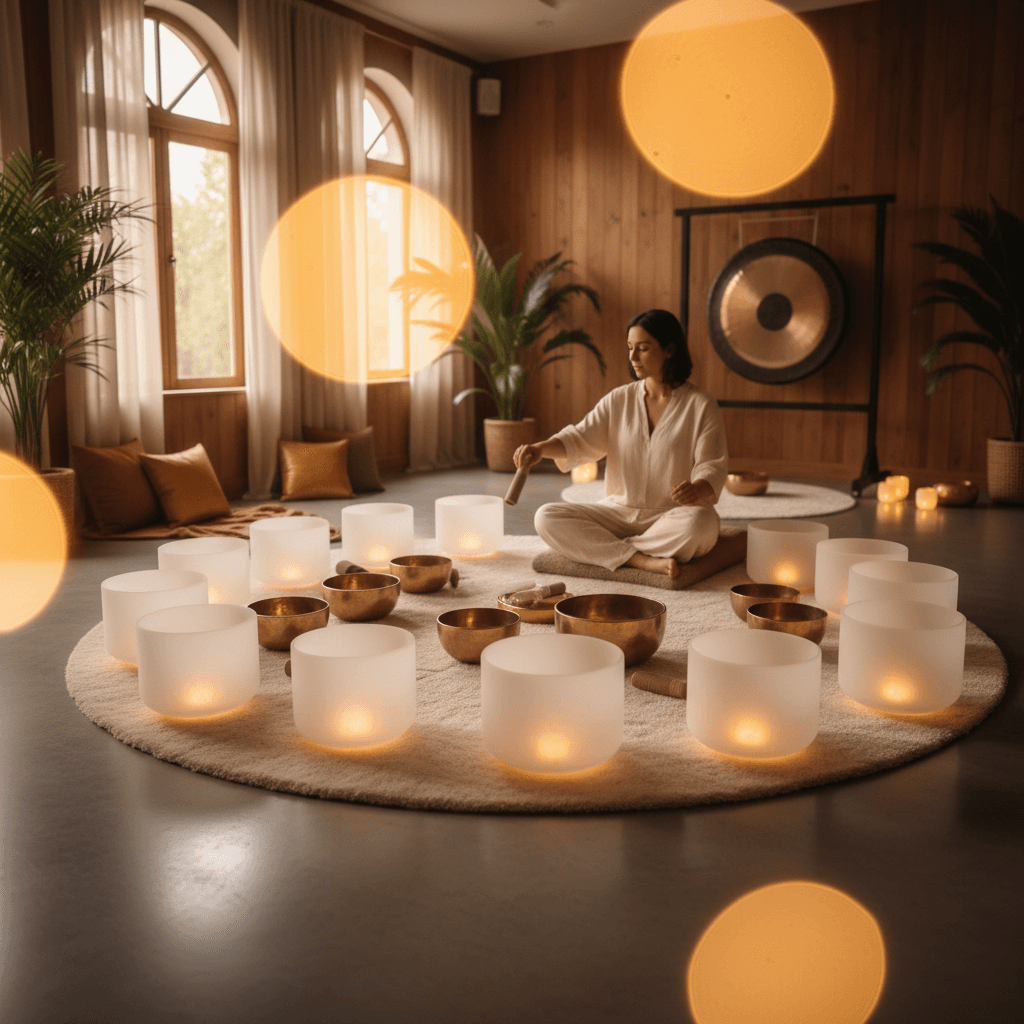
- Harmonic Resonance for Pain Perception: We incorporate a diverse array of instruments, including Himalayan singing bowls, gongs, and tuning forks, to create rich harmonic resonances. These specific frequencies are chosen for their potential to shift brainwave states, reduce stress, and influence pain perception. While not a medical pain treatment, many people report that these sessions offer a significant reduction in perceived pain and a greater sense of ease within the body, complementing pain management strategies.
- Neuro-Relaxation and Stress Reduction: A crucial, yet often overlooked, aspect of physical recovery is the state of the nervous system. Chronic pain or physical limitations can lead to heightened stress and anxiety. Our sound journeys, led by Larissa Steinbach, are specifically designed to guide the nervous system into a parasympathetic (rest and digest) state. This deep relaxation supports the body's natural healing mechanisms, improves sleep, and enhances mental clarity, all vital components of a successful rehabilitation journey.
Larissa Steinbach's expertise ensures that each sound experience at Soul Art is not only scientifically informed but also intuitively guided, creating a serene and supportive environment where individuals can reconnect with their bodies and accelerate their path to well-being. We empower our clients to explore sound as a powerful self-care practice, helping them to integrate the benefits of sound into their everyday lives and achieve holistic recovery.
Your Next Steps: Integrating Sound into Your Wellness Journey
Embracing sound-enhanced rehabilitation as a complementary approach can be a transformative step towards holistic well-being. If you're currently undergoing physical therapy or looking for innovative ways to support your body's recovery, here are some actionable steps you can take today:
- Consult with Your Physical Therapist: Discuss the potential benefits of integrating sound wellness practices into your current rehabilitation plan. Share information about RAS or vibroacoustic therapy to see how it might align with your existing care.
- Explore Rhythmic Movement: Start incorporating rhythmic elements into your daily life. Simple activities like walking to a consistent beat or performing gentle exercises with a metronome can begin to engage your brain's timing mechanisms.
- Engage with Vibrational Sound: Explore guided sound meditations or listen to specialized low-frequency tracks designed for relaxation and stress reduction. Many people find these practices helpful for reducing muscle tension and promoting deeper rest.
- Prioritize Nervous System Regulation: Recognize that stress significantly impacts physical recovery. Implement daily relaxation techniques, such as deep breathing exercises or listening to calming soundscapes, to support your nervous system.
- Experience Soul Art Dubai: Discover firsthand how Larissa Steinbach and the Soul Art team harness the power of sound. An introductory session can provide a gentle, immersive experience to understand how our unique approach may support your journey towards greater physical ease and holistic well-being.
In Summary: The Harmonious Path to Physical Wellness
The journey to physical recovery is multifaceted, and integrating sound-enhanced rehabilitation offers a profound and scientifically-supported pathway to augment traditional care. From the rhythmic guidance of RAS that re-patterns movement, to the deep cellular resonance of vibroacoustic therapy that eases discomfort and fosters relaxation, sound provides a unique dimension to healing. Sonification further empowers individuals with immediate auditory feedback, deepening body awareness and control.
At Soul Art Dubai, Larissa Steinbach champions this holistic approach, offering bespoke sound experiences designed to harmonize your body and mind. We invite you to explore the transformative potential of sound, complementing your physical therapy with practices that nurture your nervous system, alleviate stress, and foster a deeper connection to your body's innate capacity for restoration. Embark on a journey where every frequency moves you closer to optimal well-being.
Bookings Coming Soon
Soul Art is still in preparation. Session details and booking will be published here after launch.
Coming Soon
Wellness Disclaimer: This article is for educational and informational purposes only. It does not constitute medical advice, diagnosis, or treatment. Soul Art Dubai provides non-medical wellness experiences focused on relaxation, stress management, and general wellbeing. Sound wellness is a complementary practice and should not replace professional medical care.