Persian Sufi Music & Whirling: Sound for Spiritual Well-being
Key Insights
Explore Persian Sufi music, whirling (Sama), and its profound impact on spiritual well-being. Discover how ancient sounds and movement support modern relaxation at Soul Art Dubai with Larissa Steinbach.
Unveiling the Ancient Frequencies of Persian Sufi Music and Whirling
Imagine a practice so profound, so deeply rooted in history, that it can transport you beyond the everyday, into a realm of deep spiritual connection and serene stillness. Persian Sufi music and the ancient practice of whirling (Sama) offer precisely this journey. They represent a powerful synergy of sound, movement, and spiritual intention, inviting practitioners into a heightened state of awareness and inner peace.
For centuries, these traditions have been a cornerstone of mystical devotion, particularly within the Mevlevi Order founded by the revered poet Rumi. Yet, their resonance extends far beyond historical or religious contexts. Modern wellness seekers are increasingly drawn to the deep relaxation and transformative potential held within these ancient sonic and kinesthetic wisdoms.
This article delves into the rich heritage of Persian Sufi music and the captivating dance of the whirling dervishes, exploring their scientific underpinnings and their profound benefits for contemporary well-being. We will uncover how these practices, steeped in history and mystical insight, can offer a unique pathway to stress reduction, emotional balance, and a deeper connection to self in our bustling world. Join us as we explore how the wisdom of ancient Persia continues to inspire profound wellness today.
The Science Explained: Rhythmic Entrainment, Mind-Body Synergy, and Ancient Wisdom
The profound impact of Persian Sufi music and whirling on the human psyche is not merely anecdotal; it is increasingly understood through the lens of modern science. These ancient practices intuitively harness principles of neurophysiology and psychology to guide individuals towards states of deep relaxation and spiritual insight. The interplay of rhythmic sound, focused movement, and intentional meditation creates a powerful environment for holistic well-being.
The Power of Rhythmic Entrainment and Auditory Processing
At the heart of Sufi musical practices, such as dhikr (the rhythmic repetition of divine names) and the musical accompaniment of Sama, lies the principle of rhythmic entrainment. This phenomenon occurs when our internal biological rhythms, such as brainwaves and heart rate, synchronize with external rhythmic stimuli. The consistent, often repetitive, beats of instruments like the daf or bendir, combined with melodic lines of the ney, can gently guide the brain into slower frequency states.
Preliminary studies indicate that listening to specific rhythmic music can encourage brainwave activity to shift from beta (associated with alert consciousness) to alpha or even theta states. These states are commonly associated with deep relaxation, meditation, and heightened introspection. This shift may support the nervous system in downregulating the sympathetic (fight-or-flight) response and activating the parasympathetic (rest-and-digest) system, fostering a sense of calm.
Music, being an ancient language of emotion, directly influences the limbic system, the brain's emotional center. Persian Sufi music, with its intricate modal system known as dastgāh (or makam in some contexts), is believed to evoke specific emotional and spiritual states. While further scientific research is needed to fully understand the specific therapeutic applications of makam music, the historical understanding of its ability to profoundly affect human mood and consciousness aligns with contemporary neuroscientific insights into music's emotional power.
The Somatic Wisdom of Whirling (Sama)
The whirling dance of the Sufi dervishes is far more than just movement; it is a physically active meditation, a sophisticated psycho-spiritual technology. This repetitive, circular motion, performed while listening to music and focusing on the divine, engages the body in a way that profoundly influences the mind. The consistent spinning stimulates the vestibular system, which is responsible for balance and spatial orientation.
As the body adjusts to the rhythmic turning, practitioners may experience an altered state of consciousness, often described as meditative or ecstatic. This state is thought to facilitate a detachment from the nafs (ego or personal desires), enabling a deeper focus on spiritual connection, or kemal (perfection). The continuous, graceful turning acts as a moving metaphor for the soul's journey, symbolizing the cyclical nature of existence and the ascent towards the divine.
The combination of focused movement and sound can also influence the body's internal chemistry. Engaging in such immersive practices has been associated with the potential release of endorphins, naturally occurring compounds that may promote feelings of well-being and reduce discomfort. Furthermore, the mindful, repetitive nature of whirling, alongside the accompanying music, provides a powerful anchor for attention, helping to quiet the incessant mental chatter often associated with stress and anxiety.
"The repetitive nature of the motion, sound, and rhythm parallels spiritual practices, transforming the performance into a dynamic expression of spiritual and existential themes."
This synergy of sound and movement creates a powerful, holistic experience. It offers a unique pathway for the mind and body to transcend ordinary states, promoting deep relaxation, emotional release, and a profound sense of unity and presence. The ancient Sufis intuitively understood this connection, and modern science is beginning to unravel the intricate mechanisms behind their timeless wisdom.
How It Works in Practice: A Journey Through Sound and Movement
To truly understand the impact of Persian Sufi music and whirling, one must imagine the immersive experience of a traditional Sama ceremony. This is not merely a performance to be observed, but a sacred ritual designed to guide participants on an inner journey, fostering a deep sense of community and connection with the divine. The atmosphere created is one of reverence, intense focus, and palpable energy.
The ritual often begins with recitations and prayers, setting a contemplative tone. Then, the musicians begin. The ethereal, breathy tones of the ney (Persian reed flute) weave haunting melodies that seem to carry ancient whispers, creating an immediate sense of otherworldliness. These melodies are often underpinned by the deep, resonant rhythms of the daf and bendir, traditional frame drums that pulse like a heartbeat, anchoring the experience to a primal rhythm.
As the music intensifies, the dervishes (semazen) begin their graceful, continuous whirling. Dressed in symbolic attire, they extend one hand towards the heavens to receive divine grace, and the other towards the earth to channel it, creating a conduit between the spiritual and material realms. Their circular motion is mesmerizing, symbolizing the rotation of the universe, the cyclical nature of life, and the soul's relentless journey towards its source.
For those observing or participating, the combined effect of the rhythmic sound and the hypnotic movement can be profoundly transformative. The repetitive sound patterns and the visual spectacle of the whirling dervishes can induce a meditative state, drawing the attendee's focus inwards. Many people report a sense of profound stillness, where the usual anxieties and external distractions begin to fade away.
This immersive environment fosters a deep connection to self and a potential for emotional release. The music, with its complex makams, can evoke a wide spectrum of feelings, from sublime peace to deep introspection, allowing emotions to surface and integrate. Attendees often describe feeling a powerful sense of unity, a shared consciousness with others in the space, and an intimate connection to something larger than themselves. It is a journey where the physical, emotional, and spiritual realms converge, guiding individuals toward deeper understanding and inner harmony.
The Soul Art Approach: Larissa Steinbach's Modern Interpretation
At Soul Art, Dubai's premier sound wellness studio, founder Larissa Steinbach masterfully distills the profound essence of ancient traditions like Persian Sufi music and whirling into contemporary, accessible sound wellness experiences. While not replicating the traditional Sama ritual directly, Larissa's approach is deeply informed by its core principles: the power of rhythmic entrainment, the meditative qualities of sustained sound, and the intention for spiritual connection and profound relaxation.
Larissa Steinbach understands that the therapeutic benefits of Sufi practices lie in their ability to shift consciousness and foster inner harmony. At Soul Art, this is achieved through meticulously curated sound journeys that utilize a diverse array of instruments, both ancient and modern. The aim is to create an environment where the mind can quiet, the body can release tension, and the spirit can find solace, much like the states sought in Sufi traditions.
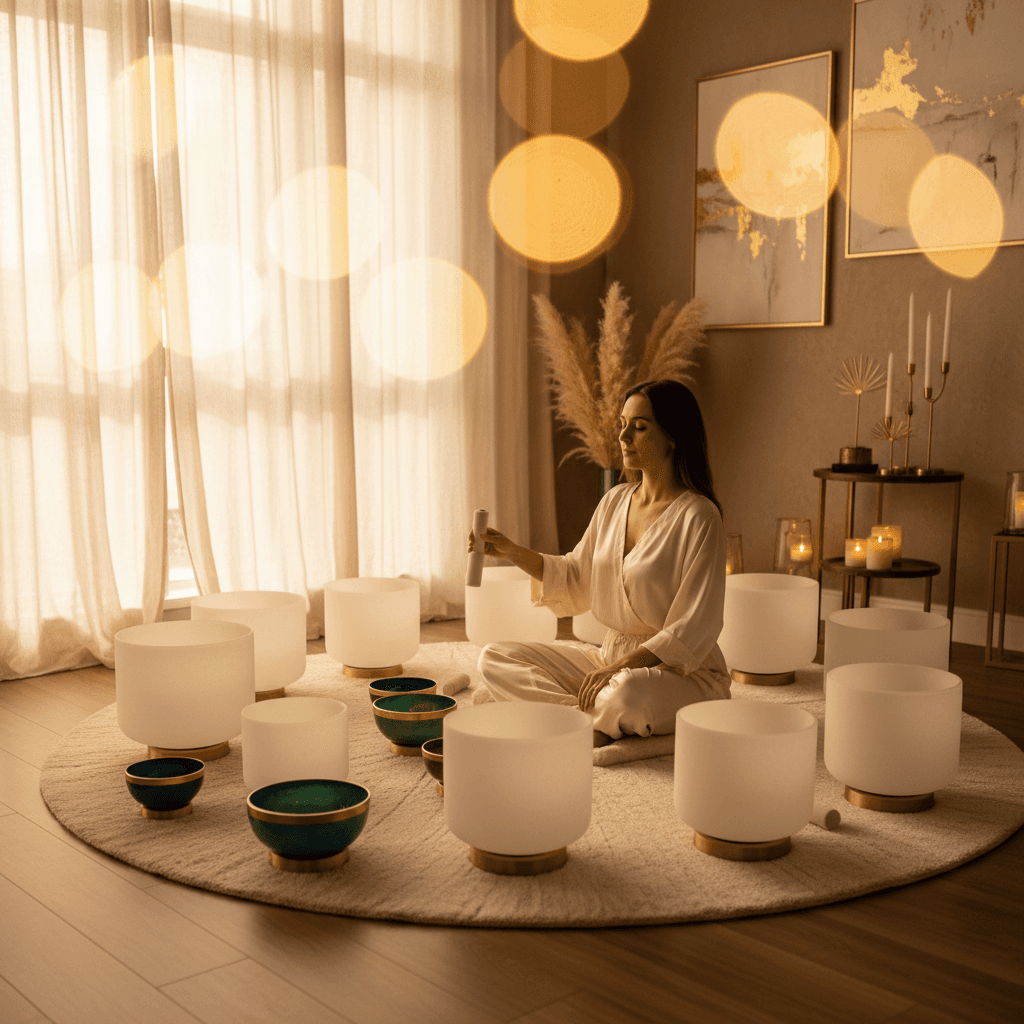
The Soul Art method is unique in its blend of traditional wisdom with cutting-edge sound science. Larissa incorporates instruments chosen for their specific vibrational frequencies and ability to evoke states of deep relaxation, similar to the calming effects of the ney and the grounding rhythms of the daf. Clients might experience the ethereal tones of crystal singing bowls, the deep resonance of gongs, or the gentle pulsations of shamanic drums, all carefully layered to create an immersive sonic landscape.
Each session at Soul Art is designed to guide the nervous system into a state of profound rest and regeneration. The intention behind the sound offerings is always focused on facilitating self-discovery, stress reduction, and emotional balance, echoing the Sufi quest for kemal and the shedding of nafs. Larissa's expertise ensures that every experience is a sanctuary for the senses, offering a pathway to inner peace and a reconnection with one's authentic self, deeply inspired by the spiritual depth of Persian Sufi heritage.
Your Next Steps: Integrating Ancient Wisdom into Modern Life
The profound wisdom embedded in Persian Sufi music and the meditative art of whirling offers invaluable lessons for navigating the complexities of modern life. You don't need to become a whirling dervish to experience the benefits of these ancient practices. Here are some actionable steps you can take today to integrate their principles of sound, rhythm, and mindful movement into your personal wellness journey:
- Mindful Listening: Seek out authentic Persian Sufi music. Allow the intricate melodies of the ney and the rhythmic drumming to wash over you without judgment. Focus on how the sounds make you feel, observing any shifts in your emotional or physical state. This practice can support deep relaxation and introspection.
- Embrace Rhythmic Movement: Incorporate gentle, repetitive movements into your day. This could be mindful walking, stretching, or even a simple swaying motion. Pay attention to your breath and body, letting the rhythm guide you into a more grounded state, similar to the meditative aspect of Sufi whirling.
- Intentional Breathwork: Explore rhythmic breathing exercises. The deliberate and patterned inhalation and exhalation can help regulate your nervous system, mirroring the focused, repetitive nature of Sufi dhikr. Many people report that this practice has been associated with reduced stress and enhanced mental clarity.
- Cultivate Presence: Practice focusing your attention on a single point or intention, whether it's a sound, a breath, or a visual anchor. This cultivation of sustained presence is central to Sufi spiritual practices and can significantly enhance your self-care routine, promoting a sense of inner peace.
- Experience Immersive Sound: Consider exploring sound wellness experiences that draw inspiration from these profound traditions. Engaging with curated sound journeys, like those offered at Soul Art, can provide a powerful and accessible way to restore your nervous system and discover deep relaxation within a supportive environment.
In Summary: The Enduring Harmony of Soul and Sound
The ancient practices of Persian Sufi music and whirling stand as a timeless testament to the profound connection between sound, movement, and spiritual well-being. From the rhythmic entrainment of dhikr and Sama to the meditative journey of the whirling dervishes, these traditions offer powerful tools for cultivating inner peace, reducing stress, and fostering a deeper connection to self. While modern scientific research continues to explore their full therapeutic potential, anecdotal evidence and historical accounts consistently highlight their capacity to transform consciousness and promote holistic wellness.
At Soul Art, Larissa Steinbach honors this rich heritage by creating immersive sound experiences that echo the spiritual depth and restorative power of these ancient wisdoms. We invite you to explore the profound benefits of sound wellness, allowing the resonant frequencies to guide you towards a state of deep relaxation and renewed vitality. Discover how the wisdom of Persian Sufi traditions, reinterpreted for the modern world, can illuminate your path to well-being.
Bookings Coming Soon
Soul Art is still in preparation. Session details and booking will be published here after launch.
Coming Soon
Wellness Disclaimer: This article is for educational and informational purposes only. It does not constitute medical advice, diagnosis, or treatment. Soul Art Dubai provides non-medical wellness experiences focused on relaxation, stress management, and general wellbeing. Sound wellness is a complementary practice and should not replace professional medical care.
Related Articles
Maori Poi & Sound: Pacific Traditions for Modern Well-being
Swedish Nyckelharpa: The Science of Nordic String Healing
Apollo's Ancient Echoes: Sound Healing & Holistic Wellness