The Unspoken Language: Opt-Out Signals in Group Sound Sessions

Key Insights
Explore how subtle physiological 'opt-out signals' guide deep relaxation in sound wellness, enhancing individual comfort and well-being at Soul Art Dubai.
What if your body had its own intricate "privacy settings," subtly communicating its needs for comfort and disengagement in a group setting? In the rapidly evolving landscape of wellness, understanding these unspoken preferences – what we at Soul Art refer to as "opt-out signals" – is not just beneficial, but essential for truly transformative experiences. Just as digital platforms recognize a universal opt-out request from a browser, a skilled sound wellness facilitator learns to interpret the subtle, non-verbal cues that indicate a participant might be feeling overwhelmed, disengaged, or simply needing space.
This article delves into the fascinating science behind these physiological and psychological "opt-out signals" within group sound sessions. We will explore how our nervous system communicates its preferences, why acknowledging these signals is paramount, and how Larissa Steinbach and the Soul Art team masterfully integrate this understanding to cultivate an environment of profound safety and individual responsiveness. Prepare to discover why truly honoring these subtle cues is the cornerstone of effective, empathetic sound wellness, supporting a deeper, more personalized journey into relaxation and well-being for every single person.
The Unseen Language of the Nervous System
Our bodies are continuously processing information from our environment, often without our conscious awareness. This constant assessment, primarily governed by the autonomic nervous system, dictates our feelings of safety, comfort, and willingness to engage. In a group setting, especially one designed for vulnerability and relaxation like a sound session, these internal states become particularly significant.
Decoding Somatic Responses: The Body's "Opt-Out" Mechanisms
In the context of group sound sessions, "opt-out signals" are not digital clicks but rather a sophisticated array of physiological and behavioral cues. These are the body's automatic, often unconscious, ways of communicating a need for more space, less stimulation, or a different approach. Much like how researchers observed that opt-out consent procedures yield higher participation but can also highlight specific populations (such as older individuals or those from deprived backgrounds) who might be less likely to engage, our bodies in a wellness setting also reveal subtle patterns of disengagement.
Preliminary studies and anecdotal evidence suggest that individuals who may feel less comfortable with vulnerability, who have past experiences influencing their trust, or who simply have different preferences for how they receive information or engage, might display these subtle signals more readily. These signals manifest as shifts in posture, subtle facial expressions, changes in breathing patterns, or a general sense of internal retreat. Recognizing these cues is crucial for a facilitator to maintain an inclusive and supportive environment.
Polyvagal Theory and the Spectrum of Engagement
A deeper understanding of these signals is often rooted in Polyvagal Theory, developed by Dr. Stephen Porges. This theory highlights how our vagus nerve, a major component of the autonomic nervous system, plays a critical role in regulating our emotional states, social engagement, and responses to perceived threats. It describes a hierarchy of three nervous system states: ventral vagal (safe and social), sympathetic (fight or flight), and dorsal vagal (freeze or collapse).
In a sound session, the aim is to gently guide participants into a ventral vagal state, characterized by a sense of safety, calm, and connection. However, if an individual’s system perceives even a subtle threat – perhaps a sound frequency that is too intense, a feeling of being observed, or an internal memory triggered by the experience – they might shift towards a sympathetic or dorsal vagal state. This shift is where "opt-out signals" emerge, acting as the body's protective mechanism to disengage or create distance from the perceived stressor.
The Impact of Group Dynamics on Individual Comfort
Group settings, while often fostering a sense of community, can also present unique challenges for individual comfort. The presence of others, their energies, and the collective experience can influence how safely each participant feels they can drop into a state of deep relaxation. Research on consent bias in studies, for example, notes that certain demographics, such as older participants or females, sometimes show different consent patterns. This can be metaphorically extended to wellness, where individuals might have varying needs for personal space, sensory input, or emotional boundaries within a group setting.
When a participant subtly "opts out" through their body language, it's not a rejection of the session itself, but a silent request for adjustment. It could signify a need for less intensity, a feeling of being overwhelmed, or even a desire for a moment of internal retreat. Failing to recognize or honor these unspoken signals, much like ignoring digital privacy preferences, can lead to a diminished experience, fostering distrust or a sense of discomfort that undermines the entire purpose of the wellness practice. The facilitator's role becomes one of a highly attuned observer, ensuring that the collective experience still allows for individual boundaries and nervous system regulation.
How It Works in Practice
Translating the understanding of "opt-out signals" into the practical realm of a group sound session involves a heightened sense of awareness from the facilitator and a thoughtfully curated environment. It's about recognizing that each person arrives with their unique nervous system landscape, and their comfort levels are not monolithic.
When a participant is subconsciously "opting out" of the experience, the cues can be subtle but distinct. One might observe a shift in posture – perhaps a tensing of the shoulders, arms crossed protectively, or a slight curling inward of the body. Shallow breathing, restless fidgeting, or even a sudden urge to open their eyes and survey the room can be indicators that their nervous system is signaling discomfort or a need to re-orient. These are the body's ways of trying to regain a sense of control or safety when feeling vulnerable or overstimulated by the resonant frequencies.
The experience of sound itself can be deeply personal. While one individual might find a particular frequency deeply soothing, another's nervous system might interpret it as too intense or even jarring, triggering a defensive response. The brain continuously filters and interprets auditory input, and if it perceives any element as a threat, it can activate sympathetic responses, hindering relaxation. This can manifest as an inability to "drop in," heightened alertness, or a feeling of agitation, even when surrounded by what is intended to be a calming soundscape.
Sensory details play a crucial role. The volume of the gongs, the proximity of a singing bowl, the specific vibrational qualities of different instruments – all these elements are received and processed by the body on a cellular level. If these inputs are inconsistent with a person's current capacity for reception, or if they override existing subtle preferences, it can cause the individual's system to subtly "break" its connection to the intended relaxation state. Just as an inconsistent website might fail to honor a digital opt-out signal, an inattentive sound facilitator might inadvertently push a participant further into discomfort, rather than gently drawing them into deeper relaxation.
The Soul Art Approach
At Soul Art, Larissa Steinbach and her team place immense value on creating an environment where every participant feels genuinely safe and seen, allowing them to truly "opt-in" to the healing frequencies. This philosophy is deeply ingrained in the very fabric of our studio, from the initial greeting to the final lingering resonance of a session. Understanding and responding to subtle "opt-out signals" is a cornerstone of the Soul Art method, elevating it beyond a mere collection of sound instruments to a truly responsive wellness practice.
Larissa Steinbach's approach is characterized by meticulous observation and a profound empathy for the individual experiences within a group. She doesn't just play instruments; she "listens" to the room, tuning into the collective energy while simultaneously scanning for those quiet, unspoken signals. This involves paying attention to subtle shifts in posture, changes in breathing, or any indications of restlessness. Her goal is to ensure that the soundscape is not only beautiful but also therapeutically appropriate for every nervous system present.
"True healing begins when we feel safe enough to be vulnerable. My role is to hold that space, to listen not just with my ears, but with my entire being, for the subtle whispers of comfort and discomfort that guide each person's unique journey."
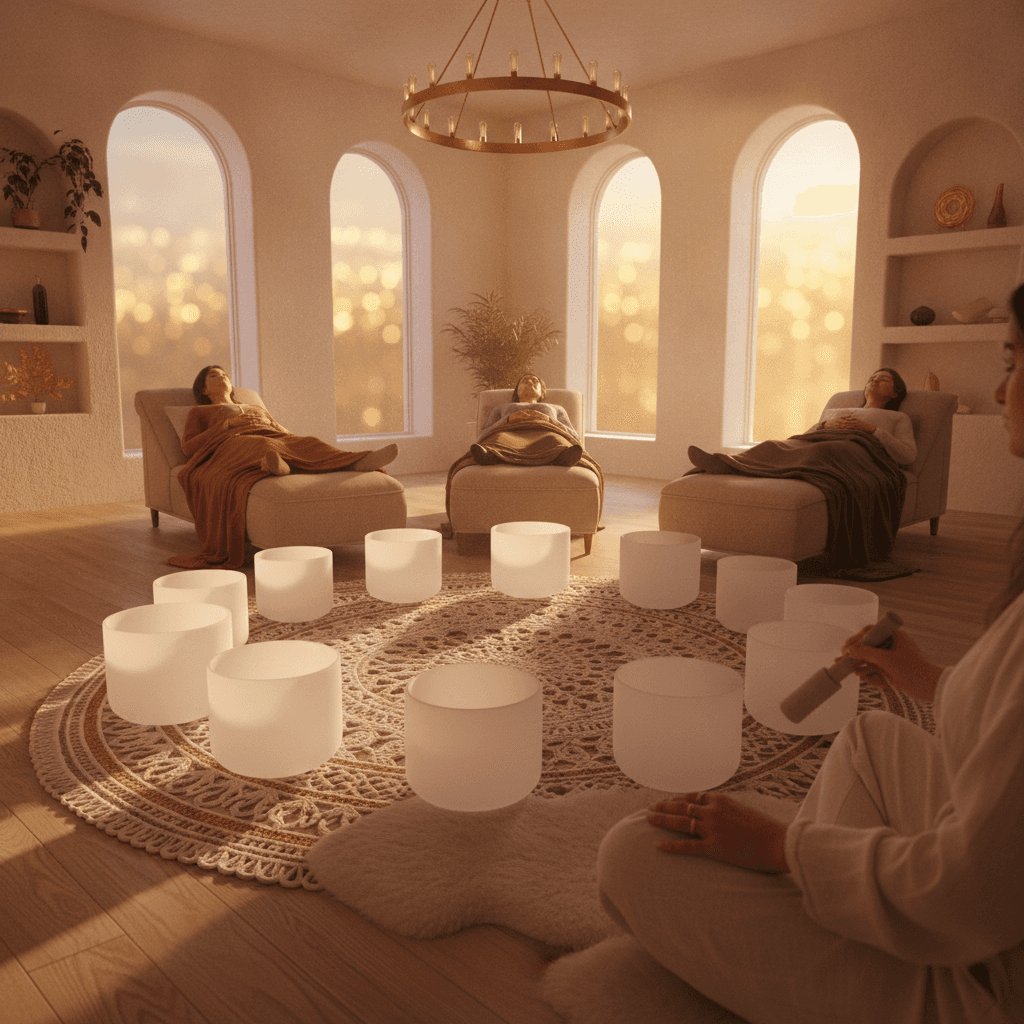
What makes the Soul Art method unique is this dynamic responsiveness. Larissa might adjust the intensity or tempo of instruments, introduce specific tones known for their grounding qualities, or even pause to offer a verbal cue that gently invites deeper relaxation. She masterfully employs a curated selection of instruments – resonant gongs, crystal singing bowls, Himalayan singing bowls, chimes, and even her own gentle voice – chosen not just for their acoustic beauty but for their specific vibrational frequencies and their ability to soothe and restore the nervous system. For example, she might lean into lower frequencies when sensing a need for grounding, or introduce higher, ethereal tones to encourage an expansive sense of peace.
The "quiet luxury" of the Soul Art space itself contributes significantly to this sense of security. Every detail, from the soft lighting and plush mats to the subtle aromatherapy and calming ambiance, is designed to reduce external stimuli and facilitate a deep sense of internal quiet. This intentional curation minimizes potential triggers that might cause a nervous system to "opt out," creating a sanctuary where participants can truly surrender to the sound journey, trusting that their needs are implicitly understood and honored. It’s an environment where the body feels inherently safe, allowing for the natural unfolding of deep relaxation and self-discovery.
Your Next Steps
Understanding these subtle "opt-out signals" can empower you, whether you're a participant seeking deeper relaxation or a wellness professional aiming to enhance your practice. Integrating this awareness can transform your approach to self-care and group facilitation, fostering environments of true receptivity and trust.
Here are some practical steps you can implement today:
- Cultivate Self-Awareness: Before and during any wellness practice, take a moment to scan your own body. Notice any tension, restlessness, or feelings of internal retreat. Acknowledge these sensations without judgment, as they are your body's way of communicating.
- Communicate Your Needs: If you're in a group session and feel overwhelmed, it's always okay to make a subtle adjustment (e.g., changing your position, covering your eyes) or, if comfortable, to quietly signal to the facilitator. Your well-being is paramount.
- Practice Mindful Observation: For facilitators, dedicate time to consciously observe your participants. Look beyond overt actions for subtle cues like changes in breathing, facial expressions, or posture. This intentional observation can guide your facilitation in real-time.
- Create a Responsive Environment: Ensure your space is designed to minimize potential stressors. Consider elements like lighting, temperature, comfort of seating, and the overall energetic flow. A truly safe space reduces the likelihood of "opt-out signals" emerging from environmental discomfort.
- Prioritize Gentle Integration: After a powerful sound session, allow ample time for quiet integration. Avoid rushing back into demanding activities. This helps your nervous system gently re-calibrate and fully absorb the benefits of the relaxation.
In Summary
The concept of "opt-out signals" in group sound sessions, while metaphorically borrowed from the digital world, profoundly illuminates the nuanced dynamics of human comfort and nervous system regulation. It highlights that individuals subtly communicate their needs for safety and space through physiological and behavioral cues, especially in environments designed for deep relaxation and vulnerability. Just as digital platforms must honor privacy preferences, wellness spaces must learn to interpret and respect these unspoken messages to ensure a truly supportive experience.
Larissa Steinbach and Soul Art Dubai champion this approach, creating a sanctuary where every participant's subtle signals are acknowledged and honored. By fostering an environment of deep empathy and responsiveness, Soul Art ensures that each journey into sound wellness is not just heard, but deeply felt, enabling profound relaxation and genuine well-being for all. It's a testament to the power of attuned facilitation in creating truly transformative wellness experiences.
Bookings Coming Soon
Soul Art is still in preparation. Session details and booking will be published here after launch.
Coming Soon
Wellness Disclaimer: This article is for educational and informational purposes only. It does not constitute medical advice, diagnosis, or treatment. Soul Art Dubai provides non-medical wellness experiences focused on relaxation, stress management, and general wellbeing. Sound wellness is a complementary practice and should not replace professional medical care.
Related Articles

Beyond Hearing: Sound Waves & Your Body's Inner Boundaries at Soul Art
Breath Holding & Sound: Releasing Guarded Patterns at Soul Art Dubai

Reclaim Vitality: Soft Sound Practices for Fatigue & Collapse