Reclaiming Calm: Sound Recovery for Open Office Overload
Key Insights
Combat open office noise and stress with sound recovery. Soul Art, founded by Larissa Steinbach, offers a pathway to restore focus and well-being.
The hum of fluorescent lights, the incessant chatter of colleagues, the insistent ring of phones – this is the soundtrack to modern professional life in an open-plan office. While designed to foster collaboration and transparency, these environments often inadvertently cultivate a pervasive sense of overwhelm. The constant auditory input, far from being background noise, can be a relentless drain on our cognitive and emotional reserves.
It's a problem far more profound than mere annoyance; it impacts our ability to focus, our stress levels, and ultimately, our overall well-being and productivity. Imagine a scenario where workers in open offices waste twice as much time as those in private offices due to noise distraction. This startling reality, highlighted by research, underscores the urgent need for effective strategies to mitigate the impact of open office overload.
At Soul Art, Dubai's premier sound wellness studio, we understand the intricate connection between our auditory environment and our inner state. We believe that just as noise can deplete us, specific frequencies and vibrations can profoundly restore us. This article delves into the scientifically-backed reasons why open office noise is so detrimental and explores how targeted sound recovery practices may offer a powerful antidote, guiding you back to a state of calm and clarity.
The Science Explained
The modern open-plan office, a ubiquitous feature in today's corporate landscape, presents a paradox. While intended to break down silos and foster dynamic interaction, it often becomes a breeding ground for stress and diminished performance, largely due to its inherent acoustic challenges. Scientific inquiry has increasingly illuminated the detrimental effects of this auditory environment on our brains and bodies.
The Silent Saboteur: How Office Noise Impacts Your Brain
Noise in an open-plan office is rarely "silent." It’s a constant barrage of auditory stimuli, from conversations and phone calls to keyboard clicks and the whir of HVAC systems. Research indicates that this seemingly innocuous background noise is a significant source of distraction and annoyance for employees. Studies have shown that noise "has often been reported as the greatest issue of dissatisfaction that staff raise when questioned about their open-plan work environments."
This constant auditory input imposes a substantial cognitive load on individuals. Our brains are hardwired to process novel sounds, diverting attention even when we consciously try to ignore them. As a result, cognitive resources that should be dedicated to complex tasks are instead consumed by filtering out irrelevant auditory information, leading to impaired concentration and reduced cognitive performance. Jahncke, Hygge, Halin, Green, and Dimberg (2011) found that exposure to open-plan office noise negatively impacted cognitive performance and the ability for restoration.
The Stress Response: Beyond Annoyance
The impact of open office noise extends beyond mere distraction; it triggers a physiological stress response. Our bodies perceive prolonged, uncontrollable noise as a threat, activating the fight-or-flight mechanism. This leads to an elevation in stress hormones, such as cortisol, even during short-term exposure, as reported by Kristiansen et al. (2009). Over time, chronic exposure to elevated cortisol levels can have significant implications for both physical and psychological well-being.
Studies have linked open office noise to increased perceived cognitive workload, impaired concentration, and reduced energy and motivation. These effects are not merely subjective; they are detectable through physiological changes. While some short-term studies may not show significant physiological stress reactions, the cumulative effect of daily exposure points to a clear negative impact on psychological and physiological well-being, as noted by researchers like Danielsson & Bodin (2008).
Cognitive Erosion: The Cost to Performance
The cumulative effect of constant noise and its associated stress response is a measurable decline in work performance. Evidence indicates that individuals exposed to office noise remember fewer words, rate themselves as more tired, and are less motivated compared to those in quieter environments. This directly translates to reduced productivity and an increase in errors.
For instance, studies have demonstrated that when distracting sound is removed, errors in work are reduced, and productivity increases. The nature of the task also plays a role; tasks requiring deep focus and information processing are particularly vulnerable to noise interference. Open office noise has been associated with decreased cognitive performance, particularly affecting processes like memory and information recall. The Rivier Academics blog highlights that noise alone caused open office workers to waste twice as much time as those in private offices.
The Need for Restoration
Given these pervasive negative impacts, the need for effective restoration strategies becomes paramount. The brain requires periods of quiet and calm to consolidate memories, process information, and recover from cognitive fatigue. Without adequate restoration, individuals risk burnout, chronic stress, and a sustained reduction in cognitive function. The absence of a restorative environment within or immediately after an open office day can lead to a persistent state of heightened arousal, making it difficult to unwind and fully recover. This cycle perpetuates stress and diminishes overall quality of life, underscoring the vital role of intentional recovery practices.
How It Works in Practice
Understanding the scientific rationale behind open office overload naturally leads to the question of practical solutions. While structural changes to office environments are often outside individual control, the power of sound recovery offers a profound personal pathway to restoration. At its core, sound recovery leverages the principles of vibrational healing to reset the nervous system and calm the mind, counteracting the detrimental effects of chaotic office acoustics.
When exposed to the targeted frequencies and resonant vibrations of sound wellness instruments, the body and mind undergo a transformative shift. The chaotic brainwave patterns often induced by environmental stressors begin to synchronize and slow down, transitioning from the alert beta state to more relaxed alpha and even deeply restorative theta states. This physiological shift is crucial for mitigating stress.
The experience often begins with a subtle yet profound sensation of sound washing over and through the body. The deep, sustained resonance produced by instruments like gongs and singing bowls can stimulate the vagus nerve, a key component of the parasympathetic nervous system. Activation of the vagus nerve helps to switch the body from its stress-induced "fight-or-flight" response to a more tranquil "rest and digest" state. This process naturally lowers heart rate, slows breathing, and reduces muscle tension, creating a sense of deep physical and mental relaxation.
Many people report feeling the vibrations of the instruments penetrate deeply, almost as if every cell is being gently massaged. This somatic experience, combined with the auditory input, creates a multi-sensory immersion that facilitates profound relaxation. The mind, often racing with thoughts and anxieties from the workday, finds it easier to quiet down as it focuses on the continuous, evolving soundscape. This journey inwards allows for a release of accumulated tension and a clearing of mental clutter.
Beyond immediate relaxation, consistent engagement with sound recovery practices may support the development of greater resilience to future stressors. By regularly entering these states of deep rest, individuals can enhance their body's natural ability to self-regulate and maintain a more balanced physiological state, making them better equipped to navigate the demands of a busy work environment. It’s an active form of self-care that directly addresses the root causes of stress from overstimulation.
The Soul Art Approach
At Soul Art, Larissa Steinbach has meticulously crafted a unique sound wellness experience designed to directly address the modern challenges of open office overload and urban stress. Her approach is rooted in both ancient wisdom and a deep understanding of contemporary scientific principles, creating a sanctuary for profound restoration in the heart of Dubai. Larissa's vision is to offer a precise, intentional, and deeply holistic pathway to well-being, moving beyond mere relaxation to genuine nervous system recalibration.
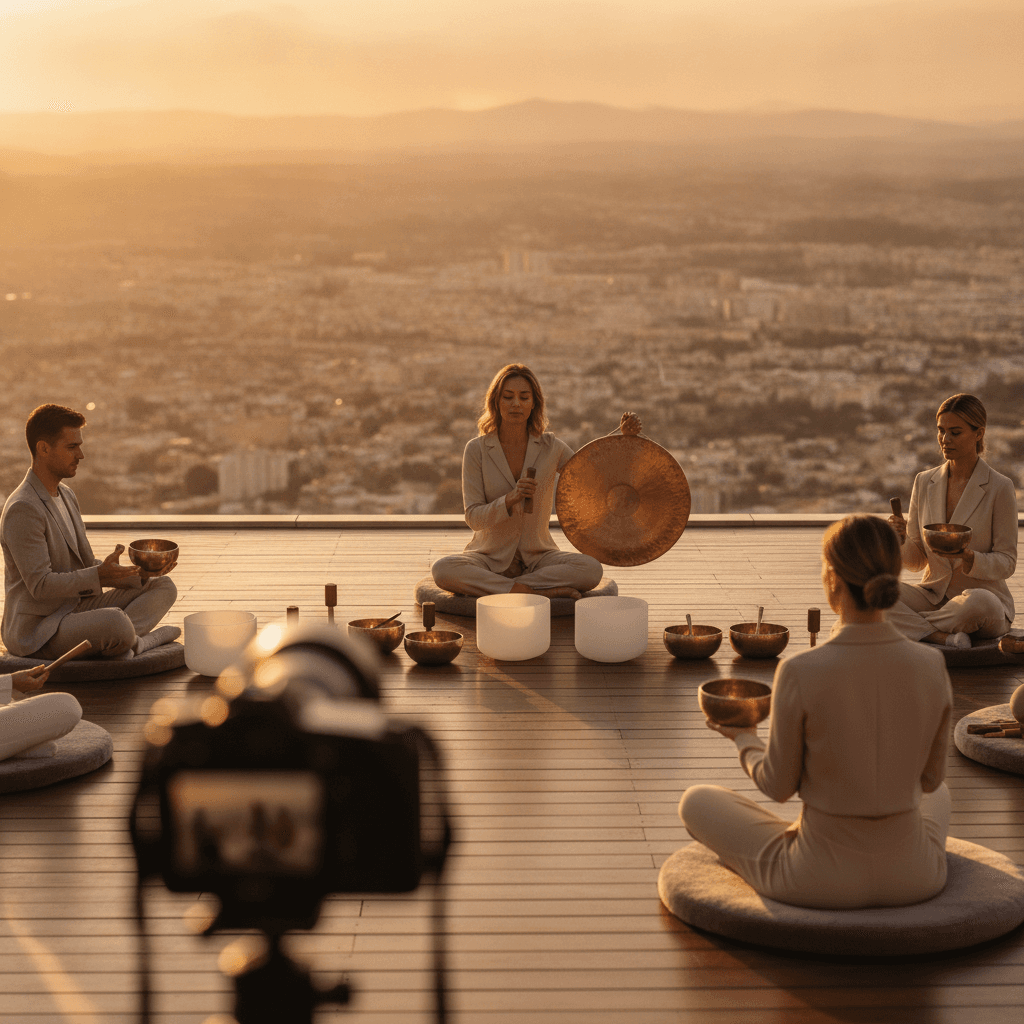
What makes the Soul Art method truly distinctive is Larissa’s expertise in curating specific soundscapes that gently guide the mind and body into states of deep coherence and healing. She selects and plays a diverse array of instruments, each chosen for its unique vibrational qualities and resonant frequencies. These include the majestic Gong, whose pervasive vibrations can help break up energetic blockages and induce a meditative state; Himalayan singing bowls, which create rich, layered harmonics that resonate with the body's energy centers; and crystal singing bowls, known for their pure, clear tones that align with specific chakras and foster deep emotional release. Chimes and other gentle percussive instruments are also incorporated to weave intricate textures into the sound tapestry, enhancing the immersive journey.
Larissa Steinbach combines these instruments with a profound understanding of how sound affects the human energy system and nervous system. She doesn't just play sounds; she facilitates an experience where individuals can genuinely disconnect from external noise and reconnect with their inner calm. Each session is an invitation to shed the accumulated stress of the open office environment, allowing the body's innate healing mechanisms to activate.
"Our sound recovery sessions at Soul Art are more than just an escape; they are a conscious re-tuning of your entire being. We provide the precise frequencies your nervous system needs to transition from overwhelm to profound peace, supporting a return to your most centered and productive self." - Larissa Steinbach
The Soul Art approach is a complementary practice, focused on empowering individuals with tools for holistic wellness and stress management. It offers a unique opportunity to experience profound relaxation, enhance mental clarity, and nurture emotional balance, particularly for those grappling with the auditory challenges of modern workspaces. Larissa Steinbach’s dedication ensures that every session is a carefully guided journey toward inner harmony and renewed vitality.
Your Next Steps
Navigating the demands of an open office environment doesn't have to mean sacrificing your peace of mind or productivity. Integrating proactive sound recovery practices into your routine may offer a powerful way to mitigate the stress and cognitive drain associated with constant noise. Here are some actionable steps you can implement today to reclaim your calm:
- Create Micro-Breaks of Silence: Even a few minutes of conscious quiet can make a difference. Step away from your desk, find a quiet corner, or simply close your eyes and focus on your breath. This provides a brief respite for your auditory system and mind.
- Utilize Noise-Canceling Technology: Invest in high-quality noise-canceling headphones. While not a permanent solution, they can create a personal acoustic buffer, particularly when you need to concentrate on complex tasks or during short breaks.
- Incorporate Natural Soundscapes: During breaks or commutes, listen to nature sounds like gentle rain, ocean waves, or forest ambiance. Some research suggests that natural sounds can promote relaxation and focus more effectively than artificial sound masking.
- Practice Mindful Listening: Engage in short exercises where you focus entirely on a single, pleasant sound – the chirping of a bird, the rustle of leaves. This can train your brain to filter distractions more effectively and appreciate beneficial sounds.
- Explore Sound Wellness Sessions: For deep and lasting restoration, consider professional sound recovery sessions. Experiences at studios like Soul Art are specifically designed to guide your nervous system into profound relaxation and recalibration, offering a powerful antidote to prolonged auditory stress.
Ready to transcend the noise and discover a deeper sense of well-being? Take the first step towards a calmer, more focused you.
In Summary
The open office, while designed for collaboration, often comes with an unforeseen cost: a constant deluge of noise that taxes our cognitive abilities and elevates stress levels. Research unequivocally demonstrates that this pervasive auditory environment can impair concentration, reduce motivation, and significantly impact overall well-being and productivity. It's a critical challenge demanding intentional solutions for modern professionals.
Sound recovery offers a scientifically-supported, complementary approach to counteract these negative effects. By harnessing specific frequencies and vibrations, practices like those offered at Soul Art, founded by Larissa Steinbach, may support the nervous system in transitioning from a state of overwhelm to profound calm. This holistic wellness practice provides a much-needed sanctuary, enabling deep restoration and enhancing resilience against the daily stressors of urban life. Reclaim your focus, restore your energy, and rediscover inner tranquility.
Bookings Coming Soon
Soul Art is still in preparation. Session details and booking will be published here after launch.
Coming Soon
Wellness Disclaimer: This article is for educational and informational purposes only. It does not constitute medical advice, diagnosis, or treatment. Soul Art Dubai provides non-medical wellness experiences focused on relaxation, stress management, and general wellbeing. Sound wellness is a complementary practice and should not replace professional medical care.
Related Articles
Reclaim Your Focus: The Afternoon Slump Sound Ritual for Office Wellness with Soul Art

Corporate Sound Healing: Elevate Employee Well-being & Productivity
Conflict Decompression: Resetting Your Mind After Difficult Meetings with Sound Wellness