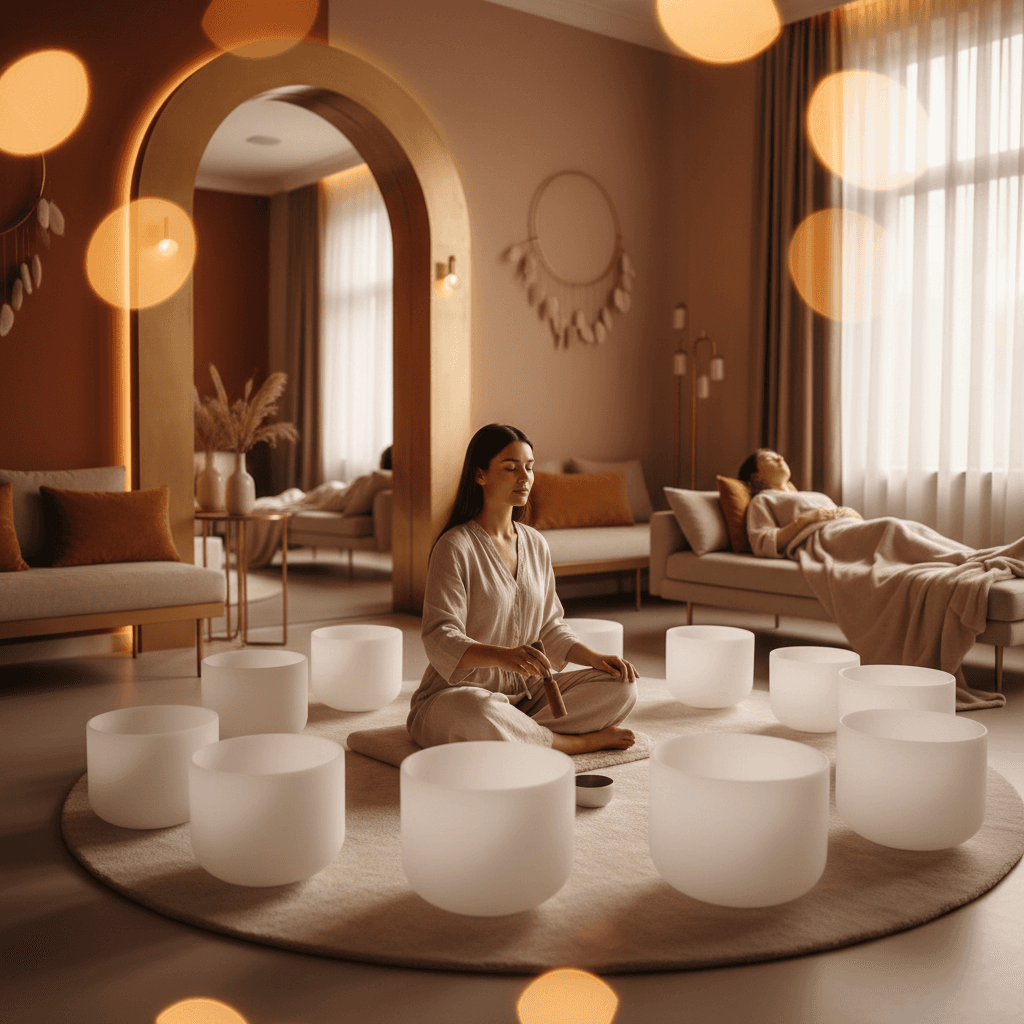
Olympic Edge: How Elite Athletes Harness Sound for Peak Performance & Recovery
Key Insights
Discover how Olympic athletes leverage advanced sound protocols for enhanced performance, rapid recovery, and unparalleled mental resilience. Uncover the science with Soul Art Dubai.
Can sound waves truly unlock an Olympic athlete's potential, transforming not just their physical capabilities but their mental fortitude and recovery speed? In the relentless pursuit of excellence, elite athletes often seek every conceivable advantage, meticulously optimizing their training, nutrition, and psychological preparation. Yet, one powerful, often overlooked modality is increasingly gaining recognition: the strategic application of sound.
At Soul Art, Dubai’s premier sound wellness studio founded by Larissa Steinbach, we delve into the sophisticated science behind how tailored sound protocols can be a game-changer for individuals striving for their personal best, from aspiring competitors to seasoned professionals. This deep dive explores the cutting-edge ways sound is being integrated into elite athletic regimens, offering profound insights into how it may support peak performance, accelerated recovery, and an unwavering mental edge. Understanding these principles can offer significant advantages not just to Olympians, but to anyone seeking to elevate their overall wellbeing and resilience.
The Science Explained
The human auditory system is an incredibly sophisticated network, constantly processing acoustic information that shapes our perception and interaction with the world. For elite athletes, this ability is honed to an exceptional degree, extending far beyond simply hearing. Sound provides critical, time-sensitive feedback that can profoundly influence movement precision, cognitive processing, and even neural efficiency.
Auditory Feedback: A Precision Tool for Performance
Elite athletes inherently rely on sport-specific sounds to interpret and respond to their environment. These "ecological sounds" provide immediate, naturally evocative feedback about the success or failure of their movements. While visual analysis has traditionally dominated technique refinement, some research suggests that auditory perception offers a clearer time-resolution, making acoustic displays a promising alternative or complement.
Sonification, the acoustic representation of information, provides an abundance of applications in elite sports for monitoring, observing movement, and detecting subtle changes. Studies have repeatedly demonstrated the efficacy of sonification in various disciplines. For instance, in rowing, converting propulsive boat acceleration into pitch changes has been associated with faster boat speeds, increased distances traveled per stroke, and improved crew synchronization. Schaffert et al. (2010, 2011) extensively investigated this, showing that real-time sonification allows rowers to enhance movement stability and control.
Similarly, in swimming, mapping higher water pressure to a higher pitch enabled athletes to maintain stroke velocity and improve movement stability. Even in strength training, high-intensity sounds presented during the bench-press phase of weightlifting have been found to facilitate exerted mean muscle power (Murgia et al., 2012b). For precision sports like rifle shooting, augmented auditory feedback informing shooters about rifle alignment significantly improved performance in both post- and retention tests (Konttinen et al., 2004). These findings collectively highlight sound's potent capacity to provide immediate, actionable feedback, directly enhancing motor control and athletic output.
Cognitive and Perceptual Advantages: Quieter Brains and Sharper Focus
Beyond immediate feedback, sound profoundly impacts an athlete's cognitive and perceptual capabilities. Research indicates that athletes exhibit differences in auditory processing compared to non-athletes, often displaying what scientists refer to as "quieter brains." This term suggests a reduction in background neural noise, potentially enabling more efficient sensory processing and quicker responses to environmental cues.
This neural efficiency, a reduction in neural activity during motor and cognitive tasks, has been observed in elite athletes. The demanding auditory processing inherent in many sports activities may underlie these enhancements, indicating that engaging in sports might literally re-wire the brain for optimal sound interpretation. For example, neurophysiological studies show different brain activation patterns when athletes listen to self-produced sports sounds versus sounds from other athletes (Justen et al., 2014). This suggests a deep, embodied connection between action and sound.
Athletes also leverage auditory information to anticipate and predict actions. Expert basketball players, for instance, can detect an opponent's movement intentions and predict their running direction based solely on the sounds generated by their movements (Camponogara et al., 2017). Another study found that experienced skateboarders were superior to non-experts in anticipating and reproducing a jump based only on movement sounds (Cesari et al., 2014). This heightened auditory perception allows for faster decision-making and more precise motor responses, critical advantages in high-stakes competition.
Addressing Research Gaps and Future Directions
While the evidence for sound's impact on elite performance is compelling, it is acknowledged that research on elite athletes can be challenging due to limited accessibility and numbers. The Scandinavian Journal of Medicine & Science in Sports (2025) and other consensus statements highlight the scarcity of rigorous original study designs, such as randomized controlled trials, which are essential for establishing definitive cause-and-effect relationships.
Furthermore, a significant portion of available evidence is based on male athletes, underscoring a critical need for more research on female athletes and the longitudinal effects of various interventions. Despite these gaps, the existing body of work provides a strong, evidence-based foundation, indicating the vast potential of integrating sound protocols into comprehensive athlete development programs. Future technological innovations, including wearable sensors and "omics" technologies, hold promise for further personalizing training, nutrition, performance, and recovery, likely incorporating more sophisticated sound-based metrics.
How It Works in Practice
Translating the intricate science of sound into tangible benefits for elite athletes involves a multifaceted approach, extending beyond real-time performance feedback to encompass critical areas like stress reduction, recovery, and mental resilience. These practices create a holistic sound environment that supports an athlete's entire journey, from intense training to crucial competition and vital rest.
In practice, elite sound protocols often begin with a deep understanding of an athlete's specific needs and the demands of their sport. This personalization is key, as different sports and individual physiologies respond uniquely to various acoustic stimuli. The goal is to create targeted auditory experiences that can either energize and focus or deeply relax and restore.
During training, athletes might experience sonification techniques where subtle changes in their movement, force, or technique are translated into real-time auditory cues. Imagine a swimmer hearing a specific tone that indicates optimal stroke length, or a gymnast receiving auditory feedback on the rhythm and timing of their routine. These immediate acoustic signals bypass the slower processing of visual data, allowing for instantaneous adjustments and faster skill acquisition.
Beyond performance, the power of sound for recovery and mental state is paramount. Athletes are under immense pressure, and managing stress is crucial for sustained success and injury prevention. Sound protocols are designed to downregulate the nervous system, shifting the body from a 'fight or flight' state into one of deep rest and repair. This is achieved through specific frequencies, rhythms, and harmonies that encourage brainwave entrainment, guiding the brain into alpha or theta states associated with deep relaxation and meditative calm.
Clients often report a profound sense of peace and mental clarity during these sessions. The immersive nature of sound, with its deep resonances and soothing frequencies, can create an almost meditative state, allowing the mind to quiet the incessant internal chatter. This mental break is just as vital as physical rest, helping athletes to process experiences, manage pre-competition anxiety, and cultivate an unshakeable inner focus. The experience is deeply sensory, where the body feels enveloped by vibrations, leading to a palpable release of tension and a renewed sense of calm.
The Soul Art Approach
At Soul Art, Larissa Steinbach and her team are dedicated to bringing these advanced, scientifically-informed sound wellness practices to a broader audience, including those pushing their physical and mental limits. Our approach seamlessly bridges ancient wisdom traditions with contemporary scientific understanding, crafting experiences that resonate deeply with the modern individual's pursuit of optimal well-being. Larissa Steinbach believes that true peak performance arises from a harmonious balance between mind, body, and spirit.
The Soul Art method is unique in its highly personalized soundscapes, which are meticulously curated to address individual needs and goals. For athletes, this might involve protocols specifically designed for pre-competition focus, post-training recovery, or deep restorative sleep. We understand that every individual's journey is unique, and our sessions reflect this bespoke philosophy.
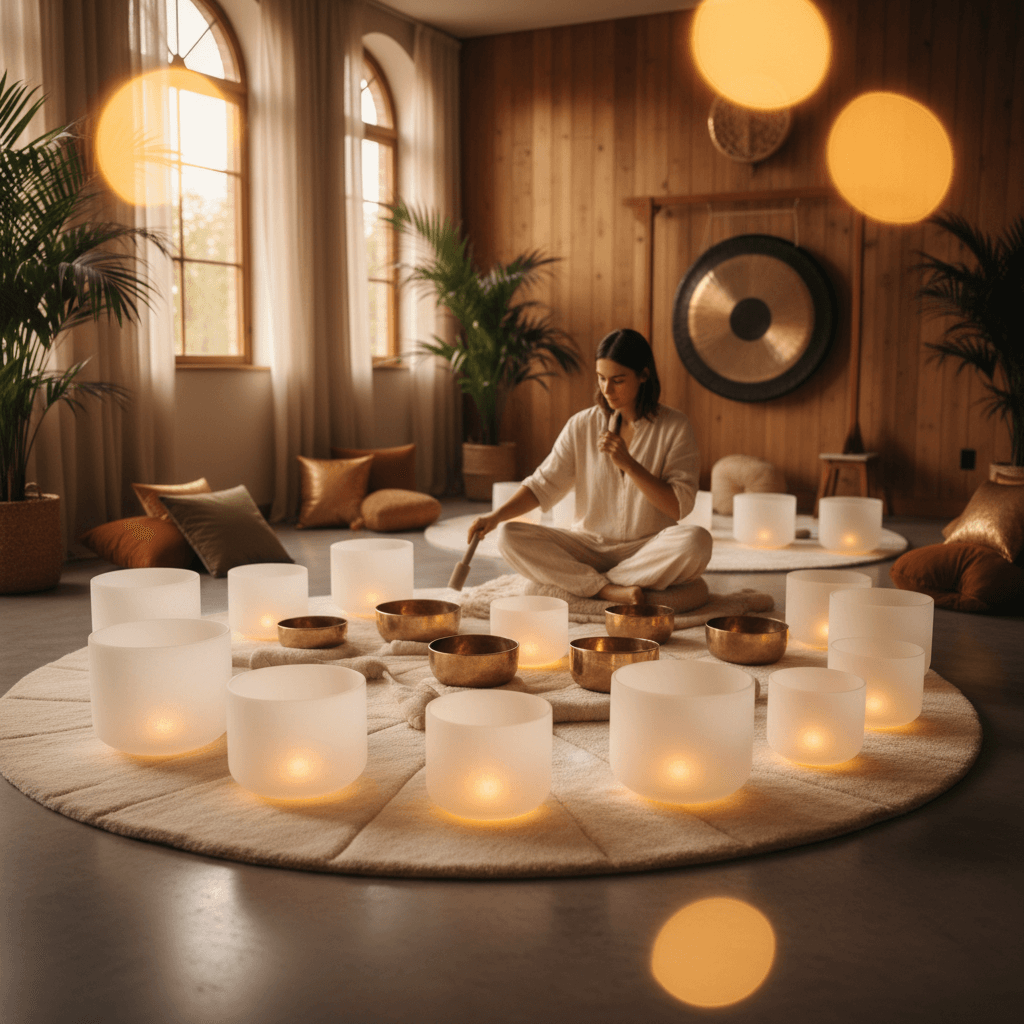
We utilize a diverse array of sacred instruments, each chosen for its specific acoustic properties and resonant qualities. Hand-hammered Tibetan singing bowls, powerful gongs, precision-tuned tuning forks, and other resonant tools are expertly played to create immersive sound baths. These instruments generate a rich tapestry of frequencies and vibrations that gently guide the nervous system into states of deep relaxation, fostering cellular resonance and promoting systemic balance.
"The true power of sound lies not just in what we hear, but in how it resonates through every cell of our being, bringing us back to our innate state of balance and strength." - Larissa Steinbach
Our focus extends beyond mere relaxation. We aim to support nervous system regulation, enhancing an individual's ability to adapt to stress and recover more efficiently. For athletes, this translates into improved physical recovery, reduced muscle tension, enhanced mental fortitude, and a greater capacity for sustained focus. The sound experiences at Soul Art are designed to be a complementary approach to traditional training, nutrition, and psychological support, providing a profound space for holistic wellness and self-care.
Larissa Steinbach's vision for Soul Art is to empower individuals to harness the transformative power of sound for personal growth and sustained vitality. By offering a sanctuary for deep healing and profound rest, Soul Art helps athletes and high-performers alike cultivate the inner resilience necessary to thrive in demanding environments. Our practices are not about 'curing' or 'treating' but about creating optimal conditions for the body's innate wisdom to flourish.
Your Next Steps
Embracing the potential of sound wellness doesn't require you to be an Olympic athlete, but the principles of enhanced focus, accelerated recovery, and deep relaxation are universally beneficial. Incorporating mindful sound practices into your daily routine can significantly elevate your overall well-being and resilience. Here are some actionable steps you can implement today to begin your journey:
- Mindful Listening Practice: Dedicate 5-10 minutes each day to simply listening to your environment. Notice the subtle sounds, their textures, and their rhythms without judgment. This practice can sharpen your auditory perception and bring you into the present moment.
- Create a Calming Soundscape: Curate a playlist of ambient nature sounds, instrumental music, or binaural beats that promote relaxation and focus. Use this during periods of stress, before sleep, or when you need to concentrate. Many people report that certain frequencies can significantly impact mood.
- Explore Guided Meditations with Sound: Numerous apps and online platforms offer guided meditations that integrate sound. These can be particularly effective for stress management and improving sleep quality, as they gently guide your mind into a relaxed state.
- Prioritize Quiet Time: In our constantly noisy world, finding moments of true silence can be incredibly restorative. Schedule short periods without any electronic distractions or background noise to allow your nervous system to fully rest and recalibrate. This self-care practice is invaluable.
- Experience a Professional Sound Bath: Discover the profound benefits of immersive sound experiences. A session at a dedicated sound wellness studio, such as Soul Art, allows you to deeply relax and experience the expertly curated frequencies that promote holistic well-being.
In Summary
The strategic application of sound represents a powerful, scientifically-backed frontier in optimizing human performance, with elite athletes increasingly leveraging its benefits. From enhancing movement precision through sonification to fostering a "quieter brain" and accelerating recovery, sound protocols offer a holistic pathway to superior physical and mental states. While research continues to evolve, the existing evidence strongly suggests that conscious engagement with sound may support unparalleled focus, resilience, and restorative healing.
At Soul Art, Larissa Steinbach champions these sophisticated sound wellness practices, offering meticulously crafted experiences that merge ancient techniques with modern understanding. Whether you aspire to athletic greatness or simply seek a deeper sense of well-being, exploring the transformative power of sound can be a vital step towards unlocking your full potential. Embrace this complementary approach to elevate your self-care journey and discover your inner sanctuary.
Bookings Coming Soon
Soul Art is still in preparation. Session details and booking will be published here after launch.
Coming Soon
Wellness Disclaimer: This article is for educational and informational purposes only. It does not constitute medical advice, diagnosis, or treatment. Soul Art Dubai provides non-medical wellness experiences focused on relaxation, stress management, and general wellbeing. Sound wellness is a complementary practice and should not replace professional medical care.
Related Articles
Optimizing Athletic Performance: The Synergy of Sports Nutrition and Sound Wellness
Archery, Stillness, and Sound: Soul Art's Path to Focus

Swimming's Secret Weapon: Sound for Peak Aquatic Performance