Mountain Sound: Unveiling Altitude's Impact on Sonic Wellness
Key Insights
Explore how atmospheric conditions at altitude shape sound propagation and perception, and how Soul Art Dubai leverages this for deep relaxation.
Have you ever noticed the profound quiet that often blankets high mountain peaks, a stillness that feels different from any other? Or perhaps felt an inexplicable clarity in your hearing amidst alpine air? This isn't just a trick of perception; the very atmosphere at altitude profoundly alters how sound travels, how we hear it, and ultimately, how it impacts our being.
At Soul Art, Dubai's premier sound wellness studio, we delve into the intricate relationship between sound, environment, and inner harmony. Understanding the science behind "Mountain Sound: Altitude and Atmosphere" allows us to craft experiences that tap into these subtle yet powerful dynamics, guiding you toward profound relaxation and restoration. This article will unravel the fascinating physics of sound at elevation, explain how your body and senses respond, and reveal how Larissa Steinbach and the Soul Art method harness these insights for your holistic well-being.
The Science Explained: How Altitude Reshapes Sound
The air surrounding us is not uniform. As we ascend into higher altitudes, the atmospheric conditions change dramatically, directly influencing the speed, attenuation, and refraction of sound waves. These shifts create a unique sonic signature, a "mountain sound" that subtly affects our auditory experience and, by extension, our state of mind.
Atmospheric Density and Sound Attenuation
One of the most significant factors is atmospheric density. Air density falls off exponentially with increasing altitude, meaning there are fewer air molecules per given volume. This scarcity of molecules has a direct impact on how sound energy propagates. Research indicates that the mean free path between molecular collisions increases accordingly, leading to greater attenuation, or reduction, of sound energy.
Crucially, this attenuation is not uniform across all frequencies. Sound energy undergoes greater attenuation at high frequencies (short wavelengths) than at low frequencies. The attenuation is, in fact, proportional to the square of the frequency. This means that high-pitched sounds lose their energy much more rapidly at high altitudes compared to lower-pitched sounds. Consequently, the sonic landscape of a mountain often feels inherently quieter, with higher frequencies fading into the background, allowing deeper, more resonant sounds to potentially travel further or seem more prominent in relative terms.
The Speed of Sound and Frequency Dispersion
While one might intuitively expect the speed of sound to change dramatically with altitude, the relationship is nuanced. At a constant temperature, the speed of sound, which can be expressed as c = sqrt(kappa * p / rho) (where p is static air pressure and rho is air density), remains relatively stable because static air pressure and density are proportional. However, the atmosphere is rarely isothermal, and temperature gradients profoundly influence sound speed.
Beyond temperature, a phenomenon called dispersion becomes increasingly significant at higher altitudes. As altitude increases, the ratio of frequency to pressure (f/P) and the mean free path between air molecules both increase. This causes molecular relaxation frequencies to drop significantly, intensifying velocity dispersion. What does this mean for sound? It suggests that sound speeds at fixed frequencies can increase significantly with altitude, and can even lower the altitude at which sound is refracted downward. Preliminary studies indicate that this dispersion can lead to decreases in travel time of several percent for frequencies slightly below 1 Hz, emphasizing its importance in predicting low-frequency atmospheric returns. While increased attenuation often masks the most extreme effects of dispersion, its presence highlights the complex and dynamic nature of sound propagation in the upper atmosphere.
Wind and Temperature Gradients: Bending Sound
The atmospheric environment is a dynamic medium, with wind and temperature gradients constantly shaping how sound travels. These gradients cause sound waves to refract, or bend.
-
Wind Refraction: Wind speed typically increases with altitude due to less friction from the ground. This wind gradient causes sound waves to bend. When traveling downwind of a source, sound waves bend downward, making noise levels appear louder to a listener. Conversely, when traveling upwind, sound waves bend upward, resulting in quieter noise levels. This effect can significantly impact sound propagation, especially over long distances often encountered in vast mountain environments.
-
Temperature Refraction: On a typical sunny day, air is warmest near the ground, with temperatures decreasing at higher altitudes. This common temperature gradient causes sound waves to refract upward, away from the ground, contributing to lower perceived noise levels. However, during certain meteorological conditions, such as evening or specific weather patterns, a "temperature inversion" can occur. Here, the air near the surface is colder, blanketed by a warmer layer above. This inverted gradient causes sound waves to bend downward, often leading to increased perceived noise levels. Such atmospheric conditions can contribute to the clarity and reach of sounds heard in mountainous regions, revealing distant calls or subtle environmental hums.
Human Perception at High Altitudes
Beyond the physical changes in sound, our bodies also adapt to high altitudes. The reduced oxygen availability means our bodies work harder: breathing speeds up, the heart pumps more intensely, and more red blood cells are produced to transport oxygen. While these physiological changes are primarily focused on oxygen uptake, the overall shift in bodily state can influence our sensory perception.
Many people report that high-altitude environments, when calm, are exceptionally quiet, allowing sounds to be heard over long distances. This might be partly due to the absence of urban noise and the unique attenuation properties of thin air, which filters out higher frequencies. However, the reduced air density can also mean that sounds produced by our own voices or instruments might appear softer. This is due to the poorer coupling between the sound source (like a vocal cord or speaker cone) and the less dense air, and similarly, less efficient coupling between the air and our eardrums.
"The silence of the mountains is not merely an absence of noise, but a canvas upon which the subtle symphony of nature and the whispers of our own being can truly emerge."
This creates a unique acoustic environment where the very act of listening can become more intentional, more attuned to the deeper, slower frequencies that persist and the nuanced changes in the soundscape dictated by atmospheric variability. This natural sonic filtering and heightened sensory state in calm mountain environments offer a compelling backdrop for immersive sound wellness practices.
How It Works in Practice: Experiencing the Mountain Sound
Bringing the essence of "Mountain Sound" into a wellness practice involves more than just playing recordings of mountain environments. It's about understanding the core atmospheric principles at play and translating them into an intentional sonic experience. The natural quietude and altered frequency landscape of high altitudes offer a unique template for deep listening and profound relaxation.
Imagine the high mountains on a calm day: the absence of bustling ambient noise allows for an acute awareness of subtle sounds. This natural filtering, where high frequencies attenuate more rapidly, leaves a soundscape often dominated by lower, resonant frequencies—the rumble of distant wind, the deep hum of the earth, the rustle of leaves that produce lower-frequency vibrations. When we recreate this atmosphere, even indirectly, we invite the body and mind into a state of openness, allowing deeper vibrational energies to be perceived without the distraction of higher-pitched, potentially agitating sounds.
Clients engaging in a "Mountain Sound" inspired session may experience a sensation of expansive quietude, a feeling of vastness that mirrors the open spaces of mountain ranges. The deliberate use of instruments that produce sustained, low-frequency vibrations—such as large gongs, Himalayan singing bowls, or deep drums—can evoke the persistent, grounding resonance associated with high-altitude environments. The subtle shifts in pitch and volume, guided by the practitioner, might mimic the natural refraction of sound by wind and temperature gradients, creating an immersive, undulating sound field that encourages the mind to wander freely yet remain deeply present.
The less efficient coupling of sound at altitude, which makes voices seem softer, can be an advantage in a wellness setting. It encourages a deeper internalization of sound, where the vibrations are felt not just heard, permeating the body at a cellular level. This isn't about volume, but about presence and resonance. The physiological adaptations of the body to altitude, while not directly replicated, inform an approach that supports the nervous system in a similar way—encouraging a gentle slowing down, a heightened internal awareness, and a profound sense of calm amidst a world often saturated with high-frequency noise. This focused attention on lower, sustained frequencies can foster a deeper connection to one's inner landscape, promoting mental clarity and emotional release.
The Soul Art Approach: Harnessing Altitude's Resonance
At Soul Art, Larissa Steinbach and her team integrate this scientific understanding of "Mountain Sound" to create bespoke sound wellness experiences that transcend geographical limitations. The goal is not merely to replicate mountain sounds but to embody the principles of sound propagation and perception at altitude, fostering a unique pathway to inner peace and systemic balance.
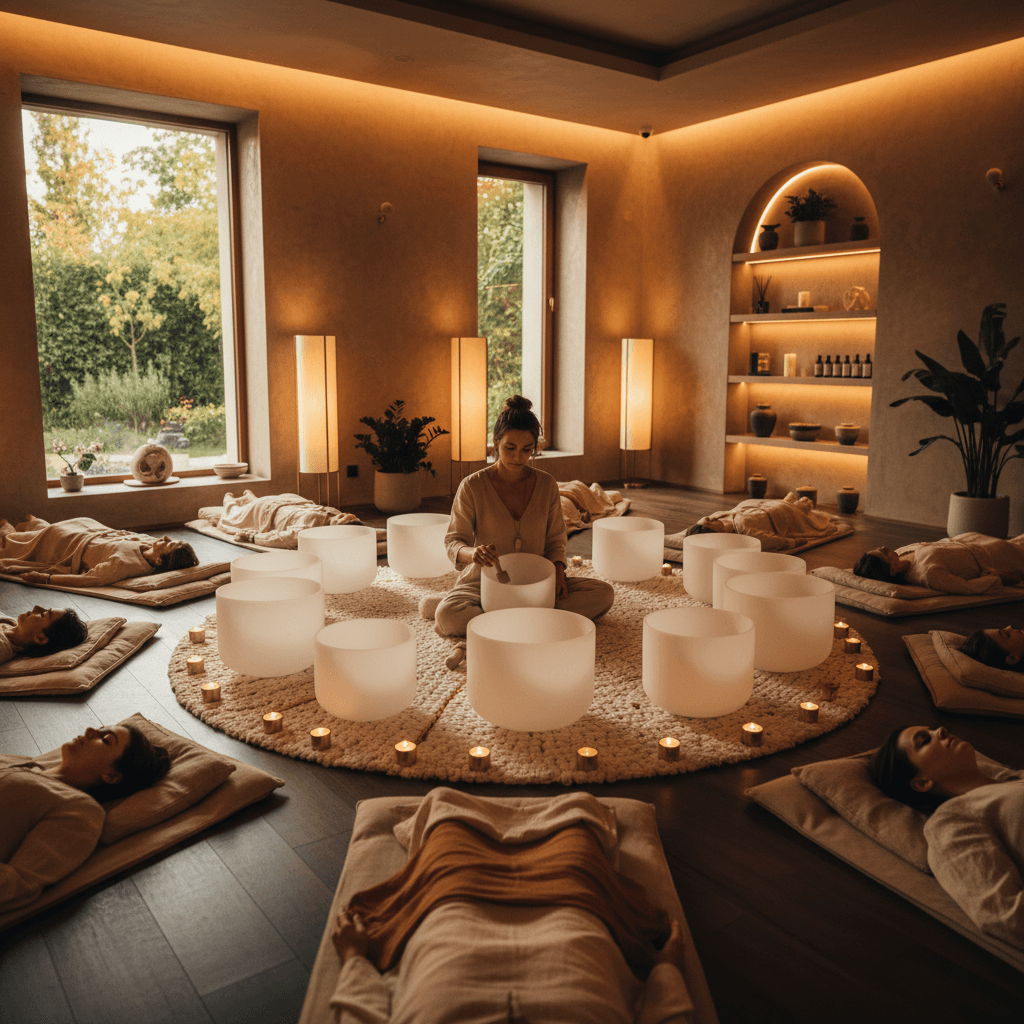
Larissa Steinbach's method focuses on the deliberate creation of a sonic environment that emulates the expansive, grounding, and naturally filtered soundscape of high-altitude regions. This involves a meticulous selection of instruments and a sophisticated understanding of how their frequencies interact with the human body and mind. The attenuation of higher frequencies at altitude suggests a natural preference for lower, sustained tones in these environments. Soul Art sessions, therefore, often emphasize instruments known for their rich, deep, and long-lasting vibrations, such as large symphonic gongs, deep earth drums, and specific crystal singing bowls that resonate at lower hertz frequencies.
"Our practice is not just about hearing sound, but about feeling its subtle shifts, its ebb and flow, mirroring the atmospheric dance that shapes our world."
What makes the Soul Art method unique is its intentional use of sonic spaciousness. Just as the thin air of the mountains allows sounds to travel differently and creates pockets of profound quiet, Larissa designs sound baths with periods of silence and gentle transitions. This encourages the nervous system to relax deeply, allowing for mental clarity and a profound sense of presence. The nuanced application of varied intensities, subtle crescendos, and diminishing decays in the soundscape evokes the feeling of sounds bending and dissolving in vast open spaces, much like they would under the influence of wind and temperature gradients in a mountain setting.
Furthermore, Larissa Steinbach integrates an understanding of the body's physiological responses to environment. While we are not at high altitude in Dubai, the intentional creation of a 'low-frequency rich' sound environment can induce a state of deep relaxation that may support the nervous system in ways analogous to the calming effects attributed to quiet natural spaces. This complementary approach supports stress management and provides a holistic wellness experience, helping clients regulate their breathing, calm their minds, and tap into their innate capacity for self-healing and restoration.
Your Next Steps: Embracing Sonic Serenity
The principles of "Mountain Sound" offer valuable insights into how our environment shapes our well-being. By understanding how altitude affects sound, we can cultivate practices that bring a sense of clarity, grounding, and spaciousness into our daily lives, regardless of our geographical location.
Here are some practical steps you can implement to invite more sonic serenity into your world:
- Mindful Listening: Dedicate time each day to simply listen to your environment. Notice the subtle background hums, the distant sounds, and how different frequencies interact. This practice can heighten your auditory awareness and help you appreciate the nuances of sound around you.
- Seek Out Quiet Spaces: Just as mountains offer natural quietude, actively seek out quiet spaces in your daily life. This might be a park, a quiet room at home, or even periods of intentional silence, allowing your nervous system to recalibrate away from high-frequency noise.
- Explore Low-Frequency Sounds: Incorporate sounds known for their grounding, low-frequency vibrations into your self-care routine. This could be listening to ambient nature soundscapes (without excessive high-frequency elements), using binaural beats, or exploring instruments like Tibetan singing bowls or chimes.
- Practice Deep Breathing: As the body adapts to lower oxygen at altitude by adjusting breathing, you can consciously practice deep, diaphragmatic breathing. This can help calm your nervous system, enhance oxygen flow, and deepen your ability to receive and integrate sound vibrations.
- Experience Guided Sound Wellness: For a truly immersive experience, consider engaging with professional sound wellness practitioners. They possess the expertise and specialized instruments to guide you through a profound sonic journey, leveraging principles like those discussed, to support deep relaxation and holistic well-being.
Bookings Coming Soon
Soul Art is still in preparation. Session details and booking will be published here after launch.
Coming Soon
In Summary: The Call of the Mountain's Silence
The "Mountain Sound" is a powerful testament to how environmental factors, from atmospheric density to temperature and wind, fundamentally shape our auditory world. High altitudes offer a naturally filtered soundscape where higher frequencies attenuate more rapidly, leaving space for the grounding resonance of lower tones and profound moments of quiet reflection. This unique sonic signature influences not only what we hear but also how our bodies and minds respond, fostering states of expanded awareness and deep calm.
By understanding these scientific principles, Larissa Steinbach and Soul Art Dubai are able to craft sound wellness experiences that evoke the restorative qualities of these majestic environments. We invite you to explore this intricate connection between sound, atmosphere, and your inner self. Discover how the wisdom of mountain acoustics, applied through intentional sound practices, can guide you towards a tranquil and balanced state of being.
Wellness Disclaimer: This article is for educational and informational purposes only. It does not constitute medical advice, diagnosis, or treatment. Soul Art Dubai provides non-medical wellness experiences focused on relaxation, stress management, and general wellbeing. Sound wellness is a complementary practice and should not replace professional medical care.
Related Articles

Harmonic Paws: Unveiling Animal-Assisted Sound Therapy at Soul Art Dubai

Biophilic Soundscapes: Designing Wellness Through Nature's Acoustics
City Noise vs Nature Sound: A Soul Art Path to Serenity