The Resonant Man: Breath, Voice, and Modern Masculinity

Key Insights
Explore the deep science of the male voice. Learn how breath and resonance practices can enhance presence, manage stress, and unlock your authentic power. A Soul Art guide.
The Power of Presence: An Introduction to Men's Vocal Wellness
Have you ever noticed how a calm, resonant voice can command a room without raising its volume? In a world that often prizes loudness, the quiet confidence projected by a grounded voice holds a unique and undeniable power. This isn't mere perception; it's a phenomenon deeply rooted in our biology, psychology, and the intricate mechanics of the human body.
The quality of a man's voice is intrinsically linked to how he is perceived—in leadership, attraction, and social dynamics. Yet, many men are disconnected from this powerful personal instrument. They navigate high-stress environments with shallow breath and vocal tension, unaware that their most authentic tool for communication and self-regulation lies dormant.
This article delves into the science behind men's breath, voice, and resonance. We will explore the physiological underpinnings of a powerful voice, uncover how intentional practice can transform your presence, and introduce the holistic approach we cultivate here at Soul Art. This is a journey to reclaim not just your voice, but a profound sense of inner balance and authority.
The Science of Sound: Unpacking the Male Voice
The human voice is a complex interplay of respiratory power, laryngeal vibration, and vocal tract amplification. For men, specific physiological traits create the characteristic depth and timbre that influence social perception. Understanding this science is the first step toward consciously harnessing its potential.
### Voice Pitch, Formants, and Social Perception
Research consistently confirms that deep, resonant voices give men an aura of power and allure. This is linked to a combination of pitch (the fundamental frequency of vocal fold vibration) and formants (the resonant frequencies of the vocal tract).
-
Physiological Correlates: A study highlighted in SAPIENS by David Puts found that men with lower formant frequencies—a marker of deeper resonance—tended to be taller, larger, and stronger. This is partly due to longer vocal tracts and larger vocal folds, which generate lower, more resonant sounds.
-
Hormonal Links: The same research noted that lower-pitched voices are associated with higher testosterone levels, a key hormone in male biology. This connection subconsciously signals strength and vitality to listeners.
-
The Perception of Leadership: Anthropologist Carolyn Hodges-Simeon states, “Judgments of anything that contributes to success in competition—age, size, muscle mass, confidence, leadership—they are all strongly affected by voice pitch.”
However, the appeal runs only to a certain point. Extremely low, guttural voices can be perceived as aggressive or threatening. The goal of this wellness practice is not to artificially lower the voice, but to find its optimal, natural resonance, which conveys authority without aggression.
### The Engine of Voice: The Breath Mechanism
Your voice is powered by air. The way you manage your breath directly impacts your vocal tone, endurance, and quality. While we breathe involuntarily thousands of times a day, performance breathing—the type used for speaking and singing—is a voluntary, trainable skill.
There is much discussion in vocal pedagogy about "where to place the breath." While some historical methods are based on imagery, modern research points to the importance of efficient and controlled exhalation supported by the deep muscles of the core.
-
Diaphragmatic Support: Many experts, like Chapman (2006), argue that shallow "chest breathing" is inefficient for vocal production. It engages postural muscles, which can create tension in the neck and jaw, negatively affecting vocal tone and resonance.
-
Controlled Exhalation: The key is not just a deep inhalation but a slow, steady release of air. Exercises like exhaling on a hiss or through a narrow straw (a form of Semi-Occluded Vocal Tract exercise) train the respiratory muscles to provide consistent, gentle pressure to the vocal folds. This is the foundation of a strong, unfatigued voice.
### Resonance: The Amplifier of Your Authentic Self
If the breath is the engine and the vocal folds are the source of the sound, then resonance is the amplifier and sound system. Resonance is what happens when the raw sound from your vocal folds is shaped and enhanced by the open spaces of your pharynx (throat), oral cavity (mouth), and nasal passages.
A resonant voice carries further with less effort and is rich in harmonic overtones, making it more pleasant and engaging to listen to.
-
Biomechanics of Resonance: According to research published in the National Institutes of Health (PMC-NIH), a resonant voice is associated with a highly efficient vocal fold configuration—one that is just barely adducted (brought together), avoiding both breathiness (hypoadduction) and strain (hyperadduction).
-
Somatic Feedback: With practice, a resonant voice creates a tangible sensation of vibration in the facial tissues—around the nose, lips, and even the forehead. This physical feedback becomes a powerful cue, allowing you to know by feel when you are producing sound efficiently and effectively.
From Theory to Tangible Feeling: The Practice in Action
Understanding the science is one thing; feeling it in your body is another. The practice of developing vocal resonance is a deeply somatic experience that connects you to the subtle mechanics of your own physiology. It moves you out of your head and into the present moment.
Imagine beginning a session by simply observing your breath. You might lie down comfortably, placing one hand on your chest and the other on your abdomen. In our fast-paced lives, most of us default to shallow chest breathing, a pattern linked to the body’s stress response. The first step is to gently guide the breath lower, feeling the abdomen rise on the inhale and fall on the exhale, while the chest remains relatively still.
This simple act begins to down-regulate the nervous system. From this calmer state, we introduce sound. We start not with words, but with a gentle, resonant hum on a comfortable pitch. The instruction is to notice the sensation of the sound. Where do you feel the vibration? Is it trapped in your throat? Or can you guide it forward, feeling a soft buzz on your lips, along the bridge of your nose, or in your cheeks? This is the biofeedback in action.
Next, we might progress to a lip trill—making a "motorboat" sound. This exercise is remarkably effective. As noted in vocal pedagogy resources, it provides "instant, undeniable feedback." If your breath support wavers, the trill stops. It perfectly marries breath control with relaxed vocal production, teaching you to produce a free and easy sound without any tension in the jaw or throat.
These exercises, which may seem simple, are profound. They are re-patterning years of conditioned tension. Over time, this new awareness translates directly into daily life. You notice it when you speak in a meeting—your voice feels more grounded and carries effortlessly. You feel it in a difficult conversation—you can maintain a calm, centered tone, responding rather than reacting. You are not just changing your voice; you are changing your entire physiological state.
"A man's true vocal power isn't found in forced depth, but in the authentic resonance that arises from a regulated nervous system and a connected breath. It's the sound of presence." - Larissa Steinbach
The Soul Art Approach: An Integrated Approach to Male Resonance
At Soul Art, our work with men's breath and voice extends beyond traditional vocal coaching. We recognize that your voice is a direct expression of your nervous system. A tense, strained voice is often the product of a tense, strained inner state. Therefore, our approach, guided by founder Larissa Steinbach, is holistic and integrative.
We weave together three core pillars:
-
Somatic Breathwork: We use specific breathing techniques designed to calm the sympathetic nervous system (your "fight or flight" response) and activate the parasympathetic nervous system (your "rest and digest" state). This creates the physiological foundation for a relaxed and open vocal instrument.
-
Vocal Toning and Resonance: We utilize evidence-based vocal exercises, including those from disciplines like Lessac-Madsen Resonant Voice Therapy, to help you discover your body's natural acoustic potential. The focus is on finding ease, efficiency, and authentic timbre.
-
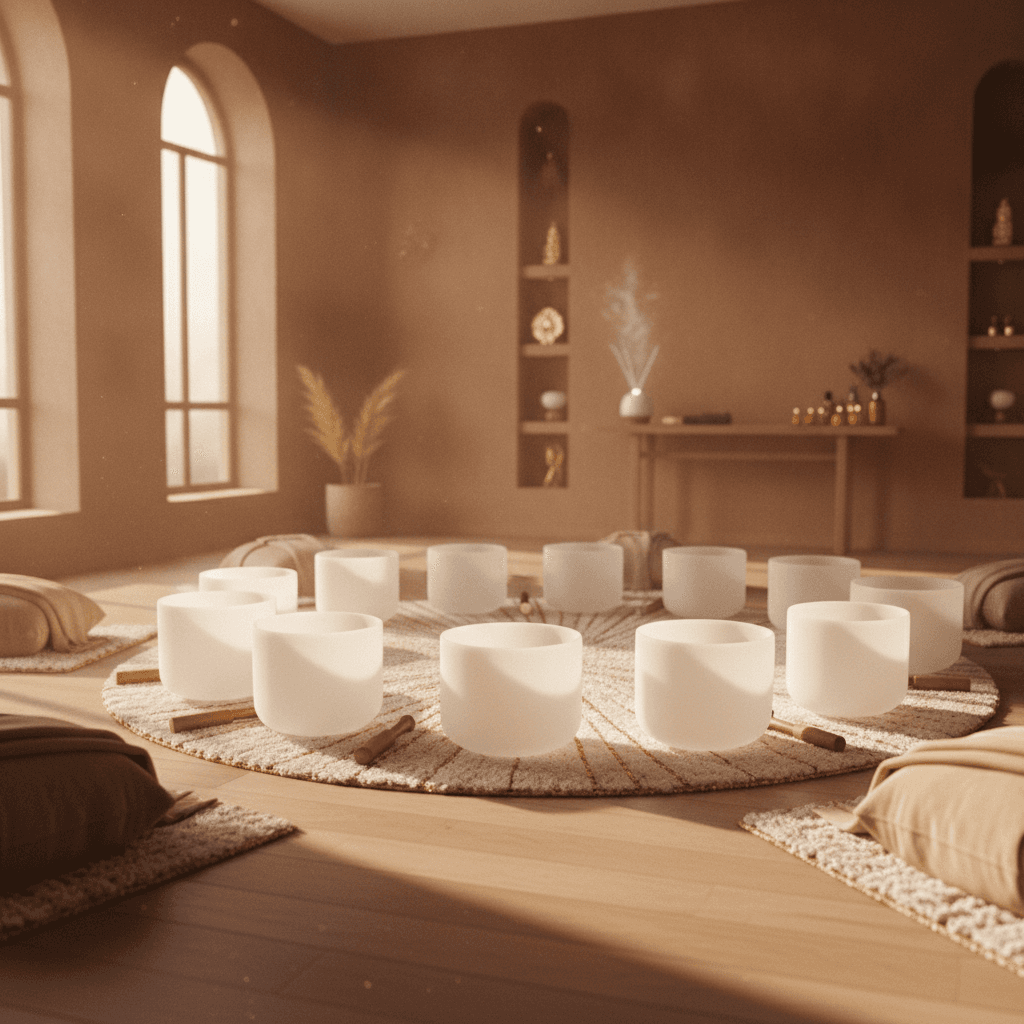
Immersive Soundscapes: What makes the Soul Art experience unique is the integration of therapeutic sound. We use instruments like Himalayan singing bowls, gongs, and crystal bowls to create an environment rich with harmonic overtones. This immersive experience allows you to feel resonance throughout your entire body, providing a powerful somatic reference point that accelerates your learning and deepens your connection to the practice.
Our goal is not to manufacture a persona or an artificially "deep" voice. It is a process of excavation—of stripping away layers of tension to uncover the powerful, authentic, and resonant voice that is already within you.
Cultivating Your Resonance: Simple Steps to Begin Today
The journey to a more resonant voice and a more regulated nervous system can begin right now, with a few simple, intentional practices. Integrate these into your daily routine to build awareness and cultivate a new baseline of calm presence.
-
The 5-Minute Breath Anchor: Twice a day, set a timer for five minutes. Sit comfortably with your spine straight. Close your eyes and focus on your breath. Inhale through your nose for a count of four, hold gently for a count of four, and exhale slowly through your mouth for a count of six. This simple exercise helps lengthen your exhalation, which is known to support nervous system regulation.
-
The Resonant Hum: Find a comfortable, low-ish pitch and hum with your lips gently closed (the sound "mmmm"). Place your fingertips on your nose and lips. Your goal is to maximize the buzzing sensation you feel under your fingers. This trains you to bring the sound forward, away from the throat.
-
Lip Trills (The "Motorboat"): Take a deep, relaxed breath and blow air through loose lips to create a vibrating or trilling sound. Try to hold the trill for as long as you can on a single, steady pitch. This is one of the best exercises for coordinating breath support with relaxed vocal fold vibration.
-
Conscious Speaking: In your next phone call or conversation, make a conscious effort to slow down your rate of speech by about 10%. Focus on finishing your phrases with the same amount of breath support as you started with, avoiding the tendency to trail off.
These practices are the first step. For a personalized and immersive experience that accelerates your progress, a guided session at Soul Art can provide the expert feedback and supportive environment needed for transformative results.
In Summary: The Voice of Wellbeing
A man's voice is far more than a tool for communication; it is a barometer of his internal state and a powerful instrument for influencing both his own wellbeing and the world around him. The science is clear: a voice characterized by controlled breath and optimal resonance is perceived as more confident, trustworthy, and authoritative.
This practice is not about performance or affectation. It is a deeply grounding form of self-care. By learning to harness the power of your breath, you support the regulation of your nervous system. By discovering your natural resonance, you unlock a more efficient and authentic mode of expression. This journey enhances presence, manages stress, and fosters a profound connection between mind and body.
At Soul Art, we are dedicated to guiding you on this path. We invite you to explore the intersection of ancient wisdom and modern science, and to find not just a more resonant voice, but a more resonant self.
Bookings Coming Soon
Soul Art is still in preparation. Session details and booking will be published here after launch.
Coming Soon
Related Articles

Nurturing Resilience: Gentle Sound Support for Men's Fertility Stress
Men's Anger, Overload & Gentle Downshifting for Inner Calm

Men's Hormonal Wellbeing: Sound Practices for Stress Awareness