Men's Anger, Overload & Gentle Downshifting for Inner Calm
Key Insights
Explore the science behind men's anger and stress overload. Discover gentle downshifting strategies with Soul Art Dubai and Larissa Steinbach for profound well-being.
The Unseen Burden: Men's Anger, Overload, and the Path to Gentle Downshifting
Have you ever wondered why seemingly minor frustrations can sometimes ignite a disproportionate flash of anger, especially for men? This isn't just about a "short fuse"; it's often a complex signal of deeper emotional and physiological overload, a hidden burden many men carry. Understanding this connection is the first step towards true well-being.
For many men, anger frequently accompanies underlying stress or even depressive symptoms, a connection often overlooked or misinterpreted. This article will delve into the scientific insights behind men's experiences of anger and overload, exploring how the brain and body react to chronic stress. We will then uncover practical, gentle strategies for downshifting, ultimately revealing how the unique sound wellness practices at Soul Art Dubai, pioneered by Larissa Steinbach, may support a profound return to inner calm and balance.
This journey is crucial for fostering healthier relationships, enhancing mental clarity, and reclaiming a sense of peaceful control in an increasingly demanding world. It offers a pathway to not just managing anger, but transforming the very conditions that give rise to it.
The Science Explained: Unpacking Men's Emotional Landscape
Anger, an emotional state ranging from mild irritation to intense fury, is far more than a simple outburst. It's a primal emotion, signaling that we perceive a boundary violated, control lost, or respect diminished. This powerful emotion triggers measurable physiological changes, including an increased heart rate, elevated blood pressure, and a surge of stress hormones like adrenaline and noradrenaline, preparing the body for a "fight or flight" response.
The Hidden Link Between Anger and Stress in Men
Emerging research increasingly highlights a significant correlation between anger and depressive symptoms in men. For instance, studies have found that men diagnosed with Major Depressive Disorder were twice as likely as women to experience anger attacks during depressive episodes. In a community sample of men, anger correlated strongly with depressive symptoms, particularly in those adhering to extreme masculine gender norms, which often discourage open vulnerability.
This pattern suggests that for many men, anger can serve as an externalizing manifestation of internal distress or emotional vulnerability. Indicators such as having a "short fuse," punching objects, or yelling at someone may actually be calls for help, signifying an accumulation of stress and unresolved emotional burdens. Clinicians and individuals alike may sometimes misinterpret these signals, often due to ingrained gender biases, making it crucial to look beyond the surface.
The Brain's Orchestration of Anger and Overload
The brain plays a central role in how we experience and regulate anger. When an angry feeling coincides with aggressive or hostile behavior, it activates the amygdala, an almond-shaped part of the brain deeply associated with emotions, particularly fear, anxiety, and anger. This response is a basic neural circuit shared even with animals, underscoring its primitive nature.
However, the orbital frontal cortex – a region involved in controlling aggressive impulses and higher-level emotional regulation – also plays a critical role. In individuals experiencing major depressive disorder and anger attacks, research suggests this neurological "brake" may fail to engage effectively. Instead, activity in the amygdala increases, often leading to unbridled angry outbursts. This neural imbalance can be exacerbated by chronic stress, which continuously primes the body for reactivity, making gentle downshifting an imperative.
Gendered Expressions and Regulation of Anger
While it might be assumed men are angrier than women due to their tendency for outward aggression, research consistently suggests that women experience anger with similar frequency and intensity. The key difference lies often in expression and regulation. Men are statistically more likely to display aggression when angry, whereas women appear to be better able to control immediate impulsive responses. This doesn't mean women aren't motivated by rage, but their expression patterns often differ.
Neurological studies provide further insight, suggesting potential sex differences in brain biology that influence anger regulation. While the amygdala is similar in size across sexes, the orbital frontal cortex, vital for impulse control, has been found to be larger in women. Furthermore, when suppressing anger, men and women exhibit distinct neural activity patterns: women show greater activation in the prefrontal cortex and reduced amygdala activity, while men show increased activation in the basal ganglia and reduced prefrontal cortex activity. This highlights that men and women employ different neural strategies to regulate anger. For men, this often translates into regulating emotions through actions rather than words, which is not necessarily a sign of low emotional intelligence, but a different form of emotional acumen. Chronic anger suppression in both sexes, however, has been linked to increased symptoms of anxiety and depression, with a potentially greater impact on women's mental health, though detrimental for all.
How It Works in Practice: From Overwhelm to Inner Harmony
The scientific understanding of men's anger and stress-induced overload offers a powerful lens through which to approach real-world well-being. In practice, this overload often manifests as a constant state of tension, a heightened sense of irritability, and a pervasive feeling of being "on edge." The "short fuse" isn't merely a personality trait; it's a physiological response to a nervous system operating in overdrive, constantly ready to react to perceived threats, even minor ones.
Imagine a mental and emotional landscape where the brain's alarm system (the amygdala) is perpetually activated, and its control center (the orbital frontal cortex) struggles to keep up. This can lead to a cycle where external stressors, such as interpersonal conflicts or situational frustrations, trigger disproportionately strong reactions. Internal triggers like worry, rumination, or unresolved memories of past trauma can further fuel this fire, creating a persistent state of internal agitation.
Many men experience this as a physical burden too – jaw clenching, tense shoulders, shallow breathing, or persistent headaches. These are the body's unconscious responses to sustained stress hormone release. The challenge often lies in recognizing these signals and understanding their roots, rather than dismissing them as simple bad moods or personality flaws. It's about acknowledging that anger, in this context, is a messenger, indicating that the system is overloaded and desperately needs to downshift.
Gentle downshifting is not about suppressing anger, which only pushes it deeper, but about consciously engaging practices that calm the nervous system and allow for healthier emotional processing. This might involve intentionally stepping away from a stressful situation, engaging in a focused activity that acts as a healthy distraction, or deliberately engaging the parasympathetic nervous system through deep breathing and relaxation techniques. The goal is to move from a state of hyper-arousal to one of calm and coherence, allowing the brain's regulatory mechanisms to regain control. This shift creates space for introspection, enabling individuals to identify underlying triggers and develop more constructive responses, rather than reactive ones.
The Soul Art Approach: Larissa Steinbach's Path to Deep Relaxation
At Soul Art Dubai, we understand that true well-being extends beyond the surface. Larissa Steinbach, our founder, has meticulously crafted an approach that directly addresses the nuances of stress, overload, and emotional regulation, particularly for men. Our sound wellness practices are not merely relaxation sessions; they are scientifically-informed experiences designed to guide the body and mind into profound states of gentle downshifting.
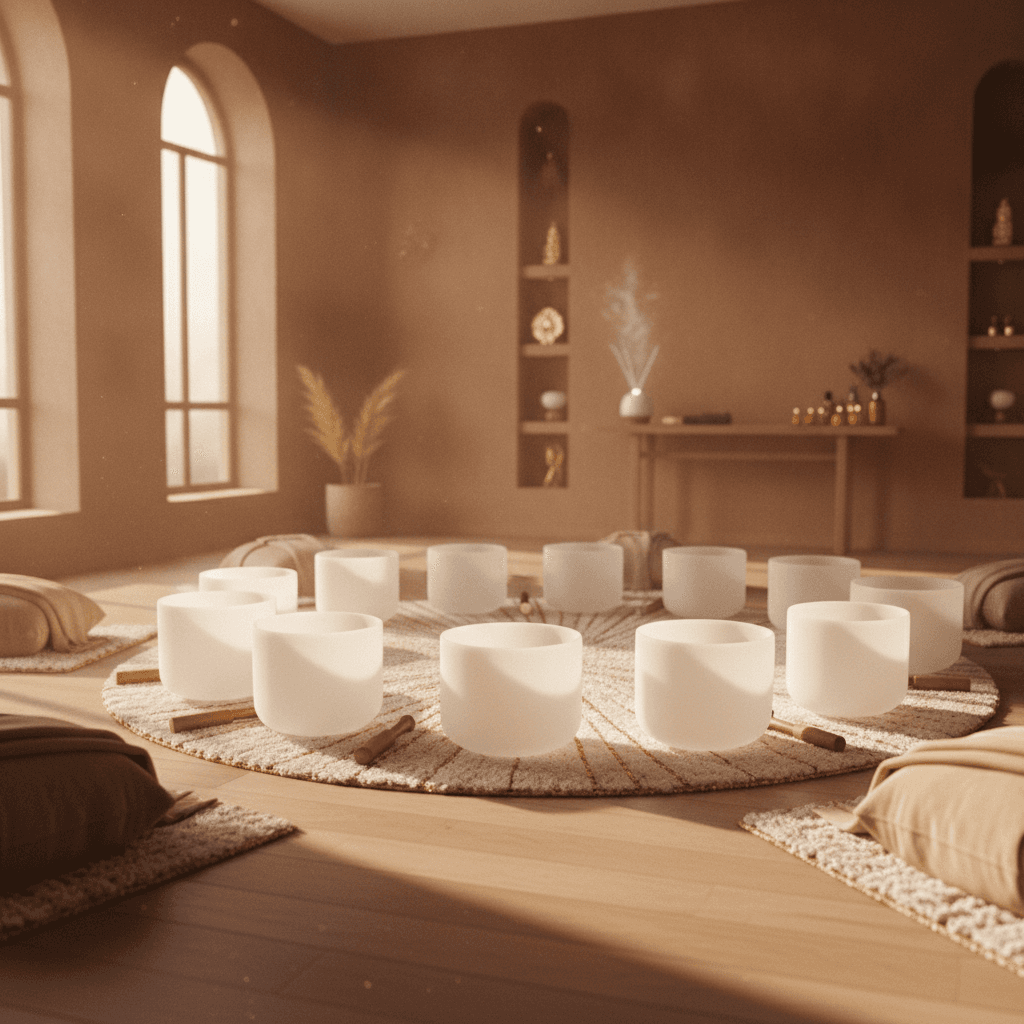
Larissa's philosophy centers on creating a sanctuary where individuals can safely explore their inner landscape, free from judgment or expectation. She leverages the profound power of specific instruments, notably gongs and Himalayan singing bowls, chosen for their rich, resonant frequencies. These instruments produce complex soundscapes that can literally alter brainwave states, moving them from the beta waves associated with alertness and stress to alpha and theta waves, characteristic of deep relaxation, meditation, and even sleep.
What makes the Soul Art method unique is its holistic and highly personal nature. The carefully curated sound vibrations permeate every cell of the body, stimulating the vagus nerve and activating the parasympathetic nervous system. This is the body's natural "rest and digest" system, counteracting the "fight or flight" response fueled by stress and anger. As the nervous system calms, the body's physiological markers of stress – heart rate, blood pressure, and stress hormone levels – naturally begin to decrease.
"Many men, accustomed to action-oriented emotional regulation, find immense relief in the passive yet profoundly active experience of sound wellness. It allows their system to release without needing to 'do' anything, offering a unique avenue for emotional processing and release."
Larissa Steinbach ensures that each session provides a safe and supportive environment, allowing emotions that have been suppressed or externalized as anger to gently surface and be acknowledged. This isn't about confronting anger aggressively, but about softening the nervous system enough for these emotions to be processed with greater ease and less reactivity. The deep resonance may support a release of physical tension and mental chatter, offering a much-needed mental break and facilitating a return to inner peace. It's a powerful tool for self-care, promoting emotional resilience and fostering a deeper connection to one's authentic self.
Your Next Steps: Embracing Gentle Downshifting Today
Recognizing the signs of anger and overload is the first step towards a calmer, more balanced life. Embracing gentle downshifting isn't a passive act; it's an active commitment to your well-being. Here are some actionable steps you can implement today to begin your journey:
- Cultivate Self-Awareness: Pay attention to your body and mind. What triggers your anger or feelings of overwhelm? Notice physical sensations like muscle tension, jaw clenching, or shallow breathing, which are often precursors to an angry outburst. Keeping a journal may support identifying patterns.
- Practice Mindful Breathing: When you feel stress or anger rising, pause. Take several slow, deep breaths, focusing on extending your exhalation. This simple act can directly engage your vagus nerve and activate your parasympathetic nervous system, helping to calm your physiological response.
- Integrate Healthy Distraction: When emotional intensity is high, some preliminary studies suggest distraction can be more efficient than reappraisal. Engage in activities that genuinely bring you joy or fully absorb your attention, whether it's a hobby, physical activity, or creative pursuit. This provides a temporary break, allowing your emotional state to de-escalate.
- Prioritize Movement and Nature: Regular physical activity is a powerful stress reliever, helping to metabolize excess stress hormones. Spending time in nature, even a short walk in a park, may also support nervous system regulation and mental clarity.
- Consider Professional Support: If anger or stress feels overwhelming or consistently disruptive to your daily life and relationships, seeking the support of a trained mental health professional is a courageous and effective step. Therapies like Cognitive Behavioral Therapy (CBT) or Mindfulness-Based Stress Reduction (MBSR) are commonly used to address anger regulation.
Remember, these practices are complementary approaches to holistic wellness. For a unique and profound experience of gentle downshifting, consider exploring the transformative sound wellness sessions offered by Larissa Steinbach at Soul Art Dubai.
In Summary: Reclaiming Calm and Control
Men's anger and feelings of overload are often profound indicators of underlying stress and unaddressed emotional vulnerabilities, frequently masked by societal expectations. The science clearly demonstrates how chronic stress impacts the brain and body, leading to a "short fuse" and compromised emotional regulation. Understanding these intricate connections is paramount for true well-being.
Embracing the concept of gentle downshifting offers a powerful antidote, moving from a state of hyper-arousal to one of calm coherence. Through intentional self-care practices and cutting-edge sound wellness, as championed by Larissa Steinbach at Soul Art Dubai, men can learn to regulate their nervous systems, process emotions more constructively, and cultivate a deep, lasting sense of inner peace. This journey is an investment in healthier relationships, enhanced mental clarity, and a life lived with greater ease and control.
Bookings Coming Soon
Soul Art is still in preparation. Session details and booking will be published here after launch.
Coming Soon
Wellness Disclaimer: This article is for educational and informational purposes only. It does not constitute medical advice, diagnosis, or treatment. Soul Art Dubai provides non-medical wellness experiences focused on relaxation, stress management, and general wellbeing. Sound wellness is a complementary practice and should not replace professional medical care.
Related Articles

Nurturing Resilience: Gentle Sound Support for Men's Fertility Stress

Men's Hormonal Wellbeing: Sound Practices for Stress Awareness
Optimize Men's Recovery: The Power of Sound After Intense Training