Unlock Your Mind: Auditory Stimulation for Memory Enhancement
Key Insights
Explore how targeted sound frequencies can enhance memory and brain health. Discover the science behind auditory stimulation at Soul Art Dubai with Larissa Steinbach.
Unlocking Your Memory's Potential Through Sound
Imagine a world where the very sounds around you could sharpen your mind, enhance your recall, and even bolster your brain's resilience against the passage of time. For centuries, sound has been recognized for its profound influence on human emotions and spiritual states. Yet, modern neuroscience is now revealing its equally remarkable capacity to directly impact cognitive functions, particularly memory.
At Soul Art Dubai, founded by the visionary Larissa Steinbach, we explore these cutting-edge insights to offer a unique pathway to holistic well-being. This article delves into the fascinating scientific discoveries behind memory enhancement through auditory stimulation, explaining how specific frequencies can tune your brain for optimal performance. Join us as we uncover the secrets of sound and its potential to revitalize your cognitive landscape.
The Brain's Symphony: How Auditory Input Shapes Memory
Our brain is a complex orchestra of electrical activity, with different frequencies of brainwaves dictating various states of consciousness and cognitive function. Among these, gamma oscillations – rapid brainwave patterns ranging from 30 to 100 Hz – have emerged as particularly crucial for learning, memory, and information processing. Inducing or enhancing these gamma oscillations through external stimulation is a burgeoning field of research with exciting implications for cognitive wellness.
"The brain's incredible plasticity means it's always ready to adapt and grow. Sound is a powerful, non-invasive key to unlocking that potential, offering a gentle yet profound pathway to cognitive vitality."
Recent scientific studies highlight the targeted power of specific auditory frequencies to influence memory, from immediate recall to long-term cognitive integrity. This isn't just about listening to calming music; it's about precisely engineered sound experiences designed to interact with your brain's natural rhythms. These complementary approaches are gaining recognition for their potential to support overall brain health and cognitive function.
The Science Explained: Frequencies of Focus
The intricate relationship between auditory stimulation and memory enhancement is rooted in several fascinating neurobiological mechanisms. Researchers worldwide are actively exploring how different sound interventions can positively influence brain structures, protein regulation, and neural network activity associated with memory. This body of work underscores the potential of targeted sound as a powerful wellness tool.
Gamma Oscillations and Cognitive Function
One of the most compelling areas of research focuses on gamma oscillations, a high-frequency brainwave pattern known to be integral to higher-order cognitive processes like perception, attention, and memory encoding. Studies have consistently shown that strong gamma activity correlates with better memory performance in humans. Introducing external stimuli at gamma frequencies may help to enhance this natural brain activity.
- 40 Hz Auditory Stimulation: A significant body of research points to 40 Hz auditory stimulation as particularly effective. Martorell et al., for instance, demonstrated that exposing 5XFAD mice to 40 Hz auditory stimulation for one hour daily over a week significantly reduced amyloid-beta deposits and decreased tau protein phosphorylation in crucial brain regions, including the auditory cortex and hippocampus. These are key hallmarks of neurodegenerative conditions.
- Enhanced Performance: The same study revealed that mice subjected to 40 Hz auditory stimulation showed enhanced performance in cognitive function tests, specifically in object recognition and spatial memory, compared to those exposed to other frequencies. This suggests a direct link between this specific frequency and improved cognitive outcomes.
- Cellular Response: Furthermore, researchers observed an increase in microglia and astrocytes – the brain's immune and support cells – in these mice, indicating a potential neuroprotective response. This cellular engagement may contribute to the observed benefits in brain health.
The Role of Binaural Beats and White Matter Integrity
Beyond animal models, human studies also support the benefits of gamma frequency stimulation. Continuous scalp EEG recordings have suggested that exposure to 40 Hz binaural beats can trigger significant cortical activity and improve memory performance. This non-invasive method involves presenting slightly different frequencies to each ear, causing the brain to perceive a third, 'phantom' beat at the difference frequency, which can entrain brainwave patterns.
A recent randomized controlled clinical trial investigated the impact of non-invasive 40 Hz gamma sensory stimulation (combining visual and auditory input) on individuals diagnosed with AD. Over a six-month period, participants receiving this stimulation showed a substantial decrease in white matter atrophy and an enhancement in myelin thickness. White matter is crucial for transmitting signals between different brain regions, and its integrity is vital for cognitive speed and efficiency. The study also reported superior cognitive performance in the treatment group, particularly in spatial memory, learning capacity, and cognitive flexibility.
Individual Gamma Frequency (IGF) Music and Short-Term Memory
Tailoring stimulation to an individual's unique brainwave patterns may further optimize cognitive benefits. Rufener et al. delivered 40 Hz transcranial alternating current stimulation (tACS) to patients with mild cognitive impairment over five weeks, reporting increased recall scores on the California Verbal Learning Test (CVLT). Their findings suggested a selective effect on short-term memory enhancement, linking altered functional connectivity between the inferior parietal lobule and the hippocampus as a potential mechanism.
Building on this, a study by Rufener et al. (2025) found that even a brief, five-minute exposure to Individual Gamma Frequency (IGF) music was sufficient to enhance immediate cognitive performance. This fascinating discovery supports the hypothesis that IGF-Music stimulation engages hippocampal mechanisms, crucial for memory formation, and may provide a powerful, personalized approach to cognitive support. This research highlights the immediate impact that precisely tuned auditory experiences can have on our memory functions.
Sound Stimulation During Sleep: Optimizing Memory Consolidation
Memory enhancement isn't solely confined to waking hours. Sleep plays a critical role in consolidating memories, particularly during slow-wave sleep (SWS), characterized by slow oscillations in brain activity. Researchers have found that playing sounds synchronized to the rhythm of these slow brain oscillations in sleeping individuals can enhance these oscillations and significantly boost memory recall.
- Synchronized Sounds: When volunteers were exposed to stimulating sounds that were precisely in sync with their brain's slow oscillation rhythm, they were better able to remember word associations learned the evening before. In contrast, stimulation out of phase with the brain's slow oscillation rhythm proved ineffective.
- Practical and Ethical: Dr. Jan Born, a co-author of this research, emphasized the "simplicity to apply auditory stimulation at low intensities," making it a practical and ethical tool for enhancing sleep rhythms and, consequently, memory consolidation. This underscores the potential for non-invasive sound practices to complement natural physiological processes.
The Nuance of Noise: Low Intensity White Noise
While the focus often lies on specific frequencies, even the seemingly random nature of white noise can play a role in cognitive function. Research suggests that low-intensity white noise may improve performance in auditory working memory tasks through a phenomenon called stochastic resonance. This principle describes how a moderate amount of noise can actually enhance the detection or processing of weak signals, much like a subtle hum can make a faint melody clearer.
An fMRI study explored the impact of multiple background noise levels, suggesting that an optimal signal-to-noise ratio, within 10 to 5-dB SNR, can enhance auditory working memory performance. This effect was associated with activity in the right superior frontal gyrus (SFG), a brain region involved in cognitive control. This indicates that carefully calibrated soundscapes, even those incorporating 'noise,' may support specific aspects of memory.
How It Works in Practice: Tuning Your Mind
Connecting the dots between cutting-edge neuroscience and practical well-being experiences is what Soul Art excels at. When you step into our studio, you're not just listening to sounds; you're engaging in a carefully curated experience designed to resonate with your brain's natural rhythms and support its cognitive functions. This holistic approach leverages the scientifically observed benefits of auditory stimulation in a deeply immersive setting.
Our approach integrates the principles of gamma wave entrainment, personalized frequency responses, and the profound effects of sound on relaxation and neural synchronization. The goal is to create an environment where your brain can naturally shift into states conducive to enhanced memory encoding, processing, and recall. Many people report feeling a heightened sense of mental clarity and focus after sessions.
During a sound wellness session, you might experience a rich tapestry of auditory sensations. This can include precise tones, binaural beats designed to encourage gamma oscillations, and deeply resonant frequencies from various instruments. These sounds are not merely listened to but are felt, creating a full-body sensory experience that encourages deep relaxation and allows your brain to be receptive to beneficial rhythmic patterns.
The gentle yet powerful vibrations created by these sounds work on multiple levels. They may help to reduce stress, a known impediment to memory, and create a calm mental space where your brain can operate more efficiently. By supporting the brain's natural electrical activity, these experiences offer a complementary pathway to strengthening neural connections associated with memory.
The Soul Art Approach: Larissa Steinbach's Vision
At Soul Art, Larissa Steinbach has meticulously crafted a unique methodology that synthesizes ancient wisdom with modern scientific understanding of sound and the brain. Her vision is to offer non-invasive, profoundly effective sound wellness experiences that go beyond mere relaxation, aiming to support fundamental cognitive processes like memory. This bespoke approach reflects a quiet luxury in holistic well-being.
Larissa's method is distinct in its careful selection and application of sound frequencies, informed by the latest research on gamma oscillations and their impact on neuroplasticity and memory. She understands that while the science provides the framework, the art lies in the delivery – creating an immersive, nurturing environment where the body and mind can truly surrender and benefit.
- Targeted Frequencies: Soul Art sessions often incorporate sounds specifically designed to encourage 40 Hz gamma oscillations, leveraging the findings that these frequencies may help reduce amyloid-beta deposits and improve cognitive performance. This precision ensures a targeted impact on brain health.
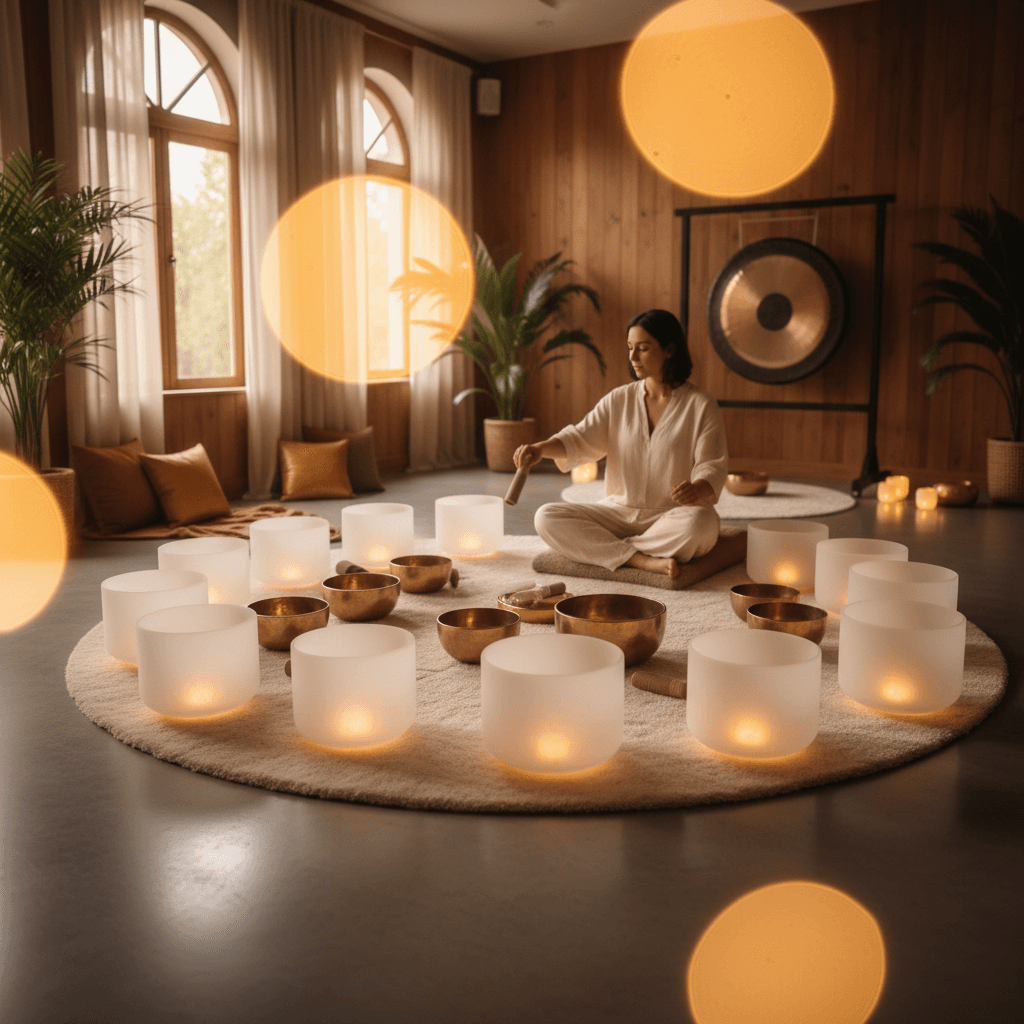
- Harmonic Richness: Beyond specific frequencies, the rich harmonic overtones produced by instruments like crystal singing bowls, gongs, and tuning forks create a deeply resonant field. This harmonic complexity is believed to promote brainwave entrainment and foster a state of deep meditative focus.
- Individualized Experience: While guided by scientific principles, each session is also tailored to the individual's needs, creating a personalized journey towards enhanced cognitive well-being. The emphasis is on facilitating your brain's natural capacity for self-regulation and improvement.
- Holistic Integration: Larissa Steinbach's approach views memory enhancement not in isolation, but as part of a broader spectrum of holistic wellness. By reducing stress, improving sleep quality, and fostering mental clarity through sound, the entire cognitive system benefits. This integrated philosophy underpins every Soul Art experience.
Through the meticulous orchestration of sound, Soul Art offers a sophisticated self-care practice that supports your brain's intrinsic ability to learn, remember, and adapt. It's a journey into the subtle yet powerful world of sonic architecture, designed to enhance your mental acuity and overall vitality.
Your Next Steps: Cultivating a Mindful Memory
Incorporating the insights from auditory stimulation research into your daily life can be a surprisingly simple yet powerful endeavor. While professional sound wellness sessions offer deeply immersive experiences, there are practical steps you can take today to support your cognitive vitality. These are complementary approaches to enhancing your well-being.
Here are a few actionable suggestions to begin your journey towards a more mindful memory:
- Explore Gamma Wave Music: Seek out specially composed music or binaural beats designed to promote 40 Hz gamma waves. Many apps and online platforms offer these types of auditory stimuli. Listen during periods of focus or light activity to potentially enhance your cognitive state.
- Prioritize Quality Sleep: Recognize the critical role of slow-wave sleep in memory consolidation. Create a peaceful sleep environment and consider incorporating very low-intensity, rhythmic sounds or white noise to support deep sleep, as some preliminary studies indicate it may enhance memory consolidation.
- Mindful Listening Practices: Dedicate time each day to focused listening. Whether it's ambient nature sounds, classical music, or even the subtle hum of your environment, engage your auditory system mindfully. This practice can sharpen your attention and auditory processing skills.
- Reduce Noise Pollution: While some low-intensity white noise can be beneficial, excessive or chaotic noise can be a cognitive drain. Create quiet periods throughout your day to allow your brain to rest and reset, improving its capacity for processing and memory.
- Experience Soul Art: Consider booking a session at Soul Art Dubai. Under the expert guidance of Larissa Steinbach, you can experience precisely crafted soundscapes designed to engage your brain's natural rhythms for enhanced memory and overall well-being. It's an opportunity to discover the profound impact of expertly guided auditory stimulation.
Bookings Coming Soon
Soul Art is still in preparation. Session details and booking will be published here after launch.
Coming Soon
In Summary: The Sound Path to Cognitive Vitality
The journey to enhanced memory is increasingly being illuminated by the power of sound. Groundbreaking research consistently highlights how specific auditory stimulations, particularly at 40 Hz gamma frequencies, may support crucial brain functions, from reducing amyloid-beta deposits to improving cognitive performance and even strengthening white matter integrity. This scientific understanding is paving the way for innovative wellness practices.
Whether through targeted gamma wave stimulation, sound synchronization during sleep, or the nuanced effects of low-intensity white noise, auditory input offers a non-invasive and accessible pathway to cognitive vitality. At Soul Art, Larissa Steinbach harnesses these profound insights to create transformative sound wellness experiences. We invite you to explore the potential of sound to sharpen your mind, deepen your focus, and nurture your memory, embracing a holistic approach to brain health.
Wellness Disclaimer: This article is for educational and informational purposes only. It does not constitute medical advice, diagnosis, or treatment. Soul Art Dubai provides non-medical wellness experiences focused on relaxation, stress management, and general wellbeing. Sound wellness is a complementary practice and should not replace professional medical care.