Quantifying Calm: Measuring Corporate Sound Wellness Outcomes

Key Insights
Unlock employee potential by measuring sound wellness impact. Soul Art's guide to tracking ROI, engagement, and well-being for a thriving workplace.
Quantifying Calm: Measuring Corporate Sound Wellness Outcomes
Imagine a corporate landscape where employee well-being isn't just a buzzword, but a measurable asset directly contributing to the bottom line. This vision is rapidly becoming a reality, yet many organizations grapple with the fundamental question: how do you truly measure the impact of wellness initiatives? Corporate wellness programs have become a norm, with over 80% of small companies and nearly all large companies in the US offering some form of benefit, but the challenge of proving their effectiveness persists.
A recent study cited by Shortlister reveals a compelling statistic: for every dollar spent on wellness programs, companies save an average of $3.27 in healthcare costs and $2.73 in absenteeism costs. These figures paint an encouraging picture, highlighting the immense potential for improved productivity and retention. However, despite these promising wellness statistics, translating the benefits of reduced stress and enhanced focus into quantifiable outcomes remains a complex endeavor for many employers.
This article, from Soul Art, Dubai's premier sound wellness studio founded by Larissa Steinbach, delves into the scientific basis of sound wellness and provides a comprehensive framework for measuring its specific corporate outcomes. We will explore how intentional sound experiences can positively influence employee health and productivity, offering practical strategies to track and demonstrate a clear return on investment. Join us as we demystify the process of quantifying the profound benefits of corporate sound wellness.
The Science Explained: Unpacking the Measurable Impact of Sound Wellness
The modern workplace, with its relentless pace and constant demands, often leaves employees in a state of chronic stress. This isn't just an anecdotal observation; it's a physiological reality that impacts health, productivity, and overall corporate performance. Understanding the science behind sound wellness provides a robust foundation for measuring its corporate impact, moving beyond mere anecdotal reports to concrete, data-driven insights.
The Physiological Basis of Sound Wellness
Sound wellness, often delivered through practices like sound baths or guided meditations with specific instruments, works by influencing our brainwave states and activating the body’s innate relaxation responses. Different sound frequencies have been associated with distinct brainwave patterns, which in turn correlate with various states of consciousness and physiological functions. When exposed to therapeutic sound, the brain may shift from a beta state (associated with active, alert thought) towards alpha (relaxed, creative) and even theta or delta states (deep relaxation, restorative sleep).
This shift is not merely subjective; it involves a complex interplay within the nervous system. Gentle, rhythmic sounds, particularly those rich in harmonic overtones, can stimulate the vagus nerve. The vagus nerve is a key component of the parasympathetic nervous system, responsible for the "rest and digest" response. Its activation helps to counteract the "fight or flight" response governed by the sympathetic nervous system, which is often overactive in stressful environments.
By activating the parasympathetic nervous system, sound wellness practices may support a reduction in the production of stress hormones, such as cortisol. Chronic elevation of cortisol has been linked to numerous health issues, including anxiety, depression, impaired immune function, and increased risk of cardiovascular disease. Through consistent exposure to sound wellness, many people report a greater sense of calm, improved emotional regulation, and enhanced physiological resilience to stressors. Preliminary studies indicate that these practices can also influence heart rate variability (HRV), a key indicator of nervous system balance and adaptability, further solidifying the physiological underpinnings of sound's beneficial effects.
Bridging Wellness Theory to Corporate Outcomes
To effectively measure the success of any corporate wellness program, including sound wellness, employers need a multifaceted approach that considers various levels of impact. The Shortlister framework categorizes measurement into three key areas: Process, Impact, and Outcome. Sound wellness programs can contribute positively to all three, offering distinct metrics for evaluation.
Process Measurement: Engagement and Satisfaction
Process measurements are short-term oriented results focused on the implementation and reception of the program. For corporate sound wellness, this primarily involves tracking participation rates and employee satisfaction. Monitoring how many employees attend sessions, how frequently they participate, and their feedback on the program's perceived value are crucial first steps.
Surveys can assess initial satisfaction, asking participants what they liked, what they found valuable, and what improvements could be made. This data helps in refining program offerings and identifying barriers to engagement for non-participants, as highlighted by a U.S. Department of Labor study. High participation and positive satisfaction are essential indicators that the program is well-received and meeting initial expectations.
Impact Measurement: Health and Well-being Shifts
Impact measurements focus on medium-term results, reflecting changes in employee health risks, attitudes, and overall well-being. For sound wellness, this can be measured through:
- Decreased Employee Health Risk: While direct clinical measures like medical expenditures can be challenging to link solely to wellness programs (as noted by MIT Sloan), indirect health risk assessments related to stress can be highly informative. Pre- and post-program surveys measuring self-reported stress levels, anxiety, and sleep quality can demonstrate significant improvements.
- Improved Health Attitudes and Perceived Status: Health surveys can capture shifts in how employees perceive their own health and their commitment to well-being practices. After participating in sound wellness, many people report feeling more mindful, better equipped to manage daily stressors, and more positive about their overall health.
- Improved Employee Satisfaction: Beyond program satisfaction, this refers to broader job satisfaction and a sense of value from the employer. Questionnaires administered before and after a sound wellness initiative can reveal improvements in morale, perceived employer support, and a general increase in contentment within the workplace.
Outcome Measurement: Financial and Long-term Benefits
Outcome measurements are long-term oriented results, often quantifiable in financial terms, demonstrating the ultimate return on investment (ROI). While privacy issues can make direct health outcome measurement difficult, as the U.S. Department of Labor study noted, sound wellness can indirectly contribute to significant financial benefits by influencing broader trends:
- Financial ROI Calculations and Cost-Benefit Analysis: This involves comparing the costs of implementing the sound wellness program against the savings generated. These savings may not be immediate, but accrue over time.
- Cost Savings in Health Benefits and Insurance Claims: By supporting stress reduction and improved overall health, sound wellness may lead to a decrease in stress-related health issues, potentially reducing claims related to worker’s compensation, short-term disability, and long-term disability. The RAND study noted that healthcare costs might initially go up as people address issues, but tend to level out and decrease over time with sustained wellness efforts.
- Reduction in Absenteeism and Presenteeism: A core financial impact often cited in corporate wellness is the reduction in habitual absence (absenteeism) and the state of being present but unproductive due to illness or stress (presenteeism). Sound wellness, by fostering mental clarity, reducing stress, and improving sleep, can significantly enhance an employee's ability to be fully present and engaged, thereby reducing lost productivity costs. This is an area where MIT Sloan found mixed evidence for general programs, emphasizing the need for targeted and measurable interventions like sound wellness.
"To continuously improve the effectiveness of wellness programs, employers need to measure their performance. Despite the significance measurement and evaluation have for positive outcomes, this work is still challenging for employers."
The consistent evaluation of these metrics, both quantitative and qualitative, allows organizations to assess the true impact of sound wellness programs, making data-driven decisions to optimize their effectiveness and justify their investment.
How It Works in Practice: Translating Sound into Tangible Benefits
Understanding the science is one thing; experiencing its real-world application is another. Soul Art brings the profound benefits of sound wellness to life, offering a unique and deeply immersive experience that translates scientific principles into tangible improvements for individuals and, by extension, the corporate environment. Our approach is designed to be accessible, effective, and deeply restorative.
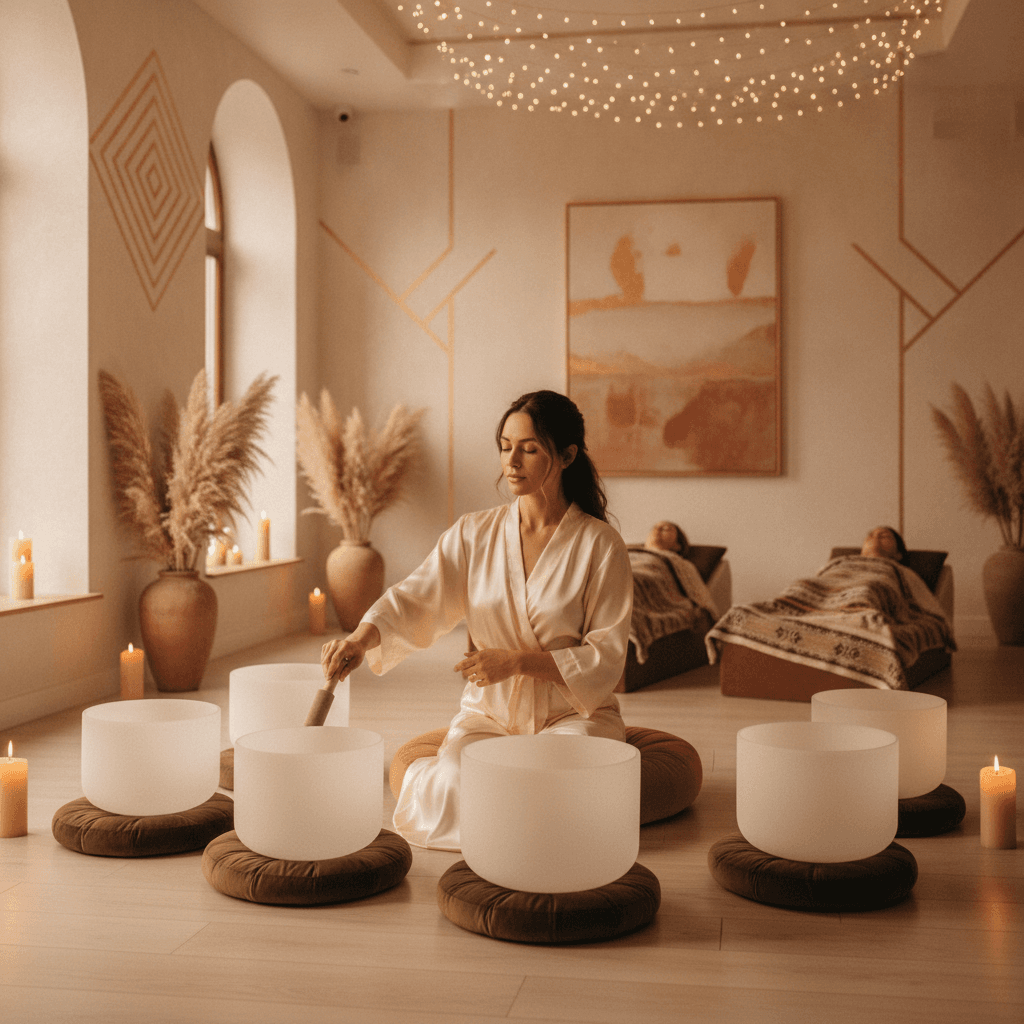
A typical sound wellness session at Soul Art is a journey into deep relaxation and self-discovery. Participants lie comfortably, often on yoga mats or cushions, and are invited to simply receive the sounds and vibrations. Larissa Steinbach, or one of our expert practitioners, meticulously selects and plays a symphony of instruments. These may include crystal singing bowls, each tuned to specific energetic frequencies; Himalayan singing bowls, with their rich, earthy tones; resonating gongs that create expansive soundscapes; and various chimes, drums, and other percussive instruments that weave together a tapestry of therapeutic sound.
The experience is deeply sensory. It's not just about hearing the sounds; it's about feeling the gentle vibrations permeate the body, encouraging a sense of release and surrender. Many people report an immediate calming effect, a noticeable reduction in mental chatter, and a profound sense of peace. It's common for participants to enter a state akin to meditation, where the mind is quieted, and the body relaxes deeply. Some describe feeling lighter, more clear-headed, and profoundly rejuvenated after a session.
These immediate, subjective experiences have direct implications for the workplace. When employees consistently engage in sound wellness practices, they may develop improved coping mechanisms for stress. This translates into enhanced focus and concentration during work hours, reducing the often-invisible costs associated with presenteeism. An employee who feels mentally clear and emotionally balanced is far more productive and innovative than one battling chronic stress and mental fatigue.
Furthermore, the deep relaxation induced by sound wellness can significantly improve sleep quality. Better sleep leads to increased energy levels, improved mood, and enhanced cognitive function, all of which are critical for sustained peak performance in a corporate setting. The ability to regulate emotions more effectively reduces interpersonal conflicts and fosters a more harmonious team environment. By integrating sound wellness into their routines, individuals learn to self-regulate their nervous systems, building resilience against the daily pressures of corporate life. These individual transformations collectively contribute to a healthier, more engaged, and ultimately more productive workforce.
The Soul Art Approach: Larissa Steinbach's Framework for Corporate Harmony
At Soul Art, Dubai's premier sound wellness studio, we believe that true corporate well-being stems from nurturing the individual. Larissa Steinbach, our visionary founder, has meticulously crafted a corporate sound wellness framework that is not only deeply transformative but also strategically aligned with measurable business outcomes. Our unique approach goes beyond generic wellness offerings, providing a personalized and scientifically-informed pathway to enhanced employee well-being and organizational success.
Larissa Steinbach's philosophy centers on the understanding that each corporate culture and its employees have distinct needs. Echoing the insights from FitOn Health about the value of personalized wellness programs, Soul Art specializes in customizing sound wellness experiences to resonate with the specific challenges and goals of an organization. This might involve designing programs to address high-stress periods, foster creativity, or improve team cohesion. The sessions themselves are carefully curated, leveraging a diverse array of instruments chosen for their unique vibrational properties, including exquisite crystal singing bowls, resonant Himalayan singing bowls, powerful gongs, and delicate chimes.
What makes the Soul Art method unique is its commitment to both profound experience and measurable impact. Larissa Steinbach and her team integrate a blend of ancient wisdom and contemporary understanding of neuroscience, ensuring that each session is not just relaxing but therapeutically effective. We focus on creating an environment where employees can truly disconnect from external pressures and reconnect with their inner calm, a crucial step for stress reduction and mental clarity. This intentional design facilitates the physiological shifts required for sustained well-being, as discussed in the "Science Explained" section.
Crucially, Soul Art actively supports organizations in measuring the effectiveness of their sound wellness programs. We partner with HR and benefits managers to implement robust evaluation strategies, moving toward evidence-based wellness as advocated by the Miraval-Humin study. Our approach includes:
- Customized Pre- and Post-Program Surveys: Tailored questionnaires designed to assess changes in self-reported stress levels, anxiety, sleep quality, focus, and overall job satisfaction among participants. These provide invaluable qualitative and quantitative data on perceived improvements.
- Tracking Participation and Engagement: We provide tools and guidance for monitoring attendance rates and gathering feedback on the perceived value and enjoyment of the sessions. High engagement indicates a program that truly resonates with employees' needs.
- Collaboration on HR Data Analysis: Where ethical and permissible, we work with corporate partners to correlate participation in sound wellness programs with broader HR metrics. This includes observing trends in absenteeism rates, presenteeism, employee turnover, and even engagement scores, offering insights into the program's indirect impact on financial outcomes.
By combining the transformative power of sound with a rigorous approach to measurement, Larissa Steinbach and Soul Art empower companies to not only offer a unique and highly valued employee benefit but also to demonstrate a clear return on their investment in human capital. We believe that investing in measurable well-being is not just good for employees; it's a strategic imperative for a thriving business.
Your Next Steps: Actionable Strategies for Measuring Sound Wellness
Implementing a sound wellness program for your employees is a powerful step towards fostering a healthier, more productive workplace. However, to truly understand its value and optimize its effectiveness, consistent and strategic measurement is essential. Here are actionable steps you can take, informed by best practices in corporate wellness evaluation, to quantify the benefits of sound wellness for your organization.
1. Define Clear, Strategic Goals
Before launching any program, articulate what you hope to achieve. Do you aim to reduce stress-related absenteeism? Improve employee focus and productivity? Boost overall morale and job satisfaction? As HRCI advises, clear strategic goals provide the benchmark against which all future measurements will be compared. This clarity will guide your choice of metrics and evaluation methods.
2. Leverage Pre- and Post-Program Surveys
This is perhaps the most accessible and effective way to measure the impact of sound wellness. Implement short, anonymous surveys before the program begins and again after a sustained period (e.g., 3-6 months). Ask employees about their self-reported stress levels, perceived focus at work, sleep quality, overall mood, and their sense of well-being. Tools for standardized perceived stress scales (PSS) or well-being questionnaires can provide valuable quantitative data.
3. Track Participation and Engagement
Monitor attendance rates for your sound wellness sessions. High participation is a direct indicator of employee interest and perceived value. Beyond attendance, consider qualitative feedback through anonymous surveys asking participants about their satisfaction, how the program benefits them personally, and what they would like to see more of. This helps assess the program's process effectiveness and informs future adjustments.
4. Correlate with Existing HR Data (Ethically)
Work closely with your HR department to explore correlations between sound wellness participation and existing HR metrics, while strictly adhering to privacy protocols. Observe trends in absenteeism rates, sick leave requests, employee turnover, and internal engagement survey scores among participants versus non-participants. While direct causation can be complex to prove, consistent positive trends can strongly suggest the program's outcome benefits.
5. Begin to Quantify Potential ROI
For long-term outcome measurement, consider a phased approach to calculating potential financial ROI. Compare program costs with potential savings from reduced absenteeism (e.g., estimating the cost of lost productivity) and a decrease in stress-related health claims. This requires ongoing data collection and analysis, and while it takes time, it provides the most compelling evidence of your program's financial value.
By meticulously tracking these areas, you can build a robust case for the sustained investment in sound wellness. Ready to explore how customized sound wellness programs can benefit your team and how Soul Art can help you measure that impact?
In Summary
Corporate wellness is no longer a luxury but a strategic necessity, pivotal for nurturing employee productivity and retention. While the financial benefits are clear – significant savings in healthcare and absenteeism for every dollar invested – the challenge often lies in proving the efficacy of specific wellness interventions. This article has illuminated how sound wellness, with its profound physiological impacts on stress reduction and mental clarity, offers tangible and measurable outcomes for the corporate sector.
From assessing process metrics like participation and satisfaction, to gauging impact through shifts in perceived well-being, and ultimately demonstrating long-term financial outcomes like reduced absenteeism and healthcare costs, a comprehensive measurement strategy is essential. Soul Art, under the leadership of Larissa Steinbach, is at the forefront of this movement, providing meticulously crafted, personalized sound wellness programs designed for measurable corporate harmony. We empower organizations to not only enrich their employees' lives but also to quantify the strategic return on their investment in holistic well-being.
Bookings Coming Soon
Soul Art is still in preparation. Session details and booking will be published here after launch.
Coming Soon
Wellness Disclaimer: This article is for educational and informational purposes only. It does not constitute medical advice, diagnosis, or treatment. Soul Art Dubai provides non-medical wellness experiences focused on relaxation, stress management, and general wellbeing. Sound wellness is a complementary practice and should not replace professional medical care.
Related Articles

Reclaim Your Focus: The Afternoon Slump Sound Ritual for Office Wellness with Soul Art

Corporate Sound Healing: Elevate Employee Well-being & Productivity
Conflict Decompression: Resetting Your Mind After Difficult Meetings with Sound Wellness