Japanese Zen & Sound: Mastering the Art of Silence for Well-being
Key Insights
Discover the profound connection between Japanese Zen, the art of silence, and sound wellness. Learn how Soul Art by Larissa Steinbach cultivates peace and mental clarity in Dubai.
In our perpetually connected world, where notifications chime and urban clamor is a constant soundtrack, have you ever considered the profound impact of what you don't hear? The World Health Organization, as early as 2011, identified noise pollution as a "modern plague," a silent assailant jeopardizing our well-being. Our ears, evolved for the quiet expanse of ancient landscapes, now contend with an auditory overload that our nervous systems were simply not designed to process.
This article delves into the transformative power of silence, drawing inspiration from the timeless wisdom of Japanese Zen traditions. We will explore the scientific evidence illuminating how quiet moments can literally rejuvenate the brain, and how intentional sound practices, far from disrupting silence, can deepen our connection to inner stillness. Join us as we uncover how these ancient practices, expertly integrated by Larissa Steinbach at Soul Art, offer a path to profound relaxation and mental clarity amidst the bustling energy of Dubai.
The Neuroscience of Silence and Sound
Our modern lives are characterized by an almost ceaseless barrage of auditory stimuli, from traffic and construction to the constant hum of digital devices and social media alerts. This pervasive noise pollution is far more than a mere inconvenience; some research suggests it may pose a significant threat to our health. Our auditory systems, designed to detect subtle cues of potential food or danger in vast, open environments, are now perpetually overstimulated, leading to chronic stress.
Noise Pollution: A Modern Health Hazard
A 2011 World Health Organization report highlighted substantial evidence linking increased noise exposure to elevated health risks. This constant auditory input keeps our bodies in a state of heightened alert, triggering the sympathetic nervous system, which is responsible for our "fight or flight" response. Over time, this sustained activation may contribute to a range of wellness challenges, including sleep disturbances and elevated stress levels.
The relentless digital noise—cell phones, video games, and the endless stream of news media—further exacerbates this issue, distracting us and increasing mental tension. Efforts to mitigate this "modern plague" are gaining traction globally, with initiatives like the widespread adoption of electric vehicles aiming to reduce transportation noise at its source. Yet, even with these external efforts, cultivating personal oases of quiet remains paramount for individual well-being.
The Regenerative Power of Silence
Amidst the clamor, silence emerges as a profound agent of healing and regeneration. A compelling study published in the journal Brain, Structure, and Function explored the effects of sound and silence on the brains of mice. Researchers focused on the hippocampus, a critical region involved in learning, memory, and emotional regulation.
Their remarkable findings indicated that while certain types of music could induce a calming effect similar to silence, only sustained periods of silence demonstrably led to the creation of new cells in the hippocampus. This suggests that silence does not just soothe; it may actively support neural growth, literally helping the brain to develop and regenerate. Several other scientific studies lend credence to the idea that silence heals, regenerates, and calms the mind, offering a vital counterbalance to our overstimulated lives.
While a secluded retreat is not always feasible, these studies affirm that the benefits of silence are accessible. Many people report that creating a personal sanctuary, even within a busy environment, can effectively provide moments of restorative quiet. This deliberate seeking of stillness is not about escaping the world, but about equipping ourselves to navigate it with greater resilience.
The Role of Sound in Zen Practice
Interestingly, while the profound benefits of silence are clear, the Japanese Zen tradition also incorporates intentional sound as a pathway to deeper awareness. Rather than being mutually exclusive, sound and silence often complement each other within Zen practices, guiding practitioners toward a state of profound inner stillness. Silence, in a spiritual context, is often seen as fostering intrapersonal communication, allowing individuals to connect with their "self," nature, or a deeper spiritual dimension.
This inward turning is central to Zen meditation, where silence is not seen as socially isolating, but as a shared experience for self-discovery. Scholars like Kurzon (2007, 2011) and Fennell (2012) have increasingly examined the crucial role of silence in social interaction during Buddhist meditation, demonstrating its power to create a collective space for quiet contemplation.
Zen breathing practices, for instance, begin with the practitioner acutely aware of the audible sound of their incoming and outgoing breaths—a "gross" breathing stage. As meditation deepens, the breath becomes "subtle," no longer audible, but felt as a stream of life-energy. In the most advanced stage, the sensation of breath itself recedes, allowing for a deeper meditative state where the interval between inhalation and exhalation is prolonged, representing a profound quieting of the physiological process.
Furthermore, Japanese culture embodies an "aesthetic of reduction," where "less is more" is a guiding principle in many traditional art forms. Haiku, the world's shortest literary form, is sometimes called "the literature of silence" because its brevity and suggestive nature allow for vast meaning to unfold in the unspoken, in the "rich possibilities of blank space." This cultural ethos highlights a deep-seated understanding that we share the world with other beings, and that peace of mind often comes from trusting unseen powers and the wisdom of nature.
However, Zen is not solely defined by the absence of sound. Research by scholars like Michaela Mross highlights the significant role of music and ritual in Zen Buddhism. Practices like kōshiki rituals incorporate melodies and sermons, creating sacred spaces and fostering collective identity. These sonic elements are understood to embody Buddhahood and cultivate compassion, demonstrating that certain sounds, used intentionally, can be just as sacred and transformative as silence. Buddhist belief systems consider sound sacred, capable of cleansing emotional energies and serving as a doorway to energetic dimensions, or prana. Mantras and chants, whether internal or external, are understood to benefit not just the individual but all beings, underscoring the deep spiritual significance of specific sounds within Zen.
How It Works in Practice
The integration of silence and intentional sound, as inspired by Japanese Zen, offers a powerful framework for enhancing well-being. It is about actively creating an environment—both internal and external—that supports deep relaxation and mental clarity, moving beyond mere absence of noise to a profound engagement with stillness. This approach allows individuals to cultivate a sanctuary that travels with them, regardless of their physical location.
Practically, this means understanding that while absolute silence is beneficial, the art of silence can be cultivated amidst daily life. It begins with mindful attention to breath, echoing the Zen practice of progressing from audible to subtle breathing. By focusing on the rhythm and sensation of each breath, we begin to quiet the internal chatter, shifting our awareness from external distractions to the rich, calming landscape within. Many people report that this practice alone can significantly reduce feelings of overwhelm and anxiety.
The Japanese aesthetic of reduction, where profound beauty is found in what is left unsaid or in the "blank space," translates directly into practical applications for our mental and physical environments. This isn't just about decluttering a room; it's about decluttering the mind. By reducing unnecessary sensory input—be it visual, auditory, or digital—we create space for inner reflection and peace. It allows us to appreciate the subtle nuances of our surroundings and our inner experience more deeply.
Clients embarking on this journey often describe a profound shift in their sensory perception. As external noise diminishes and internal focus sharpens, ordinary sounds—the rustle of leaves, a distant bird call—can become deeply resonant and calming. The intentional use of specific sounds, like the pure tones of certain instruments, can then act as a gentle guide, leading the mind further into a meditative state, much like a mantra providing a focal point for concentration.
This practical application nurtures intrapersonal communication, allowing for a clearer connection with one's authentic self. The quiet space provides an opportunity to listen to one's own thoughts, feelings, and intuition without the constant interruption of external demands. This fosters a sense of groundedness and trust, echoing the Japanese cultural value of trusting to nature and unseen powers for peace of mind. It’s a holistic wellness practice that addresses the mental, emotional, and even spiritual aspects of well-being, promoting a deeper sense of harmony.
The Soul Art Approach
At Soul Art, Larissa Steinbach meticulously translates the profound wisdom of Japanese Zen and the scientific insights into silence and sound into a unique, transformative wellness experience. Our approach is not merely about playing instruments; it is about creating an intentionally curated sonic and silent environment that guides individuals towards their own inner sanctuary. Larissa Steinbach believes that true well-being stems from a harmonious balance, where silence amplifies the power of sound, and sound deepens the appreciation of silence.
The Soul Art method draws heavily on the principle of "less is more," fostering an atmosphere of elegant simplicity and deep introspection. We integrate elements of Zen philosophy by emphasizing mindful presence and a gentle return to the natural rhythms of the body and mind. Our sessions begin with an invitation to shed external distractions, encouraging participants to engage with their internal landscape, much like a Zen practitioner quieting the "gross" sounds of breath.
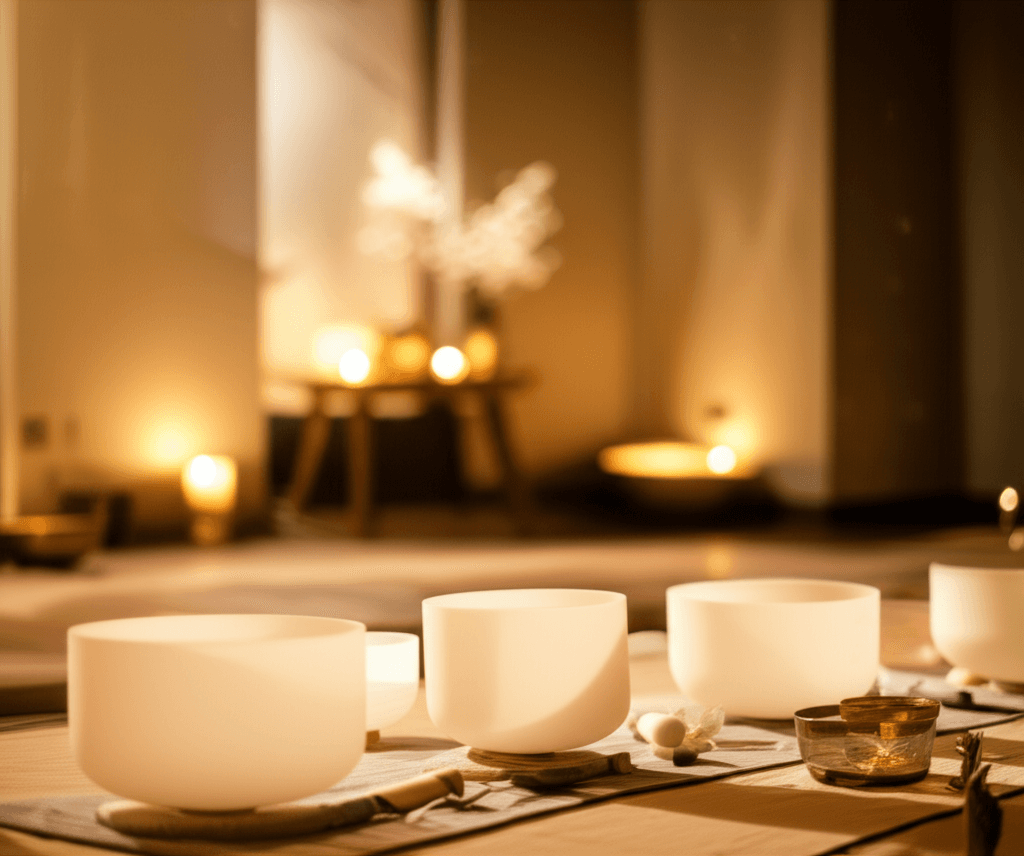
Larissa Steinbach masterfully orchestrates a delicate balance of carefully selected sound tools and periods of profound stillness. While Zen monasteries might utilize ritualistic chants and bells, Soul Art uses instruments renowned for their pure, sustained vibrations, such as crystal singing bowls, Himalayan singing bowls, and resonant gongs. These instruments are chosen not for their complexity, but for their ability to create a deep, immersive soundscape that encourages brainwave entrainment, gently guiding the mind into states conducive to relaxation and meditation.
For instance, the resonant frequencies produced by these instruments may support a shift from alert beta brainwaves to calmer alpha or even deeply restorative theta waves. This physiological response is believed to facilitate a release of tension, support emotional balance, and enhance mental clarity. The periods of quiet between sonic offerings are equally vital, allowing the subtle vibrations to integrate and the mind to rest in a state of tranquil receptivity.
Soul Art's signature blend of intentional sound and restorative silence is a complementary approach designed to soothe the nervous system and foster profound inner peace. Larissa Steinbach’s expertise lies in creating a space where the benefits of both auditory input and quietude are maximized, helping clients to experience a deep sense of rejuvenation and a renewed connection to their inner self, right here in the heart of Dubai. It’s a holistic wellness journey tailored for the demands of modern life.
"True silence is not the absence of sound, but the presence of peace. It's in this profound stillness that the deepest healing and clarity arise, guiding us back to our authentic selves."
Your Next Steps
Embracing the art of silence and intentional sound doesn't require a monastic retreat; it begins with small, conscious shifts in your daily routine. Integrating these practices can profoundly enhance your well-being, helping to counteract the constant noise of modern life. Start today by making deliberate choices that invite more stillness and mindful sound into your world.
Here are a few actionable steps you can implement:
- Designate "Quiet Zones": Create specific times or spaces in your home or workday where digital devices are off, and silence is invited. Even 10-15 minutes can offer a restorative break for your nervous system. Many people report that regular quiet breaks significantly reduce overall stress levels.
- Practice Mindful Breathing: Inspired by Zen, take moments throughout your day to focus purely on your breath. Notice the sensation of air entering and leaving your body, allowing any external sounds to simply pass by without engaging with them. This simple exercise can quickly calm the mind.
- Curate Your Auditory Environment: Be intentional about the sounds you expose yourself to. Reduce background noise from television or social media. Instead, choose calming music, nature sounds, or simply embrace silence when possible. This deliberate choice may support improved focus and relaxation.
- Engage with Nature's Silence: Seek out natural environments, even a local park, and simply listen to the ambient sounds—wind, birds, water. These organic soundscapes have been associated with reduced stress and a greater sense of peace, connecting you to the natural rhythms of the world.
- Explore Guided Sound Experiences: Consider joining a sound wellness session, such as those offered at Soul Art. These sessions provide an expertly guided immersion into intentional sound and silence, creating a powerful opportunity for deep relaxation and self-discovery without the need for an external "quiet retreat."
Ready to experience the profound benefits of integrated sound and silence? Discover how Larissa Steinbach and Soul Art can guide you on a journey to deeper tranquility and enhanced well-being.
In Summary
The relentless hum of modern life, identified as a "modern plague" by the WHO, actively impacts our well-being. Japanese Zen traditions, however, offer a powerful antidote, revealing that both profound silence and intentional sound can be transformative. Scientific research underscores the regenerative power of silence, showing it may literally foster new brain cell growth in the hippocampus, while Zen practices leverage both silent meditation and sacred sounds for deep introspection and collective identity.
At Soul Art, Larissa Steinbach masterfully blends these ancient wisdoms with contemporary understanding, creating unique sound wellness experiences. Through carefully curated soundscapes and periods of restorative quiet, Soul Art provides a sanctuary where individuals can escape the noise, regenerate their minds, and cultivate lasting inner peace. This holistic approach offers a pathway to enhanced well-being, inviting you to rediscover the art of silence in a bustling world.
Bookings Coming Soon
Soul Art is still in preparation. Session details and booking will be published here after launch.
Coming Soon
Wellness Disclaimer: This article is for educational and informational purposes only. It does not constitute medical advice, diagnosis, or treatment. Soul Art Dubai provides non-medical wellness experiences focused on relaxation, stress management, and general wellbeing. Sound wellness is a complementary practice and should not replace professional medical care.
Related Articles
Maori Poi & Sound: Pacific Traditions for Modern Well-being
Swedish Nyckelharpa: The Science of Nordic String Healing
Apollo's Ancient Echoes: Sound Healing & Holistic Wellness