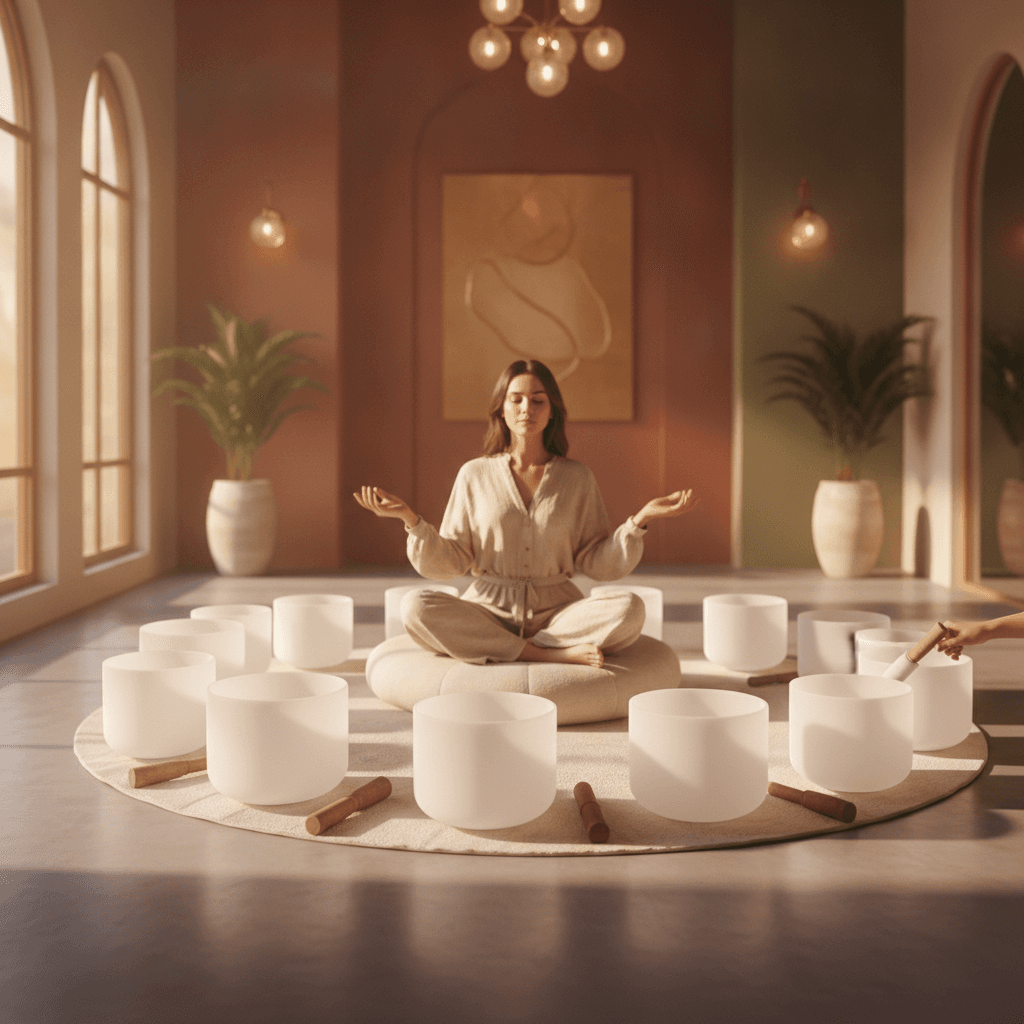
Interoception: Feeling Sound from the Inside – Enhancing Your Inner Sense
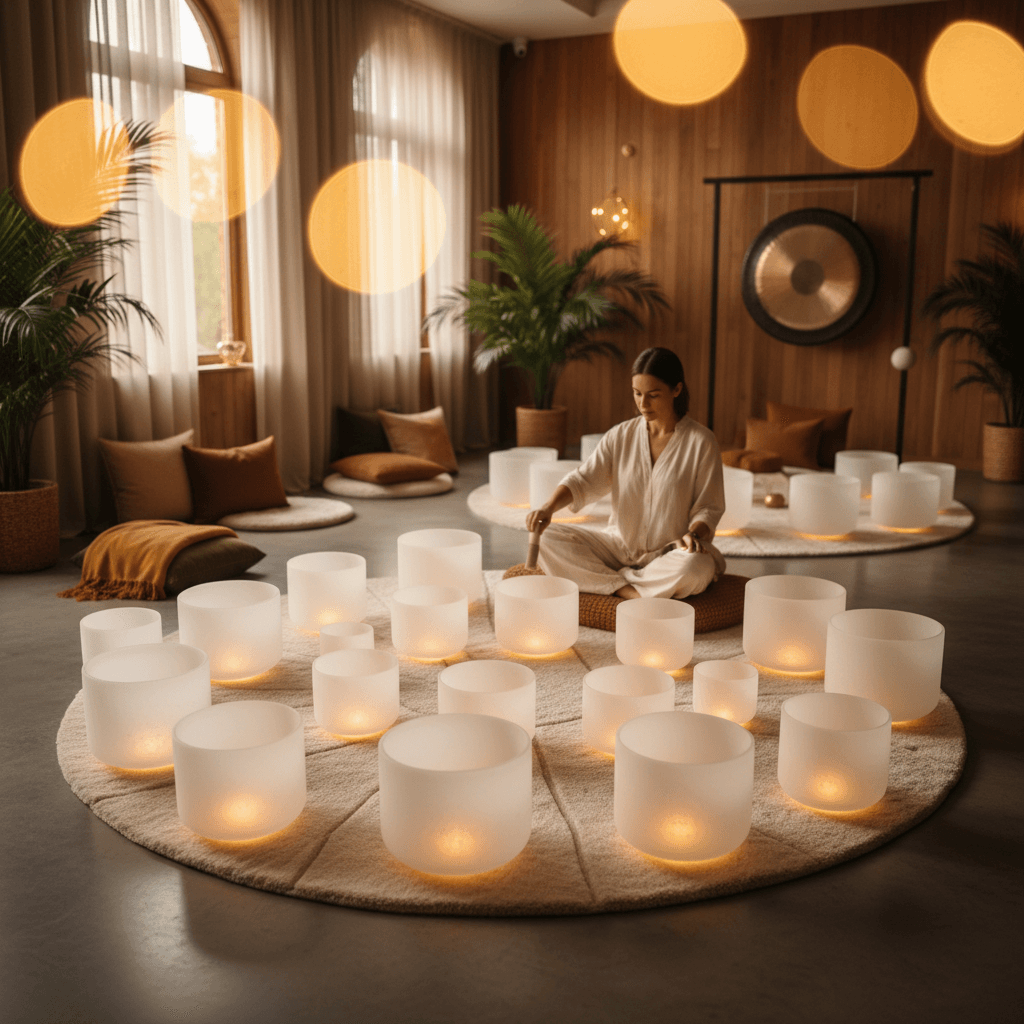
Key Insights
Explore interoception, the 'inner sense', and how sound wellness practices at Soul Art Dubai, founded by Larissa Steinbach, can deepen your body-mind connection.
Can you feel your heart beating in your chest right now, without placing a hand to your pulse? Perhaps you can sense the subtle rhythm of your breath, or the quiet hum of your digestive system. These are not just fleeting sensations; they are signals from a profound internal sense known as interoception.
Interoception is our mysterious "inner sense," a constant stream of information flowing from every corner of our internal landscape to our brain. It is the basis for our primal understanding of hunger, thirst, fatigue, and even our emotional states. Understanding and enhancing this crucial sense may unlock deeper layers of well-being, resilience, and self-awareness.
In an increasingly external world, the ability to tune into our internal signals can feel lost, yet it is more vital than ever for managing stress and maintaining balance. This article will delve into the science of interoception, explore its far-reaching impacts on our mental and physical health, and reveal how sound wellness practices, like those offered at Soul Art Dubai by Larissa Steinbach, can profoundly nurture this fundamental inner connection. Prepare to discover how feeling sound from the inside out may be a powerful pathway to holistic well-being.
The Science Explained
What is Interoception?
At its core, interoception is the processing of bodily signals that come from the inside, as explained by Jennifer Murphy, a researcher at Royal Holloway University of London. These signals include our heart rate, breathing patterns, sensations of hunger or fullness, and awareness of pain or sickness. It is the fundamental mechanism by which our brain understands our physiological state.
Initially conceptualized in 1906 by Nobel Laureate Sir Charles S. Sherrington, who focused on receptors within the viscera, the understanding of interoception has significantly evolved. Modern neuroscience now views interoception as a far more complex and multidimensional system. It is not merely about perceiving signals from internal organs, but rather, it encompasses perceptions of bodily signals and states that construct a subjective representation of our experience.
This expanded definition highlights interoception as a crucial element in how we categorize sensory attributes and construct meaning from our internal world. It’s a dynamic interplay between our brain and body, essential for maintaining homeostasis and enabling adaptive responses to our environment.
The Mind-Body Loop: More Than a One-Way Street
For a long time, interoception was traditionally understood as a one-way street: signals from the body traveled to the brain. However, cutting-edge research is reshaping this paradigm, revealing a more nuanced and interactive system. Scientists like Wen G. Chen, who oversees interoception research at the NCCIH, now affirm that "the brain can go back and regulate signals in organs. It’s a loop."
This bidirectional communication is key to maintaining bodily balance and emotional regulation. For instance, the brain doesn't just passively count calories; it actively sends signals that can make us feel full well before digestion is complete, preventing overeating. This preemptive regulation demonstrates the brain's powerful role in influencing our internal states.
This constant feedback loop between brain and body means that our internal sensations are not just raw data. They are actively interpreted, integrated, and used by the brain to form our subjective experience of self, emotion, and well-being. Disruptions in this delicate balance can have profound consequences.
Interoception's Impact on Emotions, Cognition, and Health
The accuracy and clarity of our interoceptive signals have far-reaching implications for our mental and physical health. Individuals who struggle to perceive their bodily feelings often find it more challenging to articulate and regulate their emotions. This suggests a direct link between our inner sensory awareness and our emotional intelligence.
Beyond emotions, interoception can influence cognitive functions, including decision-making. An intriguing study by Garfinkel and colleagues found that City of London hedge fund traders who could more accurately perceive their own heartbeats were more likely to make profitable decisions and enjoy longer careers. While this study did not show causation, it highlights a compelling association between interoceptive accuracy and complex cognitive performance.
Jennifer Murphy's comprehensive review of evidence indicates that disruptions in interoception are associated with a wide variety of both physical and mental health conditions. These include:
- Mental Health: Depression, anxiety, anorexia nervosa, and autism.
- Physical Health: Obesity, addiction, and chronic pain.
Research by Stephen Liberles and others at Harvard Medical School is continually exploring the molecular underpinnings of these mind-body links, deepening our understanding of how our internal senses are integral to keeping the body in balance.
Measuring the Inner World: Challenges and Advancements
Assessing interoception has historically presented challenges, often relying on subjective self-reports or tasks like heartbeat counting, which may not capture the full complexity of this internal sense. However, advancements in scientific methodology are providing more objective and comprehensive insights.
- Neuroimaging Techniques: Functional magnetic resonance imaging (fMRI) and positron emission tomography (PET) allow scientists to observe brain activity in real-time. These methods have highlighted a major role for the anterior insular cortex in interoception, revealing its deep connection to our sense of self and emotional processing.
- Wearable Technology: Smartwatches and fitness trackers can continuously monitor physiological signals such as heart rate variability, skin conductance, and temperature. This real-time data collection enables researchers to study interoception in natural settings, offering valuable insights into how stress and anxiety may affect interoceptive accuracy. These devices can also provide biofeedback, helping individuals become more aware of their internal states.
- Specialized Environments: Flotation environments, which minimize external stimuli, have been used to help individuals focus more easily on interoceptive sensations. The idea is that over multiple sessions, patients with various conditions may learn to become more attuned or tolerant to their interoceptive sensations, both within the float tank and in their daily lives.
These diverse approaches underscore the growing recognition of interoception as a critical area of study, offering new avenues for understanding and supporting overall well-being.
How It Works in Practice
Connecting with interoception in a practical sense means learning to gently turn our attention inward, away from the constant barrage of external stimuli. It’s about cultivating a nuanced awareness of the subtle sensations within our body, recognizing them as valuable information rather than just background noise. This is where holistic wellness practices can play a transformative role.
Sound wellness, in particular, offers a unique pathway to enhance interoceptive awareness. When surrounded by therapeutic sounds and vibrations, the experience naturally shifts from external perception to internal sensation. The rich overtones and deep resonances of instruments like gongs and singing bowls don't just reach our ears; their vibrations travel through our body's tissues, fluids, and bones. This creates a profound, multi-sensory experience that is felt as much as it is heard.
"The true magic of sound wellness lies in its ability to guide your awareness from the 'heard' to the 'felt,' transforming an auditory experience into a deeply interoceptive journey."
Clients often describe feeling gentle tingles, warmth, expansion, or a sense of resonance in various parts of their body during a sound bath. These are not merely subjective interpretations; they are the direct somatic experience of the sound's energy interacting with their physical form. This visceral connection provides a tangible anchor, helping individuals to bypass an overactive mind and drop into a deeper state of bodily presence.
This process helps to heighten awareness of subtle internal signals, such as changes in heart rate, the rhythm of breathing, or the nuanced sensations in the gut. By providing a focal point through sound, individuals can practice distinguishing these internal cues with greater clarity. This practice may support a strengthening of the communication pathways between the brain and body, much like how gentle vagus nerve stimulation has been found to increase interoceptive accuracy in preliminary studies.
Regular engagement with sound wellness practices may foster a deeper sense of embodiment, promoting relaxation and stress management. By consciously feeling and acknowledging internal sensations, we begin to reintegrate aspects of ourselves that may have been overlooked or suppressed. This re-connection with the physical self is a powerful form of self-care, supporting emotional regulation and a more balanced nervous system response.
The Soul Art Approach
At Soul Art, Dubai's premier sound wellness studio, Larissa Steinbach has meticulously crafted an approach that leverages the profound power of therapeutic sound to cultivate and enhance interoceptive awareness. Larissa’s vision is centered on guiding individuals toward a deeper understanding of their inner landscape, promoting holistic well-being in a fast-paced world.
The Soul Art method is built upon a foundation that blends ancient wisdom with contemporary scientific understanding. Larissa Steinbach and her team utilize a curated selection of instruments, each chosen for its unique vibrational quality and capacity to resonate with the human body. These include:
- Himalayan Singing Bowls: Known for their rich, earthy tones and deep, penetrating vibrations that encourage relaxation and internal focus.
- Gongs: Their expansive, multi-layered sounds create immersive soundscapes that may facilitate profound meditative states and shifts in internal perception.
- Crystal Bowls: Producing pure, clear tones that are believed to resonate with the body's energy centers, promoting a sense of clarity and balance.
- Tuning Forks: Used for targeted vibrational therapy, these can help to gently stimulate specific areas, further enhancing localized interoceptive awareness.
Larissa Steinbach creates a sanctuary-like environment, meticulously designed to minimize external distractions and maximize the potential for introspection. In this nurturing space, the therapeutic sounds become a gentle yet powerful guide, inviting clients to surrender to the present moment and direct their attention inward. The goal is not just to listen, but to truly feel the sound as it permeates every cell of their being.
Through expertly facilitated sessions, Larissa Steinbach guides participants to observe their internal responses without judgment, fostering a safe space to explore bodily sensations and emerging emotions. This conscious engagement with inner signals is a core practice at Soul Art. It may help to gently "tune" the nervous system, potentially shifting it towards a more parasympathetic state of rest and digest.
The Soul Art approach to sound wellness is a complementary practice designed to support stress management, relaxation, and emotional regulation. By regularly engaging with these carefully curated sound experiences, many people report an enhanced ability to perceive and interpret their internal bodily signals. This cultivated interoceptive sensitivity may empower individuals to respond more adaptively to their inner states and external environment, fostering a profound sense of peace and self-connection.
Your Next Steps
Cultivating a deeper connection to your interoceptive sense is a journey, not a destination, but one that offers profound rewards for your well-being. By integrating simple, mindful practices into your daily routine, you can begin to strengthen this vital inner awareness.
Here are a few actionable steps you can implement today to enhance your interoception:
- Practice Mindful Breathing: Take a few moments each day to simply observe your breath without trying to change it. Notice the subtle sensations of air entering and leaving your body, the rise and fall of your chest or abdomen. This anchors your awareness in your internal rhythm.
- Engage in Body Scan Meditations: Systematically bring your attention to different parts of your body, noticing any sensations—tingling, warmth, pressure, or coolness—without judgment. This practice helps to map your internal landscape.
- Incorporate Gentle Movement: Practices like slow yoga, tai chi, or a mindful walk can help you connect with your body's movements and sensations. Pay attention to how your muscles feel, how your joints move, and the feeling of your feet on the ground.
- Journal Your Internal Experiences: Regularly reflect on how your emotions manifest physically. When you feel joy, anxiety, or sadness, what sensations do you notice in your body? This helps to build a vocabulary for your interoceptive signals.
- Explore Sound Wellness: Consider booking a session at Soul Art Dubai. Larissa Steinbach's guided sound experiences provide a unique, immersive environment that may gently facilitate deeper internal awareness and nervous system regulation.
By consistently engaging with these practices, you may gradually enhance your ability to perceive, interpret, and respond to your body's wisdom. This self-care journey can lead to greater emotional resilience, improved decision-making, and a more harmonious relationship with yourself.
In Summary
Interoception, our often-overlooked "inner sense," is the fundamental process by which we perceive and interpret our body's internal signals. From the rhythm of our heartbeat to the subtleties of our breath and gut sensations, this complex, bidirectional communication loop between our brain and body profoundly shapes our emotions, cognitive abilities, and overall well-being. Disruptions in interoceptive awareness have been associated with a range of mental and physical health challenges.
Fortunately, interoceptive sensitivity can be cultivated and enhanced through mindful practices. Sound wellness, in particular, offers a unique and deeply immersive pathway to connect with this vital inner sense. The gentle yet powerful vibrations of therapeutic instruments, skillfully guided by experts like Larissa Steinbach at Soul Art Dubai, create an environment that encourages profound introspection and somatic awareness.
By feeling sound from the inside, individuals may experience deeper relaxation, enhanced emotional regulation, and a stronger, more harmonious connection between their mind and body. This complementary approach to wellness invites you to tune into your inner world, fostering a profound sense of balance and self-understanding. We invite you to explore the transformative power of sound at Soul Art and rediscover the wisdom within.
Bookings Coming Soon
Soul Art is still in preparation. Session details and booking will be published here after launch.
Coming Soon
Wellness Disclaimer: This article is for educational and informational purposes only. It does not constitute medical advice, diagnosis, or treatment. Soul Art Dubai provides non-medical wellness experiences focused on relaxation, stress management, and general wellbeing. Sound wellness is a complementary practice and should not replace professional medical care.
Related Articles
Beyond Hearing: Sound Waves & Your Body's Inner Boundaries at Soul Art
Breath Holding & Sound: Releasing Guarded Patterns at Soul Art Dubai

Reclaim Vitality: Soft Sound Practices for Fatigue & Collapse