The Unseen Force: How Sound Shapes Elite Football Performance
Key Insights
Explore the scientific impact of sound on football performance, from crowd roars to focused calm. Discover how Soul Art, led by Larissa Steinbach, leverages sound for athlete well-being and mental resilience in Dubai.
Have you ever considered that the roar of a stadium crowd, the precise timing of a pass, or even a referee's critical decision might all be influenced by the unseen force of sound? In the electrifying world of football, where milliseconds and mental fortitude dictate outcomes, the auditory environment is far more than mere background noise; it is a profound determinant of performance, communication, and even overall well-being. From the deafening cheers of thousands to the strategic silence of a training ground, sound impacts players on a deeply physiological and psychological level.
This article delves into the fascinating science behind sound's pervasive influence on team sports, particularly football. We will explore how different acoustic conditions can enhance or hinder player performance, communication, and decision-making. More importantly, we'll uncover how a deeper understanding of these dynamics can pave the way for innovative wellness practices, offering athletes and individuals alike new pathways to focus, recovery, and mental resilience through the intentional application of sound.
The Science Explained: Unpacking Football's Auditory Battlefield
The football stadium is a dynamic auditory ecosystem, capable of shifting from hushed anticipation to an overwhelming crescendo in seconds. Researchers have rigorously quantified these soundscapes, revealing their profound and often surprising effects on everyone from players to referees. Understanding these acoustic forces is crucial for appreciating the subtle yet powerful ways sound impacts the beautiful game.
The Decibels of Disruption: Communication & Penalties
Crowd noise in football games isn't just loud; it can be incredibly intense, reaching levels that significantly challenge human communication. Andrew Barnard, an acoustics researcher, highlights how peak crowd noise can climb to astonishing levels, sometimes reaching 123-140 dB, with maximum 10-second equivalent levels of 109-114 dB during college football games. To put this in perspective, prolonged exposure to sounds over 85 dB can cause hearing damage, illustrating the extreme nature of these environments.
These intense sound levels directly impair speech intelligibility and communication distance among players. When a coach's shouts or a teammate's call are drowned out by an overwhelming roar, crucial tactical information is lost. This breakdown in communication may lead to confusion on the field, potentially contributing to missed assignments or even penalties, underscoring the tangible impact of an uncontrolled auditory environment on game outcomes.
Psychological & Physiological Echoes: Performance Under Pressure
The sonic environment extends its influence far beyond mere communication, deeply affecting players' psychological states and physiological responses. Research from Otte, Klatt, and others investigates how different auditory conditions influence player performance under controlled laboratory settings. These studies reveal that players exhibit quicker passing times when exposed to pertinent auditory cues compared to silent or negatively valenced conditions, such as booing. Conversely, negative sounds or absolute silence have been associated with slower reaction times in tasks like passing performance.
Interestingly, while negative sounds seem to hinder performance by slowing reaction times, positively valenced sounds, like cheerful crowd noise, have not consistently yielded significant objective improvements in passing accuracy or reaction speed. However, subjective perceptions matter greatly; players' emotional scores have been shown to correlate with their average reaction times, indicating a strong mind-body connection mediated by sound.
"The impact of sound on athletes transcends the physical, reaching deep into their cognitive processes, emotional regulation, and even the very rhythm of their physiological responses."
The idea of a "home advantage" in sports is also intimately linked to crowd noise. The cheers of a home crowd can serve as a "12th man," fostering a sense of psychological arousal that may help focus attention, as noted by researchers at Tufts University. This physiological activation, characterized by increased heart rates, can contribute to a heightened state of readiness, though sustained high arousal can also lead to pressure and errors.
The Silence Paradox: When Quiet Isn't Golden
While excessive noise can be detrimental, the absence of crowd noise also presents a unique set of challenges and insights. During the COVID-19 pandemic, professional football matches were played in empty stadiums, providing an unprecedented opportunity to study the effects of silence. Harris et al. (2020) observed a statistically significant increase in the number of goals scored when crowds were absent, compared to previous seasons. This finding suggests that the reduction in external pressure, often amplified by crowd presence, may have contributed to enhanced performance.
However, silence isn't always beneficial. For some athletes, the constant "white noise" of a crowd can act as a beneficial distractor, preventing them from overthinking or "getting into their own head." When stands are silent, players may experience increased psychological tension, a phenomenon that can lead to tightening up and sub-optimal performance. This highlights a fascinating paradox: while noise can disrupt, its absence can sometimes remove a valuable psychological buffer, forcing athletes into a more internal, potentially self-critical, mental space. The optimal sound environment for performance may therefore involve a delicate balance, rather than simply absolute quiet.
How It Works in Practice: From Stadium Roar to Focused Flow
Understanding the scientific impact of sound in football opens doors to applying these principles beyond the pitch, particularly in the realm of athlete wellness and cognitive enhancement. The very elements that can hinder performance – overwhelming noise or unsettling silence – can be harnessed and re-engineered into tools for focus, recovery, and mental resilience through intentional sound practices. The goal is to transition from reactive coping with noise to proactive engagement with sound.
One key practical application lies in training methodologies. If crowd noise influences penalty-taking and decision-making, as demonstrated by Oldfield et al. (2020), then encouraging footballers to train under varied, simulated noise conditions could be highly beneficial. This practice may help athletes acclimatize to high-pressure auditory environments, enhancing their ability to maintain focus and execute skills even when surrounded by distracting sounds. By simulating the "auditory battlefield" in a controlled setting, players can develop robust coping mechanisms and mental strategies.
Furthermore, sound can be strategically employed to foster pre-competition calm and post-game recovery. Athletes often experience significant anxiety and adrenaline surges before a big match. Introducing specific sound frequencies or curated soundscapes during these critical periods may support the nervous system in shifting from a state of high arousal to one of calm focus. This intentional use of sound aims to prepare the mind and body, reducing cognitive load and promoting mental clarity.
Post-game, the body and mind are often fatigued and overstimulated. Sound practices focused on relaxation can be invaluable for accelerating recovery. Gentle, soothing sounds and resonant frequencies can help to quiet the mind, reduce muscle tension, and facilitate the body's natural restorative processes. Many people report that engaging in sound-based relaxation techniques after intense physical exertion helps to lower their heart rate, reduce stress hormones, and improve sleep quality, all crucial for optimal athlete recovery.
Clients engaging in these practices experience a multi-sensory journey. They often report a profound sense of grounding and mental clarity, a stark contrast to the chaos of a stadium. The carefully selected sounds, whether resonant tones or binaural beats, are designed to guide the brain into specific states, promoting a sense of calm or heightened awareness. This experience is not merely passive listening; it is an active engagement with frequency, allowing the body's own systems to re-harmonize and find their optimal rhythm.
The Soul Art Approach: Larissa Steinbach's Symphony of Wellness
At Soul Art, Dubai's premier sound wellness studio, we understand that sound is a powerful, yet often overlooked, pathway to holistic well-being. Founded by the visionary Larissa Steinbach, Soul Art harnesses the scientific principles of sound's impact to craft bespoke experiences designed for profound relaxation, mental clarity, and accelerated recovery. Our approach goes beyond merely reducing stress; it's about optimizing the internal environment for peak mental and physical states, whether you're an elite athlete or seeking everyday balance.
Larissa Steinbach and her team at Soul Art recognize the stark contrast between the uncontrolled, often detrimental, noise of a stadium and the meticulously curated, beneficial soundscapes we create. If chaotic sound can lead to communication breakdowns and slower reaction times, imagine the potential of intentionally crafted frequencies to enhance focus, deepen relaxation, and support cognitive function. Our method is unique in its integration of ancient wisdom with modern scientific understanding, delivering a contemporary wellness experience rooted in verifiable principles.
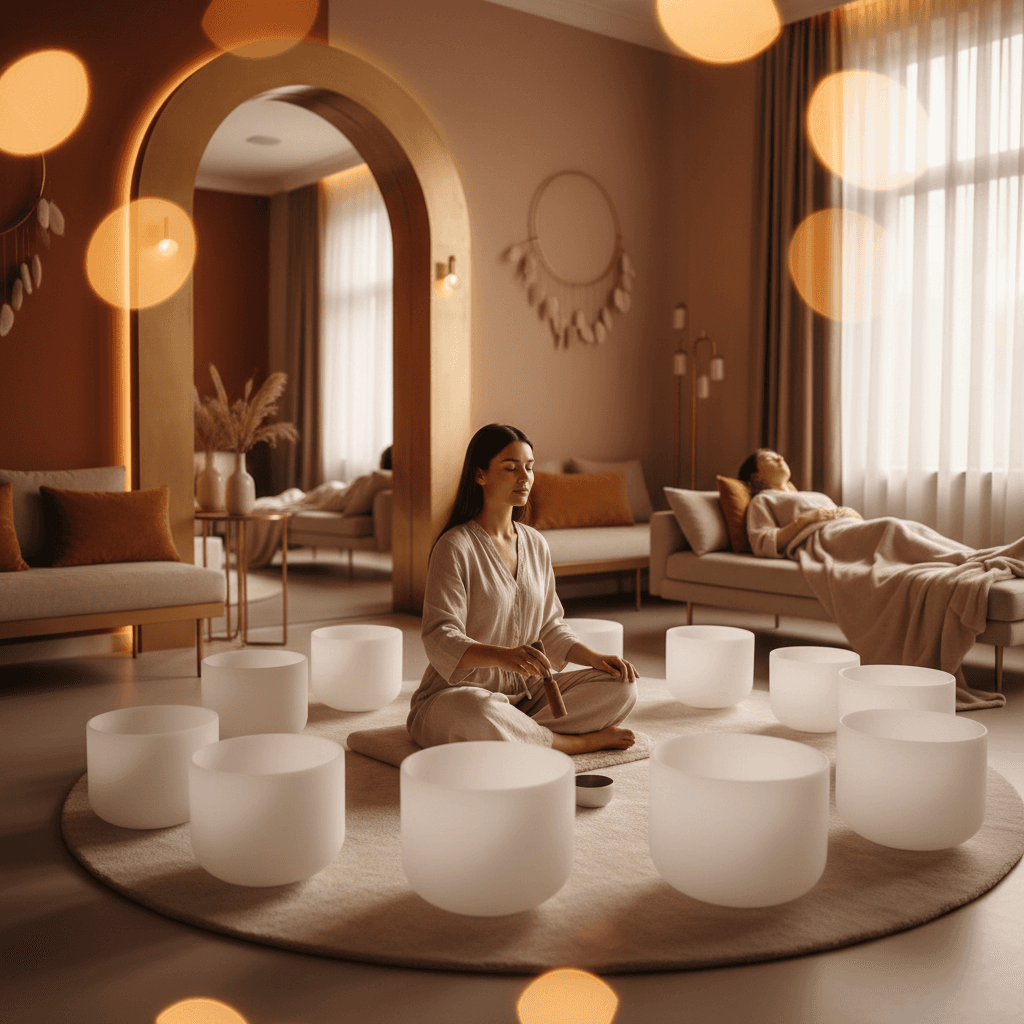
We leverage a diverse array of specialized instruments, each chosen for its unique vibrational qualities and capacity to induce specific states. Himalayan singing bowls produce rich, sustained overtones that are deeply grounding and can help reduce mental chatter. Gongs create immersive sound baths, generating powerful vibrations that resonate through the body, promoting a sense of release and renewal. Tuning forks, calibrated to specific frequencies, are applied to energy points to help balance the body's subtle energy systems. The strategic combination of these instruments, alongside other sonic tools, forms the core of the Soul Art experience.
The Soul Art method is built on the premise that the human body and mind are highly responsive to vibrational input. Our sessions are designed to gently guide your brainwave states, moving you from the busy beta waves of everyday activity towards the more relaxed alpha and theta states. This process, often referred to as brainwave entrainment, may support deep relaxation, enhanced creativity, and improved sleep quality. For athletes, this translates into tangible benefits like improved focus before competition, reduced anxiety, and accelerated physical and mental recovery post-exertion. We believe in empowering individuals to connect with their inner calm, fostering a sustainable foundation for resilience and optimal living.
Your Next Steps: Integrating Sound for Enhanced Well-being
The insights into how sound profoundly affects football players offer valuable lessons for everyone seeking to enhance their focus, manage stress, and improve overall well-being. You don't need a stadium-sized roar or the pressure of a penalty shootout to experience the transformative power of sound. Incorporating intentional sound practices into your daily life can be a simple yet powerful step towards a more balanced and resilient you.
Here are some practical steps you can implement today to begin your journey with sound wellness:
- Mindful Listening: Pay conscious attention to the sounds around you. Notice how different sounds make you feel. Can you identify sounds that calm you versus those that agitate you? This awareness is the first step towards intentional sound use.
- Create a Personal Soundscape: Design a playlist or discover soundscapes that support your desired state. Whether it's ambient music for focus during work, nature sounds for relaxation, or classical melodies for creativity, curate your auditory environment consciously.
- Embrace Silence (Strategically): Just as the absence of crowd noise can impact players, occasional intentional silence can be grounding. Take short breaks from all auditory input to reset your mind and find inner stillness.
- Explore Resonant Tones: Experiment with instruments like tuning forks, singing bowls, or even vocal toning. The sustained vibrations and harmonious frequencies may support a deeper state of relaxation and mental clarity.
- Consider Professional Guidance: For a deeper, more structured approach, explore sound wellness sessions with experienced practitioners. A tailored experience can guide you through specific frequencies and techniques to address your unique wellness goals.
Soul Art is still in preparation. Session details and booking will be published here after launch.
Bookings Coming Soon
Soul Art is still in preparation. Session details and booking will be published here after launch.
Coming Soon
In Summary: The Symphony of Self
From the thunderous roar of a football stadium impacting player communication and decision-making to the subtle frequencies that guide our minds into states of deep calm, sound is an undeniable force shaping human experience. Scientific research clearly demonstrates how auditory environments can either hinder performance, induce stress, or, when harnessed intentionally, become a powerful tool for enhancing focus, fostering mental resilience, and accelerating recovery. Understanding these dynamics offers profound insights not just for elite athletes but for anyone navigating the pressures of modern life.
At Soul Art, Larissa Steinbach and her team are dedicated to translating this scientific understanding into transformative wellness practices. By offering carefully curated sound experiences, we provide a complementary approach to personal well-being, inviting you to discover a sanctuary where the intentional power of sound supports your journey towards holistic balance and optimal living. Experience how the right frequencies can unlock your inner calm and potential.
Related Articles
Optimizing Athletic Performance: The Synergy of Sports Nutrition and Sound Wellness
Archery, Stillness, and Sound: Soul Art's Path to Focus

Swimming's Secret Weapon: Sound for Peak Aquatic Performance