Executive Men: The Quiet Path to Deep Recovery

Key Insights
Discover how intentional quiet practices, like sound wellness, offer executive men a science-backed route to profound recovery and sustained performance at Soul Art Dubai.
Executive Men and the Quiet Practice of Recovery
In the relentless hum of modern corporate life, executive men often find themselves caught in a paradox: the drive for peak performance often comes at the cost of personal well-being. A recent study, "The Silent Disengagement," highlighted how "quiet quitting" can undermine organizational resilience, leading to significantly longer recovery periods after market disruptions. But what if this widespread disengagement isn't just a corporate trend, but a personal cry for a deeper, more intentional form of recovery?
Many executive men, culturally conditioned to project strength and self-reliance, may find it challenging to openly acknowledge or address their need for mental and emotional recuperation. This article delves into the scientifically grounded benefits of intentional quiet practices, particularly sound wellness, as a powerful, yet understated, pathway to profound recovery. We will explore how embracing silence and carefully curated sonic environments, championed by Soul Art Dubai founder Larissa Steinbach, can not only restore energy but also enhance cognitive function and bolster resilience, offering a sophisticated antidote to chronic stress.
This journey isn't about escaping the demands of leadership, but about mastering the art of self-renewal to meet them with renewed vigor and clarity. It’s a sophisticated approach to self-care that acknowledges the unique pressures faced by executive men, providing a discreet yet potent tool for sustained success and well-being.
The Science Explained
The concept of recovery, often narrowly associated with physical rest after exercise, extends far beyond the gym. For executive men, true recovery encompasses mental, emotional, and cognitive restoration, crucial for navigating high-stakes environments. Neglecting this holistic recovery can lead to a state of chronic disengagement, mirroring the organizational quiet quitting phenomenon, where individuals are present but lack the full capacity for engagement and innovation.
Research into quiet quitting illuminates its pervasive impact, suggesting that a lack of full employee engagement demonstrably weakens an organization's ability to weather crises. Yamamoto & Chang (2022) found that companies with high levels of quiet quitting experienced 34% longer recovery periods post-market disruptions. While this study focuses on organizational impact, the implications for individual executive performance are profound. A personal form of "quiet disengagement" – where one is physically present but mentally and emotionally depleted – can severely hamper an individual's capacity to lead, innovate, and problem-solve effectively, leading to extended personal recovery times after demanding periods.
The Power of Intentional Silence
In our perpetually noisy world, the intentional practice of silence and immersion in quiet environments are emerging as critical components of mental recovery. Studies suggest that being constantly bombarded by unsolicited stimuli can hinder deep reflection and information processing. Conversely, quiet environments, especially when combined with the deliberate practice of silence, may facilitate increased deliberation and analysis, potentially leading to better decision-making.
Bernardi et al. (2006) provided compelling evidence that silence decreases physiological arousal, which can otherwise disrupt reflective thinking. This reduction in arousal is not merely about relaxation; it's about creating an optimal internal state for higher-order cognitive functions. For executive men whose roles demand constant strategic thought and critical analysis, this quiet space is not a luxury, but a necessity for maintaining cognitive sharpness and preventing mental fatigue.
Men's Mental Health and Proactive Recovery
Men, particularly those in leadership, face unique cultural pressures that often discourage seeking help for mental health challenges like depression, anxiety, or burnout. The "Breaking the Silence" initiative from Evolution Research Group highlights that societal expectations for men to appear strong can create "invisible hurdles" to asking for support. This silence can delay diagnosis, worsen symptoms, and lead to detrimental outcomes.
Proactive, self-directed recovery practices, such as engaging with sound wellness, can offer an accessible and non-stigmatizing pathway to well-being. It provides a structured, yet deeply personal, experience that allows men to address stress and mental fatigue without the perceived vulnerability of traditional therapy, although it can certainly complement such approaches. The goal is to build care plans that reflect how men process stress and recovery, moving beyond a "one-size-fits-all" approach to mental wellness.
Evidence-Based Practice (EBP) in Wellness
While sound wellness is a complementary practice, its integration of scientifically observed benefits aligns with the principles of Evidence-Based Practice (EBP). EBP in mental health incorporates external scientific evidence, client perspectives, and clinical expertise to provide effective, holistic approaches. It focuses on interventions that have shown effectiveness through research studies and clinical trials, supporting patient recovery and treatment.
For sound wellness, this means understanding the documented physiological and psychological responses to specific frequencies and environments. By leveraging research on the impact of quiet environments on physiological arousal and cognitive function, combined with anecdotal evidence from countless individuals reporting profound relaxation and mental clarity, sound wellness can be seen as an informed approach to promoting well-being. It’s about creating an experience that is both deeply personal and grounded in a growing body of scientific understanding of relaxation and recovery pathways.
How It Works in Practice
Imagine stepping away from the cacophony of emails, calls, and deadlines into a sanctuary designed purely for deep rest and recalibration. This is the essence of intentional quiet practice, where the theoretical benefits of silence and carefully curated sensory input transition into tangible, lived experience. For executive men, this shift from constant external demands to internal quietude is not merely a break but a sophisticated recalibration of their entire system.
In a practical sound wellness session, the environment is meticulously crafted to eliminate external distractions, creating a quiet zone that fosters introspection. The absence of auditory "noise" reduces the cognitive load, allowing the mind to disengage from constant processing. This deliberate quiet allows for a reduction in the physiological arousal that Bernardi et al. (2006) associated with disturbed reflective thinking. Instead of fighting for mental clarity amidst chaos, the mind is gently guided towards a state of profound calm.
As the body relaxes, the mind gains space for deeper processing and reflection. Many clients report an almost immediate sense of mental unwinding, followed by heightened clarity and an improved capacity for decision-making. This isn't just anecdotal; it aligns with research suggesting that quiet environments facilitate increased deliberation and analysis. The reduced physiological stress response, often manifested as a lowered heart rate and deeper breathing, signals to the nervous system that it is safe to enter a state of repair and renewal.
Beyond the mental clarity, clients often experience a profound physical release. Chronic stress manifests physically as muscle tension, fatigue, and even digestive issues. The deep relaxation induced by sound wellness and quiet practice may support the body's natural healing mechanisms, helping to alleviate these physical symptoms. It’s a holistic recovery, addressing not just the mind, but the physical repercussions of sustained pressure.
The personalized aspect of these sessions, even in a group setting, means each individual can attune to their own needs and experience. This focus on individual perspective, while being guided by expert knowledge and an evidence-informed approach, allows for a powerful and effective pathway to recovery that feels both personal and profoundly impactful.
The Soul Art Approach
At Soul Art Dubai, founder Larissa Steinbach has meticulously designed a wellness sanctuary that embodies the principles of intentional quiet practice and evidence-informed sound healing. Her approach transcends conventional relaxation, offering executive men a sophisticated method for deep recovery and sustained mental fortitude. It’s an immersion into an intelligently crafted sonic landscape, engineered for profound restoration.
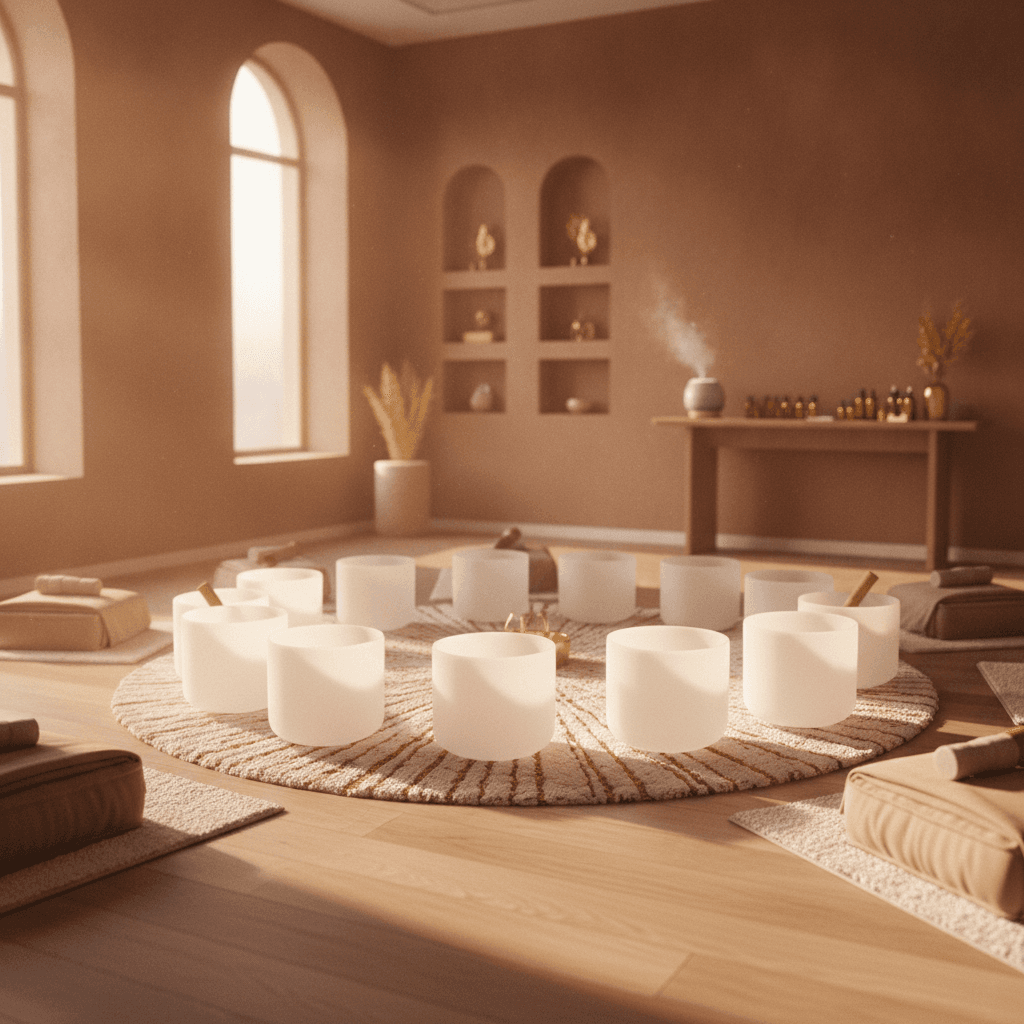
Larissa Steinbach's unique methodology at Soul Art is rooted in the careful selection and masterful application of various instruments, primarily Tibetan singing bowls, crystal bowls, and gongs. These instruments are chosen not just for their aesthetic appeal, but for their specific vibrational frequencies, which may support the brain's transition into slower, more restorative wave states. Preliminary studies indicate that certain sound frequencies can influence brainwave activity, promoting states associated with deep relaxation and meditation, such as alpha and theta waves.
The carefully curated environment at Soul Art reflects the crucial concept of a quiet zone, as highlighted in academic literature. Every detail, from the acoustics of the studio to the ambient lighting, is designed to minimize external stimuli and maximize internal focus. This allows for a deeper engagement with the sound journey, enhancing the potential for physiological arousal to decrease and reflective thinking to flourish, as suggested by Bernardi et al. (2006).
"In the heart of Dubai's dynamism, Soul Art offers a profound stillness. Larissa Steinbach's vision creates a space where the busiest minds can find their most potent clarity through the ancient wisdom of sound."
Larissa's expertise lies in her ability to intuitively blend these elements, creating a seamless and deeply immersive experience. The harmonious vibrations are believed to resonate with the body's own energy centers, encouraging a natural realignment and release of accumulated tension. This holistic wellness practice is designed to be a complementary approach to modern life, providing a powerful stress management tool that goes beyond superficial relaxation. Many people report leaving a Soul Art session feeling not only refreshed but also mentally sharper, emotionally balanced, and physically lighter, ready to re-engage with their responsibilities from a place of renewed strength.
Your Next Steps
Embracing the quiet practice of recovery is an investment in your sustained success and well-being. For executive men navigating demanding careers, integrating these principles can transform stress into resilience. Here are actionable steps you can take today to begin your journey towards deeper recovery:
- Schedule Dedicated Quiet Time: Intentionally block out short periods (even 10-15 minutes) each day for complete silence. This could be a device-free walk, a moment of mindful breathing, or simply sitting in a quiet room, allowing your mind to detangle without external input.
- Prioritize Digital Detox: Implement regular, conscious breaks from screens and notifications. Some research suggests constant digital engagement contributes to cognitive overload and prevents true mental rest. Consider "digital Sabbath" on weekends or during evenings.
- Explore Mindful Movement: Engage in gentle activities like yoga, stretching, or a slow walk in nature. These forms of active recovery, combined with a focus on breath, can help manage stress and support both physical and mental restoration.
- Nourish Your Body for Recovery: Focus on anti-inflammatory foods that support tissue repair and overall brain health. Prioritizing quality sleep is also paramount; aim for consistent sleep schedules and create a calming pre-sleep routine.
- Experience Sound Wellness: Discover the power of expertly guided sound journeys. Soul Art Dubai offers a unique, sophisticated environment for deep relaxation and mental recalibration, designed to help executive men find their quiet strength.
These practices are not about slowing down your ambition, but about optimizing your capacity to achieve it with greater clarity and resilience. Take the first step towards a more sustainable and fulfilling path.
In Summary
For executive men operating at the highest levels, the subtle art of quiet recovery is not merely a choice but a strategic imperative. From countering the organizational impact of "quiet quitting" to supporting individual cognitive function and reducing physiological arousal, the scientific evidence for intentional silence and curated environments is compelling. These practices offer a powerful, non-stigmatizing pathway for men to address stress, enhance reflection, and fortify their mental health.
By integrating evidence-informed wellness approaches, executive men can proactively safeguard their well-being, ensuring sustained performance and robust resilience. Larissa Steinbach and Soul Art Dubai stand at the forefront of this movement, offering meticulously crafted sound wellness experiences that invite you to reclaim your inner quiet and unlock deeper reserves of strength. Embrace the frequency of well-being and elevate your capacity for leadership and life.
Bookings Coming Soon
Soul Art is still in preparation. Session details and booking will be published here after launch.
Coming Soon
Wellness Disclaimer: This article is for educational and informational purposes only. It does not constitute medical advice, diagnosis, or treatment. Soul Art Dubai provides non-medical wellness experiences focused on relaxation, stress management, and general wellbeing. Sound wellness is a complementary practice and should not replace professional medical care.
Related Articles

Nurturing Resilience: Gentle Sound Support for Men's Fertility Stress
Men's Anger, Overload & Gentle Downshifting for Inner Calm

Men's Hormonal Wellbeing: Sound Practices for Stress Awareness