Drumming Rhythms: Harmonizing Brainwaves for Deep Wellness
Key Insights
Explore how drumming tempo impacts brainwave states, promoting relaxation and altered consciousness at Soul Art, Dubai, with Larissa Steinbach.
The Ancient Rhythm Within: Drumming and Brainwave Entrainment
Imagine a beat that not only moves your body but profoundly shifts the landscape of your mind. For millennia, cultures worldwide have intuitively understood the transformative power of rhythmic drumming, utilizing it for ceremony, healing, and community bonding. Modern neuroscience is now beginning to unravel the intricate mechanisms behind this ancient wisdom.
At Soul Art, Dubai's premier sound wellness studio, founded by Larissa Steinbach, we delve into the sophisticated interplay between sound and consciousness. Our unique approach harnesses the precise science of brainwave entrainment through drumming. This article explores how specific drumming tempos can gently guide your brain into states of deep relaxation, heightened awareness, and profound wellbeing.
We invite you to discover how this powerful, yet accessible, practice may support stress reduction, mental clarity, and an enhanced sense of inner harmony. Understanding the science behind these rhythms empowers you to consciously choose pathways to a more balanced and vibrant existence. Prepare to embark on a journey where the pulse of the drum becomes the rhythm of your inner peace.
The Rhythmic Pulse of the Brain: Understanding Brainwave Entrainment
Our brains are constantly generating electrical impulses, forming patterns known as brainwaves, which are closely associated with our various states of consciousness. These brainwaves can be measured and observed, revealing the intricate dance of neural activity occurring within us. Pioneering work in the 1920s by German psychiatrist Hans Berger, who introduced the electroencephalogram (EEG), first allowed scientists to record these brain waves and scrutinize their different types.
What Are Brainwaves?
Brainwaves are categorized into distinct frequency bands, each linked to particular cognitive and emotional states. Understanding these different types provides a framework for how rhythmic entrainment can influence our internal experience. For instance, Beta waves (typically 13-30 Hz) are associated with active, alert, and focused states, common during waking hours and problem-solving.
As we relax and become more introspective, our brains often produce Alpha waves (8-12 Hz), which are characteristic of calm alertness, mindfulness, and the early stages of meditation or light relaxation. Alpha waves were among the first prominent types of brain waves that Berger and other scientists began to scrutinize, recognizing their connection to a calm and relaxed state. Deeper relaxation, meditation, or light sleep often sees an increase in Theta waves (4-7 Hz), which are linked to creativity, intuition, and memory consolidation.
The slowest brainwave frequencies are Delta waves (less than 4 Hz), predominantly active during deep, dreamless sleep and profound states of relaxation or unconsciousness. These distinct patterns highlight the brain's incredible adaptability and responsiveness to internal and external stimuli.
The Power of Rhythmic Entrainment
Brainwave entrainment is a natural phenomenon where brainwave frequencies begin to synchronize with a repetitive external stimulus, such as sound, light, or tactile vibration. This process suggests that repetition and entrainment are key mechanisms underlying altered states of consciousness induced by rhythmic sounds. When you listen to a steady, consistent drumbeat, your brain naturally seeks to fall into sync with that rhythm.
This powerful mechanism allows external rhythms to act as a gentle guide, leading the brain into desired states. The impact of these rhythmic sounds appears to depend on whether they occur in a structured rhythmic pattern, as drumming provides, rather than as a continuous, unstructured fluctuation. Research continues to explore how variations in tempo, perceived rhythm, and rhythmic structure shape both phenomenological experiences and neural activity, influencing emotional and cognitive states.
Drumming and Altered States of Consciousness
The immersive experience of rhythmic drumming has long been associated with the induction of non-ordinary or altered states of consciousness. A continuous, steady drumbeat, sustained over time, can create an environment conducive to deep absorption and inward focus. The rhythmic structure of drumming, with its discrete beats, seems to facilitate a particular kind of mental journey.
A study by Huels et al., for example, investigated the effects of 25 minutes of continuous drumming on both experienced shamanic practitioners and inexperienced participants, while high-density EEG recorded their brain activity. Only the experienced participants were asked to intentionally enter an altered state of consciousness. Post-drumming, all participants completed the OAV questionnaire, a rating scale for altered states. This research sheds light on how such sustained rhythmic input can influence subjective experience.
The observation that exposure to drumming and sound-based spiritual practices induces states of relaxation and absorption aligns with a broader pattern observed across human development. Rhythmic stimulation, whether auditory, vestibular, or multimodal, consistently appears to facilitate calm and inwardly directed states. For instance, the gentle rocking of an infant is a widely used technique to soothe and promote sleep, demonstrating how rhythmic vestibular input, coupled with physical closeness, supports calming. This principle extends to adults, where rhythmic activities may similarly promote a sense of peace and deep relaxation.
The Heart-Brain Connection in Rhythmic Engagement
Beyond direct brainwave synchronization, rhythmic drumming may also subtly influence the intricate "heart-brain conversations" that play a crucial role in our mental health. Emerging research highlights the profound connection between our cardiac rhythms and our cognitive and emotional states. For example, some studies are exploring whether training individuals to better detect their own heartbeat could help alleviate anxiety.
This internal rhythm-sensing training, which involves discerning whether an external beat matches one's internal heartbeat, has shown promising preliminary results in reducing anxiety scores in participants, including those with autism and, in unpublished findings, in the general population. While the exact mechanisms are still being investigated, it is intriguing to consider how external rhythmic stimulation, such as drumming, might indirectly enhance our interoceptive awareness – our ability to sense and interpret internal bodily signals. By focusing on an external rhythm, participants might become more attuned to their own internal physiological responses, fostering a greater sense of bodily connection and potentially reducing states of unease.
The body, in many ways, is often easier to influence than the brain through direct conscious effort. This suggests that engaging with rhythmic practices could offer an accessible and gentle route to support mental wellbeing, by working through the body's innate rhythmic intelligence rather than solely through complex cognitive interventions.
How It Works in Practice
Bringing these scientific principles into a practical wellness experience involves a careful and intentional approach to rhythm and sound. When clients engage in drumming at Soul Art, they step into an environment designed to optimize their sensory experience and facilitate deep internal shifts. It's not just about hitting a drum; it's about entering a guided rhythmic landscape.
The practitioner begins by establishing a consistent, deliberate tempo. This steady, repetitive beat acts as the initial anchor for the brain's entrainment process. As the drumming continues, the rhythmic pattern provides a continuous, immersive auditory stimulus, inviting the listener's brainwaves to gradually synchronize. This structured rhythmic pattern is key to creating a predictable and safe pathway for the mind to explore new states of consciousness.
Clients often describe an initial feeling of focused attention, as their minds adjust to the insistent rhythm. This focus naturally draws attention away from external distractions and internal chatter, paving the way for a more inwardly directed state. As the session progresses, the rhythmic pulsations create a profound sense of immersion. The sound vibrations are not just heard; they are felt throughout the body, resonating within the bones and tissues. This multimodal stimulation—auditory and tactile—deepens the entrainment process and enhances the overall sensory experience.
Different tempos are employed to guide participants through various brainwave states. A slow, steady beat, for example, may encourage the brain to produce more Alpha and Theta waves, fostering states of deep relaxation, meditative calm, and sometimes even a gentle "trance-like" state conducive to introspection. Conversely, a faster, more invigorating tempo might initially stimulate Beta waves, promoting alertness and focus, before transitioning into a steady beat that facilitates a different kind of energetic equilibrium.
The absence of abrupt changes and the consistent nature of the rhythm are crucial. Studies on collective dynamics, for instance, have shown that group drumming reduces variability in timing, suggesting that a steady, coherent rhythm fosters a more unified and effective experience. While often applied to group settings, this principle translates to individual practice where a consistent, stable rhythmic input from the practitioner guides the participant's internal state with greater ease and efficacy. This allows for a deeper level of absorption and reduced mental friction, promoting a more fluid transition into desired states of consciousness and wellbeing.
The Soul Art Approach
At Soul Art, Larissa Steinbach has meticulously crafted a unique sound wellness methodology that integrates these scientific insights with a profound understanding of holistic wellbeing. Our approach to drumming is not merely about playing an instrument; it is a carefully orchestrated experience designed to facilitate specific internal states and promote deep rejuvenation. Larissa's expertise lies in her ability to intuitively and scientifically apply rhythmic principles to create an impactful journey for each individual.
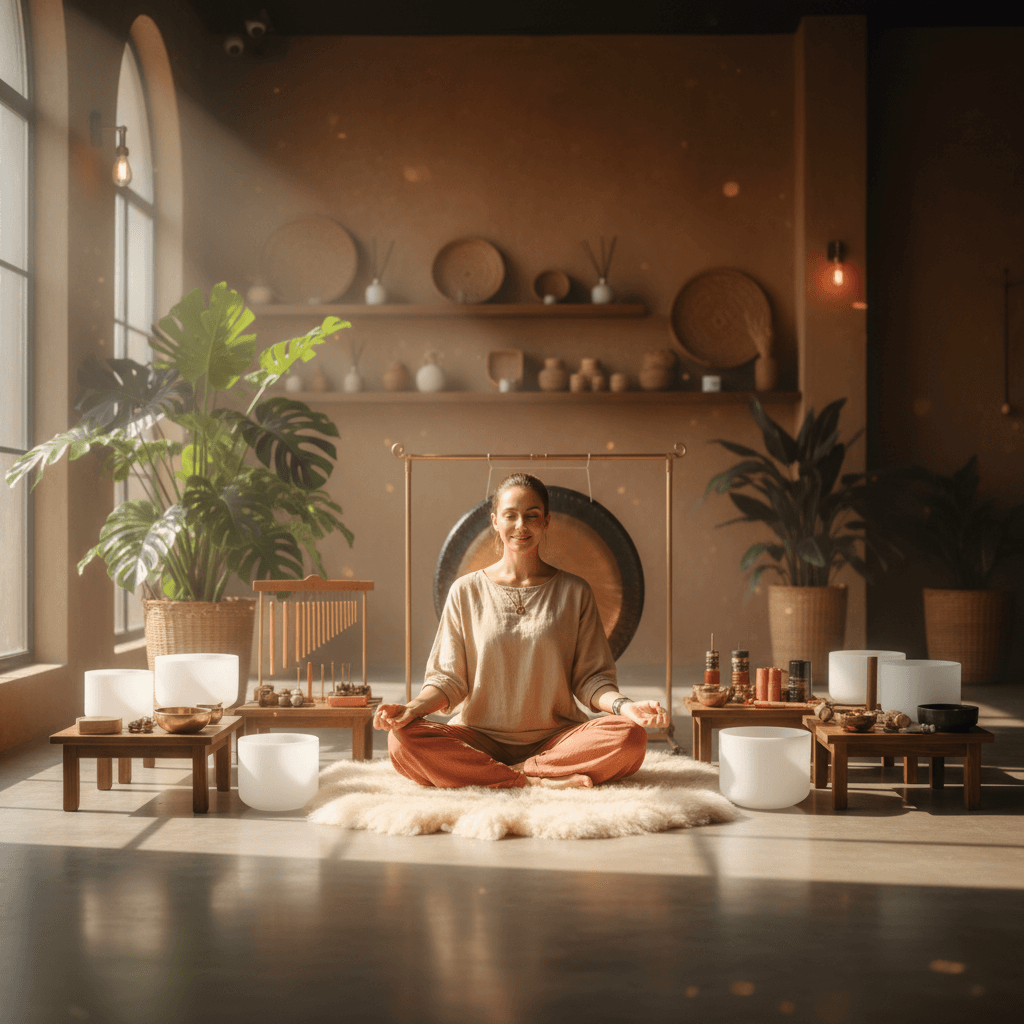
What makes the Soul Art method unique is its precision and intention. Larissa carefully selects drums and other resonant instruments, such as gongs and Himalayan singing bowls, for their specific tonal qualities and vibrational effects. While this article highlights drumming, these instruments are often used in harmony to create a rich, multi-layered soundscape. The choice of drum, from resonant frame drums to deep ceremonial drums, is paramount, as each offers a distinct frequency spectrum that can influence the body and mind differently.
Larissa masterfully modulates the drumming tempo and intensity throughout a session to guide clients through various stages of their wellness journey. She might begin with a tempo designed to ground and center, moving through phases that encourage alpha-theta brainwave activity for relaxation and introspection, and then perhaps concluding with a rhythm that promotes gentle re-energizing and reintegration. This intentional modulation is key to harnessing the power of brainwave entrainment effectively.
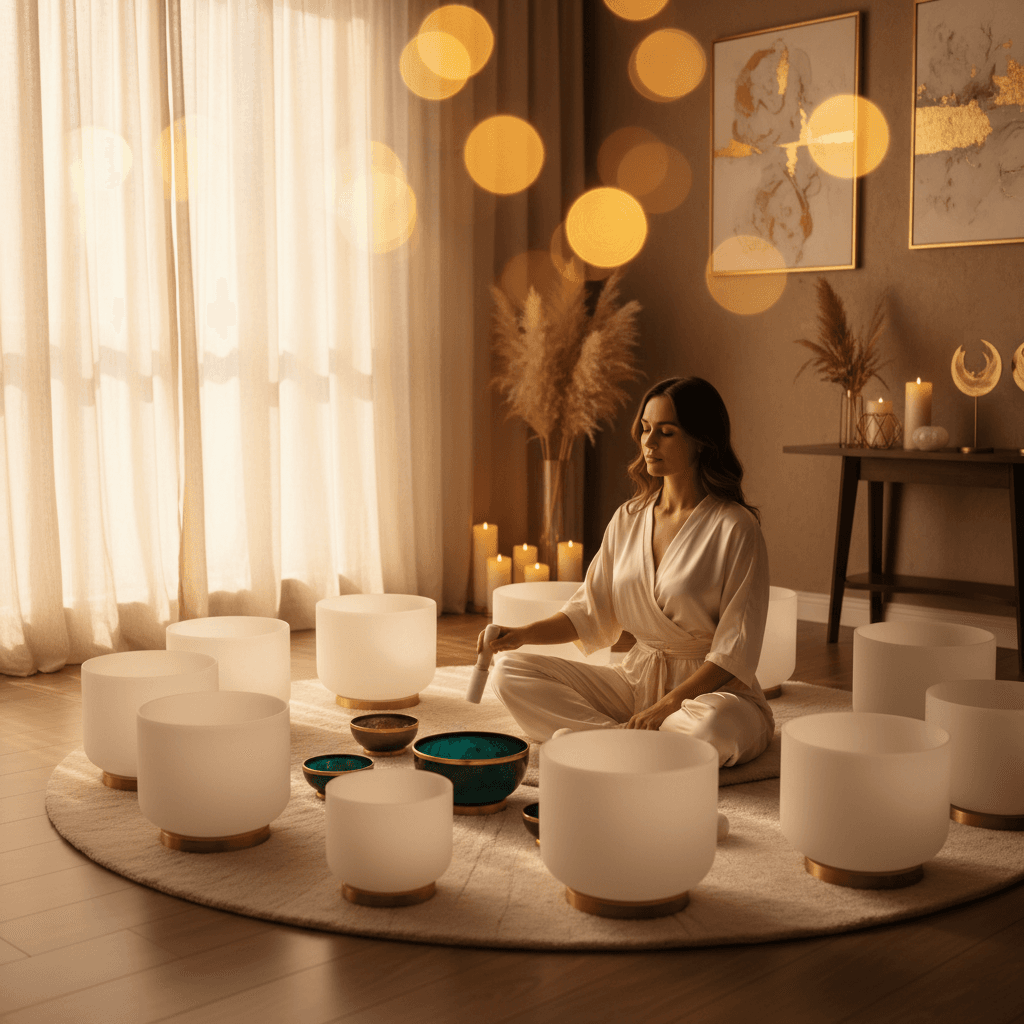
Every session at Soul Art is conducted within a serene and luxurious environment, meticulously designed to enhance the sensory experience. The ambiance, combined with Larissa's skilled facilitation, allows for a truly immersive and transformative experience. It is a space where the ancient practice of drumming meets modern understanding of neuroscience, offering a sophisticated pathway to inner harmony and holistic health.
"The drum is more than an instrument; it's a bridge to our innate rhythm, a pulse that reminds us of our connection to ourselves and the universe. At Soul Art, we simply help you find your way back to that resonance." - Larissa Steinbach
Through this refined approach, Soul Art offers not just a session, but an opportunity to reconnect with your deepest self, supported by the scientific power of rhythm and the intuitive guidance of Larissa Steinbach.
Your Next Steps
Embracing the power of drumming and rhythmic entrainment for your wellbeing doesn't require extensive training; it simply requires an openness to experience. Integrating rhythmic practices into your daily life can be a gentle yet profound way to support your nervous system and cultivate a sense of calm. Here are a few actionable steps you can take today to begin your journey:
- Mindful Listening: Start by simply listening to rhythmic music, paying close attention to the beat. Allow yourself to sway or tap your foot gently, letting your body respond naturally. Some research suggests that listening to rhythmic music can subtly influence mood and focus.
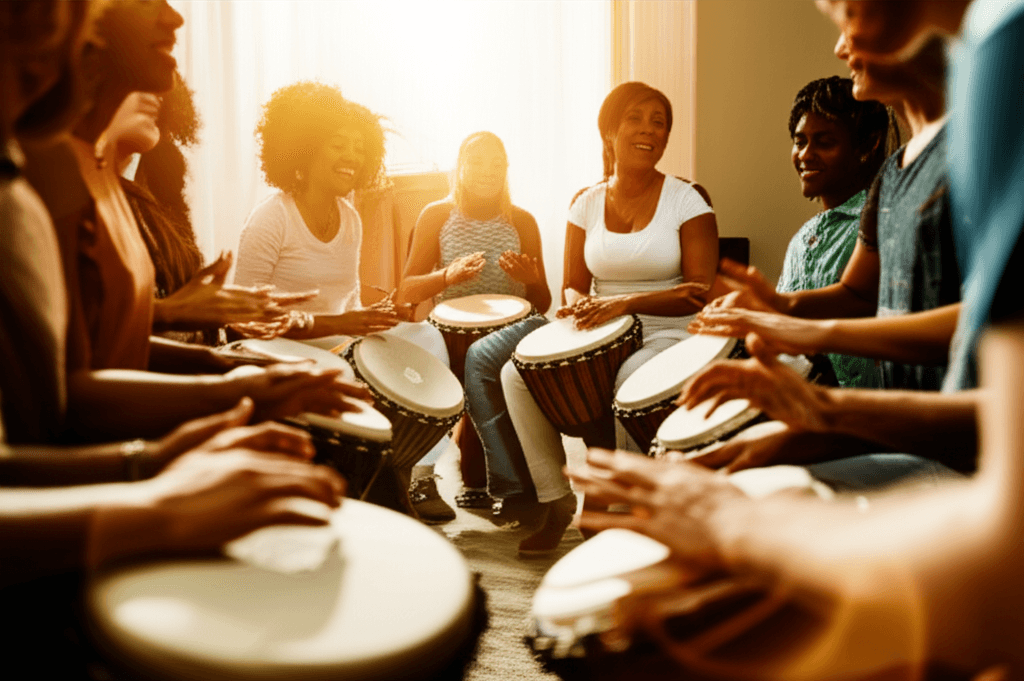
- Explore Drumming: Seek out opportunities to participate in beginner-friendly drumming circles or sound baths. Many people report finding these group experiences both cathartic and deeply relaxing.
- Rhythmic Breathing: Integrate conscious breathing exercises where you focus on a steady, rhythmic inhale and exhale. This internal rhythm can be a powerful tool for self-regulation and stress management.
- Embrace Movement: Engage in rhythmic movements like walking, gentle dancing, or even rocking in a chair. These actions provide valuable vestibular input that has been associated with soothing and calming effects.
- Seek Expert Guidance: To truly experience the depth of brainwave entrainment through drumming, consider exploring guided sessions with experienced practitioners. The intentional application of tempo and technique by an expert can unlock profound benefits.
If you're ready to explore how the scientific application of drumming tempos can unlock deeper states of relaxation and conscious awareness, we warmly invite you to experience the refined methodology at Soul Art. Our expert guidance provides a safe and supportive environment for your personal wellness journey.
In Summary
The ancient practice of drumming, now illuminated by modern neuroscience, offers a profound pathway to wellbeing through brainwave entrainment. By synchronizing our brainwave frequencies with external rhythmic stimuli, drumming can gently guide us into states of deep relaxation, heightened focus, and even altered states of consciousness, fostering a holistic sense of calm and absorption. The meticulous control of drumming tempo, as practiced by Larissa Steinbach at Soul Art, ensures a tailored and impactful experience.
This complementary approach to wellness leverages the natural responsiveness of our brains and bodies to rhythm, promoting stress reduction and mental clarity. It's a testament to the powerful, yet accessible, methods available for self-care and nervous system restoration. Discover the transformative rhythm that awaits you and elevate your personal wellness journey at Soul Art.
Bookings Coming Soon
Soul Art is still in preparation. Session details and booking will be published here after launch.
Coming Soon
Wellness Disclaimer: This article is for educational and informational purposes only. It does not constitute medical advice, diagnosis, or treatment. Soul Art Dubai provides non-medical wellness experiences focused on relaxation, stress management, and general wellbeing. Sound wellness is a complementary practice and should not replace professional medical care.
Related Articles
AI-Generated Healing Music: The Future of Personalized Sound Wellness
Monochord: Unveiling The Transformative Power of Dubai's Sound Healing Bed
Native American Flute: Wind of the Spirit – Deep Healing with Soul Art