AI-Generated Healing Music: The Future of Personalized Sound Wellness
Key Insights
Explore how AI is revolutionizing sound wellness, creating personalized healing music for relaxation and stress management at Soul Art, Dubai.
Imagine music that understands your unique emotional state, adapting in real-time to soothe your mind, alleviate stress, and guide you towards profound relaxation. This isn't a distant fantasy, but an emerging reality, powered by the incredible advancements in Artificial Intelligence. As the world becomes increasingly complex, the demand for personalized, effective wellness solutions grows, and AI-generated healing music is stepping into this space with remarkable potential.
At Soul Art, Dubai's premier sound wellness studio founded by Larissa Steinbach, we are constantly exploring the frontiers of holistic wellbeing. This article delves into the fascinating intersection of AI and sound healing, uncovering the scientific principles at play, its practical applications, and how this innovative technology may shape the future of personalized wellness experiences. Prepare to discover how intelligent algorithms are composing the soundtrack to your inner peace.
Decoding the Symphony: The Science Behind AI-Generated Healing Sounds
The integration of Generative AI Music Technology into evolving wellness practices marks a significant leap forward, creating new avenues for innovation in sound therapy. This revolutionary approach is founded on sophisticated computational models that learn, understand, and then create original musical compositions. Understanding the underlying science helps to appreciate its profound potential.
The Algorithmic Alchemy: How AI Composes
Generative AI Music operates on principles similar to those found in Large Language Models (LLMs), which are designed to process and generate human-like text. For music, these systems leverage Machine Learning (ML), Recurrent Neural Networks (RNN), Long and Short-Term Memory Networks (LSTM), and Transformer architectures. These complex algorithms enable AI to analyze vast datasets of music, learning patterns in rhythm, harmony, melody, and timbre.
By understanding these musical structures, AI can then arrange sequences and generate new music. In therapeutic settings, this allows for the creation of diverse and highly applicable personalized therapeutic music. Preliminary research, such as that presented at the SC Upstate Research Symposium, explores the positive impact of Generative AI Music on therapeutic participation and the ability to tailor music to specific individual needs, for instance, in patients recovering from post-stroke depression.
Resonance with Nature: AI and Biophilia
Humanity has drawn comfort and inspiration from nature sounds for millennia, using them in meditation practices and soundscapes. Studies have consistently shown that listening to nature sounds can effectively reduce stress and improve focus, making them ideal for wellness and therapeutic applications. AI is now bridging the gap between natural acoustics and structured musical elements.
Deep learning models, including Generative Adversarial Networks (GANs) and Convolutional Neural Networks (CNNs), are being developed to generate music inspired by natural sounds. GANs are particularly adept at creating new data that resembles a training set, while CNNs can capture dominant sound features like the whistle of wind or the specific chirps of bird songs from spectrograms. This means AI-generated music can not only reflect the acoustic qualities of natural environments but also infuse them with structured harmony and rhythm, making them deeply resonant for human perception. This approach could open new avenues in sound therapy, offering immersive, nature-inspired soundscapes.
The Brainwave Connection: AI's Impact on Physiology
Sound healing, at its core, influences our physical, emotional, and mental states through frequencies and vibrations. Science is increasingly measuring these effects on the nervous system, brainwave activity, and even cellular function. AI-generated healing music can be engineered to specifically target these physiological responses.
Our brain operates at different wave frequencies, each corresponding to a distinct state of mind. Rhythmic auditory stimulation, whether from traditional instruments or AI-generated soundscapes, has been shown to entrain brainwaves to targeted frequencies:
- Theta (4–7 Hz): Associated with emotional processing and deep meditative states.
- Alpha (8–12 Hz): Linked to relaxation and flow states.
- Delta (0.5–3 Hz): Corresponds to deep rest and regenerative healing.
Furthermore, sound influences the Autonomic Nervous System, promoting increased parasympathetic activation. This response, often measured through Heart Rate Variability (HRV), is crucial for relaxation and recovery, involving the vagus nerve and diaphragmatic breathing patterns. Sound frequencies may also support pain management by influencing brain perception of pain and relaxing tense muscles. For individuals experiencing stress or anxiety, specific frequencies and musical compositions may offer a gentle, non-verbal pathway to soothe the mind and promote emotional regulation.
Harmonising Life: AI-Powered Wellness in Action
Connecting the complex algorithms and physiological responses to real-world applications reveals the transformative potential of AI-generated healing music. This technology offers a paradigm shift in how we approach personalized sound wellness, moving beyond generic playlists to truly bespoke sonic experiences.
Personalized Sonic Prescriptions
One of the most exciting aspects of AI in sound wellness is its capacity for hyper-personalization. By analyzing an individual's unique therapeutic needs – perhaps their heart rate, breathing patterns, or self-reported emotional state – AI can generate music that is diverse and highly applicable. Imagine entering a wellness studio, and an AI-driven system, guided by a skilled practitioner, creates a soundscape specifically designed to address your particular stressors or promote a desired state of relaxation.
This ability to tailor music dynamically can significantly improve therapeutic participation, making the experience more engaging and effective. It moves beyond a one-size-fits-all approach, offering a truly responsive and individualized path to well-being.
Beyond the Human Ear: AI's Creative Edge
While the concept of AI composing music might seem distant from human creativity, its strength lies in its ability to synthesize and innovate in ways that complement human efforts. AI can efficiently generate complex soundscapes, particularly those inspired by nature, which are known to reduce stress and improve focus. These aren't merely recordings of nature, but musically structured interpretations that integrate harmonious and rhythmic elements.
AI-generated nature-inspired music finds applications not just in individual wellness sessions but also in interactive media, virtual reality experiences, and environmental soundscapes for public spaces. The focus in these applications is predominantly on enhancing wellness and relaxation, providing immersive auditory environments that support psychological and emotional benefits. The initial experiments show that AI can capture natural sounds remarkably well, integrating them into compositions that resonate deeply with human perception.
The Human Touch: Where AI Enhances, Not Replaces
Despite AI's impressive capabilities, a critical question remains: "Can AI music ever feel human?" While studies suggest that many listeners struggle to distinguish AI-generated music from human compositions – sometimes with accuracy rates close to guessing – the deeper emotional resonance often still demands a human story or intention. Carnegie Mellon University research highlights that while AI can be a powerful tool for inspiration, human creativity ultimately leads in overall musical creation.
"This ideation then allows the human being to create music that is better, or that is beneficial to society."
This perspective is crucial for understanding AI's role in wellness. AI-generated music is not about replacing the profound connection forged by a human sound practitioner, but about enhancing it. It offers incredible speed of creation and flexibility, providing a practitioner with a diverse palette of sounds and compositions to draw from. The ethical considerations of identification and copyright for AI-generated works, alongside the nuances of integrating AI into sensitive therapeutic settings, are important areas for ongoing discussion. Yet, its potential to improve patients' therapeutic participation through personalization is undeniable.
Soul Art's Vision: Integrating Innovation with Intention
At Soul Art, Larissa Steinbach and her team are dedicated to providing profound and transformative sound wellness experiences. Our philosophy blends ancient wisdom with cutting-edge scientific understanding, recognizing that true well-being arises from a holistic approach. The emergence of AI-generated healing music presents an exciting frontier that aligns perfectly with our commitment to innovation and personalized care.
We envision a future where the insights from AI research are carefully integrated to deepen and expand the bespoke nature of our offerings. Imagine bespoke sound baths where the underlying frequencies are subtly modulated by AI to perfectly match your biofeedback, or guided meditations augmented with AI-composed soundscapes designed specifically to dissolve your unique patterns of tension. This isn't about automating the healing process, but about empowering our expert facilitators with advanced tools.
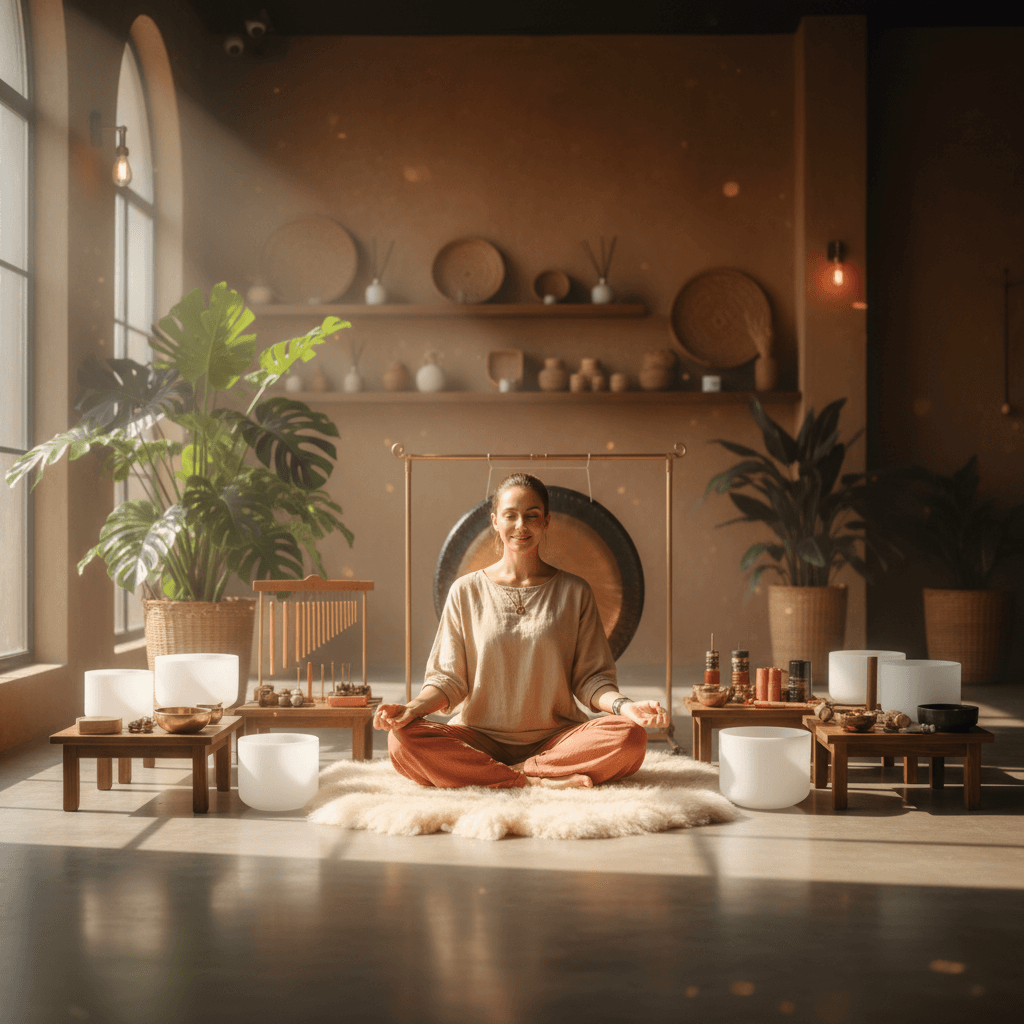
Larissa Steinbach's approach at Soul Art emphasizes the deep, human-led intention behind every session. While AI can generate diverse musical sequences and adapt to individual needs, the profound connection, empathy, and intuitive guidance of a human practitioner remain irreplaceable. We see AI as a sophisticated assistant, capable of creating highly personalized sonic environments that amplify the efficacy of traditional instruments like gongs, singing bowls, and tuning forks. This synergy allows Soul Art to continue offering unique, deeply relaxing, and scientifically-informed wellness experiences that resonate with the luxurious and forward-thinking spirit of Dubai.
Cultivating Your Sonic Sanctuary: Practical Steps
Embracing the potential of sound in your daily life doesn't require complex technology. Here are practical steps you can take today to integrate sound wellness into your self-care practice, moving towards greater peace and focus. These actionable suggestions can help you start experiencing the benefits of intentional listening and vibrational therapy.
- Mindful Listening: Dedicate 10-15 minutes each day to simply listening. Choose calming music, nature sounds, or even silence. Pay attention to how different sounds affect your mood, heart rate, and breath. This practice helps train your awareness and sensitivity to auditory input.
- Explore Nature's Symphony: Spend time in natural environments and consciously listen to the sounds around you—birds singing, leaves rustling, waves crashing. These organic soundscapes are inherently therapeutic and have been shown to reduce stress.
- Guided Sound Meditations: Many apps and online platforms offer guided meditations that incorporate sound. These can be an excellent introduction to brainwave entrainment and relaxation techniques, helping you achieve deeper states of calm.
- Curate Personal Soundscapes: Experiment with creating your own playlists of sounds that bring you joy, peace, or focus. Consider instrumental music, ambient tracks, or even white noise. The power of personal preference in sound is significant for well-being.
- Experience Professional Sound Wellness: For a truly immersive and professionally guided journey, consider visiting a reputable sound wellness studio like Soul Art. Our expert facilitators, under the guidance of Larissa Steinbach, can introduce you to the profound world of vibrational healing and help you discover personalized pathways to relaxation and rejuvenation.
In Summary: The Harmonious Horizon of Healing Sound
The advent of AI-generated healing music heralds an exciting new era for sound wellness. By leveraging sophisticated algorithms, AI can create highly personalized and diverse therapeutic soundscapes, meticulously tailored to individual needs. This innovation holds immense potential for reducing stress, improving focus, and fostering deeper emotional regulation. While AI offers unparalleled speed and flexibility in composition, it is the thoughtful integration of this technology with human intention and expertise that unlocks its true power for holistic well-being.
At Soul Art, founded by Larissa Steinbach, we are committed to exploring these harmonious horizons, blending scientific advancement with the timeless art of sound healing. We invite you to experience how personalized sound can transform your inner world, offering a unique path to profound relaxation and rejuvenation. Discover the future of wellness, where technology and human touch create a symphony of healing.
Bookings Coming Soon
Soul Art is still in preparation. Session details and booking will be published here after launch.
Coming Soon
Wellness Disclaimer: This article is for educational and informational purposes only. It does not constitute medical advice, diagnosis, or treatment. Soul Art Dubai provides non-medical wellness experiences focused on relaxation, stress management, and general wellbeing. Sound wellness is a complementary practice and should not replace professional medical care.
Related Articles
Monochord: Unveiling The Transformative Power of Dubai's Sound Healing Bed
Native American Flute: Wind of the Spirit – Deep Healing with Soul Art
Shruti Box: Drone Sounds for Deep Meditation & Brainwave Harmony