Unlocking Well-being: Dopamine, Sound, & Frequency Stimulation at Soul Art

Key Insights
Explore the profound connection between specific sound frequencies and dopamine modulation. Discover how Soul Art, founded by Larissa Steinbach, leverages scientific research to enhance your well-being through sound.
The Symphony Within: How Sound Frequencies May Tune Your Dopamine System
Imagine a hidden key that could unlock deeper states of well-being, enhancing focus, motivation, and a profound sense of calm. What if this key wasn't a pill or a strenuous regimen, but something as natural and pervasive as sound? At Soul Art, Dubai's premier sound wellness studio, we explore the fascinating intersection of sound, brain chemistry, and human experience.
Recent scientific research is shedding light on the intricate ways specific sound frequencies may influence our cognitive and emotional landscapes, particularly through the modulation of dopamine. Often called the "feel-good" neurotransmitter, dopamine plays a critical role in reward, motivation, pleasure, and executive functions. Understanding this dynamic relationship opens new avenues for holistic wellness.
This article delves into the cutting-edge research revealing how carefully curated auditory stimulation can interact with your brain's dopamine pathways. We will explore the frequency-specific nature of sound’s impact and how these discoveries are integrated into the unique sound journeys offered by Soul Art, under the visionary guidance of Larissa Steinbach. Prepare to discover a powerful, natural pathway to elevated well-being, grounded in both ancient wisdom and modern neuroscience.
The Science Explained: Unveiling Sound's Neural Influence
The human brain is an exquisite orchestra of electrical and chemical signals, constantly interpreting the world around us. Among the most potent sensory inputs is sound, which carries information that can profoundly shape our perceptions, emotions, and even our neurochemical balance. Recent studies are meticulously detailing how specific sound frequencies and rhythmic patterns can directly influence brain activity and neurotransmitter synthesis, particularly dopamine. This growing body of evidence forms the scientific bedrock of modern sound wellness practices.
The Dopamine Connection: Sound and Neurotransmitter Synthesis
The link between sound exposure and dopamine synthesis is a particularly exciting area of research. One compelling study provides quantitative evidence that sound exposure dynamically regulates tyrosine hydroxylase (TH), an essential enzyme for the synthesis of dopamine. When TH is upregulated, it suggests an increase in dopamine synthesis and release within specific neural pathways.
This upregulation of TH was observed specifically in central and peripheral components of cholinergic Lateral Olivocochlear (LOC) intrinsic neurons, and critically, in a frequency and sound level-dependent manner. This indicates that not all sounds have the same effect; the specific characteristics of the sound matter significantly. The research noted that mice raised in noisier environments exhibited significantly more TH+ LOC terminals in the cochlea compared to those in quieter vivariums, suggesting a direct environmental influence on dopamine-related pathways. Furthermore, even less damaging sound exposure protocols caused a measurable increase in TH+ LOC neurons, demonstrating the brain's dynamic response to auditory stimuli. This implies that sound can indeed influence the fundamental processes governing our internal reward and motivation systems.
Beyond direct synthesis, music itself has been shown to modulate the reward experiences elicited by dopamine. Functional magnetic resonance imaging studies in humans have revealed that listening to music activates structures within the mesocorticolimbic pathway, including the ventral tegmental area (VTA) and nucleus accumbens (NAcc). These areas are widely known for their central role in processing pleasure and reward, underscoring music’s capacity to trigger dopamine release. Other animal studies have also demonstrated a close link between music exposure and central dopamine levels, with acute exposure to classical music potentially increasing dopamine concentration in the striatum. Repeated exposure has been associated with increased dopamine in the striatum, prefrontal cortex, and midbrain, suggesting a sustained effect on dopaminergic neurotransmission.
Frequency-Specific Effects: A Deeper Dive into Auditory Stimulation
It is becoming increasingly clear that the impact of sound is not monolithic; different frequencies can elicit distinct responses within the brain. Research has highlighted the frequency-specific nature of sound’s impact on cognitive processes and motor responses. For instance, studies have shown that music with a broader frequency spectrum, ranging from 20 to 20,000 Hz, stimulates the primary auditory cortex with a wider array of stimuli and engages more neural networks compared to music limited to a narrower range, such as 0 to 5,000 Hz. This suggests that a richer auditory experience can lead to more widespread neural engagement.
Min Wu et al. further demonstrated that rhythmic music-electrical transcranial nerve stimulation (TNS) could promote rhythmic brain activity in patients, particularly at certain stimulation frequencies. This enhanced awareness was functionally related to the increase in rhythmic brain activity. These findings collectively support the hypothesis that specific auditory stimuli can modulate awareness and decision-making processes, aligning with previous work highlighting sound's role in influencing perception and motor responses. The intricate interplay between frequency and brain response underscores the potential for precisely designed soundscapes to target specific wellness outcomes.
A fascinating study also explored how different music frequencies affect the human body, observing that high-frequency music, such as that in the 16 kHz range, may stimulate dopamine synthesis and suppress sympathetic nervous system activity to a greater extent than lower frequencies like 4 kHz. This indicates a potential pathway for high-frequency sounds to foster a state of deeper relaxation and reduced stress by enhancing parasympathetic nervous system activity. This suggests that the careful selection of frequencies is paramount in creating effective sound wellness experiences.
Gamma Frequencies and Brain Health: The Power of 40Hz
Among the most compelling recent discoveries is the profound effect of gamma frequency stimulation, particularly at 40 Hz, on various aspects of brain health. Starting with groundbreaking research in 2016, studies led by Dr. Li-Huei Tsai and her collaborators at MIT have consistently shown that 40 Hz stimulation – delivered via light, sound, or a combination – may reduce hallmarks of Alzheimer’s pathology in mouse models. These benefits include a potential reduction in amyloid and tau proteins, prevention of neuron death, decreased synapse loss, and support for memory and cognition.
The underlying mechanisms appear to involve specific cellular and molecular responses across many brain cell types, including neurons, microglia, astrocytes, and the brain’s blood vessels. For example, 40 Hz audio and visual stimulation have been observed to induce interneurons in mice to increase the release of specific molecules, contributing to these beneficial effects. These findings are not confined to animal models. Phase II clinical studies involving human participants with Alzheimer’s have indicated that exposure to 40 Hz light and sound may lead to a significant slowing of brain atrophy and improvements in some cognitive measures, compared to untreated controls.
Further research has shown significant preservation of the brain’s "white matter" in volunteers receiving 40 Hz stimulation. An open-label extension study revealed that participants with late-onset Alzheimer’s disease who continued 40 Hz light and sound stimulation for around two years maintained cognitive measures significantly higher than comparable patients in national databases. Importantly, levels of Alzheimer’s biomarker tau proteins were also observed to be significantly decreased in plasma samples. This expanding body of evidence suggests that gamma frequency stimulation holds considerable promise as a complementary approach to supporting brain health and cognitive function, reinforcing the profound potential of precisely delivered sound.
"The brain's intricate response to sound frequencies is a testament to the powerful, yet often overlooked, connection between our auditory environment and our internal biochemistry. It's a dialogue that shapes our very state of being."
How It Works in Practice: Experiencing the Frequencies of Well-being
Understanding the science behind dopamine and sound stimulation translates directly into the intentional design of sound wellness experiences. At Soul Art, we bridge this scientific knowledge with a deeply intuitive and holistic approach to facilitate profound states of relaxation, cognitive support, and emotional balance. It's about more than just listening; it's about feeling the frequencies permeate your entire being.
When you step into a sound journey at Soul Art, you are immersed in a carefully crafted auditory landscape. Each session is designed to leverage the frequency-specific effects revealed by research. For instance, the strategic inclusion of high-frequency sounds may support the body's natural processes for dopamine synthesis and encourage parasympathetic nervous system activity, fostering a state of deep calm and reducing perceived stress. Clients often report a tangible shift, moving from a state of mental busyness to one of profound stillness and peace.
The rhythmic nature of the sound compositions is also a key element. As studies suggest, rhythmic music stimulation can promote rhythmic brain activity, potentially enhancing awareness and cognitive responses. The consistent, gentle rhythms act as an anchor, guiding your brainwave patterns towards states associated with relaxation and meditation. This rhythmic entrainment helps to quiet the analytical mind and open pathways to deeper introspection and rest.
Beyond the ears, the physical vibrations of the sound waves resonate through the body. This sensory experience is vital, allowing the frequencies to be felt at a cellular level. Many people report a sensation of gentle internal massage, as if the sound is washing away tension and stagnant energy. This full-body immersion complements the auditory stimulation, creating a comprehensive wellness experience that addresses both mind and body. The intricate layers of sound, from low, grounding tones to high, ethereal frequencies, are thoughtfully layered to create a rich tapestry of therapeutic vibrations that may support the body's innate capacity for self-regulation and restoration.
The Soul Art Approach: Curating Frequencies for Holistic Harmony
At Soul Art, the integration of scientific principles with a deep understanding of energy and intention forms the core of our unique methodology. Larissa Steinbach, the visionary founder of Soul Art, meticulously curates each sound journey, drawing upon both ancient sound healing traditions and the latest research in psychoacoustics and neurobiology. Her approach is not merely about playing instruments, but about orchestrating a precise symphony of frequencies designed to resonate with specific physiological and psychological states.
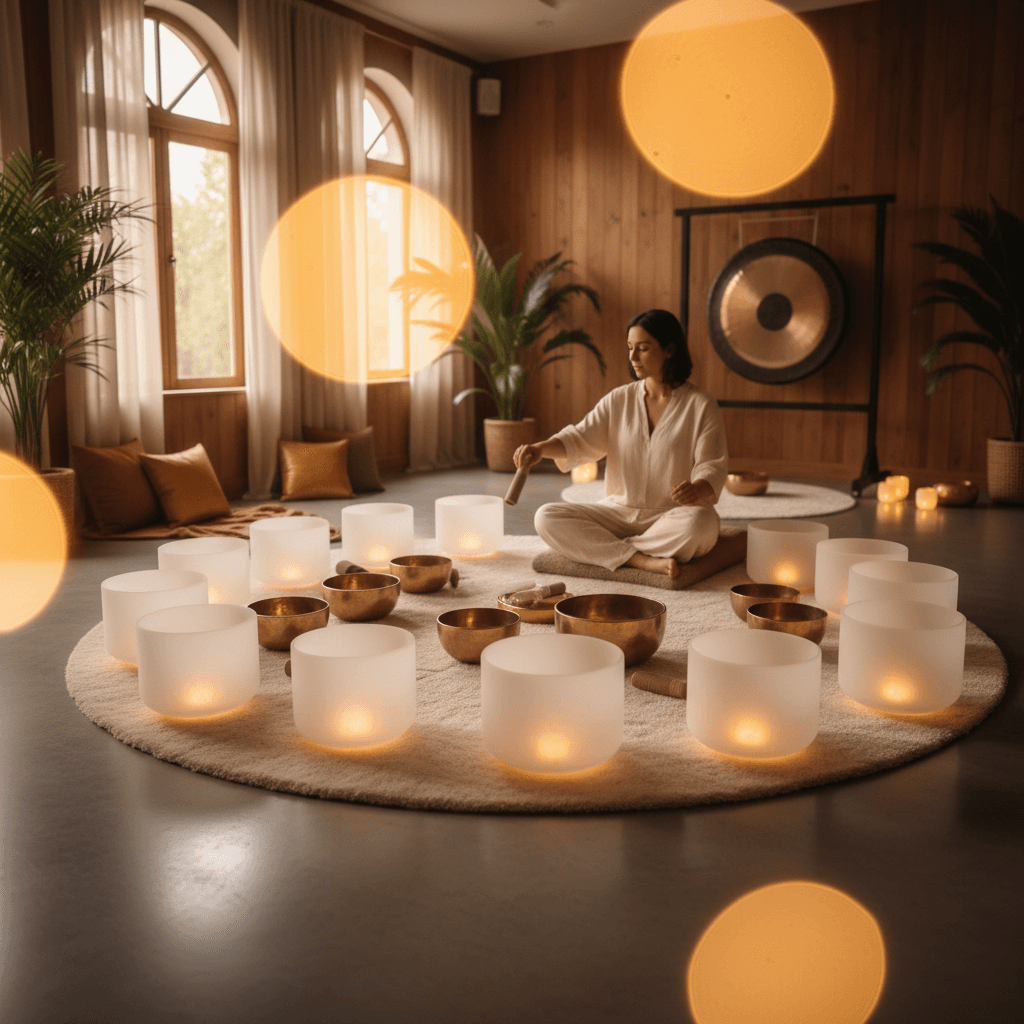
Larissa Steinbach's expertise lies in her ability to intuitively select and layer instruments and tones to create a powerful, immersive experience. She often incorporates crystal singing bowls, gongs, chimes, and other resonant instruments, each chosen for its unique vibrational signature and the specific frequencies it produces. These instruments are played with intention, allowing their pure, sustained tones to bathe the listener in harmonious sound waves. The aim is to create an environment where the body's natural inclination towards balance and harmony can be gently restored.
A central tenet of the Soul Art method is the creation of a safe and nurturing space where individuals can fully surrender to the sound. This environment is crucial for allowing the brain to relax and be receptive to the frequency stimulation. The focus is always on facilitating a state of deep relaxation and conscious awareness, enabling the body and mind to gently release tension and stress. This mindful approach ensures that the sound experience is not just passively received, but actively engaged with, promoting a deeper connection to one's inner self.
Larissa Steinbach emphasizes the importance of precision in frequency selection, acknowledging that "the subtle nuances in sound can create powerful shifts within." This commitment to precision is what makes the Soul Art method distinct, ensuring that each session is a carefully calibrated experience aimed at fostering specific benefits, from enhancing mood and focus to promoting profound rest. By thoughtfully applying the insights from research on dopamine and frequency stimulation, Soul Art offers a holistic wellness practice that is both deeply rooted in science and profoundly transformative in experience.
Your Next Steps: Integrating Sound for Daily Well-being
The growing body of research on sound, dopamine, and frequency stimulation offers exciting possibilities for enhancing our daily lives. While complex sound journeys are best experienced in a dedicated setting like Soul Art, there are practical ways you can begin to integrate these principles into your own wellness routine today. Cultivating a mindful relationship with sound can be a powerful tool for self-care.
Here are some actionable steps to start your journey:
- Mindful Listening: Dedicate time each day to truly listen to sound, whether it's calming music, nature sounds, or even silence. Pay attention to how different frequencies and rhythms make you feel. Notice any shifts in your mood or energy.
- Explore High-Frequency Sounds: Experiment with music or soundscapes that incorporate higher frequencies. Some individuals find these particularly effective for promoting relaxation and reducing stress, potentially by engaging the parasympathetic nervous system.
- Incorporate Rhythmic Elements: Use rhythmic music or binaural beats designed to promote specific brainwave states, such as alpha or theta, which are associated with relaxation and meditation. These can be found through various wellness apps and platforms.
- Create a Sacred Sound Space: Designate a quiet corner in your home for listening to calming sounds. Minimize distractions and allow yourself to fully immerse in the auditory experience without interruption.
- Consider a Professional Sound Journey: To truly experience the depth and precision of frequency stimulation, consider booking a session at Soul Art. Our expertly guided journeys offer a unique opportunity to explore profound states of relaxation and well-being, leveraging the science of sound in a supportive environment.
Embarking on a journey with sound can open doors to new dimensions of self-awareness and holistic health. Let the frequencies guide you towards a more balanced and harmonious existence.
In Summary: The Future of Frequency Wellness
The intricate relationship between sound, dopamine, and specific frequency stimulation is a frontier in wellness, offering compelling insights into how we can naturally enhance our mental and emotional states. Research continues to affirm that carefully chosen auditory inputs can dynamically influence neurotransmitter synthesis, modulate cognitive responses, and even support long-term brain health. From the upregulation of dopamine-synthesizing enzymes to the profound impact of gamma frequencies on neurological well-being, the science consistently points towards sound as a powerful tool.
At Soul Art, founded by Larissa Steinbach, these scientific discoveries are thoughtfully woven into transformative sound wellness experiences. We provide a sanctuary where you can explore the remarkable benefits of frequency stimulation, designed to foster deep relaxation, reduce stress, and cultivate inner harmony. Embrace the sophisticated path to well-being through the science-backed power of sound. We invite you to experience the meticulously curated sound journeys that await you at Soul Art.
Bookings Coming Soon
Soul Art is still in preparation. Session details and booking will be published here after launch.
Coming Soon
Wellness Disclaimer: This article is for educational and informational purposes only. It does not constitute medical advice, diagnosis, or treatment. Soul Art Dubai provides non-medical wellness experiences focused on relaxation, stress management, and general wellbeing. Sound wellness is a complementary practice and should not replace professional medical care.