Embracing Dissonance: How Tension Fuels Deep Release in Sound Baths
Key Insights
Explore how moments of tension and dissonance in sound baths, guided by Larissa Steinbach at Soul Art, can unlock profound relaxation and well-being. Discover the science behind this unique approach.
Have you ever wondered if the path to profound calm sometimes involves a momentary brush with tension? In the serene world of sound wellness, where harmony reigns supreme, the concept of "dissonance" might seem counterintuitive. Yet, at Soul Art, Dubai's premier sound wellness studio, we explore how intelligently guided moments of auditory and somatic tension can be incredibly useful, unlocking deeper states of relaxation and release.
This article delves into the fascinating science behind how these deliberate, often subtle, shifts in vibrational patterns can serve as catalysts for transformation. Join us as we uncover how the strategic use of what some might perceive as dissonance becomes a powerful tool for self-discovery and heightened well-being, paving the way for profound peace. We'll explore the physiological responses, the psychological benefits, and the unique approach pioneered by Larissa Steinbach to harness this often-misunderstood aspect of sound.
The Science Explained: Unveiling the Mechanisms of Tension and Release
The human body is an intricate tapestry of biological systems, exquisitely sensitive to vibrational input. While sound baths are widely celebrated for their ability to induce deep relaxation, the journey to this state is not always a linear progression of uninterrupted calm. Sometimes, it involves a dynamic interplay, where initial sensations of tension or unexpected shifts in sound facilitate a more profound release.
The Body's Vibrational Resonance and Somatic Release
Our bodies are largely composed of water, making them highly receptive conduits for vibrations. Instruments used in sound baths, such as singing bowls and gongs, produce long, sustained frequencies that travel effortlessly through tissues and fluids. Some practitioners believe this resonance may help release physical tension stored in muscles and connective tissue.
During a sound bath, participants often report sensations like tingling, gentle warmth, or even muscle twitches. These are not signs of discomfort but are frequently interpreted as the body actively processing and releasing accumulated physical tension. This temporary experience of somatic release can be likened to a useful "dissonance" as the body unwinds its habitual patterns of holding.
Neurochemical Shifts: From Stress to Serenity
Deep relaxation and meditative states, often achieved in sound baths, are known to stimulate a beneficial cascade of neurochemicals. Crucially, these shifts can begin to occur even amidst initial processing or mild tension. Studies on sound meditation have shown significant reductions in stress hormones like cortisol, the body’s primary stress response chemical.
As cortisol levels decrease, the body's primary stress response shifts, allowing for the activation of the parasympathetic nervous system. This "rest and digest" mode supports a lower heart rate, improved heart rate variability (an indicator of stress resilience), and easier breathing. Simultaneously, feel-good neurotransmitters like serotonin, associated with mood and emotional balance, and dopamine, linked to motivation and pleasure, tend to increase. Oxytocin, a hormone fostering connection and trust, also may see elevated levels after sound therapy.
Brainwave Entrainment and Liminal States
Sound baths leverage the phenomenon of brainwave entrainment, where the brain's electrical activity synchronizes with external rhythmic stimuli. While traditional music often contains complex melodies, sound baths employ sustained tones and resonant frequencies designed to guide brain activity towards alpha (relaxed awareness) and theta (deep relaxation, dreamlike states) waves. This transition is not always instant; the mind might resist, creating a momentary mental "tension" before surrendering to the frequencies.
As noted by sound bath practitioner Perez, participants often describe being in an "in-between state or liminal state" – not fully asleep, not entirely awake, but rather "sort of in a dreamlike state." This liminal space, where the mind is letting go, can involve fleeting moments of cognitive dissonance or internal reorientation, which ultimately lead to a deeper, more receptive relaxation. It is in this surrender that the mind finds its most profound peace.
"The fact that no two sound bath practitioners are the same 'makes this area of study more challenging for research because you can’t really control a lot of the elements that go into what the experience is producing,' Perez adds." This highlights the nuanced art of facilitation, especially when guiding participants through potentially dissonant sensations to a place of greater calm.
Anxiety Reduction and Emotional Processing
Several studies corroborate the psychological benefits of sound baths. A 2017 clinical study, for instance, found that sound baths significantly reduced anxiety scores within 60 minutes, particularly among those new to meditation. This immediate impact suggests a powerful mechanism at play. The process of easing anxiety often involves confronting and then releasing underlying emotional tension.
The vibrations generated by sound instruments can subtly stimulate limbic pathways, brain regions tied to emotion, thereby influencing mood. This influence can manifest as emotional processing, where previously suppressed feelings may surface briefly before dissipating. This temporary activation of emotional "dissonance" can be a crucial step in achieving genuine emotional release and improving overall mood and well-being. Research with 62 participants by Goldsby et al. found significant reductions in tension, anger, fatigue, and depressed mood after singing bowl meditation sessions, affirming these benefits.
How It Works in Practice: Navigating the Sound Journey
Experiencing a sound bath is a deeply personal journey, yet common threads emerge regarding how the body and mind respond to the intricate soundscapes. The concept of "useful dissonance" comes to life not as harsh, jarring sounds, but as carefully modulated energetic shifts that precede deep calm. It is a sophisticated dance between the familiar and the subtly challenging, designed to prompt deeper engagement and release.
Participants often lie down comfortably, allowing the waves of sound to wash over them. While the primary goal is relaxation, the practitioner, like Larissa Steinbach, might introduce varied frequencies or instruments that create subtle shifts in the sound field. These shifts are not intended to create discomfort, but rather to gently nudge the system out of stagnant patterns, encouraging the body and mind to adapt and release.
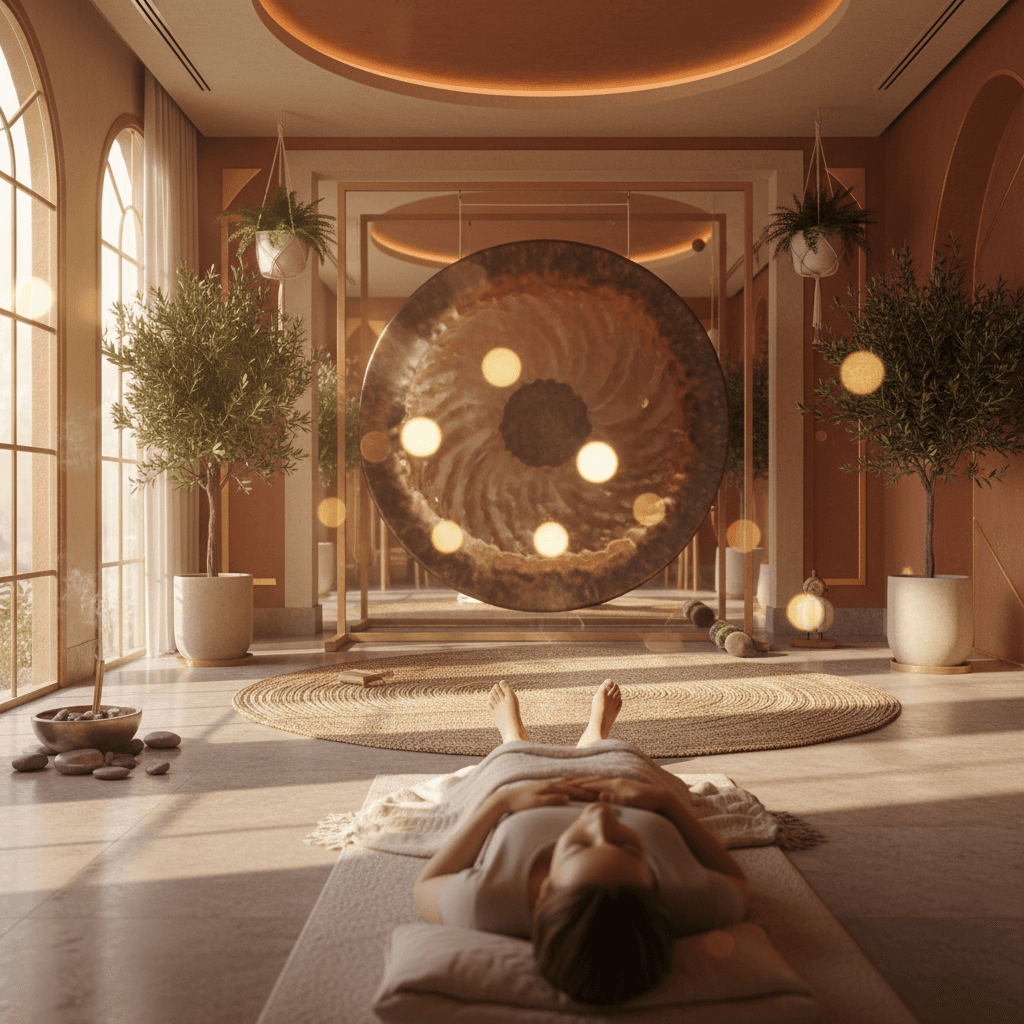
For instance, a particularly resonant gong strike, while initially intense, might serve to break through mental chatter or physical blockages. This momentary surge of robust vibration, a form of energetic "dissonance," can prompt a deeper breath, a muscle twitch, or a sudden wave of release. It's a sign that the body is actively recalibrating, responding to the energetic input and shedding what no longer serves its optimal state.
Clients frequently report feeling sensations moving through their bodies – from gentle warmth to tingling. These physiological responses are often tangible indicators that the body is shedding tension and entering a profound state of rest. The conscious experience of these releases, even if they momentarily feel like a subtle disruption to the initial calm, is an integral part of the healing process. It's the "work" your body does to settle into deeper relaxation.
The "dissonance" in practice is often about breaking habitual mental loops. As the mind grapples with new or slightly challenging auditory inputs, it may temporarily exert effort before relinquishing control. This surrender allows the brain to transition into the restorative alpha and theta states, fostering mental clarity and a sense of emotional liberation. The effect is often described as a mental and physical "reset," leaving individuals feeling refreshed and emotionally lighter.
The Soul Art Approach: Harmonizing Tension for Transformation
At Soul Art, Larissa Steinbach, our esteemed founder, has cultivated a unique methodology that thoughtfully integrates the nuanced power of sound to facilitate profound healing and relaxation. Her approach recognizes that true release often comes from acknowledging and gently moving through resistance, rather than solely seeking constant harmony. This is where the intelligent application of "dissonance" becomes an art form.
Larissa Steinbach meticulously curates sound journeys that are not merely soothing but are also dynamically designed to engage the body's innate capacity for self-regulation. She understands that a uniform soundscape, while pleasant, might not always be enough to dislodge deeply held tensions or habitual thought patterns. Instead, she masterfully weaves in moments of intentional vibrational shift.
This might involve introducing a robust, deeply resonant gong that cuts through mental static, or a carefully timed combination of singing bowls that creates a complex, yet resolving, acoustic field. The aim is to create a dynamic sonic experience that encourages the nervous system to actively process and release, rather than passively endure. It’s about creating a safe space where the body can express and let go of its stored "dissonance."
Larissa’s expertise lies in her intuitive understanding of how these frequencies interact with individual physiology and psychology. She designs sessions that gently guide participants through a process where slight discomfort or heightened awareness, often experienced as an internal "tension," is quickly followed by a deeper sense of resolution and peace. This method helps to unlock emotional blockages and foster a more resilient nervous system.
The Soul Art method emphasizes creating a supportive environment where these experiences are understood as part of the journey to deeper well-being. Rather than avoiding sensations that feel anything less than perfectly serene, clients are encouraged to observe them as indicators of release. This makes the Soul Art experience not just a relaxation session, but a truly transformative practice that leverages the full spectrum of vibrational energy to restore balance.
Your Next Steps: Integrating Sound for Lasting Well-being
Understanding the beneficial role of "dissonance" in sound baths can transform your approach to well-being, encouraging a more open and receptive mindset. Embracing these subtle shifts can lead to profound and lasting benefits for your mental and physical health. It’s about recognizing that the journey to inner harmony is often dynamic, not static.
Here are a few actionable steps you can take to integrate these insights into your life:
- Approach Sound Baths with Curiosity: When attending a sound bath, be open to all sensations, even those that momentarily feel less than perfectly serene. View tingling, muscle twitches, or shifts in sound as signs of active release and recalibration, rather than disruptions.
- Practice Mindful Observation: During your next sound experience, pay close attention to how your body responds to different frequencies. Notice where tension might reside and how it shifts or releases in response to the sound. This mindful observation enhances the therapeutic effect.
- Incorporate Conscious Breathing: When you encounter a robust sound or feel a momentary internal shift, focus on slow, deep breaths. This can help facilitate the body's relaxation response and encourage the release of stress hormones, deepening your overall experience.
- Explore Different Sound Modalities: While crystal and Tibetan singing bowls are popular, explore various instruments like gongs or tuning forks. Each offers a unique vibrational signature that can resonate differently within your system, potentially unlocking new pathways to release.
- Prioritize Regular Sessions: Like any wellness practice, consistency is key. Regular engagement with sound baths, especially those incorporating dynamic soundscapes, can help train your nervous system to more readily enter states of deep relaxation and emotional resilience.
By embracing the full spectrum of sound, including its capacity for dynamic shifts, you can unlock a deeper, more transformative path to well-being. Ready to experience this powerful journey for yourself?
Bookings Coming Soon
Soul Art is still in preparation. Session details and booking will be published here after launch.
Coming Soon
In Summary
The journey through a sound bath, particularly one thoughtfully guided to leverage moments of "dissonance," is a powerful pathway to profound well-being. Scientific research increasingly supports the physiological and psychological benefits, from reducing cortisol and anxiety to enhancing mood-boosting neurochemicals. By allowing the body and mind to navigate temporary sensations of tension or dynamic shifts in sound, we unlock deeper capacities for release and self-regulation.
At Soul Art, Larissa Steinbach expertly crafts these experiences, transforming potential points of resistance into catalysts for healing and growth. Embracing the subtle complexities within sound baths means opening yourself to a richer, more comprehensive form of relaxation. Discover how embracing these dynamic vibrations can lead you to a more harmonious and resilient state of being.
Related Articles
Unlock Harmonious Flow: Common Singing Bowl Mistakes to Avoid
Resonance Ready: Preparing a Sound Bowl Set for Private Client Well-being
Microphone Mastery: Recording Singing Bowls for Deeper Wellness