Ancient Echoes: Chanting in Native American Traditions & Its Wellness Benefits
Key Insights
Explore the profound science behind Native American ceremonial chanting and its powerful impact on mental, emotional, and physical well-being. Discover how Soul Art, led by Larissa Steinbach, integrates these principles for deep relaxation.
Have you ever experienced the profound resonance of a human voice in unison, or the deep rhythmic pulse of ancient drumming? For millennia, indigenous cultures across the globe have harnessed the power of sound, breath, and collective vocalization for healing, connection, and spiritual transcendence. In North America, the diverse traditions of Native American peoples offer a rich tapestry of ceremonial chanting, a practice deeply embedded in their cultural fabric and now gaining attention for its remarkable wellness implications.
At Soul Art, Dubai's premier sound wellness studio, founded by Larissa Steinbach, we are inspired by the universal principles of sound as a conduit for well-being. This article delves into the historical and scientific foundations of Native American ceremonial chanting, exploring how these ancient practices illuminate the profound capacity of sound to restore, uplift, and connect us, offering insights that resonate with modern approaches to holistic wellness.
The Science Explained
The human body and mind are intricately tuned instruments, profoundly responsive to sound and vibration. Chanting, with its repetitive, rhythmic vocalizations, taps into fundamental neurological and physiological pathways, offering a unique avenue for altering states of consciousness and fostering well-being. Modern scientific inquiry, while navigating the complexities of studying culturally specific rituals, has begun to uncover the mechanisms behind these powerful ancient practices.
The Auditory Pathway and Brain Response
When we chant, the rhythmic and tonal qualities of the sound engage multiple regions of the brain. Neuroimaging studies, as summarized in a systematic review published in Neural Correlates of Chanting, consistently show activation in areas such as the prefrontal cortex, insula, and cingulate cortex. These regions are critical for attention, emotional regulation, self-awareness, and cognitive control. The repetitive nature of chanting can help to synchronize brainwave activity, potentially shifting the brain into states associated with deep relaxation and meditative focus, such as alpha and theta waves.
The sustained vocalization involved in chanting also stimulates the vagus nerve, a key component of the parasympathetic nervous system. Activation of the vagus nerve promotes a "rest and digest" state, reducing heart rate, lowering blood pressure, and calming the nervous system. This physiological response contributes directly to stress reduction and an overall sense of tranquility.
Chanting, Consciousness, and Mystical States
Chanting has a documented ability to induce altered states of consciousness, often described as mystical or transcendent experiences. Research shared by Gemma Perry, for instance, highlights how chanting can evoke profound effects on consciousness, with participants reporting experiences akin to those observed in psychedelic research. This suggests a powerful capacity for chanting to facilitate deep inner exploration and spiritual connection. A study published in Rhythmic Chanting and Mystical States across Traditions used scientifically valid questionnaires, often employed in psychedelic research, to measure these mystical states, finding a clear association with regular chanting practice.
The consistency and intentionality of chanting appear to be key factors. Participants who chanted more regularly and with greater intention reported higher levels of altered states and cognitive benefits, according to research on How Chanting Relates to Cognitive Function, Altered States.... The communal aspect, particularly in call-and-response chanting, was also found to be associated with higher scores of mystical experiences, underscoring the power of shared vocalization and collective intention.
Physiological Benefits: Stress Reduction and Beyond
Beyond inducing altered states, the practice of chanting offers tangible physiological benefits that support overall wellness. By promoting parasympathetic activation, chanting acts as a potent stress management tool, helping to alleviate chronic stress and anxiety. The sustained, focused attention required for chanting also reduces mind-wandering, improving cognitive function and mental clarity. This is particularly beneficial in a world saturated with distractions, offering a natural pathway to enhanced focus.
Preliminary studies, such as those exploring the impact of traditional practices like the sweat lodge—which often incorporate chanting—for issues like chronic pain or mental health challenges among Native populations, suggest broader therapeutic potential. While the scientific evidence for culturally specific Indigenous approaches can be challenging to assess with Western methodologies due to their holistic and complex nature, anecdotal reports and qualitative studies indicate positive impacts on well-being and symptom management.
The Power of Community and Shared Ritual
Many Native American ceremonies are inherently communal, with chanting serving as a powerful unifying force. The act of chanting together fosters a deep sense of belonging, shared purpose, and collective resonance. This social cohesion is itself a significant contributor to mental and emotional well-being. The synchronized vocalizations can create a feeling of interconnectedness, reducing feelings of isolation and strengthening community bonds.
"These mystical experiences seem to be a common occurrence across traditions, which is really exciting." - Gemma Perry
This collective engagement, whether in traditional ceremonial contexts or modern group sound practices, amplifies the individual experience, creating a synergistic effect that enhances the overall benefits. The shared intention and energy of a group can deepen the meditative experience, making it easier to enter profound states of relaxation and connection.
How It Works in Practice
In Native American cultures, chanting is far more than just singing; it is an intricate spiritual and healing practice, a living prayer that connects individuals to their ancestors, spirits, and the natural world. While the specific forms and intentions vary widely among tribes—from the elaborate multi-day chants of the Navajo (Diné) for cleansing and healing, to the rain songs of arid regions, or the protective chants against illness—the underlying principles of sound, rhythm, and intention are universally powerful.
These chants are often characterized by their rhythmic complexity, specific melodic patterns, and the profound meaning embedded within their vocables or words. The repetitive vocalizations, often accompanied by drums or rattles, create an immersive auditory landscape that encourages the practitioner to enter a focused, almost trance-like state. This is not about passive listening but active participation, where the voice becomes an instrument of transformation.
For instance, in Diné (Navajo) healing ceremonies, the medicine man or Hataałii Hózhóni uses chanting, prayers, and offerings to facilitate a cleansing process for individuals experiencing grief, loss, trauma, or stressful life transitions. While the specifics of these sacred ceremonies are protected and private, the general elements point to the powerful, holistic engagement of body, mind, and spirit through sustained vocalization and ritual. Participants often report profound shifts in their emotional and psychological states, moving towards a greater sense of balance and harmony.
The sensory experience is vital: the deep, grounding thrum of the voice, the subtle vibrations felt throughout the body, the rhythmic consistency that anchors the mind, and the often outdoor settings that connect the experience to the land itself. These elements combine to create an environment conducive to deep relaxation, emotional release, and spiritual insight. The chanting is believed to influence the forces of nature, ensure crop fertility, or imbue herbal treatments with potency, demonstrating a comprehensive worldview where sound is an active agent in the world. This practice underscores the understanding that human vocalization, when imbued with intention, carries a potent energy that can influence personal well-being and the surrounding environment.
The Soul Art Approach
At Soul Art, Larissa Steinbach embraces the universal principles of sound and vibration, drawing inspiration from global wisdom traditions—including the profound insights gleaned from Native American ceremonial chanting—to create accessible and impactful sound wellness experiences. Our approach is not to replicate traditional ceremonies, which are deeply culturally specific and sacred. Instead, we respectfully extract the core elements that make vocalization and rhythmic sound so effective for human well-being: intentionality, sustained frequency, resonant vibration, and focused engagement.
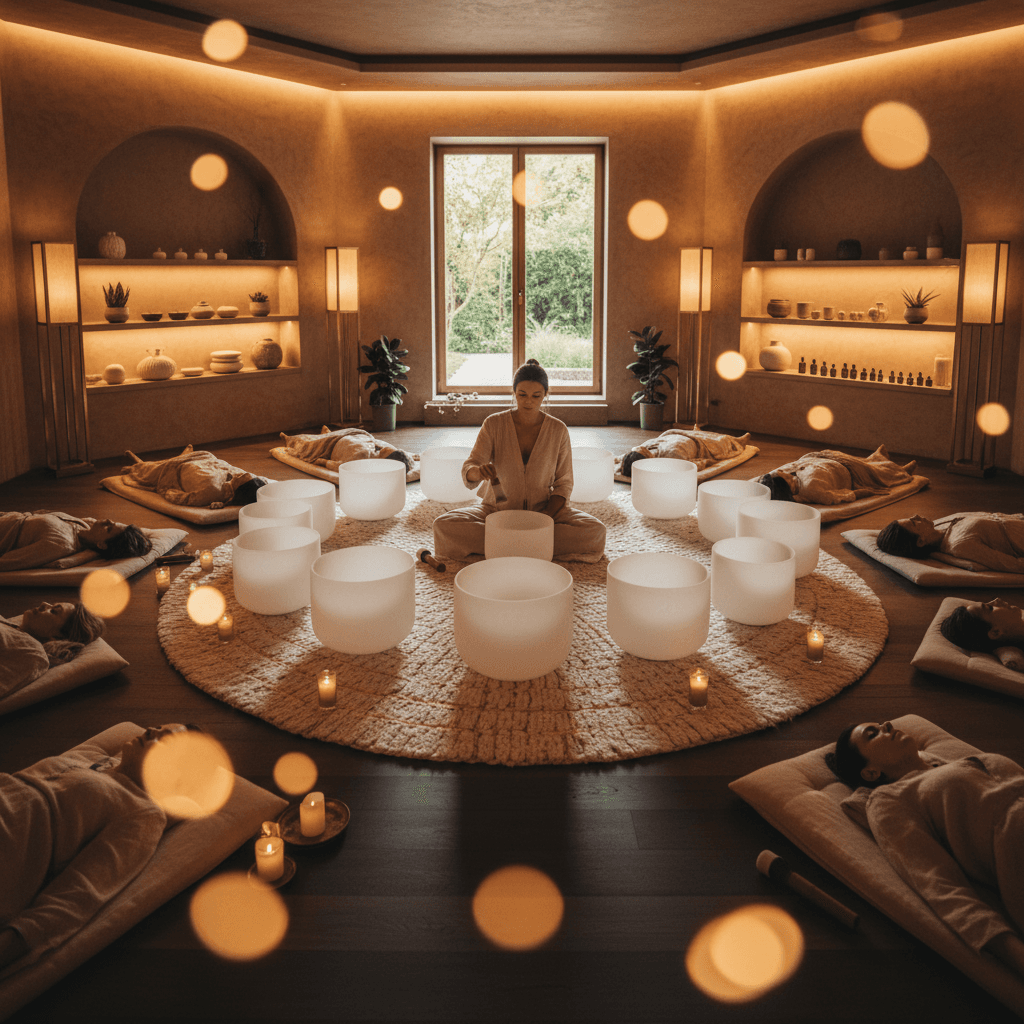
Larissa Steinbach's unique method at Soul Art synthesizes ancient wisdom with contemporary scientific understanding. She integrates vocal toning, breathwork, and the rich harmonics of instruments like crystal singing bowls, gongs, and other resonant tools to guide participants into states of deep relaxation and self-discovery. The focus is on creating a therapeutic soundscape that encourages the body's natural healing mechanisms and supports nervous system regulation.
Our sessions emphasize the importance of intention, much like the focused purpose behind traditional chants. Whether it’s an intention for stress release, mental clarity, or emotional balance, participants are encouraged to engage mindfully with the sounds and vibrations. We explore various vocalizations and breathing techniques that mirror the rhythmic and sustained aspects of chanting, allowing individuals to experience the internal vibrational benefits of their own voice. This practice can activate similar brain regions and physiological responses linked to reduced anxiety and enhanced well-being, as identified in research on chanting.
Soul Art's environment is designed to be a sanctuary for introspection and rejuvenation. Through carefully curated sound journeys, we offer a contemporary space for individuals to explore the transformative power of their own internal and external sound environments. Larissa's expertise ensures that each session is a finely tuned experience, providing a complementary approach to holistic wellness that is both deeply rooted in ancient understanding and supported by modern science.
Your Next Steps
Embracing the power of sound for well-being doesn't require a spiritual pilgrimage; it can begin with simple, intentional practices in your daily life. Inspired by the profound impact of practices like Native American chanting, you can start to integrate sound as a personal wellness tool. The key is consistency and gentle awareness.
Here are some practical steps you can implement today to explore the benefits of sound and vocalization for your well-being:
- Mindful Humming: Begin with a few minutes of humming. Focus on the vibration in your chest, throat, or head. This simple act can stimulate the vagus nerve, promoting relaxation and calming the nervous system.
- Deep Breath and Toning: Practice deep diaphragmatic breathing, then exhale slowly with a sustained vocal tone, like "Aum" or simply a long "Ah." Feel the resonance throughout your body and allow tension to release.
- Rhythmic Listening: Seek out music or natural sounds with a consistent rhythm. Whether it’s a gentle drum beat, the sound of ocean waves, or calming instrumental pieces, allow the rhythm to anchor your mind and reduce mental chatter.
- Journaling with Sound: Before and after a brief vocal practice, take a moment to journal any shifts in your mood, energy, or mental state. Observe how your internal landscape responds to intentional sound.
- Explore Group Sound Experiences: Consider attending a sound bath or group vocal toning session. The collective energy and shared intention of a group can amplify the meditative and relaxing benefits, fostering a sense of community.
Soul Art is still in preparation. Session details and booking will be published here after launch. Explore the curated sound journeys at Soul Art.
Bookings Coming Soon
Soul Art is still in preparation. Session details and booking will be published here after launch.
Coming Soon
In Summary
The ancient practice of chanting in Native American ceremonies offers a compelling testament to the profound power of sound for human well-being. From engaging crucial brain regions and calming the nervous system to fostering mystical experiences and strengthening community bonds, the scientific and anecdotal evidence highlights its remarkable efficacy as a holistic wellness practice. While deeply rooted in specific cultural contexts, the universal principles of intentional vocalization, rhythm, and resonance provide invaluable insights for modern self-care. At Soul Art, Larissa Steinbach honorably integrates these foundational principles, offering contemporary sound wellness experiences that invite you to harness the transformative power of sound for deep relaxation, stress management, and a renewed sense of balance in your life.
Wellness Disclaimer: This article is for educational and informational purposes only. It does not constitute medical advice, diagnosis, or treatment. Soul Art Dubai provides non-medical wellness experiences focused on relaxation, stress management, and general wellbeing. Sound wellness is a complementary practice and should not replace professional medical care.
Related Articles
Maori Poi & Sound: Pacific Traditions for Modern Well-being
Swedish Nyckelharpa: The Science of Nordic String Healing
Apollo's Ancient Echoes: Sound Healing & Holistic Wellness