Harmonic Renewal: Sound Healing Brain Pathways Damaged by Addiction

Key Insights
Explore how sound wellness and neuroplasticity offer a profound path to brain healing, gently supporting recovery from addiction's impact on neural pathways. Discover Soul Art's unique approach.
Addiction is a complex challenge, often misunderstood, yet it deeply reconfigures the very architecture of our brains. Imagine your brain as a vibrant, intricate city where certain routes become overused, while others fall into disrepair, creating an urgent, compulsive need. This compelling neurological reality can leave individuals feeling trapped, but there is profound hope for renewal.
At Soul Art, Dubai’s premier sound wellness studio founded by Larissa Steinbach, we explore how sophisticated sound experiences may gently guide the brain towards repairing these damaged pathways. This article will delve into the science behind addiction’s impact on the brain, the remarkable power of neuroplasticity, and how sound wellness practices can serve as a powerful, complementary ally in fostering recovery and promoting holistic brain health. Join us as we uncover how harmonic frequencies offer a path to rebalance and restore the brain's inherent capacity for healing.
Understanding Addiction: A Neurological Perspective
Addiction is far more than a moral failing; it is recognized as a chronic, primary brain disease that profoundly alters neurological function. This condition manifests as an uncontrollable, compulsive need for a substance or behavior, significantly impacting the brain's intricate systems. Understanding these neurological shifts is crucial to appreciating the potential of supportive wellness practices.
Addiction as a Disease of Neuroplasticity
The core of addiction's grip lies in its ability to hijack the brain's natural adaptability, a phenomenon known as neuroplasticity. Dr. Charles P. O’Brien describes addiction as a disease driven by this very neuroplasticity, where the brain reorganizes itself in response to drug use. Initially, drugs interfere with the precise way neurons process, receive, and transmit signals via neurotransmitters.
Over time, the brain begins to adapt to the constant presence of these substances. It constructs and reinforces new neural pathways specifically designed to accommodate the drug, essentially "rewiring" itself. This adaptation means the brain comes to require the drug to function what it perceives as "normally," making abstinence incredibly challenging. The prefrontal cortex, vital for reward, memory, and motivation, is particularly affected, leading to distorted decision-making and heightened cravings.
The Power of Neuroplasticity and Brain Healing
Despite the profound changes wrought by addiction, the brain retains an extraordinary capacity for healing and reorganization, a testament to its inherent neuroplasticity. Neuroplasticity refers to the brain’s remarkable flexibility, its ability to compensate for damage, and to continually create new neural pathways. This adaptability is not limited to recovery from injury; it is a fundamental aspect of learning and growth.
Consider a study by Harvard Medical School, which observed two women practicing a five-finger piano exercise. One practiced physically, while the other only visualized the movements mentally. After just five days, both women showed identical neural changes in their motor cortex, demonstrating that the brain's structure can be altered merely by thought and intention. This illustrates the profound potential for the brain to create and strengthen new, healthier pathways, whether through direct action or focused mental engagement. For those navigating the journey of recovery, this inherent brain flexibility presents a significant opportunity to restore neural circuits and foster a return to a healthy, balanced state.
How Sound Influences Brain States
The profound influence of sound on our physiological and psychological states is increasingly recognized. Sound healing operates on the principle that specific sound vibrations can influence the body’s energy frequencies, promoting balance, relaxation, and a deep sense of calm. These vibrations are not merely auditory; they are felt throughout the body, engaging cellular structures.
A key mechanism involves shifting brainwave states. While high-stress states are characterized by beta waves, specific sound waves may gently guide the brain into more relaxed alpha and theta states. This transition helps to reduce mental tension and stabilize emotions, offering crucial support during addiction recovery. By lowering physiological stress markers such as cortisol levels, blood pressure, and heart rate, sound healing actively mitigates factors strongly linked to cravings and mood fluctuations.
This stress reduction is vital, as noted by Crowe and Scovel (1996), who highlighted how low-frequency tones can regulate the autonomic nervous system. Furthermore, Fachner (2021) suggests that rhythmic sound therapy can activate brain reward centers, supporting emotional regulation and mental balance—key components in addiction recovery. An observational study by Goldsby, Goldsby, McWalters, and Mills (2017) further supported these calming effects, showing significant reductions in tension and anxiety in participants after a 60-minute sound healing session utilizing Tibetan singing bowls, crystal bowls, and gongs. These findings underscore the potential of sound to influence the brain's stress response and promote a state conducive to healing.
The Practical Application of Sound for Brain Wellness
Connecting the scientific understanding of neuroplasticity and brain states to the practical experience of sound wellness reveals a powerful synergy. Sound healing is not merely about listening; it is about immersing oneself in an environment where frequencies and vibrations interact directly with the body and mind. This immersive experience offers a tangible path towards supporting brain health.
Shifting Internal Frequencies for Balance
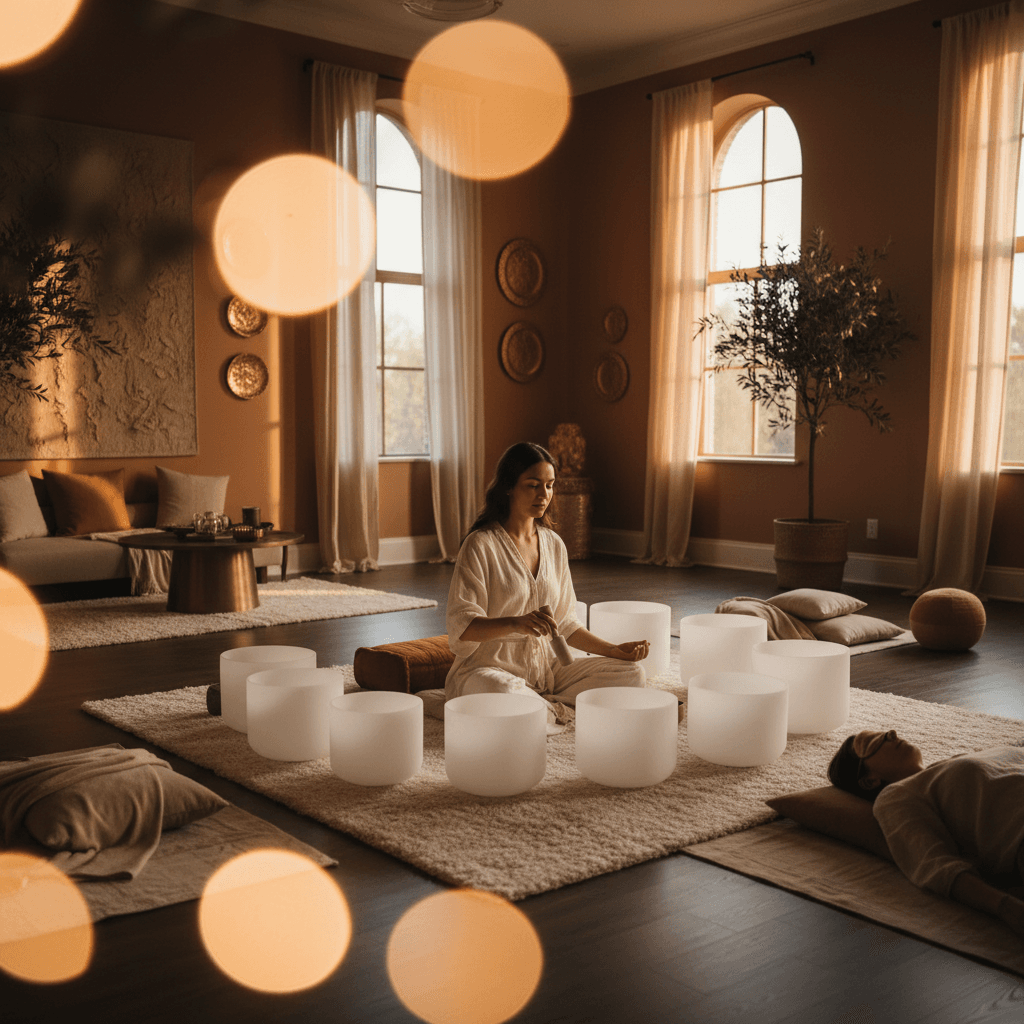
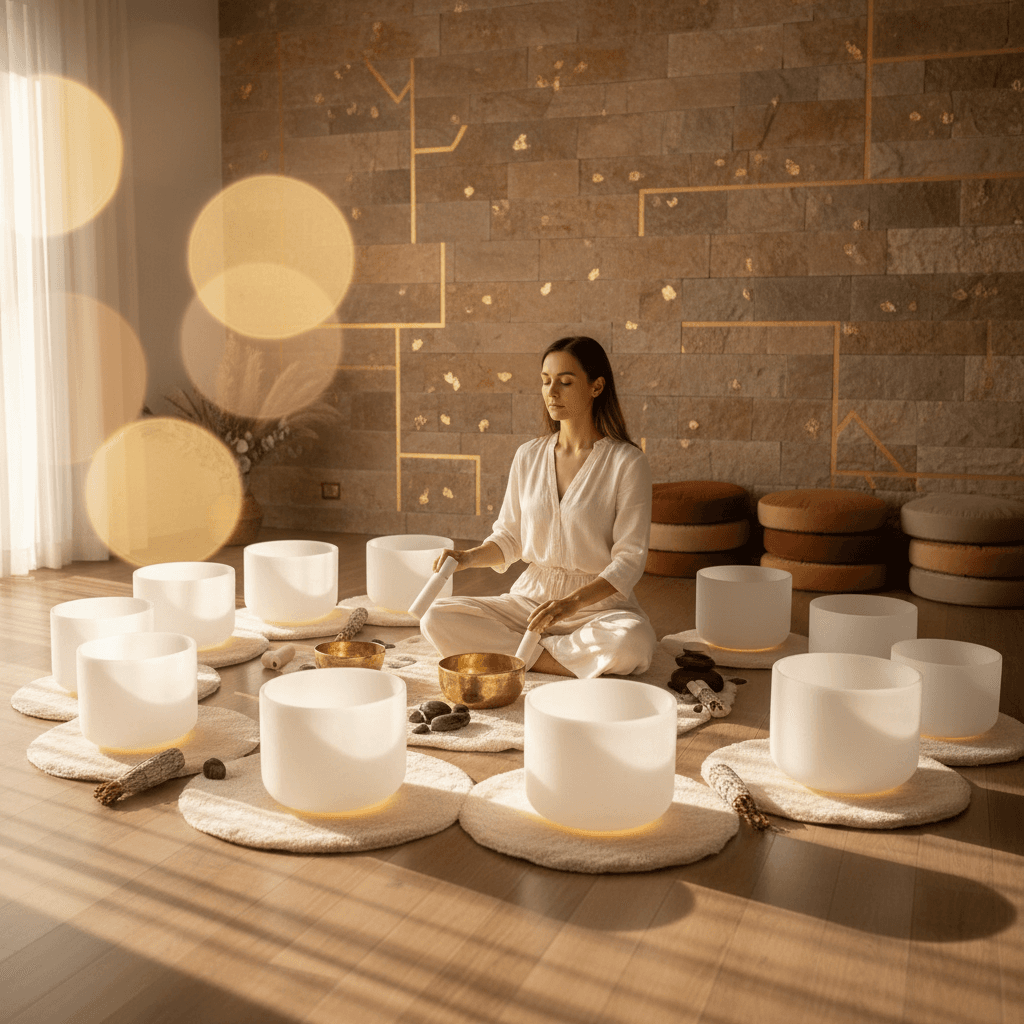
During a sound wellness session, clients are enveloped in a tapestry of carefully curated sounds and vibrations, often produced by instruments like resonant Tibetan singing bowls, expansive gongs, and luminous crystal bowls. These instruments emit specific sonic and wave properties that are felt as much as they are heard, creating a full-body sensory experience. Our bodies, being composed of over seventy percent water, are highly responsive to these vibrations.
Just as water can be tuned and rebalanced by external sounds, the sonic waves from these instruments are believed to influence the body’s internal fluids and cellular structures. This deep resonance may extend beyond the physical, potentially affecting mood, brain waves, and even supporting the release of deep-seated emotional blockages. The experience is designed to gently encourage the body and mind to return to a state of natural equilibrium and coherence.
Cultivating Mindfulness and Emotional Regulation
Sound wellness practices serve as potent tools for cultivating mindfulness, an essential skill for sustainable addiction recovery. These integrative therapies guide individuals to live more fully in the present moment, a practice that can strengthen their healing journey significantly. While mindfulness may seem distinct from traditional clinical therapy, its benefits are well-documented, helping individuals navigate triggers and manage stress effectively.
Sessions involving therapeutic sound, such as those with singing bowls, are particularly effective in this regard. Many people report reduced tension, decreased feelings of anxiety, and an increased sense of spiritual well-being following these experiences. Since stress is a major precursor to addiction triggers and potential relapse, having a proactive tool to manage stress levels is invaluable for anyone in recovery. Sound offers a non-invasive, profoundly supportive method to foster emotional regulation and a sustained sense of inner calm.
Rewiring Addiction Pathways Through Relaxation
The journey to rewire addiction-damaged pathways necessitates moving the brain away from its hyperactive reward circuits and chronic stress responses. Sound wellness, by inducing deeply relaxed alpha and theta brainwave states, offers a unique opportunity for this recalibration. In these states, the brain is more receptive to forming new connections and patterns.
The profound relaxation fostered by sound may help modulate neuronal activity, facilitating beneficial alterations in the brain's communication pathways. This process supports the brain in gently returning to its healthy homeostatic boundaries, moving away from the "outside of normal boundaries" state that addiction creates. By regularly experiencing these restorative states, individuals may strengthen new neural pathways that support calm, clarity, and impulse control, thereby supporting the brain's natural capacity for healing and balance.
"The brain's inherent neuroplasticity presents both a hurdle and an opportunity in the context of addiction. While substance use disorder rewires neural circuits, treatment interventions have the potential to restore them to a healthy state."
Soul Art's Transformative Sound Wellness Journey with Larissa Steinbach
At Soul Art, Larissa Steinbach’s vision is to create a sanctuary where sophisticated sound experiences become a powerful catalyst for profound wellness and personal transformation. We believe that true luxury lies in deep restoration and reconnection with one's inner harmony. Our approach to brain healing and addiction support is rooted in a deep understanding of vibrational science and human neurobiology.
What makes the Soul Art method unique is its meticulous curation and personalized touch. Larissa Steinbach, with her profound expertise, designs each session as a bespoke journey. She thoughtfully selects and orchestrates a symphony of instruments, including resonant gongs, ethereal crystal bowls, delicate chimes, and precise tuning forks. These are not merely tools, but conduits for vibrational landscapes crafted to address specific wellness goals, particularly in supporting neurological rebalancing.
Larissa's sessions are an invitation to profound relaxation, guiding clients into states where the brain can naturally downshift from stress-induced beta waves to the restorative alpha and theta frequencies. This intentional shift creates an optimal environment for neuroplastic change, gently encouraging the formation of new, healthier neural pathways. The focus is on facilitating a deep release of tension, supporting emotional stability, and activating the brain's innate capacity for self-repair and equilibrium. At Soul Art, we don't just offer sound; we offer an exquisitely crafted experience designed for inner harmony and lasting well-being.
Empowering Your Path: Integrating Sound into Your Wellness Routine
Embracing sound wellness as a complementary practice can be a transformative step in supporting brain health and fostering recovery. The power lies in consistency and conscious engagement with these restorative frequencies. Integrating sound into your daily life can help sustain the benefits experienced during dedicated sessions, supporting ongoing balance and resilience.
Here are some practical steps you can take today to harness the potential of sound for your well-being:
- Explore Professional Sound Wellness Sessions: Begin your journey with guided sessions at a reputable studio like Soul Art in Dubai. Experiencing the expertly curated soundscapes by Larissa Steinbach can provide a powerful foundation for understanding how deep relaxation feels and impacts your system.
- Practice Mindful Listening Daily: Dedicate time each day to conscious listening. This could involve calming nature sounds, classical music, or even focusing on ambient sounds in your environment. Engaging actively with sound can train your brain to enter more relaxed states and improve focus.
- Create a Supportive Sonic Environment: Curate your personal spaces with sounds that promote calm and well-being. Use sound bowls, chimes, or gentle instrumental music to create an atmosphere conducive to relaxation and mental clarity, especially during times of stress.
- Consider a "30-Day Reset": Inspired by recommendations for challenging one's relationship with certain behaviors, dedicating a period to heightened self-awareness and intentional wellness practices, including sound, can be profoundly beneficial. Observe how your brain and body respond to consistent, conscious care.
- Journal Your Experiences: Keep a journal to note how different sounds and sound sessions affect your mood, energy levels, and overall sense of well-being. This can help you identify what resonates most deeply and empowers you to tailor your self-care practices.
Remember, every step towards conscious well-being is a step towards empowering your brain's natural healing capabilities. We invite you to explore this profound path and discover the restorative power of sound.
A Harmonious Path to Brain Wellness
The journey of recovery and brain healing from addiction is a testament to the brain's incredible resilience and the potential of neuroplasticity. Addiction may reroute neural pathways, but the brain's capacity to adapt and form new, healthier connections offers profound hope. Sound wellness practices provide a gentle yet powerful means to support this vital process.
By shifting brain states, reducing stress, and fostering emotional regulation, sound helps to create an optimal internal environment for neurological repair and balance. At Soul Art, Larissa Steinbach's expertly guided sound experiences are crafted to nurture this innate healing potential, offering a luxurious and deeply restorative path to inner harmony. Embrace the transformative power of sound to rebalance, renew, and reconnect with your most vital self.
Bookings Coming Soon
Soul Art is still in preparation. Session details and booking will be published here after launch.
Coming Soon
Wellness Disclaimer: This article is for educational and informational purposes only. It does not constitute medical advice, diagnosis, or treatment. Soul Art Dubai provides non-medical wellness experiences focused on relaxation, stress management, and general wellbeing. Sound wellness is a complementary practice and should not replace professional medical care.
Related Articles

LGBTQ+ Recovery: Sound Wellness for Inclusive Healing & Regulation
Relationship Recovery: The Science of Sound for Intimacy
Soulful Connections: The Science of Shared Sound Practices and Well-being Sponsorship