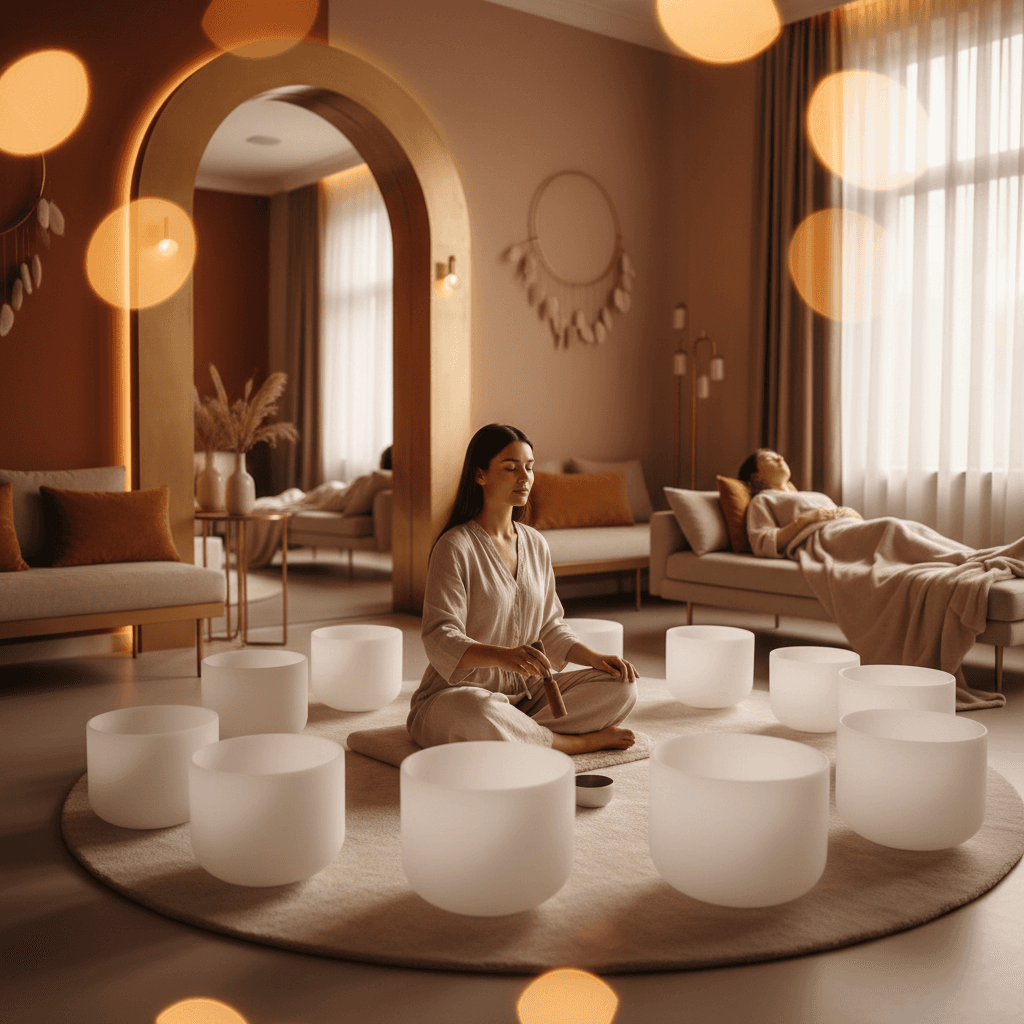
The Unheard Advantage: Sound Wellness for Elite Basketball Performance
Key Insights
Explore how targeted sound impacts basketball performance, from focus on court to post-game recovery. Larissa Steinbach and Soul Art guide athletes to peak well-being.
The roar of the crowd, the squeak of shoes on hardwood, the swish of the net – basketball is a symphony of dynamic sounds. But what if we told you that beyond these obvious auditory cues, sound itself holds a deeper, more subtle influence on an athlete's performance, focus, and recovery? From the precision of a free throw to the mental resilience required in high-pressure moments, the sonic environment, both external and internal, plays a crucial, often underestimated, role.
At Soul Art, Dubai's premier sound wellness studio, founded by Larissa Steinbach, we explore how understanding and harnessing the power of sound can elevate not just an athlete's game, but their overall well-being. This article delves into the scientifically-backed connections between sound and basketball performance, offering insights into how strategic sound practices can unlock new levels of physical and mental prowess. Prepare to discover how targeted auditory experiences can sharpen focus, reduce stress, and accelerate recovery, ultimately transforming an athlete's approach to the game and life.
The Unseen Symphony: Deciphering Sound's Impact on the Court
The relationship between sound and athletic performance is complex, oscillating between distraction and enhancement. For basketball players, navigating this auditory landscape is paramount to maintaining peak performance under pressure. Scientific inquiry has begun to unravel the nuanced ways sound interacts with an athlete's physiology and psychology.
The Athlete's Inner Soundscape: Focus and Distraction
In the critical moments of a basketball game, particularly during free throws, concentration is everything. Research highlights how the presence or absence of external sound can significantly alter an athlete's ability to maintain focus. A study examining free throws, for instance, found that participants sometimes demonstrated greater accuracy in quiet conditions compared to those with an additional external sound effect, suggesting that uncontrolled noise can interfere with the precise motor control required (Galvanovskis, Miglinieks, Parandjuks). On average, accuracy in quiet conditions was 67.6%, increasing to 70% with a physical factor, but some individuals experienced a decrease in performance with sound.
This sensitivity underscores the importance of attentional control. Klostermann (32) found that enhanced visual attention, particularly through prolonged "Quiet Eye" duration, positively predicted free throw accuracy. Sound, especially verbal distraction, has been shown to draw attentional resources away from the task, leading to less accurate movements (34). Therefore, in static shooting tasks like free throws, an athlete's ability to manage their internal and external auditory environment can directly influence their success.
However, the impact of sound is not uniform across all scenarios or athletes. In high-intensity, dynamic situations, such as a three-point shot during continuous play, the effect of noise distraction appears less pronounced, especially for expert athletes (37, 38). Studies examining dynamic three-point shots in noisy versus quiet conditions found no significant difference in performance, indicating that skilled athletes may develop a remarkable resilience to auditory interference (PMC, 2024). This suggests that while static focus can be disrupted by sound, the immersive and physically demanding nature of a fast-paced game, combined with an expert's trained focus, can mitigate some of these external distractions.
The Squeak and the Roar: External Auditory Cues
Beyond controlled experimental conditions, the basketball court itself is a vibrant soundscape. The distinctive squeak of shoes on the hardwood, often referred to as "shoequakes," is not merely background noise. It's a direct indicator of friction and grip, essential for the sudden stops, starts, and explosive jumps that define the sport. Materials scientists have found that this iconic sound is produced by organized elastic waves in the rubber soles, specifically aided by tread patterns (CBC Radio, 2024). This sound, while perhaps tuned out by seasoned fans, is a fundamental sensory input for players, signalling stability and control.
Crowd noise, another omnipresent element, further complicates the auditory experience. A loud and energetic crowd can contribute to home-court advantage by boosting the morale of the home team or frustrating the away team (Greer, 1983). Research suggests that crowd size and noise are positively associated with the likelihood of flagrant and technical fouls, indicating that an intense auditory environment can heighten game intensity and aggression (Conscientia Beam, 2025). This external sonic pressure can significantly influence player and even coach behavior, adding another layer of psychological complexity to the game.
"The court's symphony, from the squeak of a shoe to the roar of the crowd, profoundly shapes an athlete's experience and performance, often in ways unseen and unheard."
Beyond the Game: The Physiology of Sound and Performance Recovery
The stress of high-stakes competition takes a toll on an athlete's body and mind. High cortisol levels, anxiety, and mental fatigue are common. This is where the principles of sound wellness, as practiced at Soul Art, offer a powerful complementary approach. Scientifically designed sound experiences can directly influence physiological and neurological states crucial for recovery and mental resilience.
Sound healing, through various instruments and frequencies, has been shown to activate the parasympathetic nervous system, shifting the body into a "rest-and-digest" state. Key studies demonstrate that even short sessions of sound meditation, such as with singing bowls, can significantly lower stress hormones like cortisol and reduce heart rates (University of California, 2016). This reduction in stress hormones is vital for accelerating physical recovery and preventing burnout in athletes.
Furthermore, specific sound frequencies can entrain brainwaves, guiding the mind from high-stress beta states to calmer alpha or theta states. Alpha waves are associated with relaxation and creativity, while theta states are linked to deep meditation and emotional processing (Frontiers in Human Neuroscience, 2023; VOICE OF AKASH, 2023). This brainwave entrainment can enhance mental clarity, improve emotional regulation, and prepare an athlete for restful sleep, which is critical for physical repair and cognitive function. Many people report feeling more peaceful and focused after sound sessions, an outcome that directly supports an athlete's holistic well-being.
How It Works in Practice
Connecting the scientific understanding of sound to an athlete's daily regimen involves practical applications that go beyond mere listening. It’s about creating intentional sound environments that support peak performance, mental clarity, and accelerated recovery. For a basketball player, this means leveraging sound to manage pre-game anxiety, enhance in-game focus, and optimize post-game recuperation.
Before a game, an athlete might engage in a guided sound meditation designed to induce an alpha brainwave state. This could involve listening to specific binaural beats or the gentle, sustained tones of a singing bowl. The goal is to calm the nervous system, reduce anticipatory stress, and sharpen mental focus without overstimulation. Many people report entering a state of relaxed alertness, primed for competition without the jitters.
During practice, particularly for skill-based tasks like free throws, controlled sound environments can be invaluable. This doesn't necessarily mean absolute silence, but rather a deliberate choice of background sound – or lack thereof – to optimize concentration. For some athletes, minimal ambient sound might allow for deeper attunement to their proprioception and the subtle cues of their shooting motion. For others, a carefully curated, low-volume track could help block out minor distractions and maintain a consistent mental rhythm.
After intense training or a demanding game, the body and mind require deep rest and repair. Sound wellness sessions become a powerful tool for recovery. An athlete might lie down and experience the immersive vibrations of gongs or crystal bowls, feeling the frequencies resonate through their body. The deep resonance may support the release of muscle tension, improve circulation, and stimulate cellular healing. The sustained, harmonious sounds help to shift the brain into theta or delta states, fostering profound relaxation and promoting restorative sleep. This can be especially impactful for managing the perception of pain, as sound frequencies can influence neural pathways associated with discomfort, offering a gentle form of vibrational analgesia (Pain Research and Management, 2015; Journal of Evidence-Based Integrative Medicine, 2017).
Clients often describe a profound sense of calm washing over them, a feeling of "reset" for both their physical and mental faculties. The gentle ebb and flow of sound creates a sensory experience that helps detach them from the intensity of competition, promoting a deep sense of peace. This practical application of sound moves beyond passive listening, becoming an active component of an athlete's training and well-being strategy.
The Soul Art Approach
At Soul Art, Larissa Steinbach and her team harness the profound power of sound to support athletes in achieving holistic wellness, which in turn enhances their performance on and off the court. The Soul Art method is built on a deep understanding of the scientific principles connecting sound, mind, and body, tailored to address the unique demands faced by high-performance individuals.
What makes the Soul Art approach unique is its integration of ancient wisdom with modern scientific research, creating a sanctuary where sound becomes a catalyst for transformation. Larissa Steinbach emphasizes personalized soundscapes, recognizing that each athlete's needs, stressors, and recovery patterns are distinct. Sessions are not one-size-fits-all; they are carefully curated to target specific outcomes, whether it's pre-game focus, post-match recovery, stress reduction, or mental clarity.
We utilize a diverse array of instruments, each selected for its unique vibrational qualities and therapeutic frequencies. This includes Himalayan singing bowls, known for their rich, resonant tones that promote deep relaxation and brainwave entrainment; gongs, which create immersive sound baths that can induce meditative states and release energetic blockages; and chimes, whose delicate sounds contribute to mental soothing. The combination of these instruments, along with guided meditation and breathwork, guides participants into states of deep rest and healing.
The Soul Art method focuses on regulating the autonomic nervous system, shifting it from sympathetic dominance (fight-or-flight, common in competitive sports) to parasympathetic activation (rest-and-digest). This is achieved through specific frequencies and rhythmic patterns that stimulate the vagus nerve and encourage diaphragmatic breathing. By fostering this physiological shift, Soul Art aims to reduce cortisol levels, increase mood-boosting neurotransmitters like serotonin and oxytocin, and enhance the body's natural healing capabilities. This holistic approach ensures that athletes are not just performing better, but also living with greater balance, resilience, and inner peace.
Your Next Steps
Integrating sound wellness into your routine, whether you're a professional athlete or simply seeking enhanced focus and recovery in daily life, is an accessible and powerful step. The benefits extend far beyond the basketball court, impacting your overall well-being. Start exploring the potential of sound today with these actionable steps:
- Mindful Listening Practice: Dedicate 10-15 minutes daily to listening to calming, instrumental music or ambient nature sounds. Focus on the nuances of the sound to train your attention and reduce mental clutter.
- Create a Quiet Zone: Designate a space in your home or practice area that minimizes external noise. Use this space for brief periods of mental preparation or relaxation, allowing your brain to reset without auditory distractions.
- Explore Binaural Beats for Focus: Research specific binaural beat frequencies (e.g., in the alpha range, around 8-12 Hz) designed to enhance concentration. Use these during non-game practice or study sessions. Remember to use headphones for optimal effect.
- Incorporate Sound for Recovery: After intense physical activity, listen to soothing soundscapes or guided meditations that promote relaxation and sleep. This may support your body's natural recovery processes and reduce muscle tension.
- Consult a Wellness Professional: Consider a session with a qualified sound wellness practitioner, like those at Soul Art. They can provide personalized guidance and introduce you to instruments and techniques tailored to your specific needs, helping you unlock deeper states of relaxation and mental clarity.
Embrace the profound potential of sound as a tool for self-care and performance enhancement.
In Summary
The world of basketball, with its intense demands and sensory rich environment, offers a compelling case for the nuanced impact of sound on human performance and well-being. We’ve seen how specific sounds can either sharpen focus for static tasks like free throws or be seamlessly integrated into the dynamic flow of an expert's game. Beyond the court, the physiological and psychological benefits of targeted sound wellness, championed by Larissa Steinbach and Soul Art, are undeniable. By consciously managing our auditory experiences and embracing practices that promote mental calm and physical recovery, athletes and individuals alike can tap into a powerful, often overlooked, dimension of holistic well-being. Discover your inner rhythm and elevate your game and life with Soul Art.
Bookings Coming Soon
Soul Art is still in preparation. Session details and booking will be published here after launch.
Coming Soon
Wellness Disclaimer: This article is for educational and informational purposes only. It does not constitute medical advice, diagnosis, or treatment. Soul Art Dubai provides non-medical wellness experiences focused on relaxation, stress management, and general wellbeing. Sound wellness is a complementary practice and should not replace professional medical care.
Related Articles
Optimizing Athletic Performance: The Synergy of Sports Nutrition and Sound Wellness
Archery, Stillness, and Sound: Soul Art's Path to Focus

Swimming's Secret Weapon: Sound for Peak Aquatic Performance