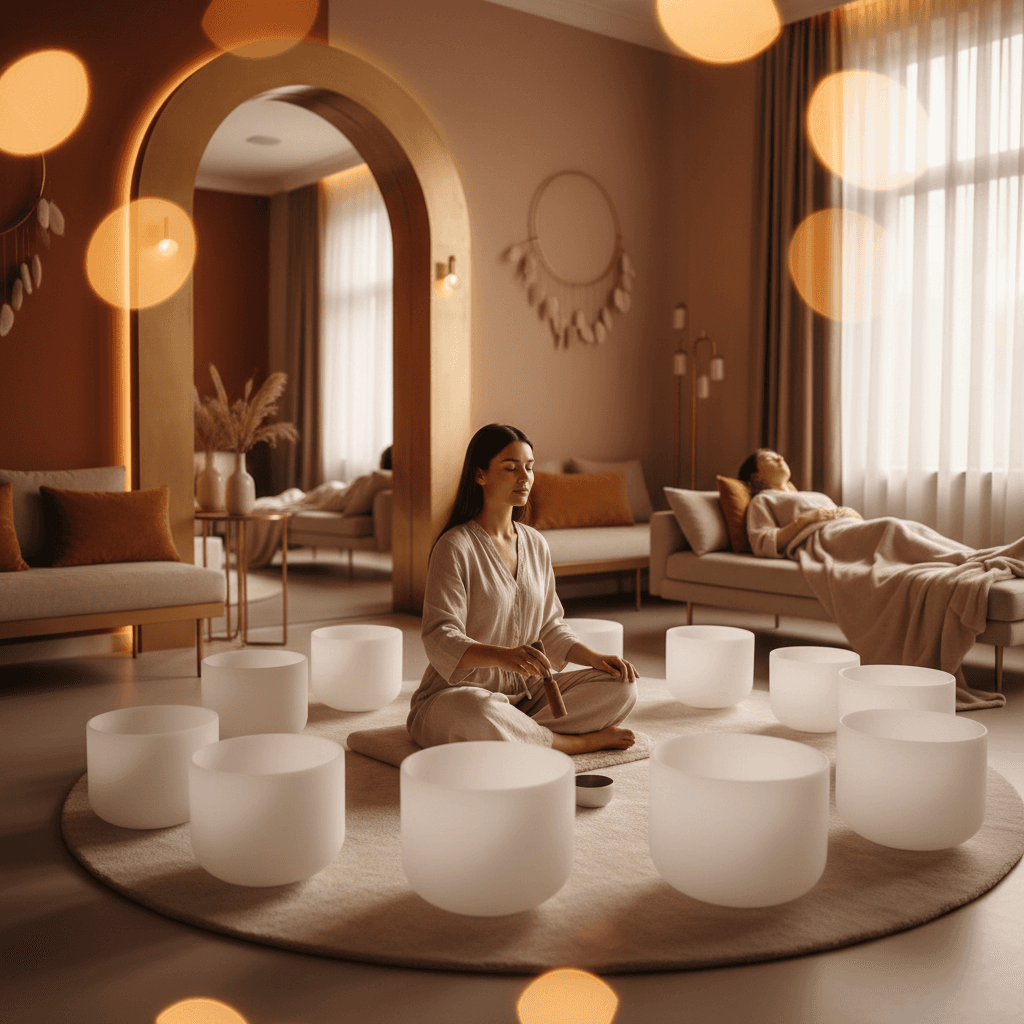
Elevate Your Game: Sound Practices for Peak Athletic Performance
Key Insights
Discover how essential sound practices, from acoustic feedback to personalized frequencies, can enhance focus, recovery, and performance for athletes at Soul Art Dubai with Larissa Steinbach.
Could the secret to unlocking your full athletic potential lie not in more intense training, but in a deeper connection to sound? For elite athletes and dedicated sports enthusiasts alike, the pursuit of marginal gains is relentless. While physical conditioning and strategic planning are cornerstones of success, an often-overlooked dimension is emerging as a powerful tool for performance enhancement and holistic well-being: sound.
At Soul Art, Dubai's premier sound wellness studio, founded by the visionary Larissa Steinbach, we explore how meticulously crafted auditory experiences can become an indispensable part of an athlete's toolkit. This article delves into the scientific underpinnings of how sound influences motor control, mental focus, recovery, and even competitive anticipation. We will unravel the practical applications that allow athletes to harness the profound power of sound to sharpen their edge, reduce stress, and cultivate a resilient mindset both on and off the field. Prepare to discover how integrating targeted sound practices can elevate not just your game, but your entire approach to athletic excellence and personal well-being.
The Unseen Edge: How Sound Shapes Athletic Performance
The human auditory system is far more than just a means to hear; it's a sophisticated sensor that provides critical information, influencing our movements, decisions, and psychological state. For athletes, this means sound can be a powerful, yet often underestimated, ally in optimizing performance. Recent scientific investigations illuminate the profound ways in which specific auditory cues and frequencies can fine-tune the body and mind.
Auditory Cues and Motor Control
Our bodies naturally produce sounds during movement, known as acoustic reafferences. These self-generated sounds are not mere byproducts but vital feedback mechanisms that help us regulate our actions. Research has highlighted the importance of these auditory cues in motor control, showing that athletes perceive and utilize them to refine their movements.
For instance, a study by Pizzera et al. demonstrated the impact of manipulating the tempo of these natural sounds. When researchers recorded the step sounds of hurdlers and played them back, altering the tempo, participants showed significant improvements in their overall running time. Notably, the best performance was observed in those who listened to a slowed-down tempo, suggesting that specific auditory manipulation can enhance both short- and long-term athletic output.
Beyond self-generated sounds, external audio-based interventions also play a crucial role. A review by Sors et al. reports that these interventions can enhance performance across various sports by providing auditory models and feedback. This includes:
- Standardizing movement: Auditory models have significantly improved golf performance by standardizing swing timing and duration.
- Refining technique: In sports like tennis, weightlifting, and skateboarding, auditory feedback has promoted better technique and muscle activation patterns.
- Real-time feedback: The sonification of movements, such as in rowing and hurdling, provides immediate acoustic information that helps athletes refine skills and optimize performance on the fly.
These findings underscore that sound is not merely background noise, but an active participant in the intricate dance of motor execution and coordination.
Anticipation and Peripersonal Space
The ability to anticipate an opponent's actions is a critical skill in competitive sports, and auditory information proves to be a powerful, often subconscious, predictor. Studies by Camponogara et al. have shown that athletes can use sounds to anticipate opponents' movements, thereby enhancing their own response times and tactical decisions. This ability to discern action intentions from subtle auditory cues is a skill that can be refined and sharpened through practice.
Furthermore, these studies have revealed a fascinating link between the perceived proximity of sound and motor preparation. The closer a sound is perceived within an individual’s peripersonal space (the space immediately surrounding our bodies), the earlier the initiation of movement. This suggests that auditory cues can prime the brain for action, providing a crucial temporal advantage in fast-paced sports. Expert fencers, for example, exhibit a superior ability to process and react to these subtle auditory cues compared to novices, highlighting the trained sensitivity of athletes to sound in their competitive environment.
The Power of Music: Tempo and Frequency for Peak States
Music's influence on athletic performance is widely acknowledged, but recent research delves deeper into the specific elements that make it effective: tempo and frequency. A study by Jebabli et al. explored the effect of preferred music at a high tempo (140 bpm) and moderate volume (80 dB) set to different frequencies (440 Hz and 432 Hz) during warm-up for kickboxers.
The findings were insightful: preferred music at 440 Hz improved mood, reduced perceived exertion, and enhanced performance indices more effectively than 432 Hz. While female kickboxers showed a higher emotional response to 432 Hz, the overall physical performance benefits leaned towards 440 Hz as the standard frequency. The study concluded that for warm-up, a fast tempo (120–140 BPM), moderate loudness (70 dB), and standard frequency (440 Hz) is the most effective combination for enhancing both aerobic and anaerobic performance and improving feeling scale. This suggests that specific musical parameters, beyond just preference, can be strategically deployed.
It's important to note that tempo is a key determinant of the motivational effects of music during exercise. Research indicates that fast-tempo music is generally associated with more positive psychological outcomes across all exercise intensities. Even with unfamiliar, non-lyrical music, a tempo approximately 10 bpm faster than familiar lyrical music can elicit similar positive effects, demonstrating the direct physiological and psychological impact of rhythmic structure.
Complementary Mental Strategies Enhanced by Sound
Beyond direct motor control and physiological response, sound can powerfully augment established mental training techniques, creating a holistic approach to athletic excellence. These strategies are essential for sharpening mental focus and maintaining composure under pressure, and sound can serve as a potent catalyst.
-
Imagery and Visualization: Athletes widely use mental imagery to enhance focus, execute skills, and build confidence, especially in high-pressure situations. Studies consistently show that combining mental imagery with physical practice leads to superior performance. Sound can profoundly enhance this process by creating immersive auditory landscapes. Imagine a runner visualizing their race with the precise sounds of their footsteps, the crowd's roar, or the rhythm of their breath, all expertly modulated to heighten the experience. This sensory richness, facilitated by sound, may support deeper engagement and more effective mental rehearsal, potentially reducing anxiety and increasing attentional control.
-
Pre-Performance Routines: High-pressure moments demand consistency, and pre-performance routines—like a basketball player bouncing the ball before a free throw or a golfer visualizing their swing—act as mental anchors. Research shows these consistent routines enhance concentration, reduce distractions, and improve performance consistency under pressure. Integrating specific sound cues into these routines can amplify their anchoring effect. A distinct chime, a particular piece of music, or even a specific tonal pattern can signal to the brain that it's time to focus, strengthening the routine's psychological impact.
-
Positive Self-Talk: Self-talk is a cognitive tool that influences how athletes interpret challenges, shifting focus from fear to action. Positive statements can enhance concentration, build confidence, and improve performance under pressure, alongside reducing physiological stress responses. Sound can provide a supportive environment for self-talk. Using calming or empowering soundscapes during moments of self-reflection or affirmation can deepen their impact, helping to internalize positive messages and cultivate resilience. The right auditory environment can make self-talk a more profound and effective practice.
By strategically weaving sound into these mental conditioning practices, athletes can potentially unlock deeper levels of focus, confidence, and resilience, forging a powerful synergy between mind, body, and sound.
"The true athlete understands that performance is not solely about physical strength, but also the mastery of the inner game. Sound provides a unique pathway to that mastery, harmonizing mind and body for peak potential."
How It Works in Practice
Connecting the scientific principles to tangible experiences reveals how sound practices transform an athlete's journey. At Soul Art, we translate these insights into practical, impactful sessions designed to optimize every phase of athletic engagement—from preparation to recovery. The experience is deeply sensory, engaging the body's innate responses to auditory stimuli.
Before a competition, an athlete might engage in a session focused on mental priming. This could involve listening to precisely engineered soundscapes that mimic the sounds of their sport, but at a slightly slower tempo, akin to the hurdling study. This technique is designed to subtly train the brain for optimal motor execution, potentially enhancing coordination and timing during the actual event. The experience is often described as feeling deeply focused, with a heightened sense of awareness and readiness, without the usual pre-competition jitters.
During the session, specific binaural beats or isochronic tones may be introduced, designed to guide brainwave states towards alpha or theta frequencies. These states are associated with deep relaxation, heightened creativity, and improved access to subconscious learning, which may support improved visualization and mental rehearsal. Athletes often report feeling a profound sense of calm yet alert readiness, where their mental game feels sharper and more accessible.
Post-training or competition, the focus shifts to recovery and nervous system regulation. Here, the power of resonant sound becomes paramount. Gentle gongs, Himalayan singing bowls, and tuning forks create rich, sustained vibrations that are felt not just heard. These deep, enveloping sounds are designed to guide the body into a state of profound relaxation, activating the parasympathetic nervous system. This activation is crucial for accelerating physical recovery, reducing muscle tension, and calming the mind after intense exertion. Athletes describe a sensation of deep release, feeling their muscles unwind and their minds clear, facilitating restorative sleep and reducing inflammation.
For skill refinement, particularly in movements requiring precision and rhythm, auditory feedback can be transformative. Imagine a golfer utilizing a sound-feedback system where the perfect swing tempo triggers a specific, harmonically pleasing tone. Through repetition, the brain begins to associate the desired movement pattern with the auditory reward, reinforcing proper technique at a subconscious level. This type of practice can feel incredibly intuitive, allowing athletes to "feel" the rhythm of their movement with newfound clarity and precision. The overall experience is one of enhanced sensory integration, where sound becomes a guide, a motivator, and a profound aid in achieving peak physical and mental states.
The Soul Art Approach
At Soul Art, Larissa Steinbach and her team have meticulously crafted a unique approach to sound wellness for athletes, blending scientific understanding with intuitive expertise. Our methodology goes beyond generic sound baths, offering personalized journeys designed to meet the specific demands of each athlete's discipline and individual needs. This bespoke approach is what sets Soul Art apart, recognizing that optimal performance stems from a holistic balance of mind, body, and spirit.
Larissa's philosophy centers on the belief that profound healing and performance enhancement can be unlocked by restoring the nervous system through specific sound frequencies and vibrations. Rather than merely addressing symptoms, the Soul Art method aims to re-tune the body's energetic landscape, creating a foundation for sustained physical prowess and mental resilience. Each session is carefully curated, drawing upon a deep understanding of psychoacoustics and the body's inherent responsiveness to sound.
We utilize a diverse array of sacred instruments, each chosen for its unique vibrational qualities and therapeutic potential:
- Gongs: The powerful, enveloping vibrations of gongs are employed for deep relaxation and nervous system reset. Their complex overtone spectrum can help release deeply held tension and guide the brain into restorative states.
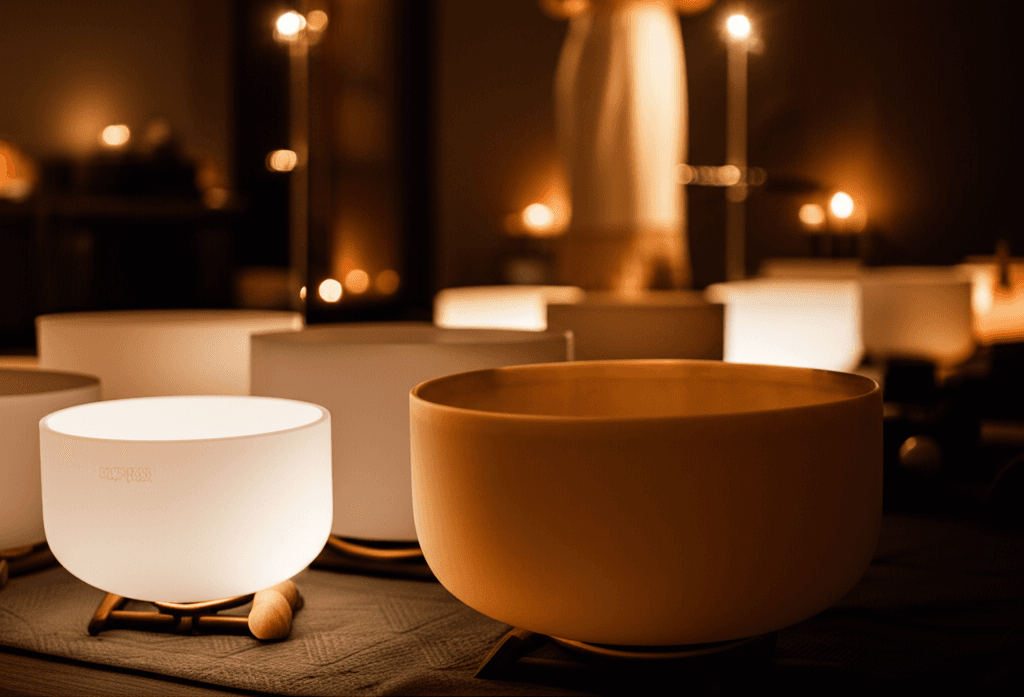
- Himalayan Singing Bowls: These ancient instruments produce rich, resonant tones that create a palpable sense of peace and harmony. Placed on or around the body, their vibrations may support cellular rejuvenation and energetic alignment, crucial for recovery.
- Crystal Singing Bowls: Tuned to specific chakra frequencies, crystal bowls emit pure, sustained tones that are believed to promote energetic balance and mental clarity. They are particularly effective for fostering a meditative state and enhancing visualization.
- Tuning Forks: Precision-calibrated tuning forks are used for targeted therapy, applied to specific points on the body or within the energetic field. Their focused vibrations may support localized pain relief, reduce inflammation, and stimulate energy flow, accelerating recovery processes.
The Soul Art method integrates these instruments into structured sessions that may include guided meditation, breathwork, and intention setting. This holistic framework ensures that athletes not only experience physiological benefits but also cultivate mental fortitude, emotional balance, and a deeper connection to their inner resources. Larissa Steinbach’s expertise lies in intuitively guiding individuals through these sound journeys, creating an environment where athletes can tap into their innate capacity for self-regulation, stress reduction, and peak performance. It's a sanctuary where the symphony of self meets the science of sound.
Your Next Steps
Incorporating sound practices into your athletic regimen doesn't require a complete overhaul; it begins with conscious exploration. Even small, consistent steps can yield significant benefits in your performance, recovery, and overall well-being. Here are some actionable suggestions to start your journey:
- Experiment with Music for Warm-ups: Curate playlists with fast-tempo music (e.g., 120-140 BPM) at a moderate volume (around 70 dB) using a standard frequency (440 Hz) for your warm-up routines. Pay attention to how this influences your mood, perceived exertion, and readiness for activity.
- Develop a Sound-Anchored Pre-Performance Routine: Choose a specific piece of music, a distinct tone, or even a particular natural sound to listen to before high-pressure events. Allow this auditory cue to become a mental anchor that signals your brain to enter a state of focused readiness.
- Prioritize Sound for Post-Training Recovery: After intense workouts or competitions, dedicate 10-20 minutes to listening to calming, resonant soundscapes. This could be ambient nature sounds, binaural beats designed for relaxation, or recordings of gongs and singing bowls, which may support nervous system regulation and muscle recovery.
- Integrate Sound into Visualization and Imagery: During your mental rehearsal sessions, use background soundscapes that immerse you in the imagined environment. If you're visualizing a race, use subtle crowd noises or the rhythmic sound of footsteps. For a moment of calm focus, use gentle, sustained tones. This may enhance the vividness and effectiveness of your mental practice.
- Explore Guided Sound Meditations for Mental Clarity: Many platforms offer guided meditations that incorporate sound for focus and stress reduction. These can be excellent tools for managing pre-competition anxiety, improving sleep, and cultivating a clear, resilient mindset.
By proactively integrating these sound practices, you may unlock a new dimension in your athletic journey, enhancing not just your physical capabilities but also your mental and emotional resilience. Ready to experience the transformative power of sound firsthand?
Bookings Coming Soon
Soul Art is still in preparation. Session details and booking will be published here after launch.
Coming Soon
In Summary
Sound is emerging as an invaluable, scientifically-backed tool for athletes seeking to optimize every facet of their performance. From enhancing motor control and refining technique through acoustic feedback, to improving anticipation and sharpening mental focus with targeted music and soundscapes, its benefits are profound. Sound practices also play a critical role in accelerating physical and mental recovery, fostering resilience and deep relaxation.
At Soul Art, Larissa Steinbach's unique approach blends cutting-edge scientific understanding with the therapeutic power of instruments like gongs and singing bowls. We offer a holistic pathway to unlock greater athletic potential and overall well-being. Embrace the quiet luxury of sound wellness and discover how these essential practices can elevate your game, fortify your mind, and rejuvenate your body for sustained excellence.
Wellness Disclaimer: This article is for educational and informational purposes only. It does not constitute medical advice, diagnosis, or treatment. Soul Art Dubai provides non-medical wellness experiences focused on relaxation, stress management, and general wellbeing. Sound wellness is a complementary practice and should not replace professional medical care.
Related Articles
Optimizing Athletic Performance: The Synergy of Sports Nutrition and Sound Wellness
Archery, Stillness, and Sound: Soul Art's Path to Focus

Swimming's Secret Weapon: Sound for Peak Aquatic Performance