Aphasia Recovery: Harmonizing Language with Sound Wellness

Key Insights
Explore how sound wellness practices may complement aphasia recovery. Discover Soul Art's holistic approach with Larissa Steinbach.
Aphasia Recovery: Harmonizing Language with Sound Wellness
Imagine a world where the words you know are trapped, just beyond your grasp. This profound challenge is the reality for millions worldwide who live with aphasia, a complex language disorder often resulting from stroke or brain injury. It disrupts the ability to communicate, affecting speech, comprehension, reading, and writing.
While conventional speech and language therapy remains the cornerstone of recovery, a growing body of research points towards the profound, complementary role of sound wellness practices. This article delves into the intricate science behind aphasia, exploring how precisely curated soundscapes may support brain function and language pathways. We will uncover how the immersive experiences offered by Soul Art, under the expert guidance of founder Larissa Steinbach, provide a unique, holistic pathway to enhance wellbeing and potentially aid the journey of language recovery.
Join us as we explore how rhythm, melody, and vibration can create a resonant environment, fostering neuroplasticity and offering a unique avenue for individuals seeking to reconnect with their innate capacity for communication. Discover why integrating sound wellness into a comprehensive recovery plan is a valuable, empathetic step towards reclaiming the power of expression.
Unlocking Communication: The Neuroscience of Sound and Language
The human brain is an extraordinary orchestrator of language, processing complex information from sounds to semantics. When this intricate system is disrupted by conditions like aphasia, the journey back to functional communication requires a multi-faceted approach, grounded in a deep understanding of neuroplasticity. Sound, with its unique ability to engage widespread brain regions, offers a fascinating avenue for complementary support.
Aphasia: A Complex Linguistic Landscape
Aphasia is not a singular condition but a spectrum of impairments, as eloquently described by Dr. Jeffrey Binder, a leading researcher in aphasia. He highlights that no two individuals with aphasia have exactly the same impairments due to the multi-faceted nature of language networks and the unique location and size of brain damage. Modern testing methods have revealed over a dozen general patterns of aphasia, along with complex mixtures, underscoring the necessity of precise, individualized diagnosis for designing effective therapies.
Intensive, daily speech-language therapy is shown in studies to lead to faster recovery of language abilities compared to traditional schedules, much like immersive approaches are optimal for learning a second language. This emphasizes the brain's capacity for rapid adaptation and learning when consistently stimulated. While speech-language therapy (SLT) is the standard of care, its effectiveness across multiple language domains has been unequivocally demonstrated, even for individuals with chronic aphasia, many years after a stroke.
Neuroplasticity and Recovery: The Brain's Capacity for Change
At the heart of any recovery journey is neuroplasticity—the brain's incredible ability to reorganize itself by forming new neural connections throughout life. Research indicates that improvements in fluency, listening comprehension, reading comprehension, and naming abilities are significantly improved after intensive treatment for aphasia. Starting SLT early, even within two to three days after a stroke, has been shown to have positive effects. However, it is also important to note that rehabilitation in the chronic phase (more than six months post-stroke) is effective, and improvements in spoken word comprehension can occur many years after a stroke, given a sufficient dose of therapy.
This remarkable capacity for change suggests that the brain remains receptive to new stimuli and learning, making complementary wellness practices potentially beneficial at various stages of recovery. Studies have shown that while individual language recovery varies greatly, consistent, evidence-based therapy yields positive effects at the group level. Sound wellness practices aim to create an optimal physiological and psychological environment to encourage this inherent neuroplasticity.
The Auditory Pathway: How Sound Engages the Brain
The inclusion of sound and music within the rehabilitation process is associated with its capacity to stimulate brain areas involved in emotional processing, motor control, and language. Music therapy, for instance, may improve communication skills in various neurological disorders. Melody-based treatments can induce structural white matter neuroplasticity and engage the right hemisphere, which often has preserved musical abilities, to play a compensatory role in language recovery.
Research by Bitan et al. demonstrates how melody-based treatment results in increased connectivity between motor speech control areas (bilateral supplementary motor areas and insulae) and right hemisphere language areas (inferior frontal gyrus pars triangularis and pars opercularis). Furthermore, singing-based interventions, including Neurologic Music Therapy (NMT) techniques like Melodic Intonation Therapy (MIT) and Therapeutic Singing (TS), can support language recovery by activating bilateral frontotemporal networks, engaging the mirror neuron system, and promoting verbal fluency through entrainment mechanisms. These interventions can lead to significant language improvements, including in spontaneous speech, auditory comprehension, naming, and sentence repetition, while also enhancing executive functions such as attention and working memory. The brain’s response to sound is profound, offering a unique avenue for holistic support in language recovery.
From Theory to Resonance: Experiencing Sound for Language Wellness
Understanding the science behind sound and language is one thing; experiencing its potential in practice is another. Sound wellness is a complementary approach that translates these neurological insights into practical, sensory experiences. It focuses on creating an environment where the body and mind can find deep relaxation, reduce stress, and potentially enhance their natural capacity for recovery and adaptation.
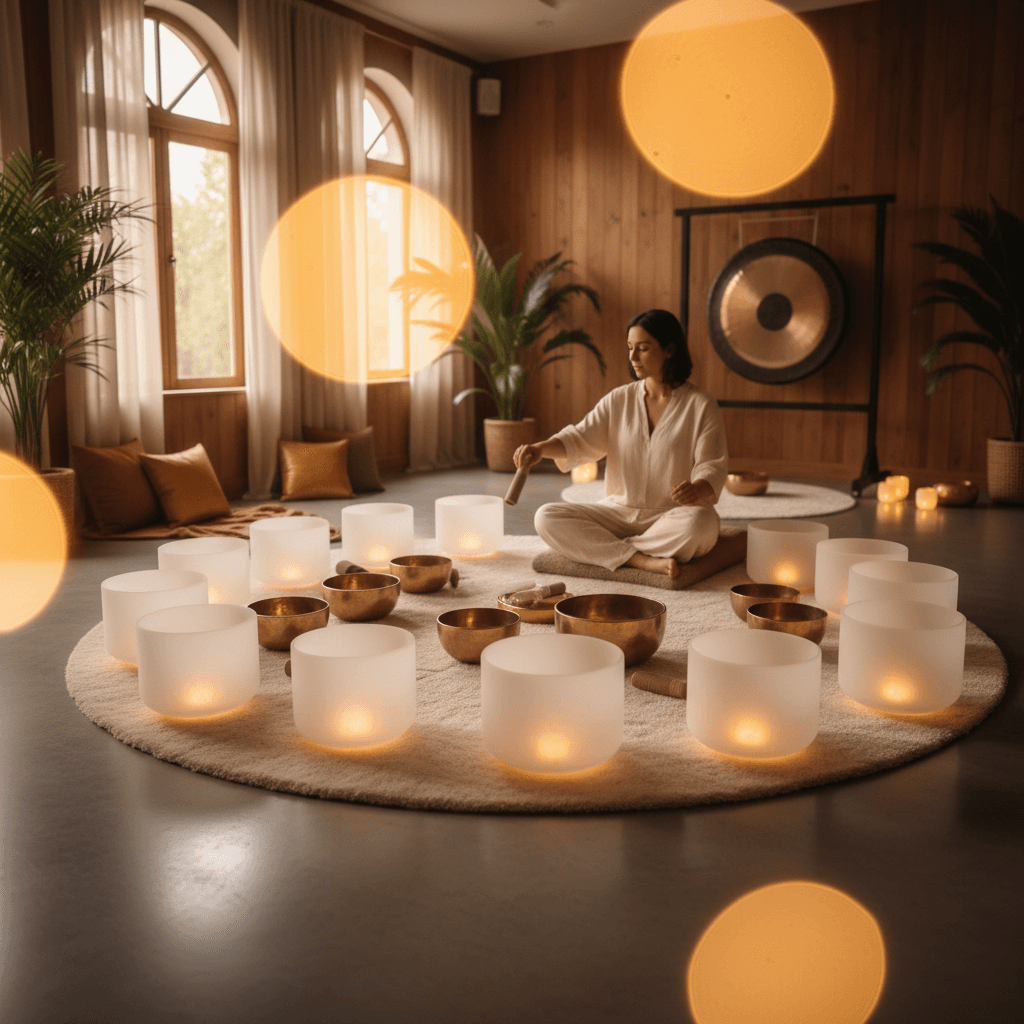
When engaging in sound wellness, clients often experience a profound sense of calm. The carefully chosen frequencies and rhythmic patterns of instruments like singing bowls, gongs, and tuning forks can resonate through the body, promoting a state conducive to healing. This isn't about direct "treatment" of aphasia, but rather about fostering a supportive internal environment. Many people report that the immersive auditory experience helps quiet the mental chatter, allowing for a deeper connection with their inner self and a reduction in anxiety often associated with communication challenges.
The sensory details are crucial. You might feel gentle vibrations permeating your body, hear sustained tones that guide your breath, or experience rhythmic patterns that can subtly encourage internal metronomic timing. These elements may, some research suggests, prime the brain for improved receptivity and processing. The goal is to engage auditory pathways in a non-demanding, soothing manner, encouraging neural networks to respond without the pressure of conventional speech tasks. It is a wellness practice designed to promote overall well-being, which in turn, may support cognitive and communicative functions.
By reducing physiological stress, sound wellness may help create a more optimal state for focused language exercises when they are undertaken. It is a self-care practice that can sit alongside traditional speech-language therapy, offering a holistic layer of support. This integrated approach acknowledges that recovery is not just about direct linguistic intervention, but also about the overall health and resilience of the individual.
"The symphony of healing begins not just with sound, but with the quiet space it creates within us, allowing the brain to tune into its innate rhythm of restoration."
The Soul Art Resonance: Larissa Steinbach's Bespoke Sound Wellness
At Soul Art in Dubai, Larissa Steinbach applies these scientifically informed principles to create bespoke sound wellness experiences. Her approach is rooted in the belief that true well-being encompasses the mind, body, and spirit, and that sound can be a powerful catalyst for harmony within. Larissa's method is unique in its personalized nature, recognizing, much like aphasia itself, that no two individuals' wellness journeys are identical.
Larissa Steinbach meticulously crafts each session, drawing upon her deep expertise in various sound modalities. She integrates ancient wisdom with contemporary scientific understanding to facilitate an environment optimal for deep relaxation and internal recalibration. Clients at Soul Art experience immersive sound journeys featuring a carefully selected array of instruments, each chosen for its distinct vibrational quality and ability to influence brain states.
Specific instruments utilized in the Soul Art method include Nepalese and crystal singing bowls, gongs of varying sizes, therapeutic tuning forks, and gentle percussion instruments. The rich overtones and sustained resonance of these tools are expertly combined to create a profound auditory landscape. Larissa also incorporates rhythmic entrainment techniques and gentle vocal toning, which may subtly encourage the brain's natural tendency to synchronize with external rhythms, potentially supporting areas related to speech and fluency.
The Soul Art experience transcends mere listening; it is a full-body sensory engagement. The gentle vibrations permeate the cells, promoting a sense of cellular renewal and deep peace. This holistic approach aims to reduce stress hormones, calm the nervous system, and foster a state of mindful relaxation where the brain may be more receptive to its inherent self-regulation and repair mechanisms. While Soul Art offers a complementary approach to general well-being, it can be a profound source of solace and support for individuals navigating the complexities of language recovery.
Embrace Your Wellness Journey: Practical Steps
Embarking on a wellness journey for language recovery is a deeply personal and often challenging path. While professional medical guidance and speech-language therapy are paramount, integrating complementary sound wellness practices can offer significant holistic support. Here are some practical steps you can consider today:
- Consult Your Healthcare Team: Always discuss any new wellness practices with your medical doctor or speech-language pathologist. Sound wellness is a complementary approach and should be integrated thoughtfully into your overall recovery plan.
- Explore Mindful Listening: Begin with simple practices of attentive listening. Pay close attention to environmental sounds, gentle music, or guided meditations that focus on sound. This can help re-engage auditory pathways in a relaxed, non-demanding way, promoting general awareness and focus.
- Engage with Gentle Vocalization: If comfortable and cleared by your therapist, explore soft humming, chanting, or singing simple, familiar melodies. As studies suggest, music and singing can activate different brain regions and may support verbal fluency and emotional expression, contributing to a sense of holistic wellness.
- Research Sound Wellness Providers: Seek out reputable sound wellness studios or practitioners in your area. Look for those who emphasize deep relaxation, stress reduction, and overall well-being. Understand their philosophy and how their approach aligns with your personal goals for self-care practice.
- Consider a Soul Art Session: Experience the unique and personalized approach of Larissa Steinbach at Soul Art in Dubai. Our immersive sound experiences are designed to foster deep relaxation, reduce stress, and promote overall nervous system balance, providing a supportive environment that may aid your journey toward enhanced communication and well-being.
Resonating Towards Well-being: A Holistic View
The journey of aphasia recovery is a testament to the human spirit's resilience and the brain's extraordinary capacity for adaptation. While comprehensive speech and language therapy forms the foundation, the emerging understanding of neuroplasticity and the brain's response to auditory stimuli reveals a promising role for sound wellness practices. From the intricate science of how melody engages compensatory brain areas to the profound relaxation offered by resonant vibrations, sound provides a unique, complementary pathway.
At Soul Art, Larissa Steinbach masterfully curates these sound experiences, offering a bespoke approach that supports deep relaxation, stress reduction, and overall nervous system balance. By fostering an environment of calm and receptivity, these wellness practices may help individuals during their language recovery journey, enhancing their overall well-being and supporting their innate capacity for communication. We invite you to explore the harmonious possibilities and discover how the transformative power of sound can resonate with your journey towards greater linguistic freedom and holistic wellness.
Bookings Coming Soon
Soul Art is still in preparation. Session details and booking will be published here after launch.
Coming Soon
Wellness Disclaimer: This article is for educational and informational purposes only. It does not constitute medical advice, diagnosis, or treatment. Soul Art Dubai provides non-medical wellness experiences focused on relaxation, stress management, and general wellbeing. Sound wellness is a complementary practice and should not replace professional medical care.