Anahata Nada: Unlocking the Unstruck Sound Within for Well-being
Key Insights
Explore Anahata Nada, the 'Unstruck Sound' in Nada Yoga and sound wellness. Learn its science, benefits, and how Soul Art Dubai by Larissa Steinbach guides you.
Have you ever wondered if there's a sound that exists beyond what your ears can perceive, a silent hum that forms the very fabric of existence? Ancient mystics and modern physicists alike suggest that at our core, everything, including us, is vibrating energy. This profound realization points to a primal vibration, a continuous, subtle sound that resonates within and around all things.
This deeply profound concept is known as Anahata Nada, or the "Unstruck Sound," a cornerstone of the ancient Indian tradition of Nada Yoga. It refers to a sound not created by two objects striking together, but rather the intrinsic vibration of the universe itself. In this comprehensive article, we will delve into the scientific underpinnings and profound benefits of Anahata Nada, exploring its ancient wisdom and how it offers a pathway to deep relaxation and holistic well-being.
Join us as we uncover how this "Unstruck Sound" can serve as a powerful tool for stress management, mental clarity, and spiritual connection. Discover how the transformative practices at Soul Art, founded by Larissa Steinbach, can guide you towards experiencing this internal resonance and unlocking a profound sense of inner peace. Understanding Anahata Nada may support a more balanced and harmonious life, bridging ancient teachings with contemporary wellness practices.
The Science Explained: The Vibrational Blueprint of Existence
At its most fundamental level, the universe is a symphony of vibrations. From the smallest atoms to the grandest galaxies, all matter is composed of pulsating energy, a concept that forms the bedrock of both ancient spiritual philosophies and contemporary physics. This universal hum, often described as a subtle, pervasive vibration, is the essence of existence, manifesting in our awareness as a gentle, underlying resonance.
For millennia, mystics across various traditions have recounted their experiences of this primal energy, perceiving it as a humming vibration within and around everything audible. Joseph Campbell, the renowned mythologist, eloquently likened this unstruck vibration to the continuous hum of an electrical transformer or the unheard oscillations of atoms and molecules. This recognition highlights a profound convergence between ancient spiritual insights and modern scientific understanding.
Ahata Nada vs. Anahata Nada: A Crucial Distinction
In the practice of Nada Yoga, the yoga of sound, this vibrational landscape is distinctly categorized into two primary forms: Ahata Nada and Anahata Nada. Understanding this distinction is key to comprehending the journey towards inner silence.
Ahata Nada refers to all external, audible sounds, those that are "struck" or produced by the impact or friction of two or more objects. This encompasses the vast spectrum of sounds we encounter daily: the bow on a string, a drum and stick, the human voice, the waves crashing against the shore, or even wind rustling through leaves. These are sounds perceived through our external senses, specifically our ears, and they create pulsing waves of air molecules that our brain interprets as sound. While powerful, these sounds are a starting point for deeper exploration.
Conversely, Anahata Nada is the "Unstruck Sound," a term that literally means "the sound that is not made by two things striking together." This profound distinction emphasizes its origin as primal energy, the very sound of the universe itself. It represents the subtler, silent, internal vibrations of our own awareness, considered sacred and deeply personal. It's the sound of cosmic consciousness, an extrasensory vibration that transcends ordinary hearing. If you close your ears completely, you may notice a subtle internal hum – this serves as an illustrative example of an internal sound, though not necessarily the full Anahata Nada experience.
The Neurological and Physiological Impact of Sound
Modern science is progressively catching up to the ancient understanding of how sound and vibration profoundly influence the human body, mind, and nervous system. The field of cymatics, derived from the Greek word kyma (wave), provides a visual testament to this impact. By directing sound waves through mediums like sand or water, cymatics reveals intricate, beautiful patterns and structures, demonstrating how sound vibrations literally shape matter. This visual evidence supports the idea that sound can induce order and harmony within chaotic systems, including the biological systems of our bodies.
Research consistently indicates that specific sound frequencies can significantly influence brain activity. Studies have shown that listening to therapeutic sounds, such as those used in sound baths, may support the reduction of tension, anger, fatigue, anxiety, and depression. It may also promote relaxation by influencing brainwave states, encouraging shifts towards alpha and theta waves associated with meditative states. For instance, preliminary studies on binaural beats suggest that specific frequencies can entrain brainwaves, guiding them towards desired states of relaxation or focus.
Furthermore, the physiological benefits are noteworthy. A study published in the Journal of Evidence-Based Integrative Medicine found that an hour-long sound meditation helped participants reduce negative emotional states while increasing a sense of spiritual well-being. Other research has indicated that listening to healing music can significantly increase levels of interleukin-1 in the bloodstream, proteins crucial for immune function and cellular protection. Simultaneously, participants in such studies often experience a reduction in cortisol, the primary stress hormone, by as much as 25 percent, highlighting sound's role as a potent stress management tool.
The Principle of Entrainment and Chakra Activation
The therapeutic power of sound is deeply rooted in the principle of entrainment. This phenomenon occurs when one oscillating system, like a struck tuning fork, influences another nearby system to vibrate at the same frequency. In the context of sound wellness, this means our body, a highly sophisticated vibrational system, can be gently guided to align with therapeutic frequencies. When external sounds (Ahata Nada) resonate with our internal rhythms, they may support a shift towards a more balanced and harmonious state.
Nada Yoga also postulates that sound vibrations can influence the energy within our body's major chakras. These are considered energy centers that govern various physical, mental, and spiritual functions. Through specific sound frequencies, both audible and inaudible, it is believed that these chakras can be activated and balanced. A randomized controlled crossover pilot study investigating Nada Yoga meditation using chakra-specific "Beej Mantras" found an immediate increase in the energy levels of several chakras, including the Muladhara, Manipura, Anahata, and Vishuddhi chakras, confirming their activation. This suggests that sound practices may foster mental, physical, and spiritual equilibrium by stimulating these energy centers.
How It Works in Practice: Journeying Inward with Sound
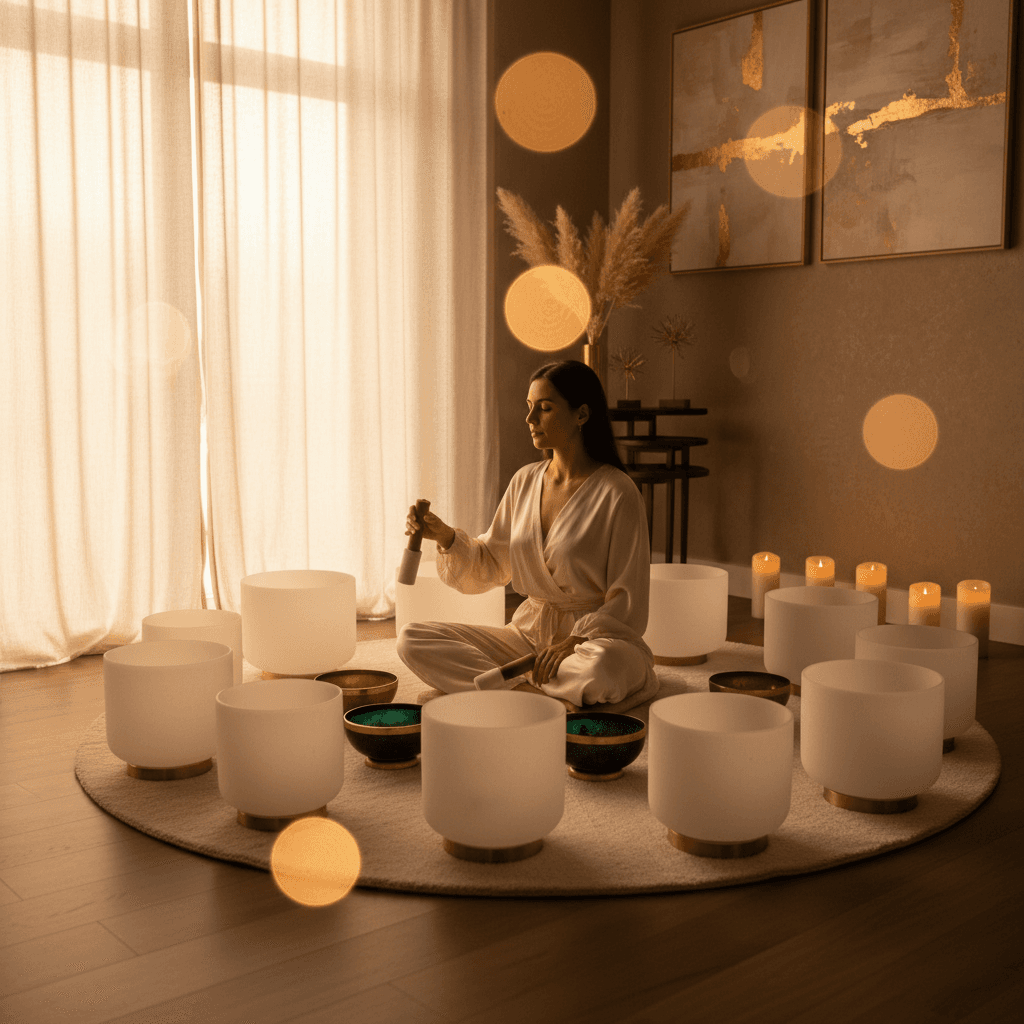
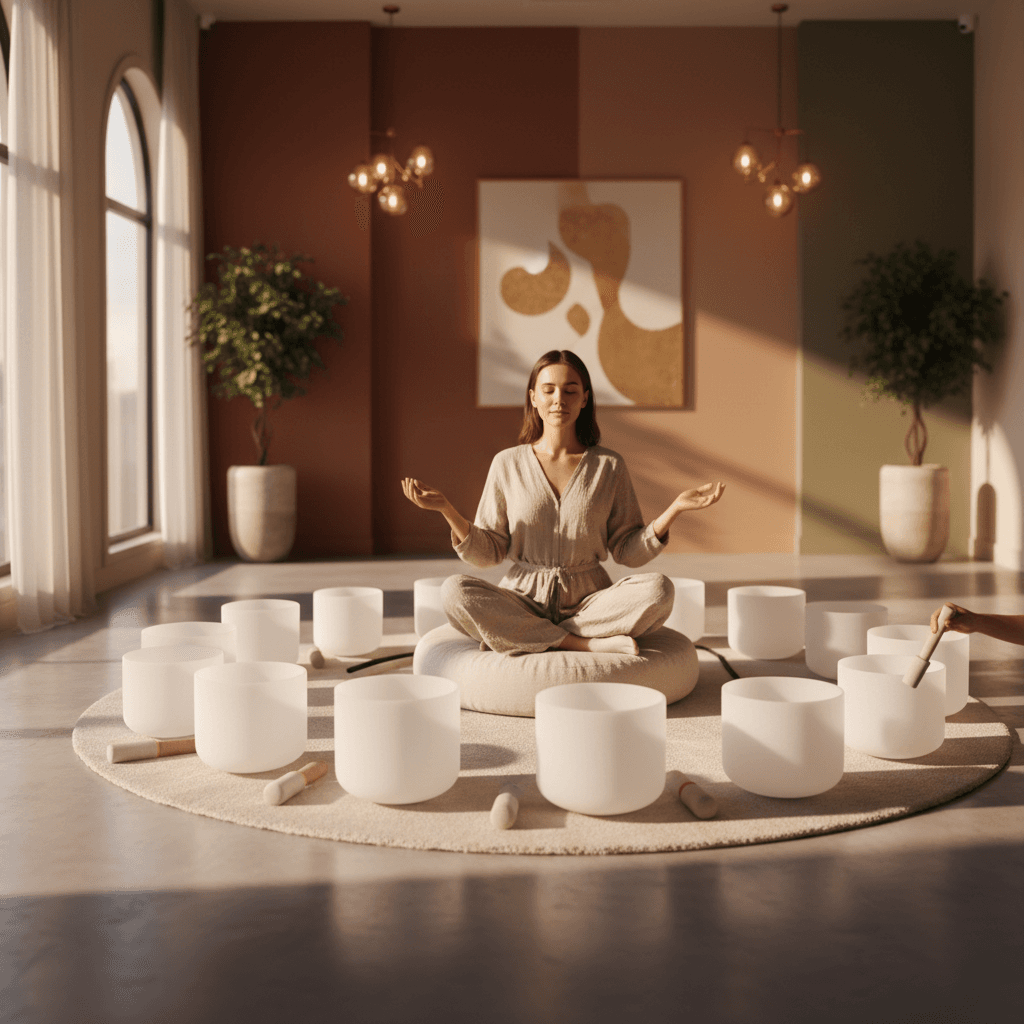
The journey towards experiencing Anahata Nada typically begins with Ahata Nada, the external, audible sounds that we can consciously perceive. These "struck" sounds, such as the resonant tones of Tibetan singing bowls, the deep vibrations of gongs, or the delicate chiming of bells, serve as powerful tools to guide our awareness inward. They are not merely background noise but intentional frequencies designed to quiet the external chatter of the mind and deepen our internal focus.
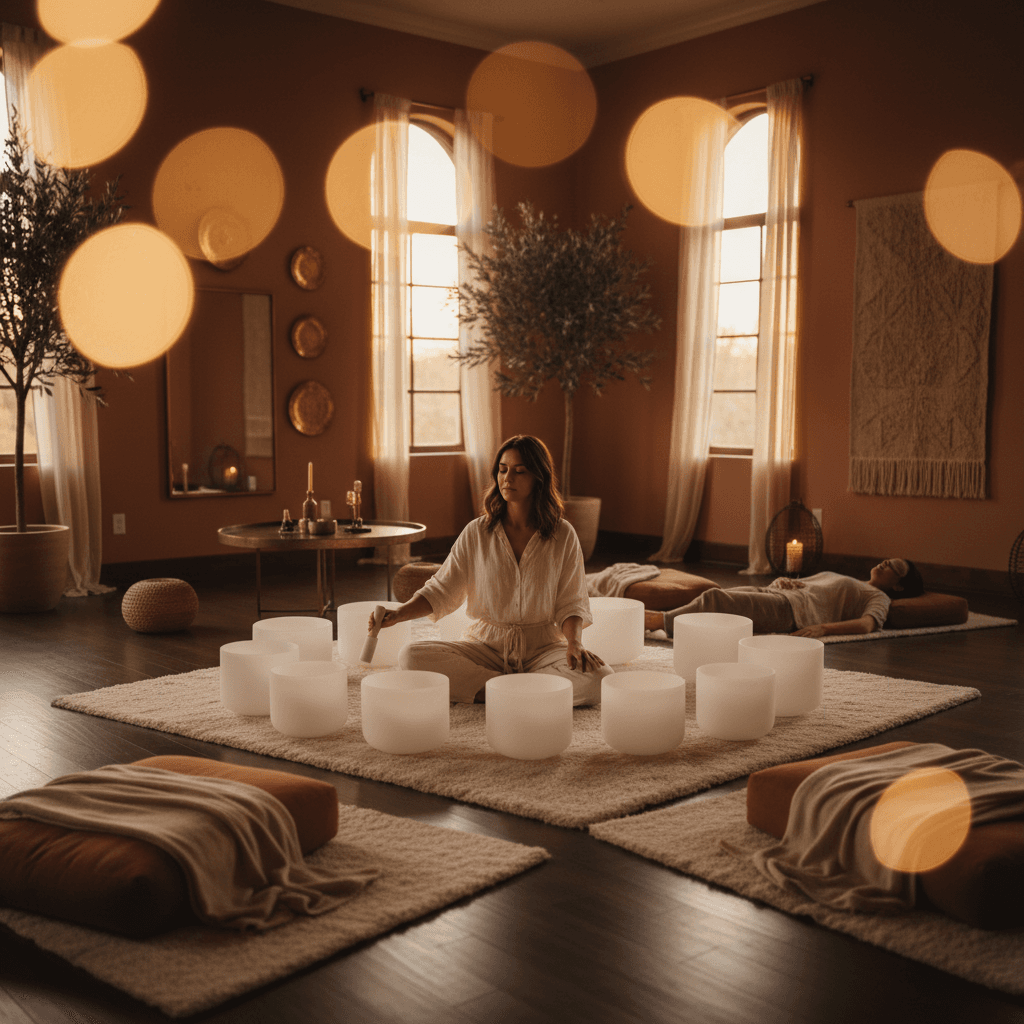
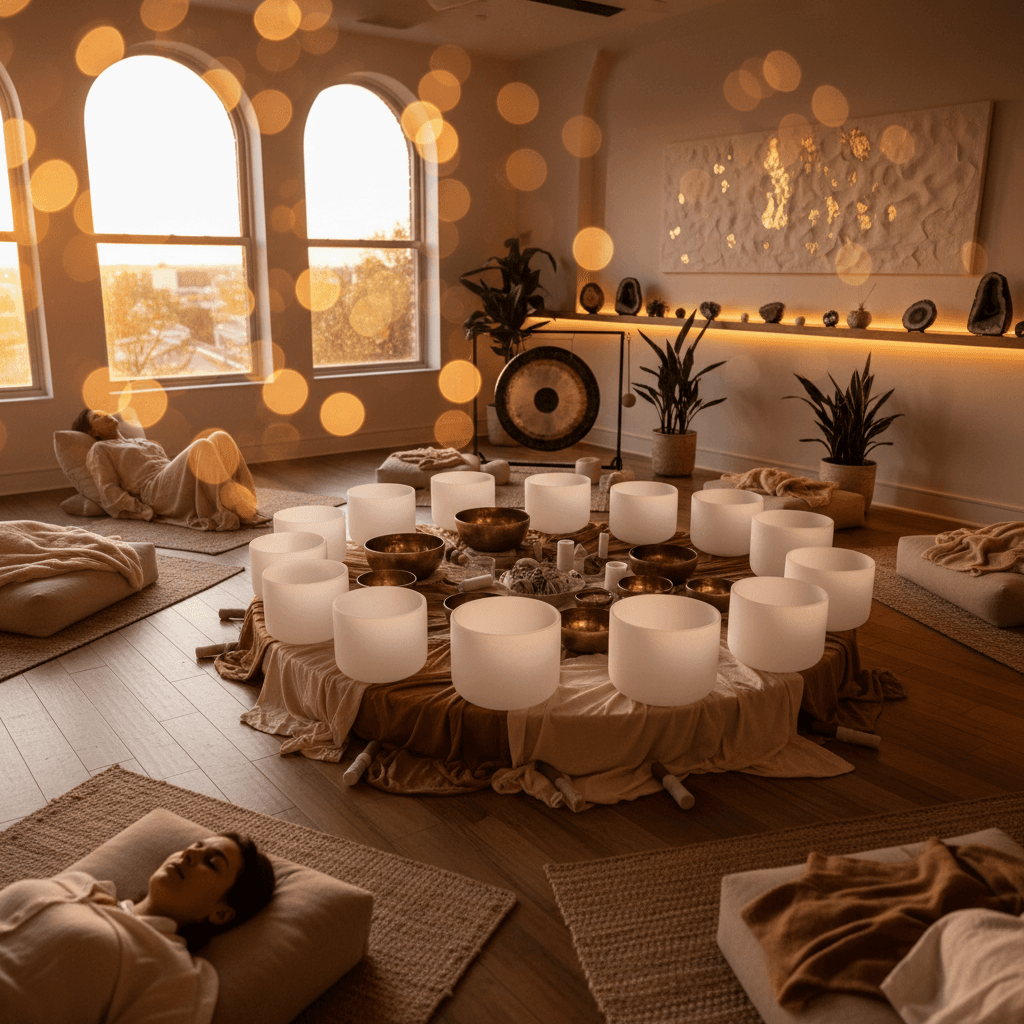
During a sound wellness session, clients typically lie down in a comfortable position, allowing themselves to fully surrender to the sonic landscape. The sustained, rich tones create an immersive environment, prompting the listener to refine their focus and cultivate deep listening. This practice encourages a meditative shift, moving beyond intellectual engagement with the sound to a more visceral, intuitive experience. The goal is to achieve a profound state of calmness, a mental stillness where the mind's incessant activity begins to subside.
This journey often culminates in a state akin to Yoga Nidra, or Yogic Sleep. Here, the body enters a profound state of relaxation, existing in a unique space between waking and sleeping consciousness. It's a state where the individual remains aware yet deeply rested, allowing for profound release and introspection. In this deeply relaxed condition, the external sounds begin to fade into the background, and the focus shifts towards the subtler, internal vibrations. Many people report experiencing a sense of being enveloped in a gentle hum, or a pervasive silence that is anything but empty.
The practice of cultivating Anahata Nada is not about creating a sound, but rather about accessing the deep, internal, silent vibrations that are always present. It’s about peeling back the layers of external stimulation and internal noise to reveal the fundamental hum of our own being. This internal sound is not heard with the physical ears but perceived through a heightened state of awareness and deep meditative shifts. It’s a sensory experience that feels like an internal resonance, a profound stillness that resonates with life itself. This profound stillness allows one to simply "let go," as often encouraged in sessions, embracing any natural bodily responses such as snoring, as signs of true relaxation.
The Soul Art Approach: Larissa Steinbach's Vision for Inner Harmony
At Soul Art, Dubai's premier sound wellness studio, Larissa Steinbach has meticulously crafted a unique approach that seamlessly blends ancient wisdom with contemporary sound healing practices. Her vision is to provide a sanctuary where individuals can embark on transformative sonic journeys, guiding them towards the profound experience of Anahata Nada and fostering holistic well-being. Larissa's method is rooted in deep respect for the traditional principles of Nada Yoga, yet delivered with a modern understanding of its therapeutic applications.
Larissa Steinbach’s expertise lies in her ability to create an environment conducive to deep listening and internal exploration. Her sessions are not merely concerts of beautiful sounds; they are carefully orchestrated experiences designed to facilitate a profound shift in awareness. She utilizes a diverse array of sacred instruments, each selected for its unique vibrational qualities and capacity to generate potent Ahata Nada. These include resonant Tibetan singing bowls, large cosmic gongs that produce deeply immersive soundscapes, gentle chimes, and other percussive instruments.
What makes the Soul Art method truly distinctive is Larissa’s intuitive guidance, which encourages participants to move beyond passive listening. She emphasizes the cultivation of inner stillness, breath awareness, and an open receptivity to subtle vibrations. Clients are guided to use the external sounds as a doorway, helping them to refine focus and shift their awareness inward, ultimately serving as a tool to access their own Anahata Nada. This deliberate journey helps individuals to cultivate deep listening, which is essential for perceiving the unstruck sound behind the ordinary audible sounds.
Larissa's sessions often incorporate elements that prepare the body and mind, creating a readiness for profound relaxation. By intentionally combining the potent frequencies of external sounds with mindful presence, she helps individuals to attune to their inner vibrational landscape. This approach aims to restore the nervous system, reduce accumulated stress, and create space for a deeper connection to the self, aligning with the "Sound of the Self" that ancient texts describe. Soul Art offers a uniquely curated space in Dubai for these transformative, deeply personal sound wellness experiences, under the compassionate and expert guidance of Larissa Steinbach.
Your Next Steps: Embracing the Unstruck Sound in Daily Life
The journey towards recognizing and integrating Anahata Nada into your life is a continuous practice, offering ongoing benefits for your well-being. While guided sessions provide an immersive introduction, there are many simple, actionable steps you can take to cultivate this inner awareness in your everyday routine. Embracing these practices may support a deeper connection to yourself and a more harmonious existence.
Here are some practical steps you can implement today to explore the "Unstruck Sound" within:
- Practice Mindful Deep Listening: Take a few moments each day to sit in quietude, closing your eyes and gently closing your ears if comfortable. Rather than seeking specific sounds, simply observe what arises. Pay attention to the subtle internal hums or the profound silence that permeates your awareness, noticing sounds not made by external sources. This simple act can begin to attune you to your inner vibrational landscape.
- Incorporate Mindful Breathing: Conscious breathing is a powerful anchor for the present moment. Engage in slow, deep, diaphragmatic breathing. As you inhale and exhale, visualize the breath carrying serene energy throughout your body, and imagine it calming your nervous system. This practice can quiet the mind, making it easier to perceive subtle internal sensations.
- Engage in Gentle Intuitive Movements: Ancient traditions often combine sound with gentle movement. Explore intuitive, soft stretches or simple yoga poses, particularly those that open the chest and upper body. This can help release physical tension and create a sense of openness, which may support a deeper connection to the Anahata (heart) chakra and the internal resonance.
- Seek Guided Sound Wellness Sessions: To deepen your experience, consider attending professional sound wellness sessions. Guided by experienced practitioners like Larissa Steinbach at Soul Art, these sessions provide a structured and supportive environment to explore the profound effects of therapeutic sound. The intentional use of instruments and expert facilitation can help you more effectively bridge the gap from external Ahata Nada to internal Anahata Nada.
- Journal Your Experiences: After practicing mindful listening or attending a sound session, take time to journal your observations. Note any sensations, emotions, or insights that arose. Reflecting on these experiences can deepen your understanding and reinforce the benefits of your self-care practice.
These steps are designed as complementary approaches to holistic wellness, inviting you to explore a path of self-discovery and inner peace.
In Summary: Discovering Your Inner Harmony with Soul Art
Anahata Nada, the "Unstruck Sound," represents the universal, primal vibration that underlies all existence, a subtle hum of cosmic consciousness. This ancient concept, deeply rooted in Nada Yoga, offers a powerful pathway to profound inner peace and holistic well-being. By distinguishing between Ahata (external, struck) and Anahata (internal, unstruck) sounds, we begin a journey of deep listening, guiding our awareness from the audible world to the silent resonance within.
Scientific research continues to validate the profound impact of sound and vibration on our nervous system, stress levels, and emotional state, demonstrating its capacity to foster relaxation and harmony. Embracing the understanding of Anahata Nada and engaging in sound wellness practices may support significant reductions in stress and anxiety, enhance mental clarity, and cultivate a deeper connection to one's authentic self. At Soul Art, Larissa Steinbach expertly guides this transformative journey, creating a serene space in Dubai for you to explore this "Sound of the Self."
Bookings Coming Soon
Soul Art is still in preparation. Session details and booking will be published here after launch.
Coming Soon
Wellness Disclaimer: This article is for educational and informational purposes only. It does not constitute medical advice, diagnosis, or treatment. Soul Art Dubai provides non-medical wellness experiences focused on relaxation, stress management, and general wellbeing. Sound wellness is a complementary practice and should not replace professional medical care.