Ahata & Anahata: Unlocking External & Internal Sound for Wellness
Key Insights
Explore the ancient wisdom of Ahata and Anahata Nada with Soul Art Dubai. Discover how external and internal sound practices enhance brain health, focus, and holistic well-being under Larissa Steinbach's guidance.
Have you ever paused to truly listen, not just to the sounds around you, but to the subtle hum within? In a world saturated with external noise, the practice of deep listening offers a profound pathway to inner peace and enhanced well-being. This journey into sound, known in ancient traditions as Nada Yoga, differentiates between two fundamental types of sound: Ahata, the external and audible, and Anahata, the internal and unstruck.
At Soul Art Dubai, founded by the visionary Larissa Steinbach, we explore these powerful dimensions of sound to guide you toward a more harmonious state of being. This article will delve into the scientific underpinnings of both external and internal sound practices, explaining how they synergistically support mental clarity, emotional balance, and holistic health. Understanding these ancient principles can transform your approach to self-care, offering a unique avenue for profound relaxation and personal growth. We invite you to discover how embracing the full spectrum of sound can unlock an unparalleled sense of calm and self-awareness, making it an invaluable tool for modern living.
The Science of Sound: Unveiling Ahata and Anahata
The universe, in its very essence, is a symphony of vibrations. From the smallest atom to the grandest galaxy, everything is in a constant state of flux and resonance. Nada Yoga, the ancient science of sound, posits that by consciously engaging with these vibrations, we can elevate our state of awareness and experience pure consciousness. This profound practice categorizes sound into two distinct yet interconnected realms: Ahata and Anahata.
What is Nada Yoga? The Universal Vibration
Nada Yoga is a holistic wellness system that views sound, or 'nada,' as a vehicle for mind-body-spirit integration. Its core principle rests on the understanding that specific sound frequencies can resonate within our bodies, influencing various energy centers or chakras, and subsequently impacting our physical and subtle bodies. This ancient wisdom, rooted in the Hatha Yoga tradition, finds intriguing parallels with modern scientific inquiry into vibration and its effects on human physiology.
Modern science is progressively uncovering complementary evidence that supports these ancient teachings. Studies have begun to highlight the profound effects of sound and vibration on the human body, mind, and nervous system. The exploration of non-pharmacological alternative and complementary medicine has paved the way for an integrative approach to health and healing, affirming the deep-seated mind-body connection.
Ahata Nada: The Power of External Resonance
Ahata Nada refers to the external, "struck" or audible sounds that we perceive through our sensory organs, primarily our ears. These are the sounds of our daily lives – music, chanting, the ringing of a singing bowl, or the striking of a gong. In sound wellness practices, Ahata Nada serves as a powerful starting point, a tangible entry into the subtler realms of internal experience. It’s the intentional application of these audible vibrations that helps us to refine focus, gently shift awareness inward, and cultivate a state of deep listening and calmness.
Research utilizing advanced brain imaging techniques such as PET and fMRI has shed light on how listening to music, a prime example of Ahata Nada, can activate specific brain regions. These activations are often associated with functions like euphoria and reward, potentially influencing mood and overall brain function. By releasing nervous tension, external sound practices may calm the brain and nerves, supporting the body in resuming its usual, healthy functions. Furthermore, studies indicate that Ahata Nada can be associated with boosting concentration and improving memory, as the mind naturally gravitates towards and focuses on the incoming sound. The therapeutic effects of rhythm, in particular, have been explored, with some research suggesting it may provide physical discomfort relief.
Beyond auditory perception, the human body is equipped with mechanoreceptors, such as Pacinian Corpuscles, located throughout the skin and other tissues. These receptors enable us to physically feel vibrations, meaning that sound is not just heard but also experienced somatically. The field of cymatics, for instance, visually demonstrates how sound vibrations create intricate patterns in mediums like sand or water, offering a tangible representation of how sound can influence physical matter, hinting at its subtle effects on the body's internal systems.
Anahata Nada: The Sacred Internal Symphony
In contrast to Ahata, Anahata Nada is the "unstruck" or silent, truly internal and sacred sound. It represents the subtler, silent vibrations of our own awareness, a personal 'nada' that arises from within and is not heard by others. This deeply personal experience is often considered the practitioner's own unique vibration, manifesting in various forms as one delves deeper into meditative states. The Yoga texts suggest that Anahata Nada can manifest in ten different forms, a testament to its profound and multifaceted nature.
The pursuit of Anahata Nada is a journey into the depths of self-realization, aiming to increase awareness and experience pure consciousness. As external sounds fade and the mind stills, practitioners may begin to perceive an internal tone – a soft hum, a high-pitched ring, or subtle sounds akin to wind or bells. This internal listening is not through the physical ears but originates from within. Anecdotal accounts often describe how resting in this internal sound allows thoughts to dissolve, breath to slow, and a profound clarity to emerge.
Scientific understanding of Anahata Nada is still emerging, yet research into sound-based meditation techniques provides valuable clues. The Mind Sound Resonance Technique (MSRT), for example, which incorporates both loud (Ahata) and mental (Anahata) chanting, has demonstrated significant psychophysiological benefits. Studies have shown that MSRT may reduce sympathetic nervous system activation, which is responsible for the body's "fight or flight" response, while potentially increasing parasympathetic activity, leading to deep relaxation for the mind and body. This technique has been associated with reduced blood pressure, heart rate, stress, anxiety, and depression, alongside improved self-esteem and cognitive functions such as sustained attention and information processing speed. These findings suggest that engaging with both external and internal sound can profoundly impact our mental and physical well-being, fostering a state of blissful awareness and inner silence.
How It Works in Practice: Journeying from External to Internal
The journey through Ahata and Anahata Nada is a carefully curated progression, designed to gently guide the mind from external distractions to profound internal stillness. In a practical setting, external sounds act as a powerful anchor, a focal point that draws awareness and prepares the ground for the emergence of the internal symphony. This process is deeply personal yet universally accessible, offering a pathway to deep self-discovery.
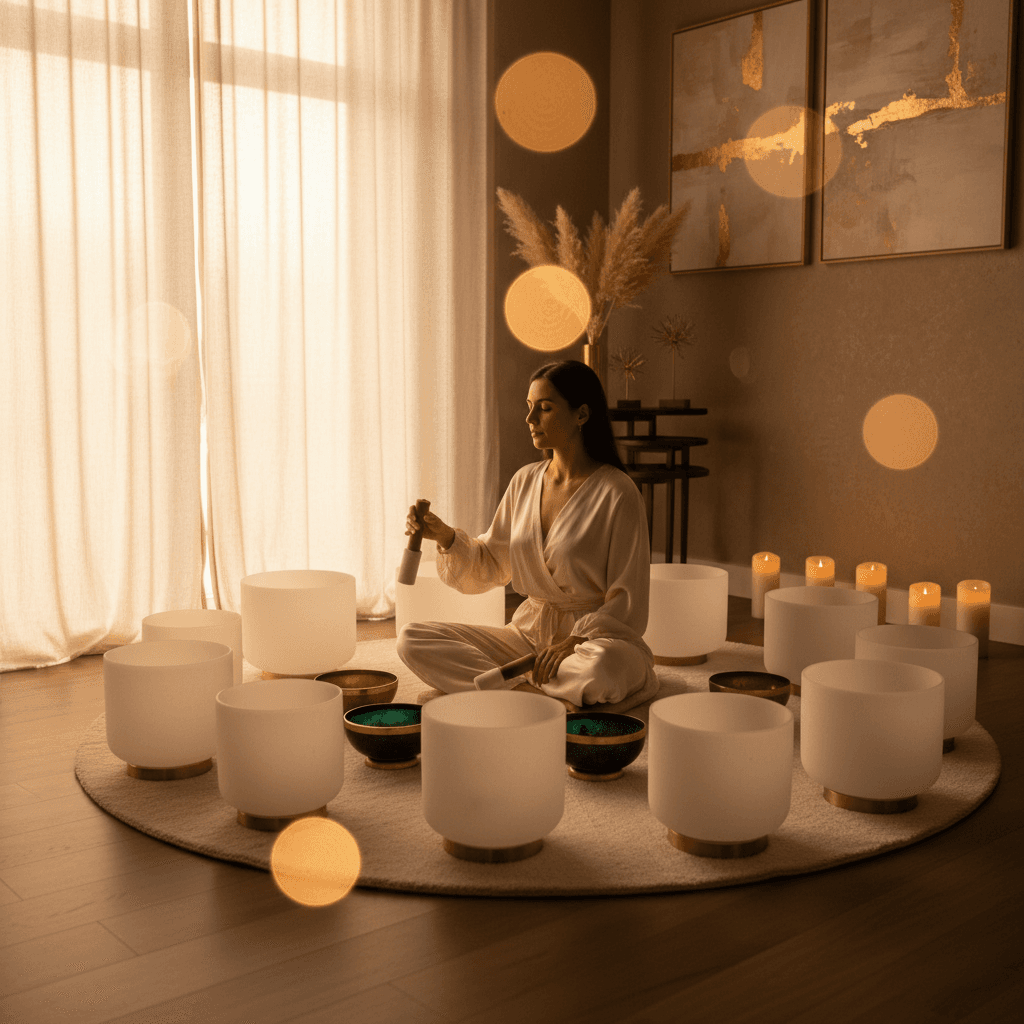
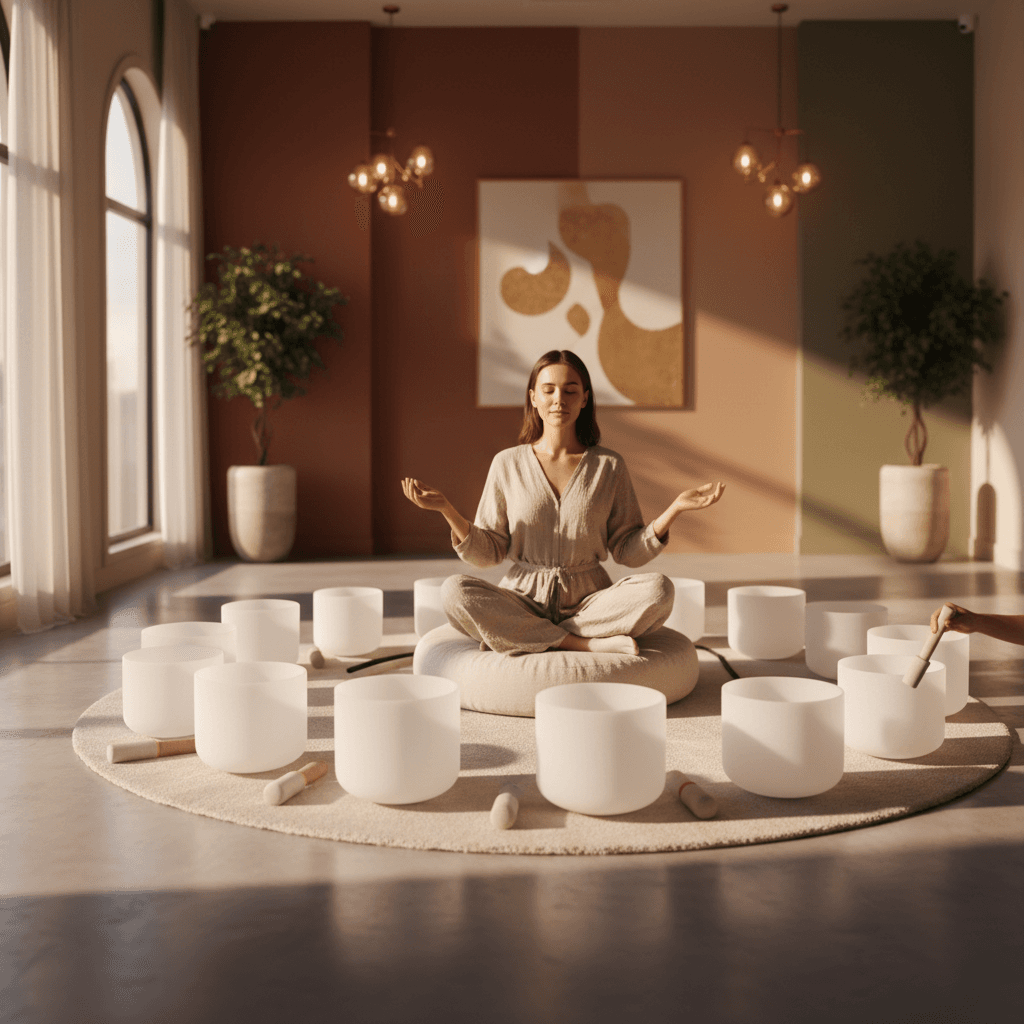
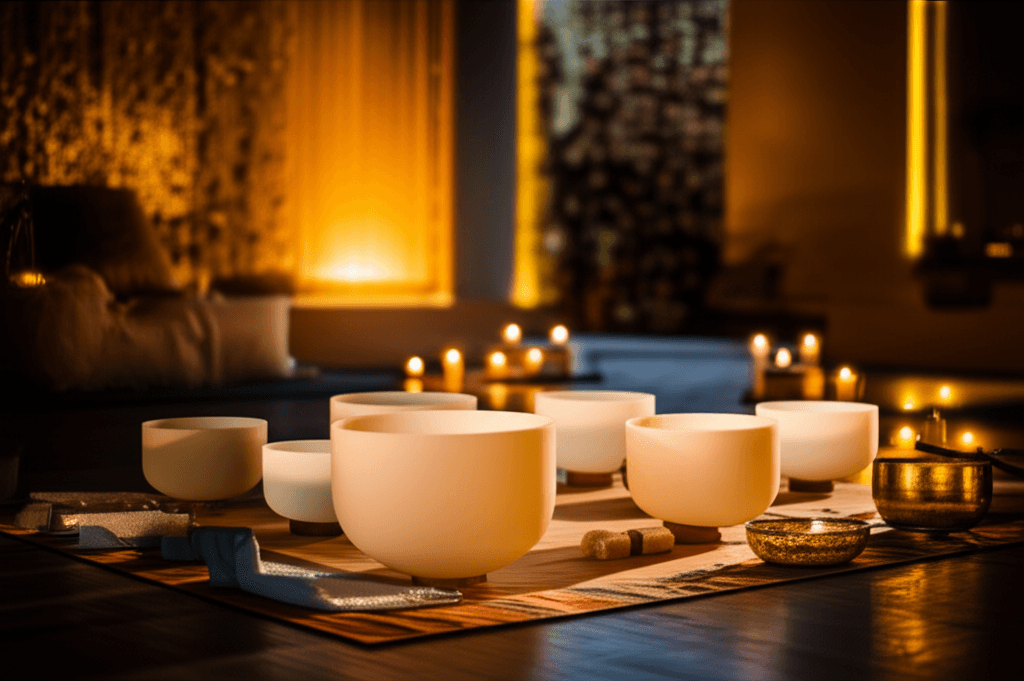
Sound healing instruments are prime examples of Ahata Nada in action. The resonant tones of Tibetan singing bowls, the gentle chime of bells, or the deep, immersive vibrations of gongs are skillfully employed to create an environment conducive to relaxation and introspection. These audible sounds serve as a starting point, helping individuals refine their focus and cultivate a state of deep listening. The rich, enveloping soundscapes encourage the mind to let go of external chatter, facilitating a natural shift in awareness inward.
Chanting and mantra repetition are also cornerstone practices in Nada Yoga, harnessing the power of both Ahata and Anahata. Reciting mantras aloud creates powerful external vibrations that resonate through the body, stimulating mechanoreceptors and influencing energy fields. As the practice deepens, the repetition may become mental (Anahata), directing awareness purely inward. This internal repetition allows the practitioner to cultivate the subtle internal sound, feeling its resonance throughout the body without the need for external auditory input. Practices like the Maha Mrityunjaya Mantra, chanted both aloud and mentally, are designed to generate resonance that revitalizes internal energy, fostering deeper layers of silence and warding off stresses. Chakra-specific "Beej Mantras" are also used, with preliminary studies suggesting their potential to enhance the activation of various chakras, indicating a direct energetic influence.
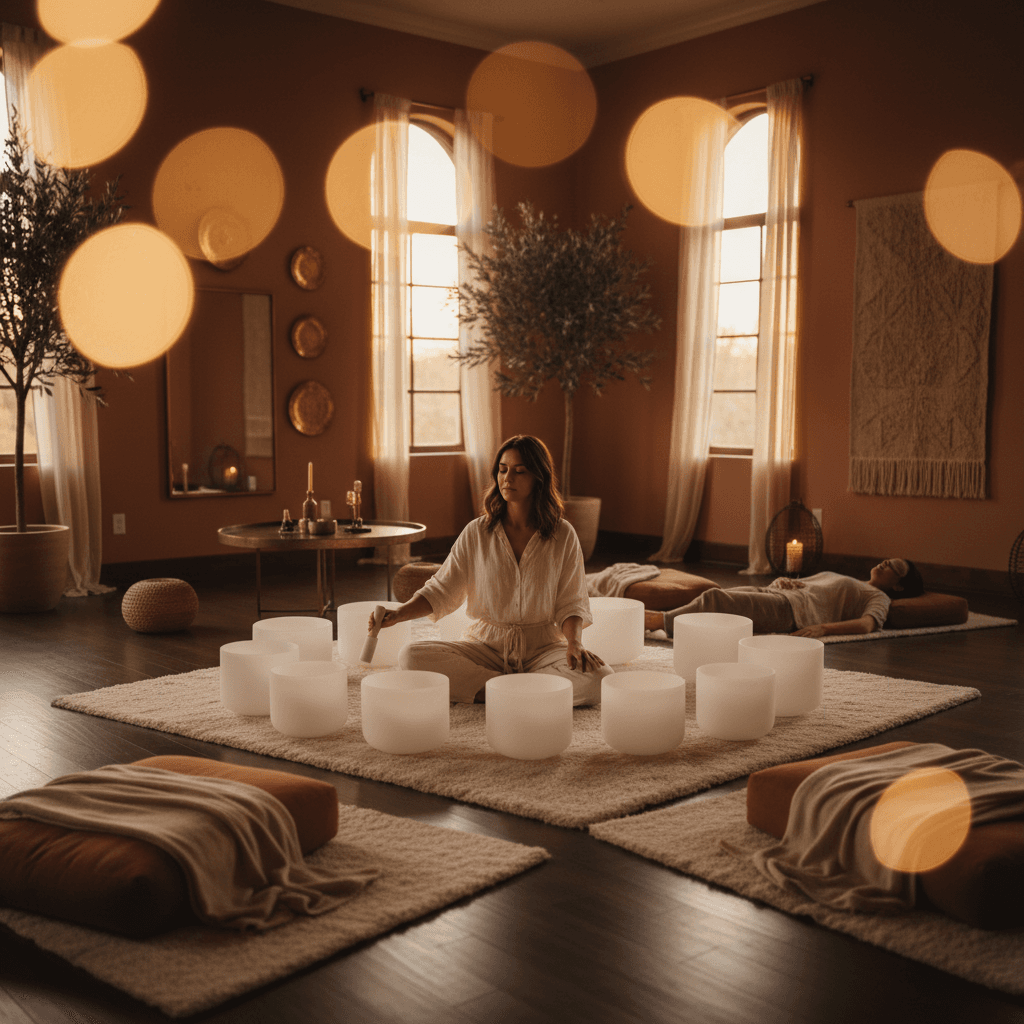
Incorporating Yoga Nidra, often referred to as "Yogic Sleep," further enhances the practice by inducing a state of consciousness between waking and sleeping. During Yoga Nidra, the body enters a profound state of rest while the mind remains gently aware, facilitating a powerful journey inward. This trance-like state is ideal for accessing deeper layers of the subconscious and cultivating the Anahata Nada. Participants are often encouraged to simply "let go," even if it means succumbing to gentle snoring, embracing the full spectrum of relaxation without judgment. The combination of sound healing with Yoga Nidra creates an immersive experience that can lead to significant reductions in tension, anger, fatigue, anxiety, and depression, while increasing a sense of spiritual well-being, as reported in studies published in journals like the Journal of Evidence-Based Integrative Medicine.
The structured application of Mind Sound Resonance Technique (MSRT) exemplifies this journey. It involves alternating between loud (Ahata) and mental (Anahata) chanting of fundamental sounds like A, U, M, and AUM. During the Ahata phase, practitioners are encouraged to feel the resonance throughout their entire body. As they transition to the Anahata phase, the instruction remains to feel this resonance, even in the absence of audible sound. This sustained practice of feeling subtle resonant waves, even in silence, culminates in a state of blissful awareness, forming the foundational basis for the therapeutic benefits and healing power of these traditional chanting practices. It leads to an experience of tremendous expansion and rest, guiding individuals from external auditory engagement to profound internal vibrational awareness.
The Soul Art Approach: Larissa Steinbach's Vision for Sound Wellness
At Soul Art Dubai, Larissa Steinbach has meticulously crafted a unique approach to sound wellness, seamlessly blending the ancient wisdom of Nada Yoga with contemporary understanding of holistic well-being. Her vision is to create a sanctuary where individuals can embark on a profound journey from the external landscape of sound to the sacred internal symphony of self. This methodology is not merely about listening to beautiful sounds; it's about active engagement, deep introspection, and a carefully guided experience designed to foster genuine transformation.
Larissa's expertise lies in her ability to interpret and apply the principles of Ahata and Anahata Nada in a way that is both scientifically grounded and deeply intuitive. She understands that the external "struck" sounds (Ahata) serve as an essential gateway, preparing the mind and body for the subtler, internal vibrations (Anahata). Her studio, Soul Art, is designed to be an immersive environment where every detail contributes to this process, from the acoustics of the space to the carefully selected instruments.
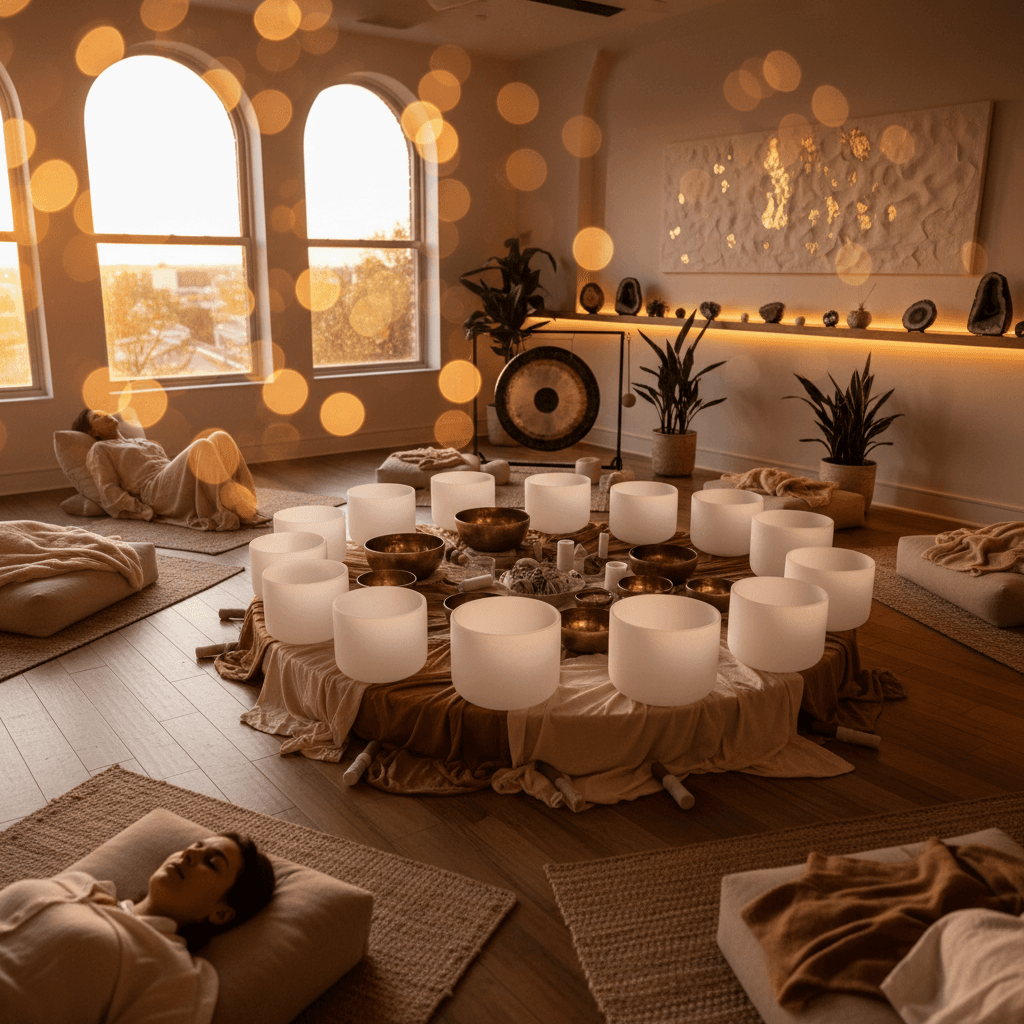
The Soul Art method integrates a range of specific instruments and techniques to facilitate this journey. Clients experience the powerful resonance of Tibetan singing bowls, known for their rich overtones and deep vibrational impact. Gongs are utilized for their ability to create immersive soundscapes that encourage a meditative state and release tension. Chimes, with their delicate, ethereal tones, help to purify and elevate the energetic field. Beyond instrumentation, Larissa incorporates guided meditation and breathwork, essential components for cultivating mindfulness and focusing attention inward. These practices prepare the nervous system, making it more receptive to both external stimuli and internal experiences.
What makes the Soul Art approach particularly unique is its emphasis on intentional progression. Larissa guides clients through a process that often begins with audible, external sounds to anchor the mind and body. As the session unfolds, there's a gentle transition towards cultivating an internal experience, encouraging clients to move beyond mere auditory perception to feel the vibrations within their own bodies. This might involve specific vocal toning exercises, which resonate within the body, or practices inspired by the Mind Sound Resonance Technique, where mental chanting fosters an inner vibratory awareness. The ultimate aim is to empower individuals to access their own Anahata Nada, fostering a deep connection to their inner self, promoting profound relaxation, and ultimately supporting holistic well-being.
Your Next Steps: Integrating Sound into Your Daily Life
Embarking on a journey with sound doesn't require complex rituals; it begins with simple, intentional practices that can be integrated into your daily routine. Cultivating an awareness of sound, both external and internal, is a powerful step towards enhanced well-being and a deeper connection to your inner self. Here are some actionable steps you can take today:
- Practice Mindful Listening: Take a few moments each day to truly listen to the sounds around you without judgment. Whether it's the gentle hum of your environment, the chirping of birds, or the distant city sounds, observe them with curiosity. This simple practice helps to anchor your awareness in the present moment.
- Explore Gentle Humming or Toning: Find a quiet space and try humming softly for a few minutes. Notice the vibrations within your chest, throat, and head. This is a simple way to experience internal resonance, a preliminary step towards sensing Anahata Nada. You can experiment with different pitches to see what feels most comforting.
- Engage with Mindful Music: Curate a playlist of instrumental music, nature sounds, or ambient tones that promote relaxation. Listen actively, allowing the sounds to wash over you and noting their effect on your mood and body. Let it be a conscious choice for stress reduction and mental calm.
- Try a Guided Sound Meditation: Many online resources offer guided sound meditations that utilize singing bowls, gongs, or vocal toning. These can be an excellent introduction to feeling how external sounds can lead you into a deeper state of relaxation and internal focus.
- Experience a Professional Sound Journey: To truly immerse yourself in the profound potential of Ahata and Anahata Nada, consider booking a session at Soul Art Dubai. Under the expert guidance of Larissa Steinbach, you can experience a curated sound journey designed to restore your nervous system, reduce stress, and unlock deep relaxation. It's an investment in your holistic well-being.
In Summary
The ancient wisdom of Nada Yoga, with its profound distinction between Ahata (external, struck sound) and Anahata (internal, unstruck sound), offers a powerful framework for holistic well-being. From activating brain regions associated with joy and focus to calming the nervous system and enhancing concentration, both external sound practices like sound baths and internal practices such as mental chanting provide a rich tapestry of benefits. These techniques may support stress reduction, improve mood, and foster a deeper connection to one's intrinsic self.
At Soul Art Dubai, Larissa Steinbach masterfully integrates these principles, guiding individuals on an transformative journey from the audible world to the profound stillness within. By embracing the power of sound, you can unlock unparalleled relaxation, clarity, and a revitalized sense of self. We invite you to explore this unique path to wellness and discover the harmonious balance that awaits you.
Bookings Coming Soon
Soul Art is still in preparation. Session details and booking will be published here after launch.
Coming Soon
Wellness Disclaimer: This article is for educational and informational purposes only. It does not constitute medical advice, diagnosis, or treatment. Soul Art Dubai provides non-medical wellness experiences focused on relaxation, stress management, and general wellbeing. Sound wellness is a complementary practice and should not replace professional medical care.