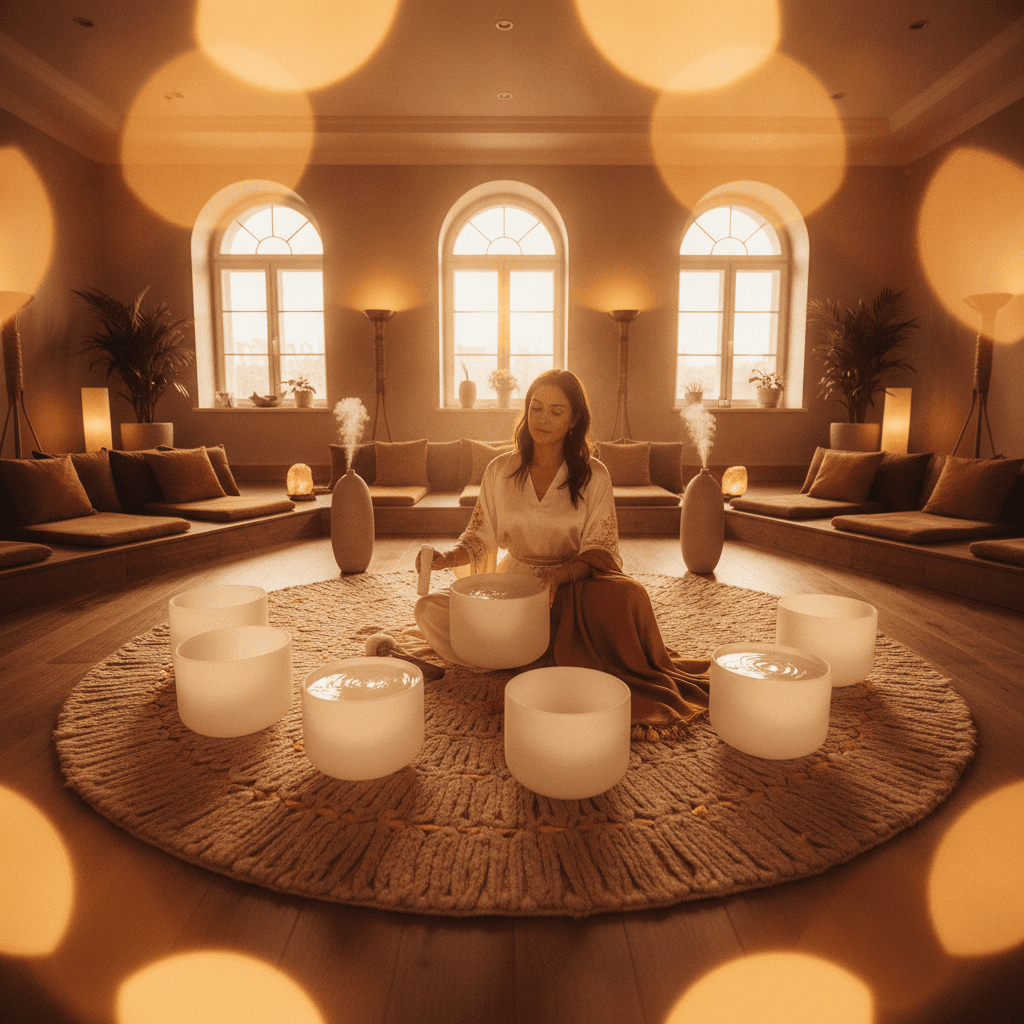
Unlock Rest: 4-7-8 Breathing & Evening Sound Rituals
Key Insights
Discover the science behind the 4-7-8 breathing technique and how combining it with evening sound rituals can activate your body's relaxation response, improve sleep quality, and calm your mind. Learn how to create a powerful nightly wellness practice for profound rest.
Have you ever laid your head on the pillow, body exhausted, only to find your mind racing like a high-speed train? In our hyper-connected world, the 'off' switch for our internal dialogue often feels impossibly out of reach. We yearn for a simple, effective way to signal to our nervous system that the day is done, and it is safe to rest. What if that signal was as accessible and innate as your own breath?
This article explores the profound wellness practice of 4-7-8 breathing, a technique rooted in ancient wisdom and increasingly validated by modern science. We will delve into the physiological mechanisms that make this simple pattern so powerful for stress reduction and sleep preparation. More importantly, we will show you how to elevate this practice into a luxurious evening ritual by pairing it with the resonant power of sound, creating a sanctuary of calm that you can access every single night. Prepare to rediscover the art of true, restorative rest.
The Science of Serenity: How Conscious Breathing Reshapes Your State
While the act of breathing is automatic, the way we breathe holds the key to regulating our entire physiological and psychological state. The 4-7-8 breathing technique is more than just a relaxation hack; it is a direct method of communication with your body's control center.
From 'Fight-or-Flight' to 'Rest-and-Digest'
Our bodies operate largely under the direction of the Autonomic Nervous System (ANS), which has two primary branches:
- The Sympathetic Nervous System (SNS) is our 'gas pedal', responsible for the "fight-or-flight" response. It elevates heart rate, tenses muscles, and heightens alertness in response to perceived stress.
- The Parasympathetic Nervous System (PNS) is our 'brake pedal', governing the "rest-and-digest" response. It slows the heart rate, promotes digestion, and fosters relaxation and recovery.
Chronic stress keeps many of us stuck in a state of sympathetic activation. The 4-7-8 breathing technique, with its long, controlled exhale, is a powerful tool to intentionally engage the PNS. The extended exhale stimulates the vagus nerve, a crucial component of the parasympathetic system that wanders from the brainstem through the neck and into the chest and abdomen, influencing the heart, lungs, and digestive tract.
The Vagus Nerve and Heart Rate Variability (HRV)
Activating the vagus nerve through deep, slow breathing is a primary mechanism for inducing calm. This is scientifically observable through changes in Heart Rate Variability (HRV), which is the measure of the variation in time between each heartbeat. High HRV is a sign of a healthy, resilient, and well-rested nervous system, capable of adapting to stress.
Research consistently supports this connection. A study in Physiological Reports found that just three sets of the 4-7-8 breathing method immediately decreased heart rate and systolic blood pressure while increasing high-frequency HRV, a direct marker of parasympathetic activity. This demonstrates the technique's rapid calming effects. Similarly, a study in the Journal of Clinical Medicine showed that a 30-day evening breathing practice significantly increased nighttime cardiac vagal activity and improved subjective sleep quality.
A Physiological Cascade of Calm
The evidence for the widespread benefits of slow, paced breathing is growing, suggesting a cascade of positive effects:
- Improved Sleep Quality: In a study of individuals with self-reported insomnia, a single session of slow, paced breathing before sleep was found to reduce the time it took to fall asleep, decrease the number of awakenings, and increase overall sleep efficiency.
- Anxiety and Stress Management: The 4-7-8 technique can be a powerful anchor during moments of high stress or panic. Research cited in the Journal of Clinical Psychology suggested a significant reduction in anxiety symptoms among participants who practiced consistently. This is because the focused nature of the breath interrupts the cycle of racing thoughts characteristic of anxiety.
- Cardiovascular Support: Studies have noted that slow breathing can temporarily help reduce blood pressure. One study from 2022 noted that 4-7-8 breathing may improve heart rate and blood pressure in young adults. This suggests a potential role as a complementary practice for cardiovascular wellness.
- Enhanced Cognitive Function: The benefits extend beyond relaxation. A 2023 study with older adults revealed that 30 minutes of deep, slow breathing improved performance on tasks measuring attention, working memory, and skill retention. By reducing "mental noise," these practices may prime the brain for better focus and clarity.
From Theory to Tranquility: The Lived Experience
Understanding the science is enlightening, but the true power of the 4-7-8 technique lies in its application. It is a practice you can feel, a tangible shift from a state of scattered tension to one of grounded presence.
A Step-by-Step Guide to the 4-7-8 Breath
This technique, developed by Dr. Andrew Weil and based on the ancient yogic practice of pranayama, is remarkably simple. The ratio is more important than the absolute time, so you can adjust the speed as you get comfortable.
- Find a comfortable position, either sitting with your back straight or lying down. If sitting, rest your hands on your knees or in your lap.
- Place the tip of your tongue against the ridge of tissue just behind your upper front teeth. Keep it there for the entire exercise.
- Exhale completely through your mouth, making a gentle "whoosh" sound.
- Close your mouth and inhale quietly through your nose to a mental count of four.
- Hold your breath for a count of seven. This pause is crucial, as it allows for optimal oxygen exchange in the body.
- Exhale completely through your mouth, making that "whoosh" sound again, for a count of eight. The extended exhale is the most powerful part of the practice for triggering the relaxation response.
- This completes one full breath. Inhale again and repeat the cycle three to five more times.
It is normal to feel slightly lightheaded the first few times you practice. This is why it is recommended to be sitting or lying down. With consistency, this sensation typically subsides.
The Sensory Shift: What You'll Feel
The first cycle requires concentration. You focus on the numbers, the position of your tongue, the sound of your breath. This focus itself is a form of meditation, pulling your attention away from external worries and into your internal landscape.
By the second or third cycle, you may notice a subtle shift. Your shoulders might drop slightly. The tension in your jaw may begin to release. You can feel the physical slowing of your heart's rhythm. The "mental noise" doesn't necessarily vanish, but its volume turns down, allowing a quiet space to emerge between your thoughts. This is the moment you reclaim a sense of control, a profound realization that you have the power to consciously shift your state of being.
Amplifying the Breath: The Soul Art Approach
While the 4-7-8 breathing technique is potent on its own, its effects can be magnificently amplified when integrated into a multi-sensory wellness ritual. At Soul Art, we believe in the synergistic power of combining conscious breath with resonant sound to guide the body and mind into their deepest states of rest.
Why Sound and Breath are Natural Partners
Both breath and sound are fundamentally about vibration. A regulated, calm breath creates a stable and receptive internal state. When your nervous system is in this parasympathetic mode, it is more open to receiving the therapeutic vibrations of sound healing instruments. The body isn't fighting or resisting; it is ready to absorb and attune.
At Soul Art, our founder Larissa Steinbach has meticulously designed evening rituals that weave these two modalities together. A session doesn't just begin with sound; it begins with the breath. Guiding clients through several rounds of 4-7-8 breathing serves as the essential first step, grounding them in the present moment and preparing their physiology for the immersive sound journey to come.
The Immersive Soul Art Experience
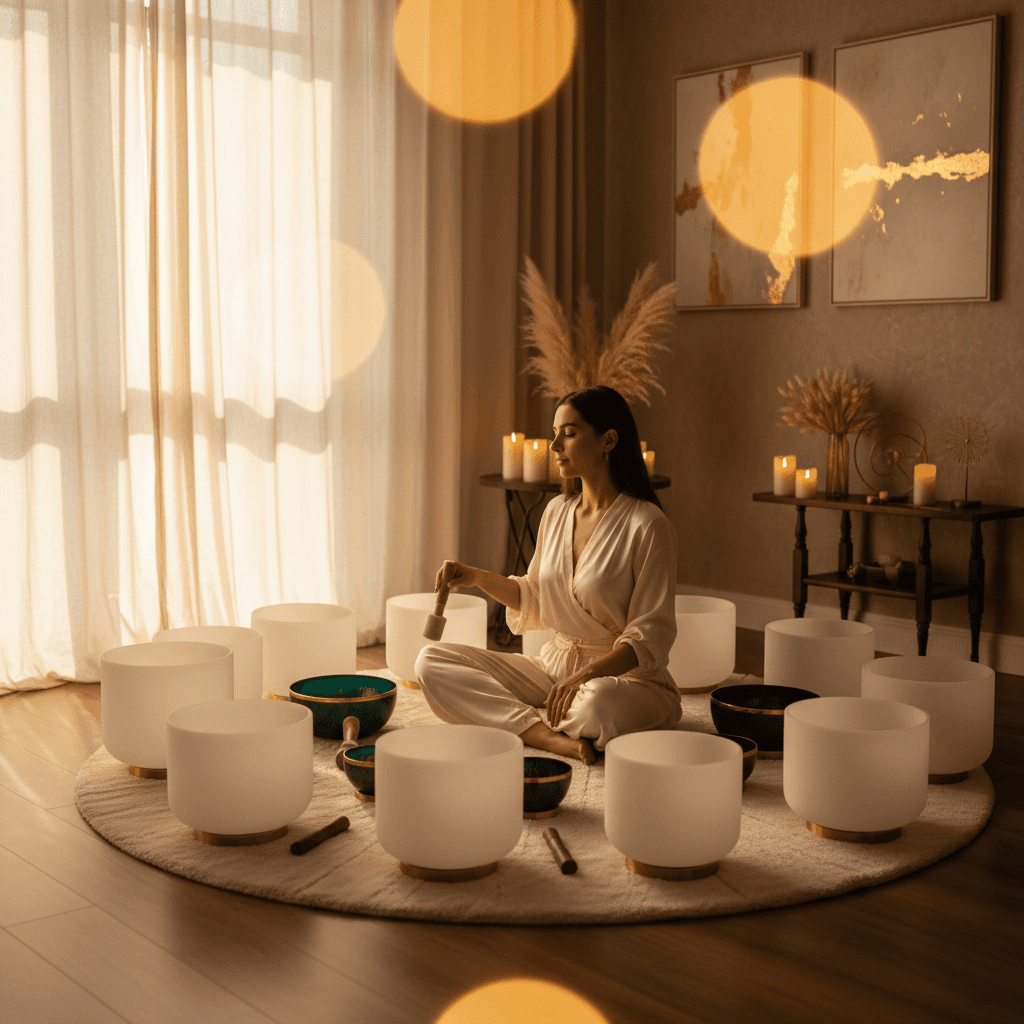
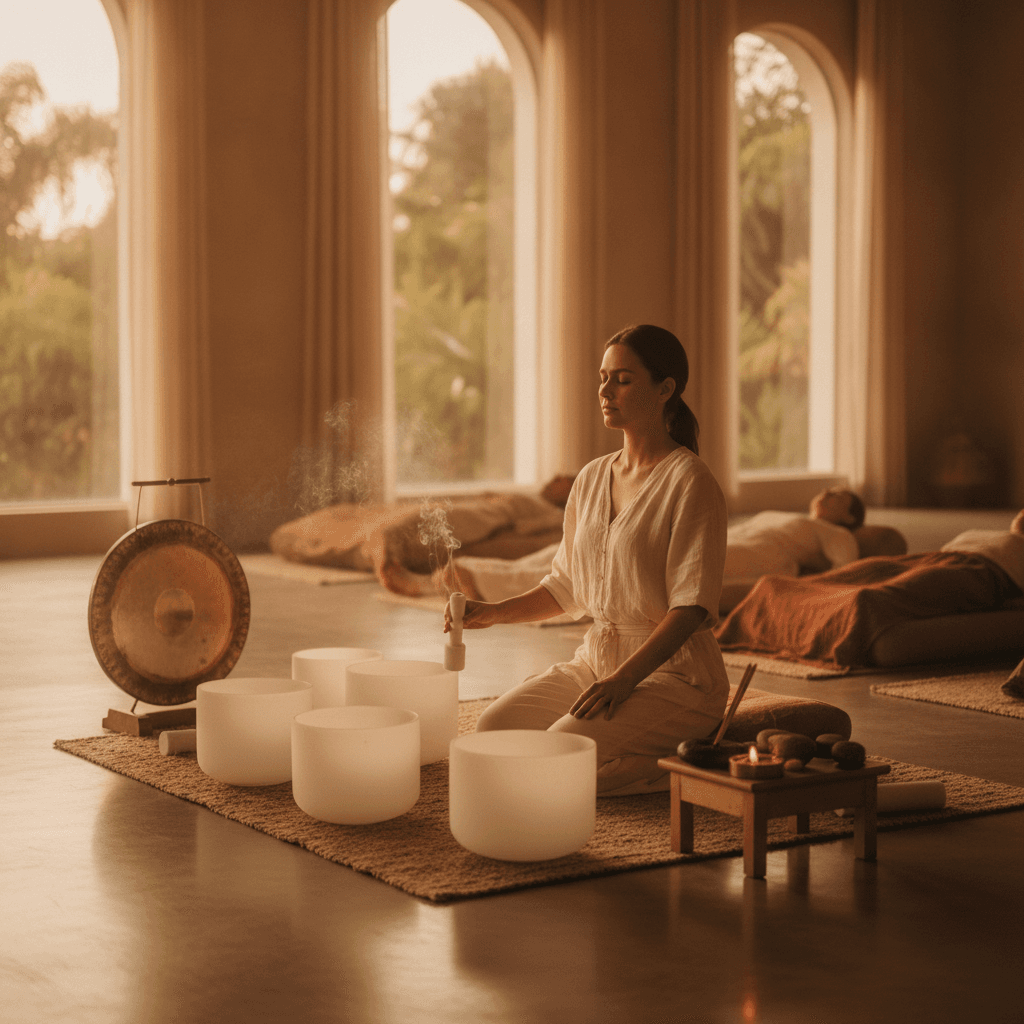
Once the body is settled through breathwork, the soundscape begins. We utilize instruments chosen for their pure, resonant frequencies, such as crystal alchemy singing bowls and therapeutic-grade Himalayan bowls. These instruments produce tones that can gently guide brainwaves from the active Beta state of normal waking consciousness into the slower Alpha (relaxed, reflective) and Theta (deeply meditative, pre-sleep) states.
The breath acts as an anchor throughout this experience. As the waves of sound wash over you, the simple instruction to return to your breath keeps the mind from wandering, allowing you to surrender more fully to the vibrations. This beautiful interplay creates a holistic experience that calms the nervous system on multiple levels simultaneously.
"The breath is the anchor that allows the soul to journey on the waves of sound. When we regulate one, we open the door for the other to work its magic." - Larissa Steinbach
This integrated approach, championed by Larissa Steinbach, ensures that each session at Soul Art is not just a passive listening experience, but an active co-creation of tranquility between practitioner, client, breath, and sound.
Weaving Calm into Your Nightly Routine
The ultimate goal of any wellness practice is to empower you with tools you can use in your daily life. Creating your own simplified evening ritual can transform the quality of your sleep and your overall sense of wellbeing. Consistency is far more important than complexity.
Here are a few actionable steps you can implement tonight to begin your journey:
- Create Your Sanctuary: Fifteen minutes before you intend to sleep, dim the lights and put your digital devices away. Choose a quiet, comfortable space where you won't be disturbed. This simple act signals a transition to your brain.
- Begin with Breath: Sit or lie down and practice four to six cycles of the 4-7-8 breathing technique. Focus on the sensation of the air and the rhythm of the count. Feel the day's tension begin to dissolve with each long exhale.
- Introduce Simple Sound: You don't need a full collection of instruments to benefit from sound. You can play a high-quality recording of a crystal bowl sound bath, a single calming frequency (like a 528 Hz track), or use a simple meditation app with chimes. The key is to listen with your whole body, not just your ears.
- Notice the Shift: After your practice, spend a few moments in complete silence. Simply observe how you feel—the stillness in your body, the quiet in your mind—without judgment. Acknowledge this peaceful state as your natural birthright.
For those seeking a deeper reset or professional guidance in harnessing these powerful techniques, a private or group session at Soul Art can provide a profound and restorative experience.
In Summary: Your Pathway to Profound Rest
The 4-7-8 breathing technique is a scientifically-supported, accessible, and powerful tool for self-regulation. By consciously shifting your breathing pattern, you can directly influence your autonomic nervous system, guiding it from a state of stress into one of deep calm and recovery.
Emerging research validates its association with a wealth of wellness benefits, including improved sleep quality, reduced feelings of anxiety, and enhanced cognitive clarity. When this potent breathwork is paired with the resonant frequencies of a sound ritual, as we practice at Soul Art Dubai, the effect is synergistic, creating an unparalleled environment for rest and restoration.
By embracing this simple practice, you are not just preparing for sleep; you are reclaiming your innate ability to find peace, cultivate stillness, and nurture your own wellbeing from the inside out.
Bookings Coming Soon
Soul Art is still in preparation. Session details and booking will be published here after launch.
Coming Soon
Related Articles
The Science of Connection: Call and Response Chanting for Wellness
Deepen Your Bond: Couples Breath & Tone Practice at Soul Art
Harmonize Your Voice: Humming for Public Speaking Nerves