Sound Healing for Sibling Harmony: A Scientific Guide
Key Insights
Discover the science-backed benefits of sound healing for easing sibling tension. Soul Art Dubai explains how sound baths can reduce stress and foster deep connection.
Have you ever sat in a room with a sibling, the silence thick with unspoken history and unresolved tension? The bond between siblings is one of the most profound and complex relationships we experience, a tapestry woven with threads of shared joy, fierce loyalty, and, at times, deep-seated friction. When disagreements arise, we often believe the only way through is to talk, analyze, and negotiate—a process that can sometimes entrench us further in our positions.
But what if harmony wasn’t about finding the right words, but about finding a shared frequency? What if you could bypass the intellectual arguments and connect on a deeper, physiological level? This is the potential of sound wellness, a practice grounded in modern science that offers a gentle yet powerful pathway to dissolving discord.
In this article, we will explore the compelling research behind sound healing and its specific application for easing sibling tension. You will learn how specific frequencies can calm a reactive nervous system, reduce stress hormones that fuel conflict, and create a neutral space for empathy and connection to flourish. This is not about magic; it’s about neuroscience, and it may just change the way you navigate your most enduring family relationships.
The Science Explained: How Sound Re-Tones Relationships
To understand how a sound bath can soothe relational friction, we must first look at how our bodies respond to stress and sound. Conflict, whether spoken or silent, puts the body in a state of high alert. Sound wellness works by addressing this physiological root of discord, gently guiding the body back to a state of balance and openness.
### Shifting Brainwaves from Conflict to Calm
When we are stressed, anxious, or engaged in an argument, our brains predominantly produce high-frequency Beta brainwaves. This is our "fight-or-flight" state—useful for immediate threats but detrimental to thoughtful communication and empathy.
Sound healing utilizes a principle called brainwave entrainment, where the brain’s own electrical cycles begin to synchronize with the rhythm of an external sound.
- Beta Waves: Associated with alertness, focus, and agitation. This is the state of a tense mind.
- Alpha Waves: Linked to a state of relaxed awareness and creativity. The mind is calm and receptive.
- Theta Waves: Connected to deep meditation, intuition, and memory consolidation. This is a state of profound calm.
Instruments like Tibetan singing bowls and precisely tuned binaural beats produce frequencies that encourage the brain to shift from a high-stress Beta state into the calmer Alpha and Theta states. Research, such as a 2014 study in the International Journal of Psychophysiology, has shown that exposure to these sounds can directly influence EEG brainwave activity, promoting the deep relaxation necessary for emotional walls to come down.
### Reducing Stress Hormones and Soothing the Nervous System
The primary hormone released during stress is cortisol. Sustained high cortisol levels keep us on edge, making us more reactive and less able to connect. Sound healing offers a direct way to counteract this.
The deep, resonant frequencies of gongs and the layered harmonics of crystal bowls activate the parasympathetic nervous system—our body's "rest-and-digest" mode. This activation signals to the adrenal glands that the threat has passed, thereby reducing the production of cortisol.
A landmark 2016 study from the University of California demonstrated that even a short singing bowl meditation led to significantly lower cortisol levels and heart rates. When two siblings experience this physiological downshift together, their shared environment moves from one of mutual threat to one of mutual safety.
### Fostering Empathy and Emotional Regulation
It is nearly impossible to feel empathy when your own nervous system is in a state of alarm. By calming the physiological stress response, sound creates the necessary internal space for positive emotions to emerge.
Harmonic sounds have been associated with an increase in the brain's "feel-good" chemicals like serotonin and dopamine. This neurochemical shift not only improves mood but also enhances our capacity for patience, understanding, and emotional regulation. When you feel safe and calm, you are better equipped to see a situation from another's perspective. The Journal of Evidence-Based Integrative Medicine published a significant 2017 study by Goldsby et al., finding that sound meditation participants reported a dramatic reduction in tension, anger, and fatigue after just one session.
How It Works in Practice: A Shared Journey in Sound
So, what does this scientific process actually feel like for two siblings in a session? It’s a journey that moves beyond words into the realm of shared sensory experience.
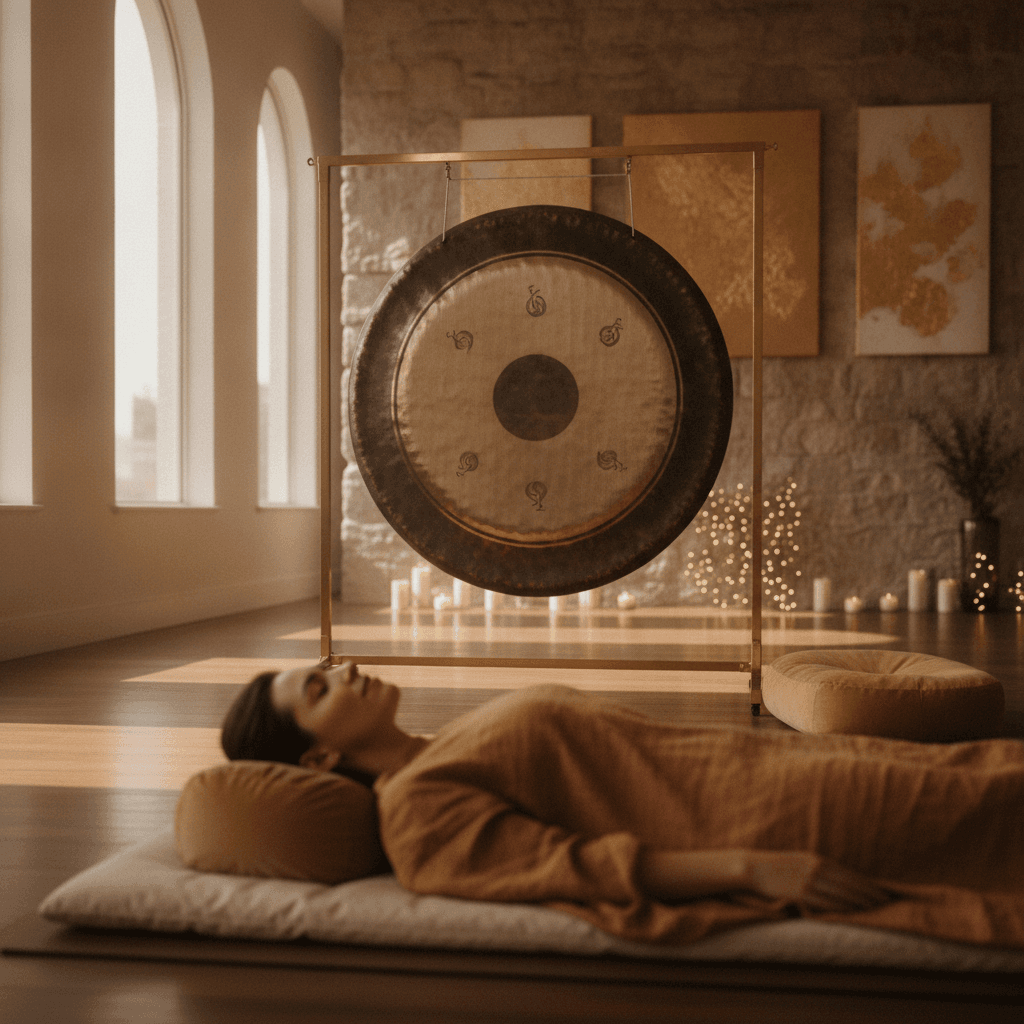
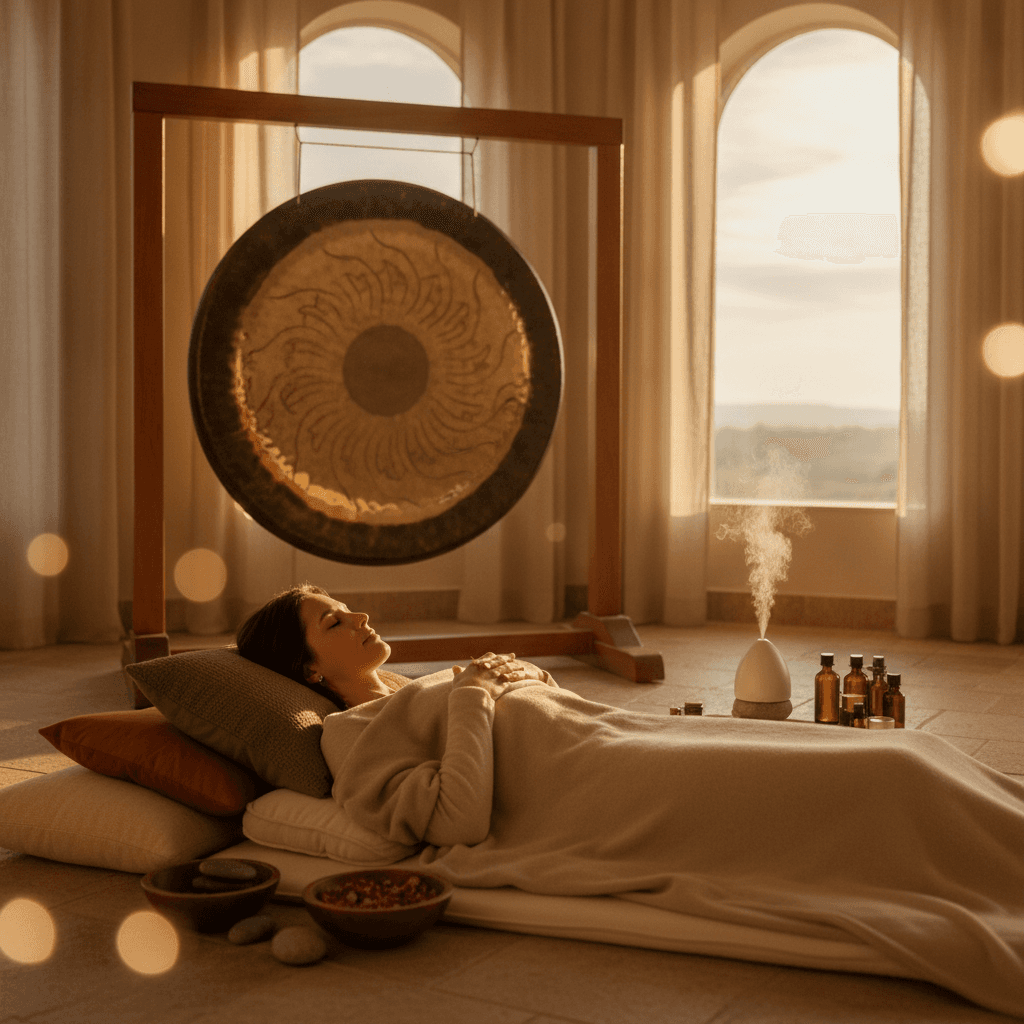
Imagine entering a softly lit, serene space. Instead of facing each other to "talk things out," you are invited to lie down on comfortable mats, side by side, but in your own space. There is no pressure to speak or interact. The session begins not with discussion, but with a simple, unifying intention for peace.
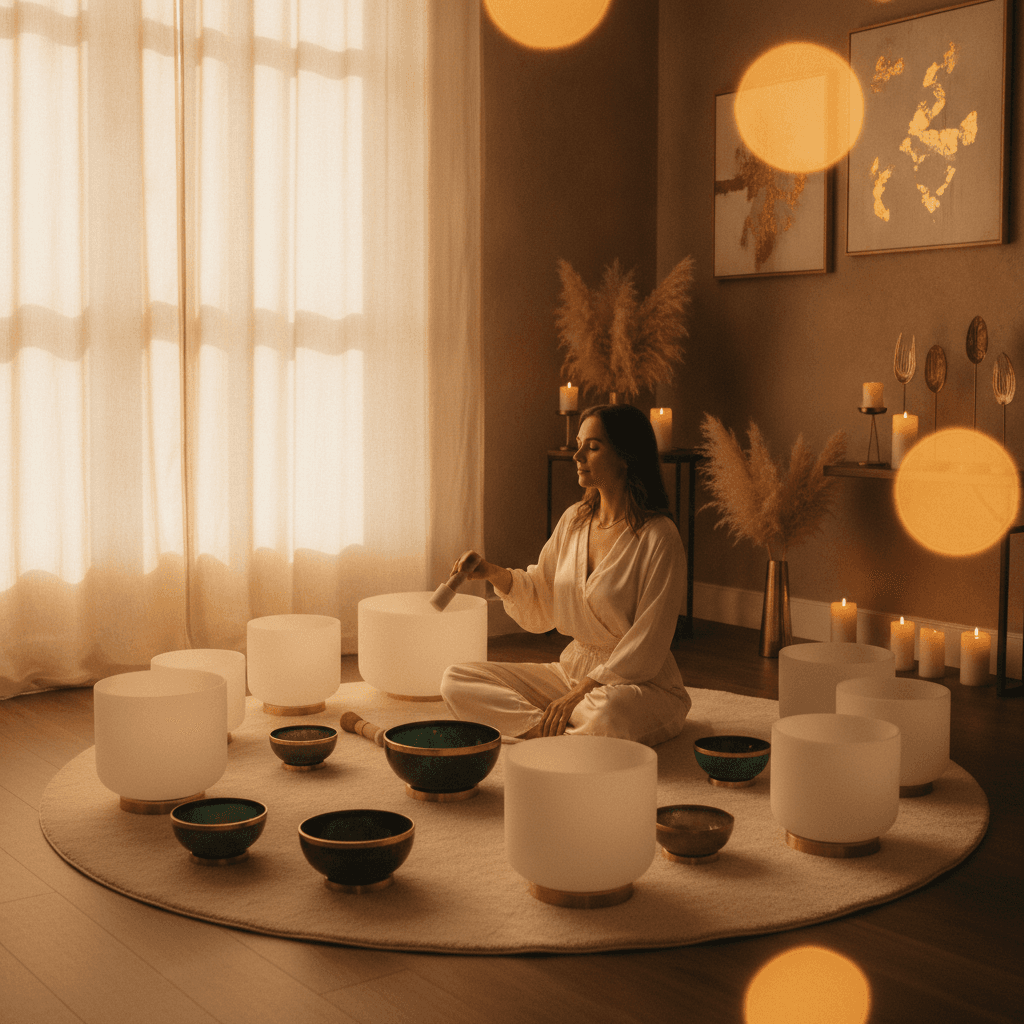
As the first resonant tones of a Himalayan singing bowl fill the room, the immediate effect is a disruption of the mental chatter. The sound is a neutral, beautiful presence in the room that belongs to neither of you. It simply is. As layers of sound are introduced—the deep, grounding hum of a gong, the ethereal chime of crystal bowls, the gentle rhythm of a rainstick—the busy, analytical mind begins to quiet down.
In the profound silence that follows the final chime, the space between two people is no longer filled with unspoken words, but with a shared sense of peace. This is where reconnection begins.
The vibrations are not just heard but are also felt physically, a gentle internal massage that releases tension from the muscles. In this state, you are not brother and sister with a history of conflict; you are two individuals sharing an experience of profound calm. The shared silence at the end of the session is not empty or awkward, but full and resonant—a foundation upon which a new, more harmonious conversation can be built later, if it’s even needed at all.
The Soul Art Approach to Relational Harmony
At Soul Art, we recognize that relational wellness is not about forcing a resolution, but about creating the ideal conditions for one to emerge organically. My approach, developed as Larissa Steinbach, is rooted in creating a bespoke and intentional container where individuals can find their way back to equilibrium, both within themselves and with each other.
For sibling sessions, we don’t just play instruments; we curate a specific sonic journey. We draw upon a range of therapeutic instruments, including many of those used in the pivotal Goldsby (2017) study, such as authentic Tibetan singing bowls, gongs, and crystal bowls. Each instrument is chosen for its specific frequency and its capacity to address different aspects of the stress response.
What makes the Soul Art method unique is the focus on non-verbal co-regulation. We guide siblings into a shared state of nervous system safety. By synchronizing their physiological states to the same calming frequencies, they can experience a sense of unity without the pressure of verbal communication. This somatic experience of togetherness can be far more impactful than any spoken apology or explanation, laying the groundwork for lasting harmony.
Your Next Steps: Cultivating Harmony at Home
While a professional session provides a deep, immersive experience, you can begin to integrate the principles of sound wellness into your relationship with your sibling today. Here are a few practical steps you can take:
-
Create a "Shared Calm" Playlist: Collaboratively build a playlist of calming, instrumental music (think ambient, classical, or nature sounds). Agree to play it in shared spaces to passively lower the ambient stress level.
-
Practice Mindful Listening: Find a comfortable space to sit together for five minutes. Close your eyes and simply listen to the environmental sounds around you without judgment—the hum of the air conditioner, a distant bird, the sound of your own breathing. This practice trains the brain to listen without reacting.
-
Share a Sound Bath Recording: There are many high-quality sound bath recordings available online. Instead of watching a movie, try listening to one together. It creates a shared experience of relaxation and requires no conversation.
-
Breathe in Sync: Before a potentially difficult conversation, take one minute to sit and consciously synchronize your breathing. Inhale for a count of four, hold for four, and exhale for a count of six. This simple act can align your nervous systems and promote a calmer interaction.
When you're ready to explore this practice on a deeper level, a professionally facilitated session at Soul Art can provide a powerful reset, offering a neutral, supportive space for connection to be rediscovered.
In Summary
The complex dynamics of sibling relationships often require more than just words to find resolution. Lingering tension is frequently rooted in a physiological stress response that keeps us locked in defensive patterns. Sound wellness offers a scientifically-supported, non-verbal approach to gently dissolve this tension.
By leveraging principles like brainwave entrainment and parasympathetic activation, sound healing helps to lower stress hormones like cortisol, shift the brain into a more receptive state, and calm the nervous system. This process creates the internal and external conditions necessary for empathy, understanding, and genuine connection to re-emerge. It is a reminder that sometimes, the most profound way to heal a relationship is to simply share a peaceful frequency. We invite you to explore this path to harmony at Soul Art.
Bookings Coming Soon
Soul Art is still in preparation. Session details and booking will be published here after launch.
Coming Soon
Related Articles
Harmonic Connections: Grandparent-Grandchild Sound Rituals
Harmonizing Blended Families: The Sound Bath for Connection
Harmonizing the Empty Nest: Sound Baths for Midlife Renewal