The Art of Boundaries: A Wellness Guide to Scope of Practice

Key Insights
Discover why a practitioner's 'scope of practice' is the most critical factor for your safety and results. Soul Art's Larissa Steinbach explains the science of professional boundaries.
Have you ever wondered what separates a true wellness professional from a hobbyist? In a world filled with self-proclaimed experts, the answer often lies not in what they claim to do, but in what they know not to do. This crucial, often invisible, framework is known as scope of practice, and it is the bedrock of safe, ethical, and effective wellness experiences.
Understanding this concept is empowering. It transforms you from a passive recipient into a discerning client, capable of identifying practitioners who prioritize your wellbeing above all else. This journal article will demystify the scope of practice, exploring its scientific and ethical foundations. We will uncover why these professional boundaries aren’t limitations, but rather the very structure that allows for profound and trustworthy experiences in sound wellness.
The Science Explained
The concept of a defined scope is not unique to wellness; it is a cornerstone of any rigorous discipline, from medical care to scholarly research. By understanding its origins and principles, we can better appreciate its vital role in the services we choose for our self-care.
### What is "Scope of Practice"?
Borrowed from established fields like nursing and medicine, scope of practice describes the services a qualified professional is deemed competent to perform and permitted to undertake. The American Nurses Association defines it as the “who, what, where, when, why, and how” of their profession. For a wellness practitioner, this translates to:
- Who: A trained professional with specific certifications in their modality.
- What: The specific services offered, such as facilitating relaxation through sound vibration.
- Where: A safe, professional, and appropriate environment.
- When: For the purpose of general wellbeing, stress management, and relaxation.
- Why: To support the body’s natural relaxation response and promote a state of equilibrium.
- How: Using techniques and instruments consistent with their training and ethical standards.
Crucially, this definition also implies what is not included. A sound wellness practitioner’s scope does not include diagnosing medical conditions, prescribing treatments, or offering psychological therapy. It is a complementary practice, designed to work alongside, not in place of, professional medical care.
### The Parallels with Scientific Research
To grasp the power of a defined scope, we can look to the world of scientific research. Researchers must explicitly define their study's boundaries, known as scope and delimitations. This process is not about avoiding difficult questions; it’s about ensuring the credibility and reliability of the findings.
As research firm Insight7 notes, setting these boundaries allows scholars to "concentrate on key aspects while minimizing distractions," which "strengthens the credibility of their findings." Delimitations are the choices a researcher makes about what to exclude, making the study manageable and focused. Limitations are the potential weaknesses they must acknowledge, such as a small sample size.
A wellness practitioner operates on a similar principle:
- Scope: The defined wellness services they provide (e.g., sound baths for stress management).
- Delimitations: The services they intentionally and ethically exclude (e.g., treating anxiety disorders).
- Limitations: Acknowledging that results can vary and that the practice is a tool for relaxation, not a guaranteed cure for any ailment.
This disciplined approach fosters trust and manages expectations, creating a safer and more effective experience for the client.
### Why Professional Boundaries Build Trust
When a practitioner clearly communicates their scope, it signals a high level of professionalism and respect for the client. It demonstrates that they understand the limits of their knowledge and are committed to an evidence-informed approach rather than making unsubstantiated claims.
Science journalist Rick Hess and education policy expert Jal Mehta, in a discussion on "evidence-based practice," highlight a key idea: science should inform our judgment, not dictate a rigid, one-size-fits-all action. A professional practitioner uses their understanding of acoustics, psychoacoustics, and neuroscience to guide a session, but they do so with sophisticated, contextual judgment, adapting to the individual in front of them.
By openly stating what we do and do not do, we create a sanctuary of clarity. In this space of honesty, the client is free to let go, knowing they are held by integrity, not by empty promises.
This integrity is the foundation of a true therapeutic alliance. When you know you are in a space free of exaggeration or medical claims, your nervous system can more easily switch into a state of relaxation and receptivity, enhancing the potential benefits of the session.
How It Works in Practice
Imagine stepping into a wellness studio. The ambiance is calming, but the true sense of safety begins with the conversation. A practitioner operating within their scope of practice will initiate a dialogue centered on transparency.
The consultation process is key. Instead of asking about medical diagnoses to "treat" them, the practitioner will inquire about your wellness goals. Are you seeking stress relief? A moment of deep peace? Better sleep quality? The focus remains firmly on wellbeing and relaxation.
During this conversation, the practitioner will clearly articulate their role. They might say something like, "My role today is to guide you through a sound experience designed to help your nervous system relax and reset. This is a powerful tool for stress management. Please note, I am not a medical professional, and this session is not a substitute for medical or psychological care." This simple act of delineation builds a container of trust.
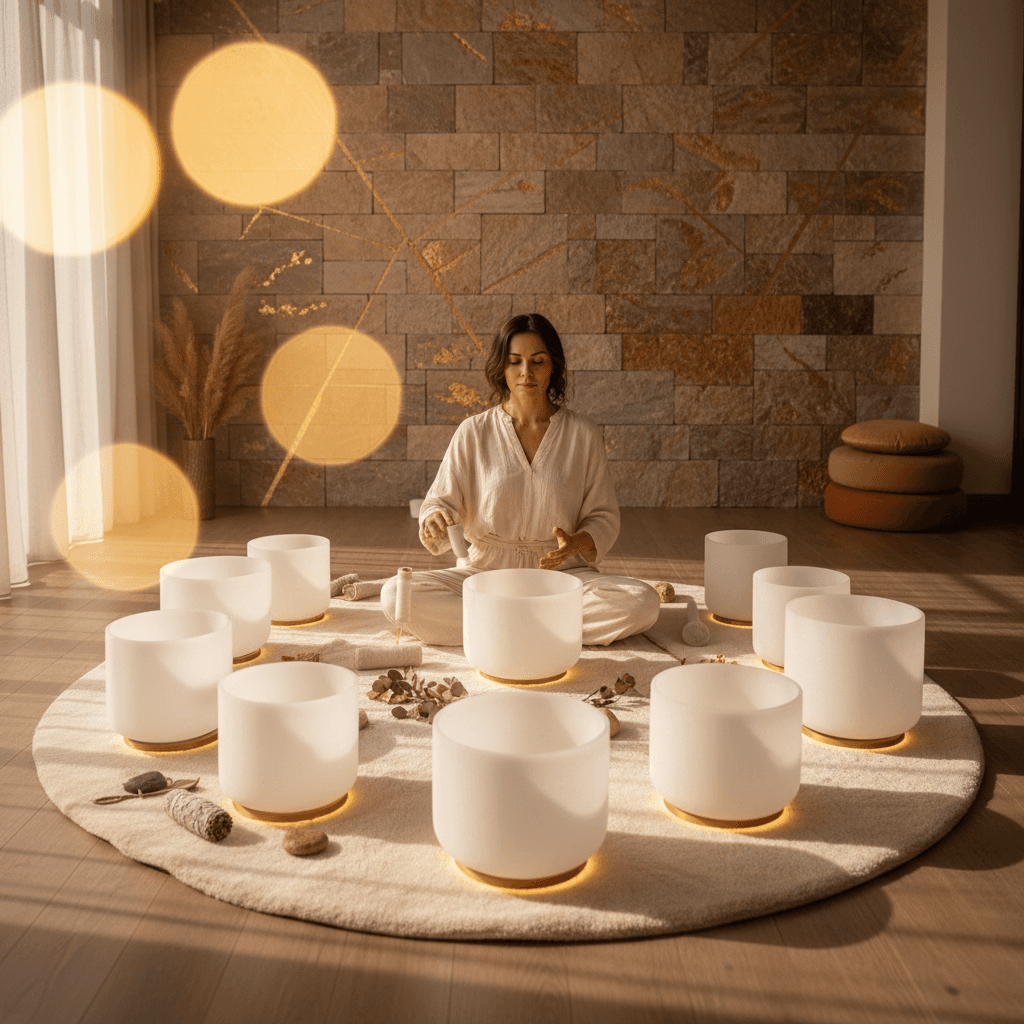
As the session begins, every choice is informed by this professional framework. The selection of instruments—the resonant frequencies of a gong, the pure tones of crystal bowls, the gentle rhythm of chimes—is based on established knowledge of how sound can support a shift from the "fight-or-flight" sympathetic nervous system to the "rest-and-digest" parasympathetic nervous system.
The practitioner isn't claiming to "heal" a specific organ with a specific frequency, a common oversimplification in the wellness industry. Instead, they are using their craft to create an immersive environment that invites the body's own innate capacity for balance to emerge. They observe your responses, adjust the soundscape accordingly, and hold a space for your experience without interpreting it through a medical lens. This is the art and science of professional practice in action.
The Soul Art Approach
At Soul Art, the principle of scope of practice is not just a guideline; it is the core of our philosophy. Founder Larissa Steinbach has built our studio on a foundation of rigorous training, ethical commitment, and a deep respect for both the scientific principles and the sacred art of sound wellness.
Our approach is rooted in an evidence-informed methodology. We integrate findings from neuroscience, psychoacoustics, and physiology to design experiences that are profoundly relaxing and restorative. We understand, for instance, how specific sound patterns can encourage the brain to enter states associated with deep meditation, such as Alpha and Theta brainwave states. However, we present this information transparently—as a supportive mechanism for relaxation, not as a medical intervention.
What makes the Soul Art method unique is this unwavering commitment to professional integrity.
- Transparent Communication: Every client journey begins with a clear discussion about the nature of our sessions, their potential benefits for wellbeing, and their boundaries.
- Personalized, Not Prescriptive: Larissa Steinbach tailors each session to the individual's wellness goals, using her extensive knowledge to create a responsive and supportive soundscape. The focus is on facilitating your personal experience, not imposing a predetermined protocol.
- Continuous Education: We are dedicated to ongoing professional development, staying abreast of emerging research to refine our practice and ensure we are always operating from a place of knowledge and integrity.
At Soul Art, we use precisely tuned planetary gongs, master-grade crystal singing bowls, and other therapeutic instruments. But our most important tool is the trust we build with our clients—a trust fortified by the clear and respected boundaries of our professional scope of practice.
Your Next Steps
As you continue your wellness journey, whether with us or elsewhere, you are now equipped to be a more discerning and empowered client. Knowing what to look for in a practitioner is the most important step you can take to ensure your experiences are safe, beneficial, and professional.
Here are a few practical actions you can take:
- Ask About Training: Inquire about a practitioner's certifications, training background, and their philosophy on professional scope of practice. A true professional will welcome these questions.
- Listen for Language: Be mindful of the words used. Phrases like "may support relaxation" and "helps manage stress" are appropriate. Red flags include definitive claims like "cures," "treats," or "heals," especially in relation to specific medical conditions.
- Seek Clarity on the 'What': Before a session, ensure you have a clear understanding of what will happen, what the intended purpose is (e.g., relaxation, mindfulness), and what is not part of the service.
- Trust Your Gut: If a practitioner makes you feel uncomfortable, pushes you to share medical information they are not qualified to handle, or makes promises that seem too good to be true, it is perfectly acceptable to walk away.
We invite you to experience the difference a professional, ethically-bound practice can make. Choosing a practitioner who respects their scope is an act of self-respect.
In Summary
The concept of scope of practice is far more than a professional technicality; it is a practitioner's pledge of safety, ethics, and respect to their client. It is the invisible architecture that separates a profound wellness experience from a potentially harmful one. By defining clear boundaries—what is included, what is excluded, and what the limitations are—a practitioner creates a space of deep trust.
This professional discipline allows you, the client, to fully surrender to the experience, confident that you are in capable and responsible hands. At Soul Art, we believe this commitment to integrity is the most resonant frequency of all. We invite you to experience a practice where professionalism and profound peace coexist in perfect harmony.
Bookings Coming Soon
Soul Art is still in preparation. Session details and booking will be published here after launch.
Coming Soon
Related Articles
Unlock Deeper Healing: Recording Your Own Sound Journeys with Soul Art
Water Consciousness: Sound's Subtle Influence on H2O for Wellness

The Silent Symphony: Plant Bioacoustics & Human Wellness