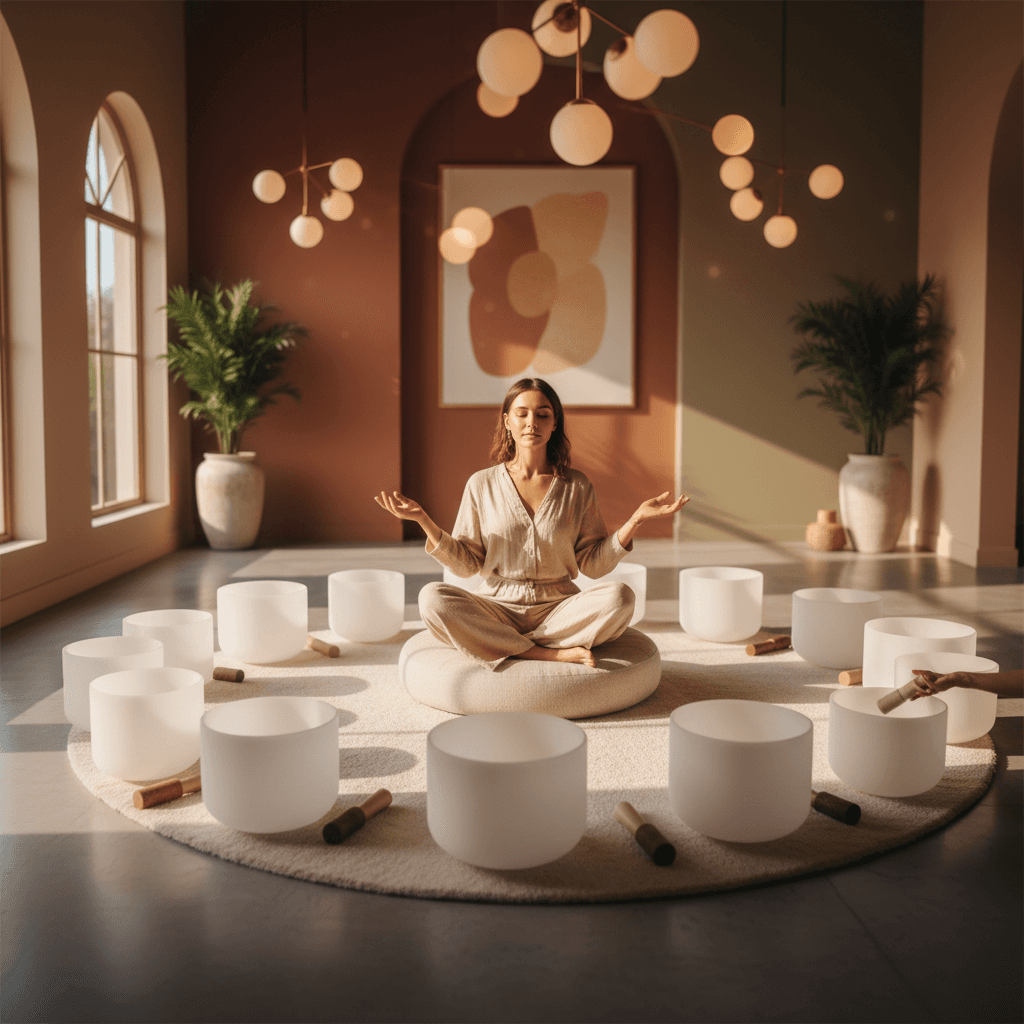
Unveiling the Future: Research Gaps in Vibroacoustic Wellness
Key Insights
Explore the exciting potential and crucial areas for deeper scientific inquiry in vibroacoustic wellness, championed by Soul Art's Larissa Steinbach.
The Unseen Symphony: Bridging Knowledge Gaps in Sound Wellness
Imagine a world where sound doesn't just soothe your ears, but resonates through every cell of your being, calming your nervous system and revitalizing your spirit. This isn't a futuristic fantasy, but the promising frontier of vibroacoustic wellness, an ancient concept now gaining robust scientific scrutiny. Yet, despite its profound potential, the full scope of how vibroacoustic stimulation (VAS) impacts our health remains an area ripe for deeper exploration.
At Soul Art, Dubai's premier sound wellness studio, we witness daily the transformative power of this modality. Our founder, Larissa Steinbach, is dedicated to a method rooted in both profound intuition and emerging scientific understanding. This article delves into the fascinating world of vibroacoustic research, highlighting the compelling evidence that exists while openly discussing the crucial gaps researchers are still working to bridge. We'll explore how this innovative wellness practice may support your well-being, from the intricate dance of brain waves to the subtle shifts in cellular response.
By understanding the current state of research and where it needs to go, we can better appreciate the holistic benefits of sound and vibration as a complementary approach to modern living. Join us as we explore the resonant language of the body, and the exciting journey ahead in fully quantifying its healing potential.
The Resonant Language of the Body: Understanding Vibroacoustic Wellness
Vibroacoustic stimulation (VAS) involves the application of low-frequency sound waves directly to the body, typically through specialized devices like sound beds or chairs. This isn't just about listening to music; it's about feeling the sound as gentle vibrations permeate tissues, muscles, and organs. The goal is to induce relaxation, alleviate stress, and foster a state of physiological and psychological balance.
The wellness technology industry is experiencing exponential growth, reflecting a shifting paradigm that acknowledges the intricate connection between the brain and body. Traditional Western science once supported a severed connection, but scholastic knowledge is now rapidly bridging this gap. This holistic view is fundamental to understanding how VAS may influence our well-being.
The Biological Blueprint: How Sound and Vibration Interact with Physiology
Research indicates that vibroacoustic stimulation can have a profound impact on various physiological systems. One significant area of inquiry focuses on its ability to modulate the autonomic nervous system, shifting it towards a state of parasympathetic dominance – often referred to as "rest and digest." This is key for stress reduction and overall physiological recovery.
Studies using electroencephalography (EEG) and electrocardiography (ECG) biosignal metrics offer objective insights into these changes. For instance, in one study, VAS was assessed for its effect on stress using concurrent EEG and ECG, alongside a subjective stress measure. This multi-faceted approach aims to comprehensively quantify the efficacy of supine-position VAS as a stress management tool.
- Cognitive Stress: Preliminary findings suggest that VAS may positively affect cognitive functions. It has been hypothesized to improve concentration by influencing the theta/beta ratio in brainwave activity. Furthermore, it may foster relaxation by impacting the beta/alpha ratio and support overall well-being through frontal/alpha asymmetry.
- Physiological Stress: Research into physiological stress indicates that VAS may influence heart rate variability (HRV), a key indicator of autonomic nervous system balance. The hypothesis is that VAS increases HRV, leading to more parasympathetic activity (evidenced by increased RMSSD and HF) and less sympathetic activity (indicated by reduced SDNN and LF). It is also anticipated that VAS will reduce heart rate (HR BPM).
- Inflammatory Responses: Beyond the nervous system, some preliminary research explores the cellular mechanisms of vibroacoustic stimulation. One study investigated the impact of sonic vibration (SV) on inflammatory responses, assessing cytokine secretion. Results showed that SV, particularly at 90 Hz, significantly increased interleukin-10 (IL-10) secretion, an anti-inflammatory cytokine, suggesting a potential anti-inflammatory effect at a molecular level.
These findings, while promising, often emerge from pilot studies or those with limited scope, underscoring the need for larger, more controlled investigations.
Decoding the Brain-Body Connection: EEG, ECG, and Stress Markers
The concurrent use of EEG and ECG biosignals provides a powerful lens through which to observe the body's response to vibroacoustic input. EEG measures electrical activity in the brain, revealing patterns associated with different states of consciousness. ECG, on the other hand, records the electrical signals of the heart, providing insights into heart rate variability.
Heart Rate Variability (HRV) is particularly important, as it reflects the flexibility and adaptability of the autonomic nervous system. A higher HRV generally indicates a healthier, more resilient nervous system, capable of responding effectively to stressors. By measuring changes in HRV, researchers can objectively assess the impact of VAS on physiological stress and the balance between the sympathetic (fight-or-flight) and parasympathetic (rest-and-digest) branches.
Beyond these objective measures, subjective reports of stress, such as those gathered via the PSS-10 scale, are also crucial. They help to correlate physiological changes with an individual's lived experience of stress. One research question posed is whether participants with higher initial stress scores are more profoundly impacted by VAS, suggesting a targeted benefit.
The Promise of Specific Frequencies: 40 Hz and Beyond
The origins of vibroacoustic therapy (VAT) trace back to the late 1970s and early 1980s with Norwegian therapist Olav Skille. Skille discovered that exposing patients to low-frequency sound vibrations, typically in the 30-120 Hz range, led to significant reductions in spasticity, pain, and stress. His pioneering work established the Physioacoustic Method, which eventually identified 40 Hz as a particularly effective frequency for systemic muscle relaxation and circulatory enhancement.
Modern research continues to explore the efficacy of specific frequencies for targeted benefits:
- Pain and Fibromyalgia: Two controlled studies have demonstrated that 40 Hz VAT significantly reduces pain, improves sleep, and eases fibromyalgia symptoms with no adverse effects. Sessions delivered 2-5 times per week over 5 weeks produced clinically meaningful results.
- Sleep Quality and Insomnia: Neuroimaging studies provide evidence that vibroacoustic stimulation can improve functional brain connectivity and increase total sleep time. Closed-loop vibration studies further confirm that vibration therapy may reduce nighttime waking and improve subjective sleep quality.
- Parkinson's Disease: Research, including double-blind randomized controlled trials, suggests that 40 Hz physioacoustic vibrations may reduce rigidity, tremor, and improve gait in Parkinson's patients. This positions 40 Hz VAT as a promising non-pharmacological adjunct for motor symptom management.
- Alzheimer's Disease and Neuroprotection: The Massachusetts Institute of Technology (MIT) research program offers compelling evidence that 40 Hz stimulation can activate microglia, reduce amyloid-beta plaques, and improve cognition. Phase II clinical trials have even shown that 40 Hz light and sound exposure significantly slows brain atrophy in Alzheimer's patients.
- Headache and Neck Pain: A 2021 study showed notable improvement in headache and cervical pain when vibroacoustic stimulation was applied to the scalp fascia and suboccipital muscles, also reducing tension in these areas.
These diverse applications highlight the versatility of VAS, yet they also reveal the fragmented nature of the research. Each study focuses on a specific aspect, often with variations in methodology, participant numbers, and specific frequencies applied. This leads us to the crucial discussion of current research gaps.
Unveiling the Research Gaps in Vibroacoustic Wellness
While the existing body of research provides an exciting foundation for vibroacoustic wellness, several critical gaps remain that need to be addressed for the field to reach its full potential and gain broader acceptance in both wellness and medical communities.
- Limited Sample Sizes and Inconsistent Study Designs: Many early studies, while pioneering, often involved small participant samples or lacked robust control groups. This makes it challenging to generalize findings across broader populations. The call for more rigorous research with larger participant cohorts and standardized methodologies is a recurring theme within the scientific community. Consistent study designs are essential to allow for meta-analyses and clearer conclusions.
- Unclear Mechanisms of Action for All Benefits: While some studies, like those on IL-10 secretion, begin to unravel the molecular mechanisms, the precise pathways through which many observed benefits (e.g., pain alleviation, improved circulation) are achieved are still not fully understood. Deeper investigation into the cellular and biochemical responses to specific frequencies and vibration patterns is needed.
- Optimal Frequencies and Protocols: While 40 Hz has been identified as particularly effective for certain conditions, the optimal frequencies, durations, and intensity of vibroacoustic stimulation for a wide range of wellness goals or specific conditions remain largely undetermined. Research often varies in the 30-120 Hz range, and a systematic approach to mapping these parameters to outcomes is required.
- Distinguishing Effects: Vibration vs. Music vs. Placebo: One significant challenge is isolating the specific therapeutic effects of the vibration itself from the accompanying auditory stimuli (music, soundscapes) or from the powerful placebo effect. Future research needs to employ carefully designed control conditions that effectively separate these elements to precisely quantify the unique contribution of vibroacoustic input.
- Long-Term Efficacy and Safety: Most current studies focus on short-term interventions and immediate outcomes. There is a pressing need for longitudinal studies that assess the long-term efficacy and safety of regular vibroacoustic stimulation, especially across diverse demographics and for chronic conditions.
- Lack of Regulatory Classification and Insurance Coverage: The Reddit discussion highlights a crucial gap: consumer vibroacoustic devices are generally not classified as medical devices under regulations like EU MDR. This regulatory gap means they cannot make therapeutic claims and are typically not covered by insurance. Bridging this requires a higher threshold of clinical evidence, which circles back to the need for more rigorous, large-scale studies.
- Standardization of Consumer Devices: There's a concern that consumer devices may not accurately replicate the specific parameters (frequencies, amplitudes, waveforms) tested in clinical studies. This inconsistency makes it difficult for consumers to choose effective products and for researchers to compare findings across different commercial offerings.
"The true potential of vibroacoustic wellness lies not just in what we know, but in what we are yet to discover through dedicated, rigorous scientific inquiry. Every answered question opens doors to deeper understanding and more refined applications."
Addressing these research gaps is vital for vibroacoustic wellness to evolve from a promising complementary practice into a widely recognized and evidence-based modality. This will not only empower practitioners like Larissa Steinbach to refine their offerings but also provide consumers with clearer guidance and confidence in their wellness choices.
Experiencing Vibroacoustic Wellness: From Theory to Embodied Practice
While the scientific community continues its important work, individuals around the world are already experiencing the profound benefits of vibroacoustic wellness in practice. The transition from complex scientific theory to a tangible, sensory experience is where its true impact often becomes evident. It’s about more than just data points; it’s about a felt sense of calm and restoration.
In a typical vibroacoustic session, clients lie fully flat on a specialized sound bed or mat, designed to facilitate maximized contact between the body and the vibrating surface. This supine position ensures that the gentle, low-frequency sound waves can permeate the entire body, from head to toe. The sensation is often described as a subtle, pervasive hum or a series of rhythmic pulsations that travel through the body.
The experience is deeply immersive. Clients close their eyes, allowing the carefully curated soundscapes – often incorporating stress-reducing sonic characteristics like rhythmicity and specific pitches – to wash over them. Simultaneously, the physical vibrations work at a somatic level, bypassing the analytical mind and engaging the body's innate capacity for self-regulation. This dual approach, engaging both auditory and tactile senses, creates a powerful synergy that promotes deep relaxation.
Many people report a significant reduction in subjective stress and muscle tension almost immediately after a session. This aligns with preliminary research suggesting enhanced parasympathetic nervous system activity and objectively measurable relaxation, including changes in skin conductance. Clients often describe feeling profoundly rested, rejuvenated, and more centered, as if a quiet recalibration has occurred within their nervous system.
For those experiencing chronic discomfort, vibroacoustic sessions may support pain management and offer a sense of physical ease. The gentle vibrations are thought to encourage localized blood circulation and muscle relaxation, potentially alleviating tension. This connection between theory and felt experience demonstrates how cutting-edge wellness practices translate scientific insights into tangible improvements in quality of life.
The Soul Art Signature: Larissa Steinbach's Vision for Immersive Sound Wellness
At Soul Art, Dubai's premier sound wellness studio, Larissa Steinbach has meticulously crafted an experience that transcends mere relaxation. Her approach is built on a foundation of scientific curiosity, intuitive understanding, and an unwavering commitment to holistic well-being. Larissa Steinbach believes that while research provides invaluable insights, the art of sound wellness lies in its bespoke application and immersive delivery.
The Soul Art method uniquely integrates the best available research with an understanding of individual needs. Our sessions are designed to facilitate maximised contact with the vibrotactile modality, ensuring that clients receive the full benefit of the low-frequency vibrations. By focusing on a fully flat, supine position, we optimize the body's receptivity, allowing the vibrations to deeply penetrate and resonate. This commitment to physical contact helps to amplify the perceived and potential physiological benefits.
We utilize state-of-the-art sound beds, carefully calibrated to deliver precise frequencies and amplitudes. The sound design features quantified stress-reducing sonic characteristics, including carefully selected rhythmicity and pitch, creating an environment optimized for nervous system regulation. This thoughtful curation ensures that every aspect of the experience at Soul Art is geared towards fostering profound calm, mental clarity, and physical ease.
Larissa Steinbach's vision extends beyond a single session; it's about empowering individuals to embrace sound as a powerful tool for self-care and resilience. The uniqueness of Soul Art lies in its blend of quiet luxury, scientific grounding, and a deeply empathetic approach to guiding clients on their personal wellness journey. We are not just offering a service; we are cultivating a space for deep internal harmonisation, where the body's innate wisdom is gently reawakened through the power of sound.
Cultivating Your Well-being: Actionable Steps for Integrating Sound into Your Life
Understanding the science and experiencing the practice of vibroacoustic wellness can be the first step towards a more harmonious life. While professional sessions offer a deeply immersive experience, there are also practical ways you can begin to integrate the principles of sound and vibration into your daily routine. Cultivating awareness of how sound affects you is a powerful practice.
Here are some actionable steps to support your journey towards greater well-being:
- Conscious Listening: Pay attention to the sounds around you. Notice how different sounds – from natural elements to specific music – make you feel. Choose calming soundscapes for relaxation, such as nature sounds or binaural beats, to help soothe your nervous system.
- Mindful Movement with Sound: Engage in activities like yoga or gentle stretching while listening to low-frequency, meditative music. This can enhance body awareness and deepen relaxation, allowing vibrations to resonate more freely.
- Explore Sound Baths or Meditations: Seek out local sound bath experiences or guided sound meditations online. These sessions often use instruments like gongs and singing bowls to create immersive soundscapes that may induce a state of deep relaxation.
- Prioritize Rest and Quiet: In our noisy world, intentional silence can be a form of sound wellness. Dedicate time each day to quiet reflection, allowing your nervous system to reset without constant auditory input. This allows for internal processing and reduces sensory overload.
- Hydrate and Nourish: The body is primarily water, making it an excellent conductor of sound and vibration. Staying well-hydrated and consuming nutrient-rich foods can enhance your body's receptivity to positive sonic input and support overall cellular health.
Embracing these steps can complement the profound benefits of dedicated vibroacoustic sessions. They offer pathways to self-care that honor the intricate relationship between sound, body, and mind.
Bookings Coming Soon
Soul Art is still in preparation. Session details and booking will be published here after launch.
Coming Soon
In Summary: Harmonizing Mind, Body, and Spirit
Vibroacoustic wellness stands as a powerful, non-invasive complementary practice with a growing body of scientific evidence supporting its potential benefits for stress reduction, pain management, improved sleep, and overall well-being. While current research has unveiled exciting mechanisms related to brainwave activity, heart rate variability, and even cellular inflammation, it also clearly highlights the need for more rigorous, large-scale studies to fully understand its optimal applications and long-term efficacy.
The journey to fully quantify the profound impact of sound and vibration is ongoing, but the anecdotal and preliminary scientific findings are undeniably promising. At Soul Art, Larissa Steinbach and her team are at the forefront of this evolving field, offering deeply restorative experiences that blend scientific insight with intuitive wisdom. We invite you to explore the transformative power of sound and vibration, embracing a holistic approach to harmonizing your mind, body, and spirit.
Wellness Disclaimer: This article is for educational and informational purposes only. It does not constitute medical advice, diagnosis, or treatment. Soul Art Dubai provides non-medical wellness experiences focused on relaxation, stress management, and general wellbeing. Sound wellness is a complementary practice and should not replace professional medical care.
Related Articles
Unveiling the Enduring Calm: Aftereffects of Vibroacoustic Sessions at Soul Art
Unlocking Relief: Vibroacoustic Relaxation for Back Tension
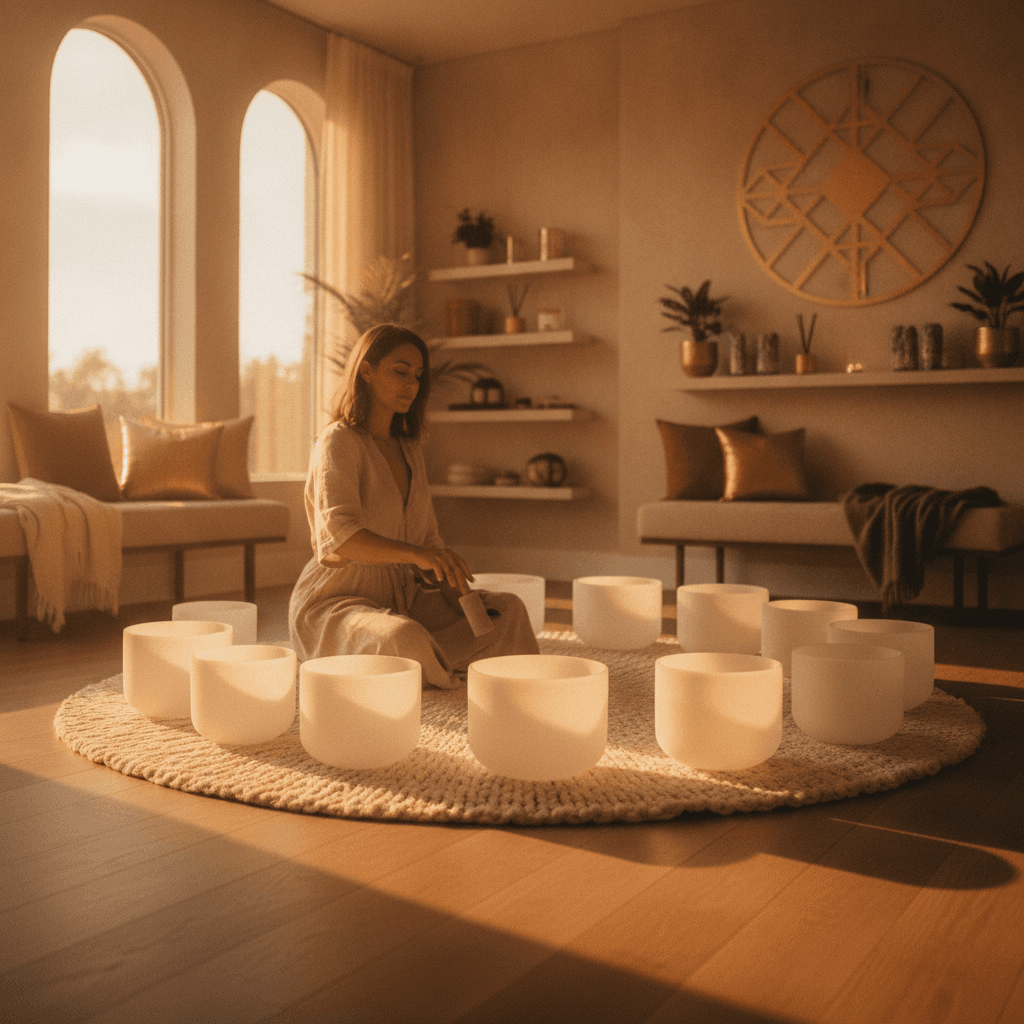
Harmonize Your Being: Choosing Between Sound Bowl and Vibroacoustic Sessions at Soul Art