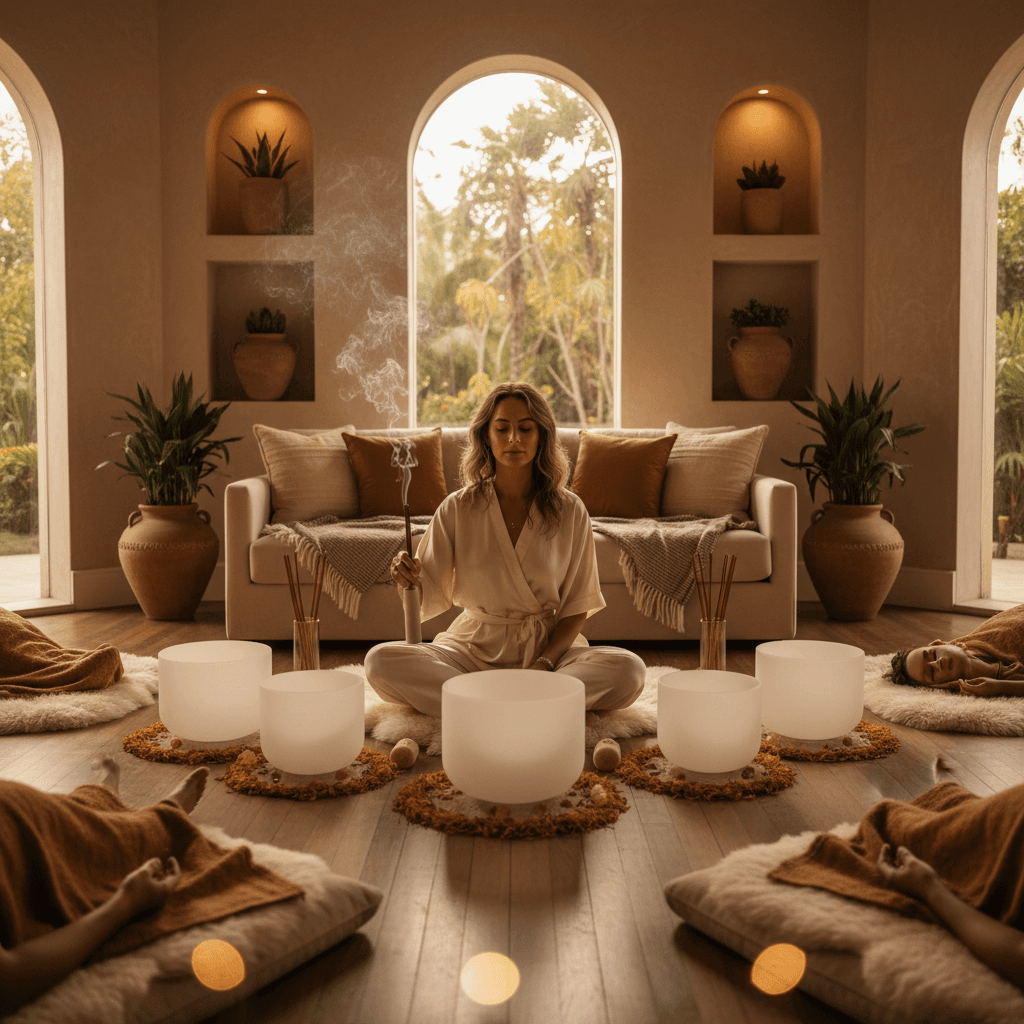
Sound for Memory: Unlocking Deeper Consciousness & Past Life Exploration
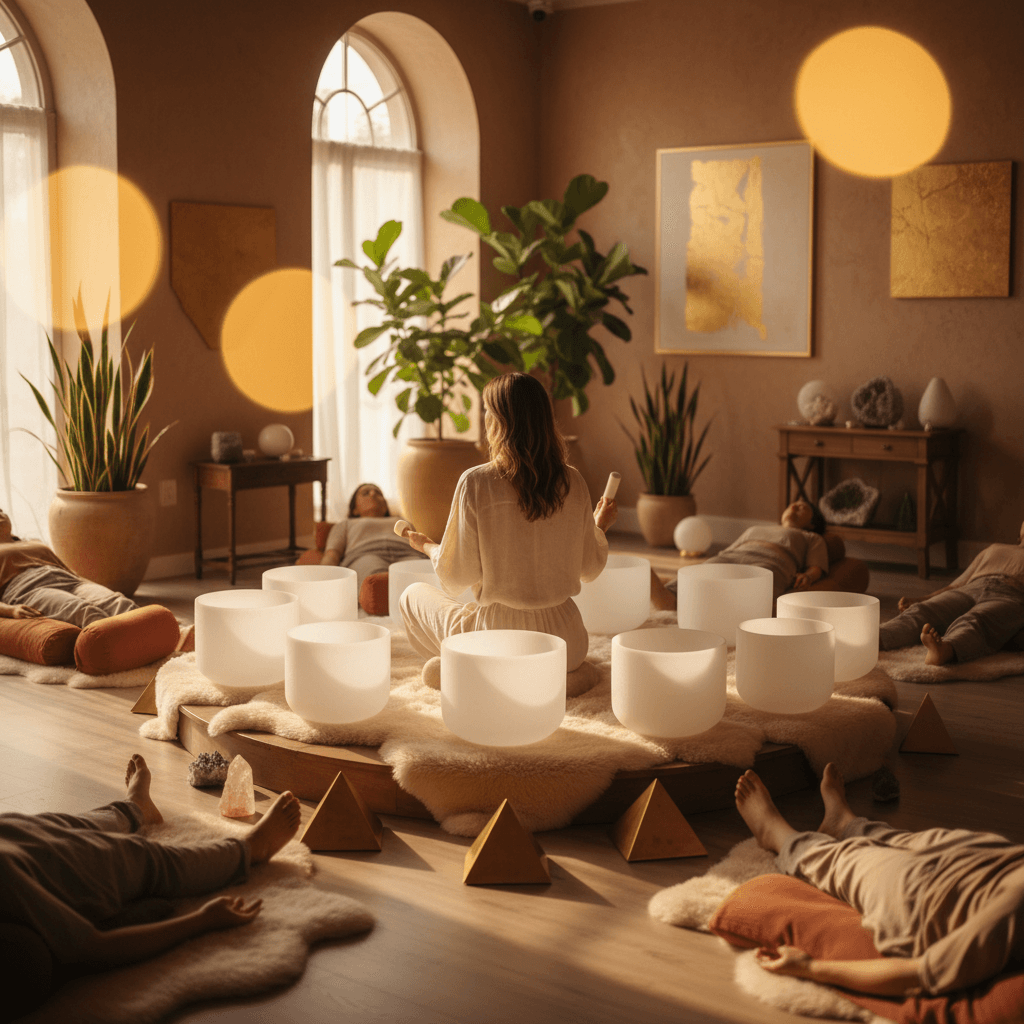
Key Insights
Explore how sound wellness at Soul Art Dubai, with Larissa Steinbach, may support the exploration of deep, perhaps past-life, memories through scientific principles of memory and music.
Compelling Introduction
Have you ever experienced a profound sense of déjà vu, an inexplicable connection to a place or person you've never consciously encountered, or a recurring dream that feels deeply significant? These subtle echoes from the past often spark a universal curiosity about the origins of our being and the potential for memories beyond our current lifetime. While the concept of past lives remains a fascinating area of spiritual and scientific inquiry, the intricate relationship between sound, memory, and consciousness offers a unique lens through which to explore these profound inner landscapes.
At Soul Art Dubai, we delve into the sophisticated art of sound wellness, recognizing its powerful capacity to influence the mind and body. This article will explore the intriguing intersection of scientific research on memory, the evolving understanding of past-life phenomena, and how carefully curated sound experiences may support a journey into the deeper recesses of our personal and potentially ancestral memory. We aim to illuminate how sound, as a non-invasive wellness practice, can create a fertile ground for introspection and the emergence of profound insights, without making definitive claims about reincarnation.
Join us as we navigate the science behind why music and sound hold such sway over our recollections, examine the intriguing field of past-life research, and discover how Soul Art’s unique approach to sound wellness, pioneered by Larissa Steinbach, offers a pathway to expanded self-awareness and holistic well-being. This journey invites us to consider the flexibility of memory and the potential for sound to be a key that unlocks deeper layers of conscious experience.
The Science Explained
The exploration of past-life memories is a complex and often debated field, yet it undeniably touches upon fundamental questions about consciousness, identity, and the very nature of existence. For centuries, various spiritual traditions have embraced the concept of reincarnation, proposing that our consciousness transcends a single lifetime. In more recent times, scientific inquiry, particularly within parapsychology, has begun to systematically investigate anecdotal reports and case studies, seeking patterns and evidence.
The Enigma of Past-Life Memories
Reincarnation researcher James Matlock, for scientific purposes, defines an adult reincarnation case as one in which the most abundant memories emerge at the age of ten or more. This contrasts with childhood cases, where memories typically fade around ages five to eight. Early pioneers like Frederick Lenz were among the first to systematically study adult past-life memories, paving the way for further research.
Distinguished researchers such as Ian Stevenson and, more recently, Jim Tucker at the University of Virginia's Division of Perceptual Studies (DOPS) have dedicated decades to meticulously documenting thousands of cases, particularly those involving children who spontaneously report memories of past lives. These studies often involve children making accurate statements about a deceased individual’s life and death, sometimes even possessing birthmarks or defects congruent with wounds on the deceased person, which have been corroborated by postmortem reports. While no conclusive proof exists for reincarnation, neither is there scientific evidence to suggest that reincarnation is impossible. The scientific community continues to grapple with the profound implications such findings could have on our understanding of mind-body relationships and the ontology of consciousness.
It is crucial to acknowledge the significant challenges that confront hypnotic past-life regression research. Hypnosis, with its characteristic suggestibility and imaginative absorption in inner-generated stimuli, means that reported memories must be rigorously checked and authenticated against existing records to rule out subconscious fabrication. However, the consistent reporting of "past-life experiences" (PLEs), whether interpreted as actual memories or powerful psychological constructs, highlights a profound human experience that warrants further exploration within a safe and structured wellness framework.
The Neuroscience of Memory and Music
Our understanding of memory is continually evolving, revealing its dynamic and often reconstructive nature. What we recall is not always a perfect playback, but rather a re-creation influenced by current emotions and contexts. This inherent flexibility of memory provides an exciting avenue for exploring how external stimuli, particularly sound and music, can profoundly impact our recall and emotional associations.
Recent research highlights the powerful connection between music, emotion, and memory. A study from Georgia Tech, reported in ScienceDaily, demonstrated that music can infuse emotional details into memories, subtly altering their emotional tone. Participants who listened to emotionally charged music while recalling neutral stories were more likely to incorporate new emotional elements into their memories that matched the mood of the music. Even days later, these memories retained the emotional tone imparted by the music, suggesting a lasting effect.
Brain scans taken during such experiments revealed increased activity in the amygdala and hippocampus—areas crucial for emotional memory processing—when participants recalled stories while listening to music. This explains why a song associated with a significant life event can feel so powerful; it simultaneously activates both emotion- and memory-processing regions. Durham University research further supports this, indicating that music evokes more consistently positive memories than other emotional cues, especially when paired with sad or angry stimuli. This suggests music's unique ability to reconnect us with emotionally positive moments from our pasts.
Moreover, music often accompanies distinctive life events—weddings, graduations, or personal milestones—making it a potent cue for self-defining memories. Its ability to capture our attention increases the likelihood that a life event, along with its details, will be strongly encoded in memory. UCLA neuroscientists also found that an optimal level of emotional response induced by music, when listened to after an experience, can significantly enhance the recall of details from that experience. This scientific grounding underscores the profound, transformative potential of sound in influencing our emotional landscape and memory recall, creating a fascinating bridge to deeper self-exploration.
How It Works in Practice
Given the profound influence of sound and music on our emotional memory, how might this translate into a practical approach for exploring deeper aspects of consciousness, including the potential for past-life memories? The core principle lies in sound's unique ability to bypass the analytical mind and directly influence our emotional and physiological states, creating an optimal environment for profound introspection.
In a sound wellness session, the carefully selected frequencies and vibrations act as a gentle guide, leading the mind from a state of active beta brainwaves, characteristic of our waking, problem-solving state, into more relaxed alpha and theta states. These deeper brainwave states are associated with meditation, creativity, intuition, and a greater openness to unconscious material. As the brain enters these receptive states, the habitual filters of conscious thought begin to soften, allowing for a more expansive awareness.
The immersive experience of deep resonant tones, gentle vibrations, and a rich tapestry of sound creates a sense of safety and profound relaxation. This deep relaxation can encourage the emergence of subtle sensory inputs, vivid imagery, or emotional shifts that might otherwise remain dormant. Some individuals report a sensation akin to what parapsychology author David Scott Rogo described as "the Lenz syndrome"—unusual sensory inputs such as a ringing sound or bright lights and colours—while entering a deeply introspective state. While not every individual experiences this, the auditory environment itself can foster a unique sensory journey.
"Sound does not merely entertain; it resonates through the very fabric of our being, offering a direct pathway to the subconscious mind where profound insights and forgotten narratives may patiently await their discovery."
This journey is not about forcing specific memories or interpretations, but rather about cultivating a state of open receptivity. By engaging with sound, individuals may find themselves recalling vivid dreams, experiencing strong emotional responses to unfamiliar scenarios, or encountering archetypal imagery that feels deeply meaningful. These emergent experiences are understood within the wellness context as opportunities for self-discovery and personal growth, offering valuable insights into current life patterns, beliefs, and emotional responses. The focus is on embracing what arises with curiosity and non-judgment, allowing the sound to facilitate a deeper connection to one's inner wisdom.
The Soul Art Approach
At Soul Art Dubai, Larissa Steinbach has meticulously developed a distinctive sound wellness methodology that harnesses these scientific principles, creating a powerful experience for self-discovery and profound relaxation. Her approach is rooted in the belief that true well-being stems from a holistic connection—mind, body, and spirit—and that sound is a universal language capable of bridging these aspects.
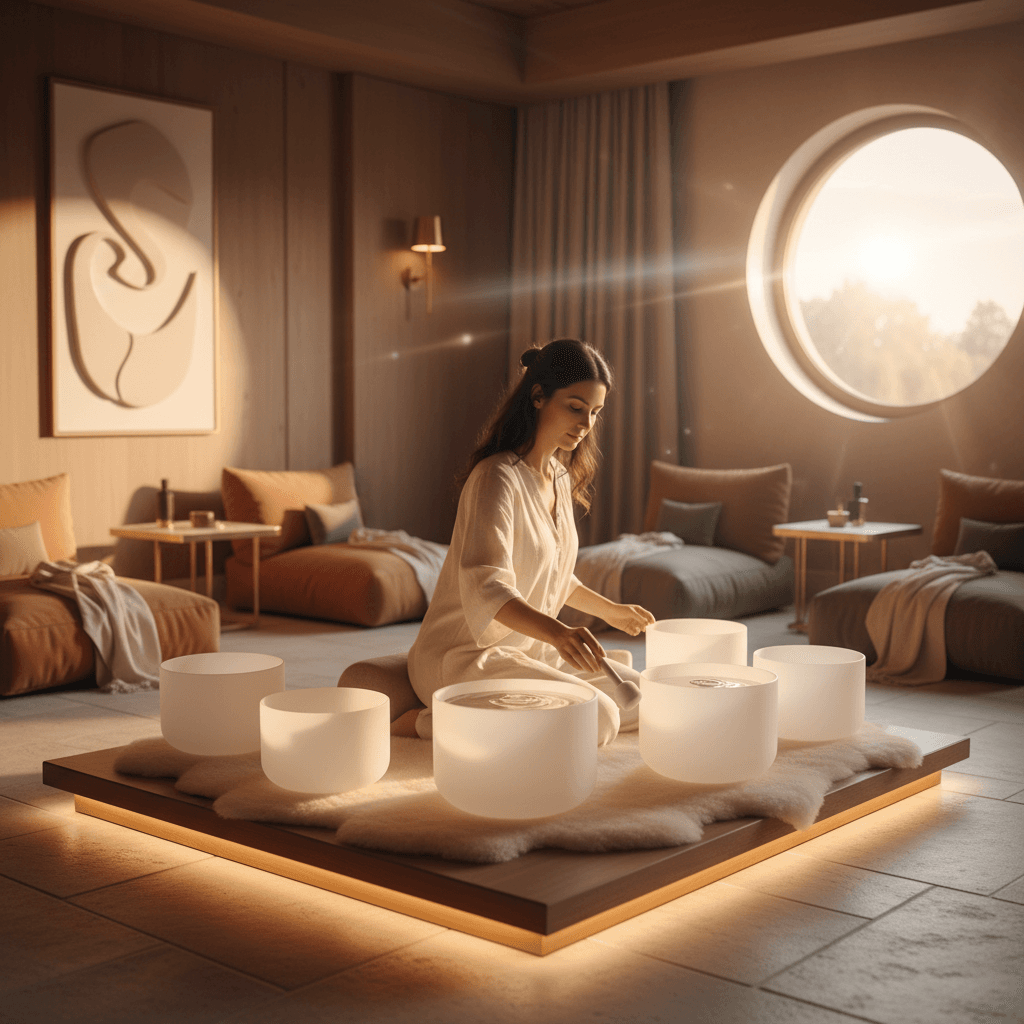
Larissa Steinbach’s sessions are meticulously crafted environments of auditory immersion, designed to gently guide participants into states of deep meditation and expanded consciousness. She intuitively selects and plays a diverse array of instruments, each chosen for its unique vibrational qualities and resonant frequencies. These include the ancient wisdom of Himalayan singing bowls, with their earthy, grounding tones; the expansive, cosmic resonance of gongs, which can induce deeply altered states; and the pure, uplifting frequencies of crystal bowls, known for their ability to align energy centers. Tuning forks are also utilized for their precise vibrational targeting, promoting specific states of relaxation or energetic balance.
What makes the Soul Art method unique is Larissa’s profound intention and intuitive guidance. The goal is not to "retrieve" past lives in a definitive sense, but to create a sanctuary where the nervous system can recalibrate, and the mind can access its innate capacity for introspection and insight. She fosters a safe, nurturing space that encourages individuals to release conscious resistance and simply "be" with the emerging sensations, emotions, and imagery. This process may naturally lead to the surfacing of deep-seated memories, symbolic narratives, or powerful emotional releases that feel ancestral or archetypal in nature.
Larissa Steinbach understands that while scientific research on past-life memories is ongoing, the experience of profound insight and emotional release through sound is universally beneficial for wellness. By harmonizing the body's energy fields and calming the mental chatter, Soul Art sessions support individuals in exploring their inner landscape with clarity and courage. This unique blend of scientific understanding and intuitive artistry allows participants to connect with a deeper sense of self, potentially unlocking rich inner narratives that inform their present journey.
Your Next Steps
Embarking on a journey of deeper self-exploration, particularly concerning profound memories, can be a transformative experience. While sound wellness offers a powerful conduit for this, integrating these insights into your daily life is key. Here are some actionable steps you can take to foster greater self-awareness and embrace the potential of sound for memory exploration:
- Engage Intentionally with Sound: Beyond structured sessions, consciously choose music or ambient soundscapes that promote relaxation and introspection. Pay attention to how different frequencies make you feel and how they influence your thoughts and emotions. This intentional listening can prime your mind for deeper states.
- Cultivate a Mindfulness Practice: Regular meditation or mindfulness exercises can train your mind to observe thoughts and feelings without judgment. This practice enhances your ability to be present and receptive to subtle cues that may arise from deeper consciousness.
- Journal Your Insights: Keep a journal to record any vivid dreams, strong intuitive feelings, recurring patterns, or unexpected memories that emerge. Even if these don't immediately make sense, the act of writing them down can help clarify connections over time and provide valuable self-reflection material.
- Explore Sound Wellness: Consider booking a professional sound wellness session. An experienced practitioner like Larissa Steinbach at Soul Art Dubai can create a specially curated environment and guide you through a profound experience, optimizing the conditions for deep relaxation and potential memory exploration. This complementary approach supports overall well-being.
- Prioritize Rest and Self-Care: Deep inner work requires energy and mental clarity. Ensure you are getting adequate sleep, maintaining a balanced diet, and engaging in other self-care practices. A well-rested mind and body are more receptive to subtle insights and less prone to distraction.
Ready to restore your nervous system, cultivate deeper self-awareness, and explore the profound connection between sound and memory? Soul Art Dubai offers a sanctuary for holistic well-being.
In Summary
The intricate dance between sound, emotion, and memory offers a compelling pathway for exploring the deeper recesses of human consciousness. While the scientific investigation into past-life memories continues to evolve, the profound impact of sound on our brain and emotional landscape is well-established. From altering the emotional tone of memories to fostering states of deep relaxation, sound provides a unique and powerful tool for introspection.
Soul Art, under the expert guidance of Larissa Steinbach, leverages these principles to create an immersive wellness experience. Her unique methodology, utilizing instruments like gongs and crystal bowls, cultivates a safe space for individuals to access expanded states of awareness, promoting self-discovery and facilitating the emergence of deep, potentially archetypal, insights. This holistic approach supports personal growth, stress reduction, and a profound connection to one's inner self. Embark on a journey to unlock these deeper dimensions of memory and well-being at Soul Art Dubai.
Bookings Coming Soon
Soul Art is still in preparation. Session details and booking will be published here after launch.
Coming Soon
Wellness Disclaimer: This article is for educational and informational purposes only. It does not constitute medical advice, diagnosis, or treatment. Soul Art Dubai provides non-medical wellness experiences focused on relaxation, stress management, and general wellbeing. Sound wellness is a complementary practice and should not replace professional medical care.
Related Articles
Harmonic Blueprints: Unveiling Sacred Geometry Through Sound at Soul Art
Astral Projection: Exploring Consciousness with Sound Wellness
Devotional Sound: Heart Offerings – Aligning Your Inner Resonance